
The cost of carbon fiber is not one number but a stack of four form factors — raw tow, woven fabric, prepreg, and finished parts — each adding its own conversion steps and yield assumptions on top of the fiber underneath. Buyers who compare a prepreg quote against a tow benchmark without adjusting f
Introduction
The cost of carbon fiber is not one number but a stack of four form factors — raw tow, woven fabric, prepreg, and finished parts — each adding its own conversion steps and yield assumptions on top of the fiber underneath. Buyers who compare a prepreg quote against a tow benchmark without adjusting for resin content and areal weight routinely mis-rank suppliers by 20 percent or more. This guide walks the full stack: precursor economics that set the floor, the premiums that fabric and prepreg add, how carbon fiber sheet cost anchors plate pricing, what drives filament wound epoxy tube programs, and the material-versus-labor split behind the question of how much it costs to make carbon fiber parts.
You will get grade-level reference bands for raw fiber, form-factor multipliers for fabric and prepreg, part-level economics for tube and plate programs, and a short list of cost levers procurement can actually pull without changing the engineering requirement.
Cost of Carbon Fiber: Raw Fiber and Precursor Economics
Raw polyacrylonitrile (PAN) precursor accounts for roughly half the final cost of carbon fiber, which is why feedstock prices for acrylonitrile and the energy curve of oxidation and carbonization kilns show up in every mill's price letter within a quarter. Standard-modulus T300-class tow trades around USD 7 to USD 12 per pound at industrial volumes; T700-class fiber for robotics and pressure vessels sits nearer USD 14 to USD 22 per pound. The gap between grades is not a marketing premium — it reflects a different draw ratio during stabilization and a tighter modulus window that lowers yield per run.
| Form factor | Relative cost vs raw tow | What the premium covers | Typical use |
|---|---|---|---|
| Raw tow (T300 class) | 1.0x baseline | Precursor, carbonization, sizing | Filament winding, pultrusion, braiding |
| Woven fabric (3K twill) | 1.4x - 1.8x | Weaving, selvedge waste, inspection | Hand layup, prepreg conversion, plates |
| Prepreg (35% resin) | 2.0x - 2.8x | Resin impregnation, cold storage, shelf life | Autoclave and oven cure programs |
| Finished plate or tube | 2.5x - 4.0x | Layup labor, cure cycle, CNC finishing | Structural parts, fixtures, end items |
Read the multiplier column as a planning tool, not a quote: a tight-tolerance plate from a certified shop can sit at the top of the band, while a commodity pultruded profile lands near the bottom.
Carbon Fiber Sheet Cost and Prepreg Pricing
Carbon fiber sheet cost is the reference most buyers reach for first because plate is the most liquid finished form in the spot market. A 2-millimeter 3K twill plate in standard panel sizes typically lands at 2.5 to 3.5 times the equivalent dry-fabric cost once cure, trim, and inspection are allocated. Prepreg pricing follows the same logic as fabric plus a resin-impregnation step: a 35 percent resin prepreg costs more per kilogram than the dry fiber alone, and the effective cost of the fiber inside it only becomes comparable when you divide out the resin fraction. Buyers comparing prepreg to tow on a per-kilogram basis without stating the resin content are comparing two different products under one unit label.
- State the basis: dry fiber, fabric, or finished prepreg — every quote line needs one of the three.
- Check the resin fraction: 35 to 45 percent is typical for autoclave prepreg; higher fractions lower the fiber content per square meter.
- Ask for panel size and flatness: large-format plates with tight flatness carry a premium over commodity cut sizes.
Filament Wound Epoxy Tubes Cost and Part-Level Economics
Filament wound epoxy tube programs sit between raw tow and finished part on the cost stack, and the economics are dominated by mandrel tooling and cure-cycle amortization rather than by the fiber itself. A standard round tube in the 10 to 30 millimeter diameter range, wound from T300-class tow with an amine-cured epoxy system, typically lands at 1.8 to 2.5 times the raw tow cost per meter once winding time, oven cure, and mandrel reuse are allocated. Short runs under 200 pieces carry the full tooling amortization and often price above 3 times baseline; programs above 2,000 pieces per year amortize the mandrel across enough cycles that the material share dominates again. Filament wound epoxy tubes cost more than pultruded profiles at the same diameter because winding lays fiber along the principal load path rather than forcing it through a die, but the trade is real mechanical performance, not a branding choice.
Buyers running both tube and plate programs through one supplier usually see the inspection and packaging overhead shared across both lines, which is why bundled quotes often come in 5 to 10 percent below the sum of two separate quotes for the same annual volume.
How Much Does It Cost to Make Carbon Fiber Parts
The short answer: material is 25 to 45 percent of the final piece price for a typical structural part, and the balance is layup labor, cure time, and finishing. A simple bonded tube assembly might sit at the low end — material-heavy, labor-light — while a complex molded bracket with CNC-drilled interfaces and a cosmetic gel-coat face sits at the high end. The variables that move the split are part complexity (number of plies and drops), cure method (oven versus autoclave), and how much post-cure machining the drawing actually demands. How much does it cost to make carbon fiber parts therefore resolves differently for a 10-piece prototype and a 5,000-piece annual program, even on identical geometry, because labor amortization and scrap rates scale on different curves.
- Prototype runs (1 to 20 pieces): labor and setup dominate; material share can fall below 20 percent.
- Mid-volume (200 to 2,000 pieces): material share typically lands at 30 to 40 percent as labor amortizes.
- High volume (above 5,000 pieces): tooling and cycle-time optimization pull material share back toward 40 to 45 percent of a lower total.
Cost Levers Procurement Can Pull
Three levers move the cost of carbon fiber programs without touching the engineering requirement. Each one is a procurement action, not a design change, and each has a measurable payback window.
- Consolidate form factors: buying tow and converting in-house, or buying fabric and converting to prepreg locally, removes one margin layer when volumes justify the equipment.
- Lock annual volume against a grade window: contract volumes above 2,000 kilograms typically earn 8 to 15 percent below spot pricing in exchange for a rolling forecast.
- Standardize panel and tube sizes: moving to stock panel sizes and common tube diameters cuts scrap and shortens lead times without changing the structural design.
Frequently Asked Questions
What is the cost of carbon fiber per pound for standard industrial grades in 2026?
T300-class tow trades around USD 7 to USD 12 per pound at 500-kilogram volumes; T700-class fiber runs USD 14 to USD 22 per pound. Landed pricing adds freight, duty, and inspection on top of these FOB mill figures.
How does carbon fiber sheet cost compare to raw fabric cost?
A finished 2-millimeter plate typically lands at 2.5 to 3.5 times the equivalent dry-fabric cost once cure, trim, and inspection are allocated. The exact multiple depends on panel size, flatness tolerance, and how much CNC finishing the drawing requires.
How much does it cost to make carbon fiber parts at prototype versus production volume?
Material is 25 to 45 percent of final piece price depending on volume. Prototype runs under 20 pieces often fall below 20 percent material share because labor and setup dominate; mid-volume programs land near 30 to 40 percent as labor amortizes.
Conclusion
The cost of carbon fiber is a four-layer stack: precursor economics, form-factor premiums, part-level labor and cure, and order volume. Normalize every quote to a stated form factor and unit basis, split material from conversion when the scope includes finished parts, and pull the procurement levers — form-factor consolidation, annual volume locks, and size standardization — before considering an engineering change.
YongXian supplies carbon fiber tow, fabric, plate, tube, and custom parts with lot documentation and engineering support. Review our material and part range or request a form-factor-specific cost breakdown.
Part of topic
Related Articles
- Carbon Fiber Sheet Price in Bangladesh: Landed Cost and Sourcing Guide
- Custom Length Carbon Fiber Tube Cutting: Tolerances, Pricing, and Lead Times
- Price of Carbon Fiber per Pound: What Drives the Cost in 2026
- Carbon Fiber Plate Price Philippines: 2026 Buyer Guide
- Carbon Fiber Rod Price in Pakistan: Import Costs and Local Market
- Where Is Carbon Fiber Manufactured: A Global Production Map
Interested in Our Products?
Contact our team for competitive pricing and technical specifications.
Get a QuoteRelated Products

Round Carbon Fiber Tube — 3K Plain Weave T700
Standard round carbon fiber tube manufactured from Toray T700 grade fiber with 3K plain weave. Offers balanced strength and stiffness for general industrial applications including robotics, automation, sports equipment, and aerospace structures.

Square Carbon Fiber Tube — 3K Twill T700
Square cross-section carbon fiber tube manufactured with 3K twill weave for torsional strength. Preferred for structural frames, trusses, and support columns where rectangular geometry offers design flexibility.

Carbon Fiber Pickleball Paddle
High-performance pickleball paddle with Toray T700 carbon fiber face and polypropylene honeycomb core. Delivers excellent power-to-weight ratio, spin generation, and vibration dampening for competitive play.
Carbon Fiber Drone Arm
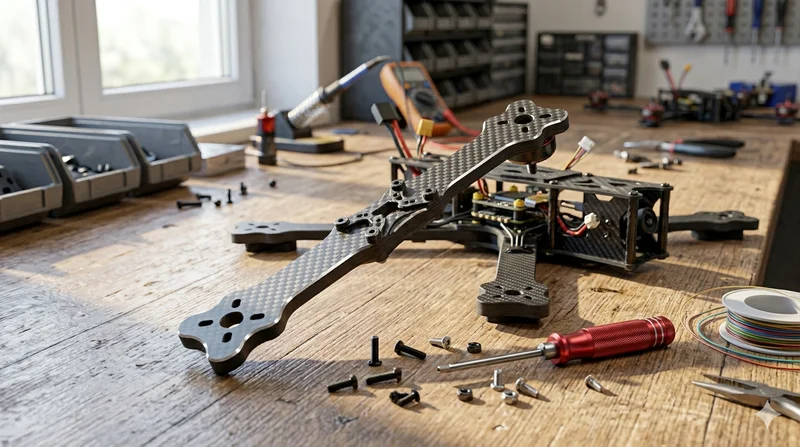
Precision-molded carbon fiber drone arm combining unidirectional fiber for stiffness and woven layers for torsional strength. Designed for FPV, photography, and industrial drone platforms. Each arm is CNC-machined to exact specifications.

Round Carbon Fiber Tube — UD Unidirectional T700
Unidirectional (UD) round tube with all fibers aligned axially for maximum longitudinal stiffness. Ideal for applications requiring high bending rigidity with minimal weight, such as shafts, struts, and structural reinforcements.