
The short answer to where is carbon fiber manufactured is that roughly three-quarters of global capacity sits in Japan, the United States, and Europe, with China expanding fastest and India building its first serious plants. The longer answer matters more to buyers, because the production map decide
Introduction
The short answer to where is carbon fiber manufactured is that roughly three-quarters of global capacity sits in Japan, the United States, and Europe, with China expanding fastest and India building its first serious plants. The longer answer matters more to buyers, because the production map decides lead times, documentation quality, and how much pricing power sits with any single mill. Understanding where carbon fiber is made — and who controls the precursor — is the difference between a stable supply chain and one that surprises you during a shortage.
This guide maps the real production geography, names the companies that matter, and explains what the map means when you need to source woven fabric, prepreg, tubes, or finished parts. Where a carbon fiber manufacturer in India fits, why China's capacity growth has not yet matched Japan's quality reputation, and how to read a "worldwide supply" claim on a supplier's website all follow from the same map.
Where Is Carbon Fiber Manufactured: The Production Map
Global carbon fiber capacity is concentrated, and the concentration is not only about spinning lines — it is about who owns the precursor, the polyacrylonitrile (PAN) feedstock that most high-quality carbon fiber is made from. The table below summarizes the main producing regions and what each one is actually known for.
| Region | Capacity share | Known for | Buyer watch-out |
|---|---|---|---|
| Japan | ~25-30% | High-grade aerospace and industrial fiber, in-house precursor | Premium pricing, long qualification cycles |
| United States | ~20-25% | Aerospace-grade tow, large continuous lines | Export controls on some grades |
| Europe | ~15-20% | Industrial grades, wind-energy supply | Energy costs feed into price |
| China | ~20-25% and rising | Fast capacity growth, competitive pricing | Grade consistency varies by plant |
| India | <5% | New entrants, growing tow and fabric | Shorter track record, fewer certified grades |
Treat the shares as directional — exact figures shift year to year as new lines commission — but the structure is stable: Japan and the US anchor the top grades, China supplies volume, and India is the newest serious entrant.
Carbon Fiber Manufacturers in the World: Who Actually Sits at the Top
When buyers shortlist carbon fiber manufacturers in the world, a handful of names keep appearing. Knowing what each one is strongest at saves weeks of misdirected inquiries.
- Japanese leaders: Toray, Teijin, and Mitsubishi Chemical control large shares of high-grade fiber and, critically, their own precursor production — the deepest moat in the industry.
- US producers: Hexcel and Solvay (formerly Cytec) anchor aerospace-grade tow and prepreg for defense and airframe programs.
- European producers: SGL Carbon and Toray's European operations supply industrial and wind-energy grades with strong technical documentation.
- Chinese producers: several large state-backed and private firms have expanded tows rapidly; the best plants now serve automotive and sporting goods, while others still chase cost leadership.
Ask any supplier which mill actually spun the lot in your hands. A trading company that cannot name the mill is describing a distribution relationship, not a manufacturing one.
Where Is Carbon Fiber Made: Precursor Is the Real Bottleneck
The honest answer to where carbon fiber is made starts one step upstream, at the PAN precursor. High-quality carbon fiber needs high-quality PAN, and the number of companies that make aerospace-grade precursor is far smaller than the number that spin carbon fiber. That imbalance explains most supply squeezes.
- Precursor control: mills that make their own precursor can hold grade through a shortage; mills that buy precursor on the open market feel every spike.
- Lead time signal: a supplier quoting four weeks when everyone else quotes twelve is usually sitting on inventory, not on capacity.
- Grade substitution risk: in a tight market, some sellers quietly swap a near-equivalent grade; lot certificates are the only reliable defense.
- Price transparency: precursor cost is a large share of fiber cost — ask how much of a quote move is precursor versus conversion.
For a buyer, the practical rule is simple: prefer suppliers who can name the mill and the precursor source, and who will show a lot certificate before payment.
Carbon Fiber Manufacturer in India: The Newest Serious Hub
India is the fastest-changing entry on the map. Government manufacturing incentives and a growing aerospace and defense sector have pushed several firms into tow and fabric production, which is why a carbon fiber manufacturer in India now appears on shortlists that would have ignored the country five years ago.
- Strengths: cost-competitive labor, growing domestic demand, and improving technical documentation on new lines.
- Gaps to check: fewer certified aerospace grades, shorter lot-traceability track records, and some dependence on imported precursor.
- Best fit: industrial structures, sporting goods, automotive components, and programs where price matters more than a long aerospace pedigree.
- Vetting step: run the same lot-certificate, storage, and trial-order checks you would apply to any new mill — the bar does not move because the region is new.
India will matter more to the map every year, but treat it as a promising second source today rather than a drop-in replacement for a qualified Japanese or US line.
Frequently Asked Questions
Where is carbon fiber made for aerospace programs specifically?
Aerospace-grade tow and prepreg still come predominantly from Japanese, US, and European mills with in-house precursor and certified quality systems. That is why airframe programs qualify a specific mill and lot, not just a fiber specification.
Has China's capacity growth changed quality rankings?
At the top end, yes — the best Chinese plants now supply automotive and sporting goods with credible documentation. Across the full market, grade consistency still varies by plant, so lot-level checks matter more than a brand name.
Should I dual-source across regions?
For series programs, yes. Qualify a primary mill for grade stability and a secondary region — China, India, or Europe — for cost and lead-time leverage, under the identical specification and the same incoming inspection.
Conclusion
Where is carbon fiber manufactured is a map of precursor control, not just spinning capacity: Japan and the US anchor the top grades, Europe supplies industrial fiber, China grows volume, and India is the newest entrant. For a buyer, the useful rule is to name the mill, verify the precursor story, and demand a lot certificate before payment — then dual-source so no single region holds your program hostage. Run the same qualification discipline regardless of which node on the map you add.
YongXian manufactures carbon fiber tubes, fabric, and custom parts with lot documentation for export programs worldwide. Review our capabilities or start the conversation with your specification.
Related Articles
- Buy Fishing Rod Carbon Fiber: Blanks and Build Quality
- Carbon Fiber Supplier in UAE: Free Zone Sourcing Guide
- Best Alibaba Carbon Fiber Supplier: A Vetting Guide for Buyers
- How to Shortlist the Best Carbon Fiber Supplier in 2026
- Carbon Fiber Supplier Selection Checklist: 12 Points Before You Sign
- Price of Carbon Fiber per KG: What Drives the Cost in 2026
Interested in Our Products?
Contact our team for competitive pricing and technical specifications.
Get a QuoteRelated Products

Round Carbon Fiber Tube — 3K Plain Weave T700
Standard round carbon fiber tube manufactured from Toray T700 grade fiber with 3K plain weave. Offers balanced strength and stiffness for general industrial applications including robotics, automation, sports equipment, and aerospace structures.
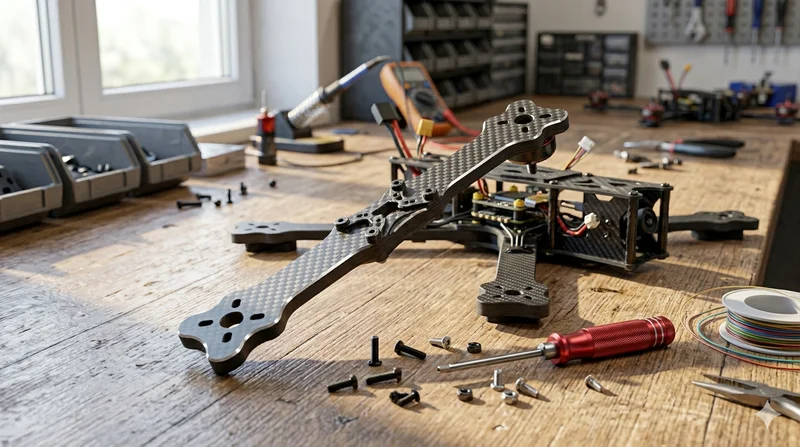
Carbon Fiber Drone Arm
Precision-molded carbon fiber drone arm combining unidirectional fiber for stiffness and woven layers for torsional strength. Designed for FPV, photography, and industrial drone platforms. Each arm is CNC-machined to exact specifications.

Carbon Fiber Pickleball Paddle
High-performance pickleball paddle with Toray T700 carbon fiber face and polypropylene honeycomb core. Delivers excellent power-to-weight ratio, spin generation, and vibration dampening for competitive play.

Square Carbon Fiber Tube — 3K Twill T700
Square cross-section carbon fiber tube manufactured with 3K twill weave for torsional strength. Preferred for structural frames, trusses, and support columns where rectangular geometry offers design flexibility.

Carbon Fiber Plate — 3K Twill T700 3.0mm
Medium-thickness 3.0mm carbon fiber plate offering significantly higher load capacity while maintaining attractive 3K twill finish. Suitable for structural brackets, reinforcement plates, and load-bearing panels.