
The price of carbon fiber per kg is the first number every buyer asks for and the number quoted most often without context. Real 2026 rates span from roughly a dozen dollars a kilogram for commodity filament to well above two hundred for aerospace-grade tow, and both extremes can be honest. This gui
Introduction
The price of carbon fiber per kg is the first number every buyer asks for and the number quoted most often without context. Real 2026 rates span from roughly a dozen dollars a kilogram for commodity filament to well above two hundred for aerospace-grade tow, and both extremes can be honest. This guide breaks the price of carbon fiber per kg into its components, so a low headline number cannot quietly turn into scrap after qualification.
You will see how the cost of carbon fiber is built from precursor to filament, how the price of carbon fibre moves with grade and order size, and how to compare the price of carbon fiber per pound against per-kilo offers without getting lost in units.
Price of Carbon Fiber per KG: Where the Number Comes From
Three layers set the price of carbon fiber per kg before anyone quotes you: the raw material chain, the processing route, and the commercial layer on top. Polyacrylonitrile precursor alone drives most of the filament cost, which is why petrochemical pricing shows up in supplier notices months later. Processing adds energy-heavy furnace stages, and on top sit grade premiums, test documentation, order volume, and the margin a trading layer adds when the mill is not the seller.
- Precursor economics: tow pricing follows petrochemical markets and Japanese supplier capacity, so expect quarterly revision notices on long contracts.
- Processing intensity: standard-modulus lines run fewer furnace stages than high-modulus production, so the same kilogram carries less conversion cost.
- Grade premium: aerospace-qualified tow with lot certification and modulus data sits far above industrial grades made on the same line family.
- Commercial layer: distributor stock, cutting service, duty and freight all land on the per-kilo number you finally pay.
Price of Carbon Fibre by Grade and Modulus
The cleanest way to read a quotation is to place it against the band matching the grade you actually need. The ranges below are indicative 2026 levels for standard commercial orders, ex-works; treat them as calibration, not as a price list.
| Grade class | Typical tensile modulus | Indicative band (USD/kg) | Typical use |
|---|---|---|---|
| Commodity PAN filament | 230-240 GPa | 12-20 | Molding compounds, rebar, pads |
| Standard modulus industrial (T300 class) | 230 GPa | 20-35 | Tubes, panels, sporting goods |
| High strength (T700 class) | 230-240 GPa | 35-60 | Pressure vessels, drone frames |
| High modulus | 350-600 GPa | 80-160 | Satellite structures, robotics |
| Aerospace qualified tow | Grade specific | 150-300+ | Certified primary structures |
A quote sitting two bands below the grade description is the classic failure mode: the invoice says T700 equivalent while the certificate says industrial. Pin the grade reference and test data to the contract, not to the sales deck.
Cost of Carbon Fiber: From Precursor to Filament
Understanding where the cost of carbon fiber accumulates explains why two visually identical tows can differ by thirty percent. The process is energy intensive and mostly fixed once a line runs, so scale and yield decide who sells cheap without selling loss-making material.
- Spinning and stabilization: precursor is drawn and oxidized into a ladder polymer, and yield losses there are baked into the base price.
- Carbonization: inert furnace stages drive off non-carbon elements; more stages raise modulus and the meter reading together.
- Surface treatment and sizing: finish chemistry determines how well the tow wets out in your resin, and an unsized bargain tow often costs more in voids later.
- Conversion to form: weaving, braiding, prepreg film and pultrusion feedstock each add their own margin before you ever see a roll.
- Yield and rejection: tight process control scraps less, the quiet reason a slightly higher per-kilo quote can still be cheaper by the finished part.
Price of Carbon Fiber per Pound versus per Kilogram
US suppliers often publish the price of carbon fiber per pound while Asian mills quote per kilogram, and the unit switch hides more than a factor of 2.2. Pound-based figures are frequently tied to one grade naming convention, while per-kilo offers may cover raw tow or tow already woven into fabric.
| Quoted unit | Convert to USD/kg | What it usually includes | Check first |
|---|---|---|---|
| USD per pound | multiply by 2.2046 | Often raw tow, freight excluded | Grade standard and lot certificate |
| USD per kilogram | base unit | Tow, fabric or finished part | Form the price refers to |
| USD per tonne | divide by 1000 | Contract volume from filament lines | Minimum order and roll size |
| Local currency per meter | convert by width | Fabric or UD tape sold by length | Fabric weight in GSM |
How to Reduce the Price of Carbon Fiber per KG Without Losing Grade
Most savings available to a mid-volume buyer come from specification discipline rather than haggling. Fix the grade reference, buy in standard forms, and consolidate sizes so the mill runs your material instead of special-casing it.
- Order standard widths and roll sizes: off-width fabric and short rolls carry scrap adders that vanish when you align to mill inventory.
- Commit volume against a schedule: quarterly call-off contracts beat spot pricing at every supplier tier.
- Specify test data, not adjectives: modulus, tensile and resin content requirements let suppliers quote the right product instead of hedging.
- Compare landed cost: freight, duty, inspection and currency movement belong in the same spreadsheet line as the headline price.
Frequently Asked Questions
Why does the price of carbon fiber per kg vary so widely between suppliers?
Grade class, order volume, form and the commercial layer all move the number. Two quotes become comparable only when grade standard, form, roll size and Incoterms are identical.
Is cheaper carbon fiber always a worse deal?
Not always. Commodity filament is the correct choice for molding and rebar where modulus is not critical. The risk appears when industrial material is sold against an aerospace grade name, because requalification and scrap absorb the saving.
How often does the cost of carbon fiber change?
Precursor-driven revisions typically arrive quarterly, with spot moves during petrochemical disruptions or capacity outages. Long-term contracts with an agreed index reduce the surprise notices you handle each year.
Conclusion
The price of carbon fiber per kg is a structured number, not a mood: precursor economics set the floor, grade and modulus set the band, and form, volume and commercial layer decide where in the band you land. Quote against grade, form and landed cost, and the cheap options sort themselves out quickly.
YongXian supplies standard and high-strength carbon fiber tow, fabric and finished parts with lot documentation for export buyers. Review our carbon fiber product range or send your specification for a per-kilo quotation.
Related Articles
- Where Is Carbon Fiber Manufactured: A Global Production Map
- Buy Fishing Rod Carbon Fiber: Blanks and Build Quality
- Carbon Fiber Supplier in UAE: Free Zone Sourcing Guide
- Best Alibaba Carbon Fiber Supplier: A Vetting Guide for Buyers
- How to Shortlist the Best Carbon Fiber Supplier in 2026
- Carbon Fiber Supplier Selection Checklist: 12 Points Before You Sign
Interested in Our Products?
Contact our team for competitive pricing and technical specifications.
Get a QuoteRelated Products

Round Carbon Fiber Tube — 3K Plain Weave T700
Standard round carbon fiber tube manufactured from Toray T700 grade fiber with 3K plain weave. Offers balanced strength and stiffness for general industrial applications including robotics, automation, sports equipment, and aerospace structures.
Carbon Fiber Drone Arm
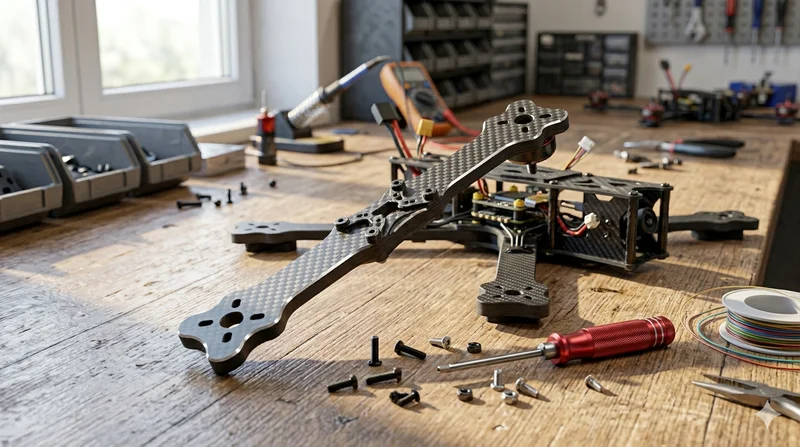
Precision-molded carbon fiber drone arm combining unidirectional fiber for stiffness and woven layers for torsional strength. Designed for FPV, photography, and industrial drone platforms. Each arm is CNC-machined to exact specifications.

Carbon Fiber Pickleball Paddle
High-performance pickleball paddle with Toray T700 carbon fiber face and polypropylene honeycomb core. Delivers excellent power-to-weight ratio, spin generation, and vibration dampening for competitive play.

Square Carbon Fiber Tube — 3K Twill T700
Square cross-section carbon fiber tube manufactured with 3K twill weave for torsional strength. Preferred for structural frames, trusses, and support columns where rectangular geometry offers design flexibility.
Carbon Fiber Plate — 3K Twill T700 3.0mm
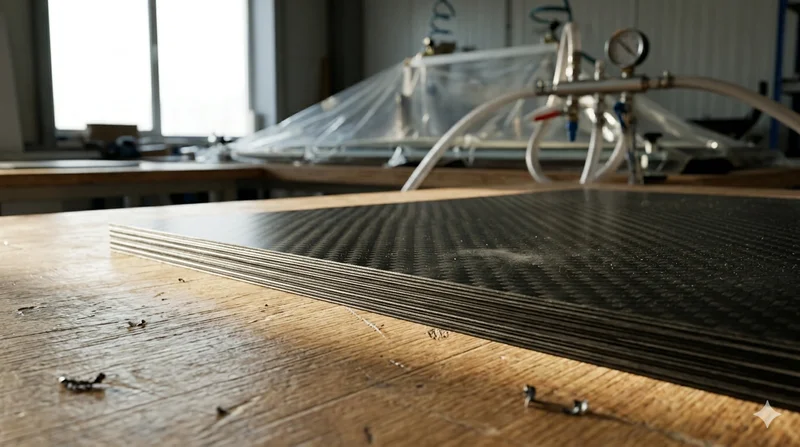
Medium-thickness 3.0mm carbon fiber plate offering significantly higher load capacity while maintaining attractive 3K twill finish. Suitable for structural brackets, reinforcement plates, and load-bearing panels.