
A custom length carbon fiber tube order fails for one of two reasons more often than any other: the cut face is not square enough for the joint design, or the tolerance band was never agreed before the saw started. Cutting tube to a buyer-specified length looks simple on a purchase order, but the pr
Introduction
A custom length carbon fiber tube order fails for one of two reasons more often than any other: the cut face is not square enough for the joint design, or the tolerance band was never agreed before the saw started. Cutting tube to a buyer-specified length looks simple on a purchase order, but the process involves blade selection, dust extraction, end-finishing, and a measurement protocol that many general machine shops never build for composites. This guide walks through the cutting methods, the tolerance bands that matter, how cut-to-length programs are priced, and how tube orders usually bundle with custom parts and plate work on the same drawing package.
You will get a method comparison table for the four common cutting approaches, the tolerance ranges to write into an RFQ, a pricing structure that separates stock tube from cut-to-length service, and a short checklist for carbon fiber tube custom programs that feed automotive and robotics assemblies.
Custom Length Carbon Fiber Tube: Cutting Methods Compared
Four cutting methods cover almost every custom length carbon fiber tube program in production today. Each one trades cut quality against setup cost and per-piece cycle time, and the right choice depends on wall thickness, diameter, and how many pieces the run actually contains.
| Cutting method | Typical tolerance | Best for | Watch-outs |
|---|---|---|---|
| Carbide-tipped cold saw | +/- 0.2 mm on length | Runs of 50 to 5,000 pieces, thin to medium walls | Blade wear on abrasive sizing; needs vacuum extraction |
| Abrasive cutoff wheel | +/- 0.5 mm | Thick-walled tubes, prototype batches | Burr and heat-affected zone at the cut face |
| Waterjet cutting | +/- 0.1 mm, clean edge | High-tolerance joints, thick walls, small batches | Higher setup cost; drying and inspection step |
| Ultrasonic cutting | +/- 0.15 mm, minimal fray | Prepreg tube, aramid hybrid layups | Equipment availability; size limits on diameter |
For most industrial buyers, the carbide cold saw at a dedicated composites shop beats a general job shop on both cost and edge quality, because the shop already owns the dust collection and the squareness fixtures that the cut depends on.
Carbon Fiber Tube Custom Cutting Tolerances
The length tolerance on a carbon fiber tube custom cut is only one of three dimensions that decide whether the part drops into the assembly. Squareness of the cut face, typically specified as perpendicularity to the tube axis, drives joint strength more than length does, because a face that is off by even a fraction of a degree concentrates load on one side of the bond line. Wall-thickness variation along the cut is a manufacturing tolerance from the tube itself, not the cutting step, and it should be verified on the mill certificate before cutting begins.
- Length: +/- 0.2 mm for structural joints, +/- 0.5 mm where the design includes a slip fit or a sleeve.
- Squareness: 0.1 mm over the tube diameter is a workable default for bonded and bolted joints; tighter for splice sleeves.
- Edge quality: no exposed fiber fray beyond 0.5 mm; de-burr and seal the cut face when the tube will be bonded.
- Batch traceability: cut pieces stay linked to the parent tube lot so a field failure can be traced back to the layup.
Custom Length Carbon Fiber Tube Pricing Structure
Cut-to-length pricing has three components: the stock tube cost, the cutting service fee, and the end-finishing fee when faces are squared, chamfered, or drilled. Stock round tubes in common diameters (10 mm to 50 mm) carry volume pricing that drops 10 to 20 percent between 100-meter and 1,000-meter parent-tube orders. The cutting fee itself is usually quoted per piece and falls steeply between prototype batches of ten and production runs above 500 pieces, because setup dominates the short runs. End finishing — squaring, chamfering, or a simple wall thinning at the joint — adds another 15 to 40 percent depending on how much material comes off.
A custom length carbon fiber tube at 300 mm from a 50 mm parent tube in a 1,000-piece run typically lands at 1.15 to 1.35 times the raw tube cost per meter, before any drilling or bonding preparation. Buyers who bundle tube cutting with plate work on the same purchase order often see the setup fee shared across both lines.
Custom Carbon Fiber Parts for Cars and Plate Programs
Tube cutting rarely stands alone on a production drawing. Automotive and motorsport programs that specify custom carbon fiber parts for cars usually include tube for ducting and reinforcement alongside carbon fiber plate custom brackets and closeouts on the same revision. Running both through one supplier keeps the material lot, the cut tolerance, and the inspection report in one package, which matters when the quality team audits the assembly later. Plate programs add their own flatness and edge-profile requirements, and the shop that already holds your tube tolerance drawings is the cheapest place to also hold the plate profile tolerance.
- Bundle the drawing package: tube lengths and plate outlines on one revision letter, one purchase order.
- Share the inspection plan: one first-article report covering both form factors is faster to approve than two parallel plans.
- Sequence the delivery: tube and plate cut in the same week arrive together for the assembly cell, reducing line-side inventory.
Ordering Checklist for Cut-to-Length Programs
Run this checklist before the saw starts. Each line removes a source of scrap or rework that otherwise surfaces at the assembly bench.
- Confirm parent tube grade and wall: match the mill certificate to the drawing before cutting begins, not after.
- State tolerance in writing: length, squareness, and edge quality on the RFQ, not in an email footnote.
- Agree the sampling plan: how many pieces per lot get measured, and at what frequency the gauge is re-checked.
- Fix the packaging method: tube ends protected, pieces separated so cut faces do not rub in transit.
Frequently Asked Questions
What length tolerance should I specify on a custom length carbon fiber tube RFQ?
For structural bonded or bolted joints, +/- 0.2 mm on length and 0.1 mm squareness over the diameter is a workable default. Where the design includes a slip fit or a sleeve, loosen length to +/- 0.5 mm and keep squareness tight.
Does carbon fiber tube custom cutting cost more than buying pre-cut stock?
Pre-cut stock in common lengths is cheaper per piece when usage matches the stock grid. Custom cutting costs more per piece on small runs because setup dominates, but the total program cost usually falls once scrap from wrong-length stock is removed from the equation.
Can tube cutting and custom carbon fiber parts for cars ship on one order?
Yes, and bundling is common on automotive programs. One purchase order covering tube lengths, plate brackets, and shared inspection reports simplifies receiving and keeps material lot traceability in a single package.
Conclusion
Custom length carbon fiber tube cutting is a three-variable problem: method choice, tolerance agreement, and pricing structure. Write length, squareness, and edge quality into the RFQ, match the parent tube certificate to the drawing before the saw starts, and bundle tube with plate work when the drawing package already spans both forms.
YongXian supplies cut-to-length carbon fiber tube, plate, and custom parts with lot documentation for automotive, robotics, and industrial programs. Review our tube and plate range or request a cut-to-length quote with tolerances itemized.
Part of topic
Related Articles
- Carbon Fiber Sheet Price in Bangladesh: Landed Cost and Sourcing Guide
- Cost of Carbon Fiber: Fiber, Fabric, and Part Cost Breakdown
- Price of Carbon Fiber per Pound: What Drives the Cost in 2026
- Carbon Fiber Plate Price Philippines: 2026 Buyer Guide
- Carbon Fiber Rod Price in Pakistan: Import Costs and Local Market
- Where Is Carbon Fiber Manufactured: A Global Production Map
Interested in Our Products?
Contact our team for competitive pricing and technical specifications.
Get a QuoteRelated Products

Round Carbon Fiber Tube — 3K Plain Weave T700
Standard round carbon fiber tube manufactured from Toray T700 grade fiber with 3K plain weave. Offers balanced strength and stiffness for general industrial applications including robotics, automation, sports equipment, and aerospace structures.

Square Carbon Fiber Tube — 3K Twill T700
Square cross-section carbon fiber tube manufactured with 3K twill weave for torsional strength. Preferred for structural frames, trusses, and support columns where rectangular geometry offers design flexibility.

Carbon Fiber Pickleball Paddle
High-performance pickleball paddle with Toray T700 carbon fiber face and polypropylene honeycomb core. Delivers excellent power-to-weight ratio, spin generation, and vibration dampening for competitive play.
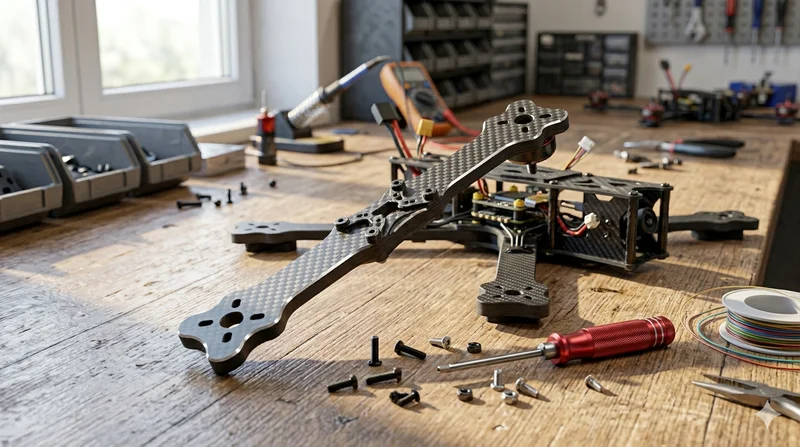
Carbon Fiber Drone Arm
Precision-molded carbon fiber drone arm combining unidirectional fiber for stiffness and woven layers for torsional strength. Designed for FPV, photography, and industrial drone platforms. Each arm is CNC-machined to exact specifications.

Round Carbon Fiber Tube — UD Unidirectional T700
Unidirectional (UD) round tube with all fibers aligned axially for maximum longitudinal stiffness. Ideal for applications requiring high bending rigidity with minimal weight, such as shafts, struts, and structural reinforcements.