
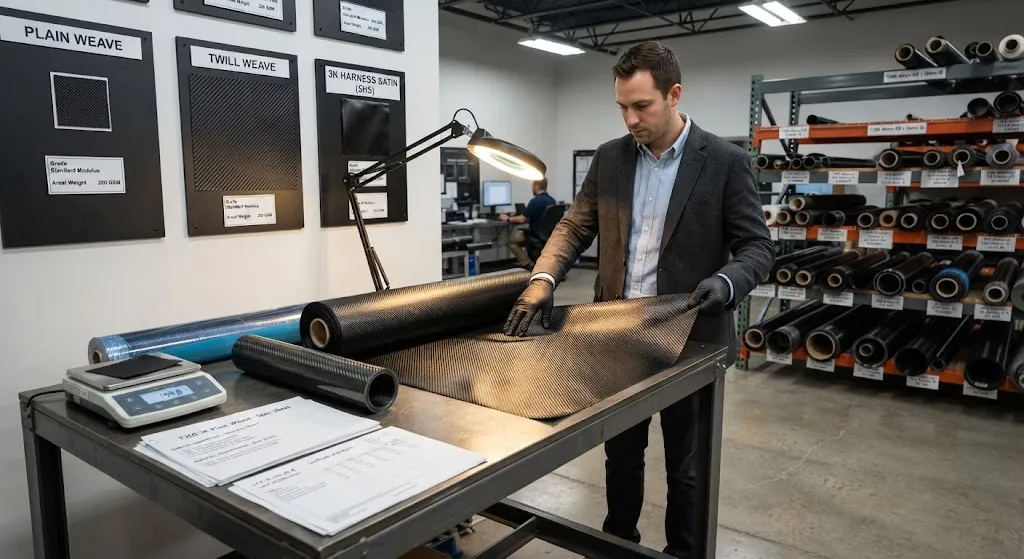
Searching "carbon fibre for sale" returns thousands of listings: full rolls of T700 fabric, offcuts of prepreg, filament wound tubes, pultruded rods, and unlabelled "carbon fibre" from sellers who cannot name the fiber grade. The quality gap between listings is enormous, and the buyer who cannot rea
Introduction
Searching "carbon fibre for sale" returns thousands of listings: full rolls of T700 fabric, offcuts of prepreg, filament wound tubes, pultruded rods, and unlabelled "carbon fibre" from sellers who cannot name the fiber grade. The quality gap between listings is enormous, and the buyer who cannot read them pays the difference. Carbon fibre for sale is not one product — it is a family of materials defined by fiber grade, tow size, areal weight, weave style, resin system, and form. A listing that omits these parameters is not cheaper; it is a gamble. This article is a practical guide to reading carbon fibre for sale listings: what the key parameters mean, how prices should scale, what lead times are realistic, and which listing phrases should send you to the next supplier.
Reading Carbon Fibre for Sale Listings: Core Parameters
Every carbon fibre for sale listing should state five parameters, and their absence is itself information. The first is fiber grade: standard-modulus fibers like T300 and T700 dominate the market, while intermediate-modulus T800 and high-modulus M-series fibers command premium prices. The second is tow size — the number of filaments per bundle — where 1K, 3K, 6K, and 12K cover most textile applications and 24K-60K tow serves industrial uses. The third is areal weight, typically 100-600 g/m² for fabrics. The fourth is weave style: plain, twill, harness satin, or unidirectional. The fifth is resin system for prepregs, including the cure temperature and out-time. The table below maps the common grades you will encounter in listings:
| Grade | Type | Tensile Strength | Tensile Modulus | Typical Use | Relative Price |
|---|---|---|---|---|---|
| T300 | Standard modulus | 3,530 MPa | 230 GPa | General purpose, sports | Base |
| T700 | Standard modulus | 4,900 MPa | 230 GPa | Structural, aerospace-adjacent | 1.2-1.5x |
| T800 | Intermediate modulus | 5,880 MPa | 294 GPa | Aerospace primary structure | 2-3x |
| M40J | High modulus | 4,400 MPa | 377 GPa | Stiffness-critical parts | 3-5x |
| M55J | High modulus | 4,020 MPa | 540 GPa | Space structures, precision | 6-10x |
As a rule of thumb, if a listing says "carbon fibre" without a grade, treat it as T300-class or unknown and price it accordingly. If it claims a specific grade, ask for the data sheet — real sellers of T700 and above can produce one instantly.
Forms, Pricing, and What "For Sale" Actually Includes
Carbon fibre for sale listings cover several distinct forms, and pricing scales differently for each. The table below gives planning ranges for common forms:
| Form | Unit | Typical Price Range | Lead Time | Watch For |
|---|---|---|---|---|
| 3K twill fabric (200 g/m²) | Per meter or roll | $25-45/m | In stock to 2 weeks | Areal weight verification |
| Unidirectional tape | Per meter or roll | $30-60/m | 2-4 weeks | Tow size and areal weight |
| Prepreg (T700, 120-180 °C cure) | Per kg | $40-90/kg | 4-8 weeks, cold chain | Out-time, expiry date |
| Raw tow (12K-48K) | Per kg | $15-40/kg | 2-6 weeks | Grade, sizing type |
| Pultruded rod/tube | Per meter | $5-60/m by size | 1-3 weeks | Fiber volume fraction |
| Filament wound tube | Per meter | $30-150/m by size | 3-8 weeks | Winding angle, pressure rating |
| Offcuts and remnants | Per kg | $10-25/kg | Immediate | Age, storage condition |
Three pricing rules hold across all forms. First, price should scale with grade — a T700 fabric at T300 prices is either a bargain or a mislabeled product, and the difference is worth a phone call. Second, volume discounts are real but bounded; a price 50% below the market range at any volume signals a quality problem, not a smart deal. Third, shipping and handling for carbon fibre is not trivial — rolls are bulky, prepreg needs cold chain, and customs paperwork adds time — so compare landed cost, not list price.
Lead Times and Stock Signals
Lead time is the parameter most often underestimated by buyers of carbon fibre for sale. In-stock items from a distributor ship in one to three days; stocked fabric and rod from a manufacturer's inventory ships in one to two weeks; production runs of fabric or prepreg take four to eight weeks; and custom winding or special grades take eight to twelve weeks. Several signals help you judge whether a seller's lead time is honest:
- Ask for current inventory: A seller who can name quantities and rolls on hand is selling from stock; one who quotes "production lead time" for everything is a broker or an out-of-stock reseller.
- Check the cold chain story: For prepreg, ask how the material is stored and shipped. Frozen storage and insulated cold-chain shipping are the difference between usable prepreg and expired material.
- Verify batch consistency: Ask whether your order will come from one batch or several. Mixed batches can mean slightly different areal weights and surface appearance.
- Ask for the material's age: Carbon fibre itself does not degrade, but prepreg and resins do. A roll of prepreg past its out-time or refrigerated shelf life is a liability regardless of price.
These four questions take five minutes and prevent the most common failure mode in carbon fibre purchasing: material that arrives on time but does not meet specification.
Red Flags in Carbon Fibre for Sale Listings
Some listing patterns should stop a buyer immediately. A listing with no fiber grade, areal weight, or weave style cannot be specified against — you would be buying an unknown. A price far below the market range usually indicates mislabeled grade, old prepreg, or factory seconds. A seller who cannot produce a data sheet for a claimed T700 or T800 grade is either reselling unknown material or misrepresenting. Stock photos of generic carbon weave, rather than photos of the actual product, hide the very details — surface finish, edge quality, roll condition — that determine whether the material is usable. And "as is" or "no returns" language in the listing shifts all risk to the buyer, which is only acceptable for true offcuts at a steep discount.
How to Verify Before You Commit
Verification converts a listing from a promise into a specification. Request a data sheet matching the exact lot number, ask for photos of the actual roll including the edge and the core, and order a small sample from the same batch before committing to volume. For structural applications, request a certificate of analysis naming the fiber grade and resin system, and if the material will carry load, consider a physical test — a tensile or flexural coupon from your own lab tells you more than any listing. These steps are routine for experienced buyers of carbon fibre for sale, and the sellers who welcome them are the ones worth keeping.
Frequently Asked Questions
What does "carbon fibre for sale" typically include in a listing?
A complete listing states fiber grade, tow size, areal weight, weave style, and resin system (for prepreg), plus form, dimensions, and price unit. In practice, many listings omit some of these. The practical rule is: the more parameters a listing states, the more likely the seller knows their material; a listing that states none should be treated as an unknown product regardless of price.
How do I compare prices across carbon fibre for sale listings?
Compare landed cost per usable unit, not list price. Convert everything to a common unit — per kg for tow and prepreg, per meter for fabric and tape, per meter for tubes and rods — then add shipping, customs, and any minimum order effect. Price should scale with grade: T700 typically costs 1.2-1.5x T300, and intermediate and high modulus grades cost 2-10x. A price far below the grade's market range signals mislabeling or expired material, not a bargain.
What is the difference between T300, T700, and T800 carbon fibre?
T300 is a standard-modulus general-purpose fiber with 3,530 MPa tensile strength; T700 is a higher-strength standard-modulus fiber at 4,900 MPa, the most common structural grade; T800 is an intermediate-modulus fiber at 5,880 MPa with 294 GPa modulus, used in aerospace primary structure. Higher grades cost more and are justified only where the strength or stiffness requirement demands them. For most ground and marine applications, T700 offers the best value.
Is it safe to buy carbon fibre offcuts and remnants?
Offcuts are safe when the seller can tell you the original grade, areal weight, and storage condition, and when the discount reflects the shorter lengths rather than unknown quality. Ask about the source roll and its age, and verify the material visually on arrival. True remnants of known material at 30-50% off are a legitimate way to prototype cheaply; unlabelled "carbon fibre" at any price is not.
Conclusion
Reading carbon fibre for sale listings is a skill that pays for itself on the first order. The five core parameters — grade, tow size, areal weight, weave, and resin system — define what you are actually buying, and their absence is a warning. Pricing should scale with grade, lead times should be verified against stock signals, and red flags like missing data sheets or far-below-market prices should end the conversation. Verification — data sheets, real photos, samples from the batch — turns any listing into a specification you can hold a supplier to.
YongXian supplies carbon fibre fabrics, prepregs, tow, tubes, and profiles with full specifications and batch documentation. Explore our carbon fibre product range or contact our sales team for a quote matched to your exact specification.
Part of topic
Related Articles
- Carbon Fiber Near Me: Why Local Sourcing Beats Cross-Border for Prototyping
- Carbon Fiber Rod Blanks: Supply Chain and Custom Cutting Services
- Carbon Fiber Tube Shop: Selecting the Right Supplier for Custom and Standard Tubes
- Carbon Fiber Sheet Price: Factors Affecting Cost per Square Meter
- Carbon Fibre Sheet Supplier UK: Sourcing Options and Specification Checklist
- Carbon Fiber Sheets Near Me Suppliers: Local Stock vs Factory Direct
Interested in Our Products?
Contact our team for competitive pricing and technical specifications.
Get a QuoteRelated Products
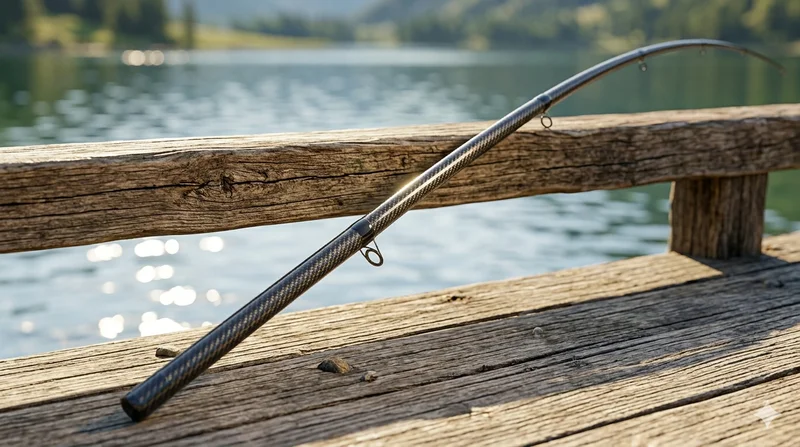
Carbon Fiber Fishing Rod Blank
High-quality carbon fiber fishing rod blank manufactured from multiple grades of Toray carbon fiber cloth. Available in a wide range of lengths, powers, and actions for freshwater and saltwater applications. Suitable for OEM rod building.

Carbon Fiber Plate — 3K Twill T700 3.0mm
Medium-thickness 3.0mm carbon fiber plate offering significantly higher load capacity while maintaining attractive 3K twill finish. Suitable for structural brackets, reinforcement plates, and load-bearing panels.

Carbon Fiber Plate — 3K Twill T700 1.5mm
Thin 1.5mm carbon fiber plate with 3K twill weave surface. Lightweight and stiff, commonly used for covers, panels, drone bodies, and applications requiring a premium aesthetic appearance.

Square Carbon Fiber Tube — 3K Twill T700
Square cross-section carbon fiber tube manufactured with 3K twill weave for torsional strength. Preferred for structural frames, trusses, and support columns where rectangular geometry offers design flexibility.

Carbon Fiber Trekking Pole
Lightweight carbon fiber trekking pole manufactured from high-grade carbon fiber tube. Weighs only 160g per pole while providing superior shock absorption and durability for hiking, trail running, and backpacking.