
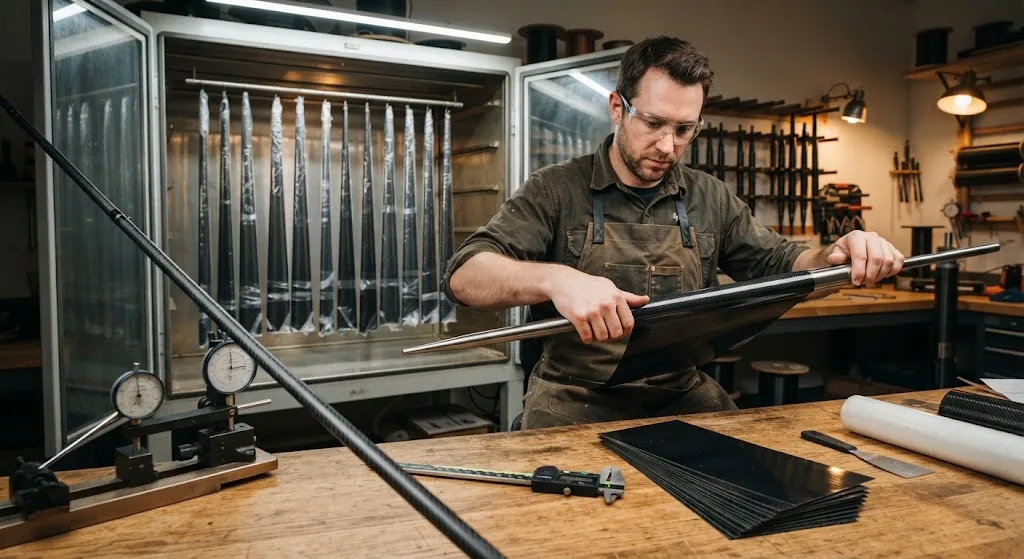
Carbon fiber fishing rod blanks are a quiet engineering success story. Every year manufacturers convert hundreds of tonnes of high-modulus carbon tow into hollow tapered shafts that must cast a lure fifty meters with pinpoint accuracy, transmit a bite through 120 millimeters of grip, an
Introduction
Carbon fiber fishing rod blanks are a quiet engineering success story. Every year manufacturers convert hundreds of tonnes of high-modulus carbon tow into hollow tapered shafts that must cast a lure fifty meters with pinpoint accuracy, transmit a bite through 120 millimeters of grip, and flex through a fighting curve that would snap most structural composites. The carbon fiber rod blank achieves all three because it is a precision composite structure: the fiber orientation, the taper along the mandrel, and the resin content are engineered together to create a specific action profile before a single ring or reel seat is attached.
For a B2B buyer — an OEM blank buyer, a custom rod builder, or a distributor sourcing finished rods — the blank is the product. Everything downstream is hardware. This article breaks down how carbon fiber rod blanks are built, how layup and modulus choices create measurable action differences, and what separates a premium blank from a commodity one.
How Rod Blanks Are Built
Rod blanks are almost always produced on a tapered steel mandrel. Carbon fiber is applied to the mandrel in one of two principal routes, and the route determines cost and performance ceiling:
- Rolled sheet (prepreg) construction: Unidirectional carbon prepreg sheets are cut to pattern, wrapped around the mandrel at engineered angles, and consolidated with a heat-shrink tape before oven curing. This is the standard for premium blanks because the fiber angle of each layer is controlled precisely.
- Towel or filament winding: Carbon tow is wound continuously around the rotating mandrel, usually combining longitudinal strands with helical bias reinforcement. It is faster and cheaper, but the fiber architecture is less controllable, which limits how finely the action can be tuned.
The finished blank is a hollow tube. Wall thickness ranges from roughly 0.8 mm in a light spinning blank to more than 3 mm in a heavy boat rod, and the taper — the reduction in diameter from butt to tip — is engineered on the mandrel itself. The blank is then trimmed, the tip is fitted, and guides, reel seats and grips are added only after the blank passes flex testing.
Layup Architecture and Modulus Selection
The mechanical identity of a blank is set by three variables: fiber modulus, layer orientation, and the ratio of longitudinal to hoop reinforcement. Longitudinal (0°) fibers carry the bending loads and define stiffness; ±45° bias layers add torsional stability and prevent ovalization under load; and hoop layers control the crush resistance around the reel seat and keep the wall from buckling in the thin tip sections.
Modulus selection is where premium tuning really lives. Standard modulus fibers (230 GPa, the T700 class) are the workhorse: they bend deeply, resist fatigue, and cost the least. Intermediate and high modulus fibers (294 GPa and above, the T800 and M-series classes) make the blank stiffer for the same wall thickness, which translates into faster recovery, longer casts and sharper bite transmission — but they are more brittle and dramatically more expensive. The table below summarizes the trade-offs available to an OEM blank designer:
| Fiber class | Tensile modulus | Typical tensile strength | Relative cost | Best suited for |
|---|---|---|---|---|
| Standard modulus (T700 class) | ~230 GPa | ~4,900 MPa | 1.0x | General spinning and casting blanks, surge rods, entry-to-mid range |
| Intermediate modulus (T800 class) | ~294 GPa | ~5,880 MPa | 2-3x | Mid-range performance, fast action tapers, longer casting blanks |
| High modulus (M-series class) | 395-440 GPa | ~4,100-4,700 MPa | 4-8x | Premium tuning, micro-guide and light-lure rod tips, high sensitivity |
| Nano-alloyed / fiber-hybrid blends | Mixed 230-440 GPa | Depends on blend | 3-6x | Flagship blanks balancing strength, weight and recovery |
Premium blank builders rarely use one modulus for the whole blank. A common pattern is a standard-modulus core with an intermediate-modulus outer layer, or high-modulus tip sections tapered into a more forgiving butt. This staged architecture is what allows a blank to feel crisp at the tip for bite detection yet forgiving in the butt for fighting large fish without breakage.
Action Profiles and the Taper Equation
The action of a rod — fast, moderate, or slow — is essentially the shape of its bending curve under load, and that shape is written by the mandrel taper. A fast-action blank concentrates flex in the upper third of the blank; a slow-action blank bends progressively through the whole length. The taper controls this mechanically: a quicker diameter reduction concentrates strain toward the tip, while a gentler, more progressive taper spreads strain along the length.
Two parameters dominate OEM specification sheets. The first is power — how much line weight and lure weight the blank is rated for — which is governed by wall thickness and modulus. The second is the action rating, which is frequently measured through a deflection test: the blank is clamped horizontally, a load is applied at the tip, and the flex point along the blank is recorded. Repeatable taper control on the mandrel is what lets a factory deliver a consistent action from blank to blank, and this consistency is the core value proposition of a serious blank supplier.
Action engineering has real mechanical consequences, not just marketing ones. A fast blank loads up faster and casts farther with a lure it suits, but it can break on a hard hook-set against a heavy fish because strain is concentrated. A slow blank is more forgiving and handles braided line with less shock, but it dampens bite feedback. The premium blank design skill is steering between these extremes with fiber placement rather than just rod length.
Premium Tuning: What the Extra Money Buys
Once power and action are fixed, premium blanks differentiate themselves in finer details:
- Tip sensitivity: High-modulus tip sections transmit micro-vibrations more directly, which matters for techniques like drop-shotting and finesse fishing where the strike is a vibration rather than a pull.
- Weight distribution: Premium blanks use the thinnest possible wall that meets strength targets, moving the balance point toward the butt. This is the "no-tip-heaviness" feel anglers pay for in a flagship rod.
- Strain-controlled layup: Advanced builders move fiber placement layer by layer, varying angles along the blank length so the flex curve stays smooth with no hard stress concentration points.
- Quality consistency: The real premium is statistical: consistent action from serial to serial, verified flex curves, and documented modulus and resin data for every batch.
None of these features appear in a catalog photo. They are measured on the flex bench and in the hand, which is why serious buyers demand sample testing and documented layup data rather than catalog claims.
Sourcing Considerations for OEM Buyers
For a buyer evaluating carbon fiber rod blank suppliers, the practical checklist is straightforward. Ask for the modulus and areal weight of the fiber used, the resin system and its glass transition temperature, and the mandrel tolerance that controls taper repeatability. Require a flex-curve chart for every requested action, not just a "fast" or "medium" label. Finally, negotiate around the trade-off that defines the whole segment: modulus upgrade and weight reduction cost real money, so the specification should be driven by target action and durability, not by marketing modulus numbers alone.
Frequently Asked Questions
What is the difference between power and action in a carbon fiber rod blank?
Power describes the line and lure weight range a blank is designed to handle, and it is set mainly by wall thickness and fiber modulus. Action describes where and how the blank bends under load — fast, moderate or slow — and it is set mainly by the mandrel taper and the longitudinal-to-bias fiber ratio. A single power rating (say, medium-heavy) can be produced in several actions, and the two specifications must be considered together when matching a blank to a fishing technique.
Why do premium blanks use high-modulus carbon fiber if it is more brittle?
High-modulus fiber makes the blank stiffer and lighter for the same strength envelope, which produces faster recovery, longer casts and much sharper bite transmission — the qualities that define a flagship rod. The brittleness is managed with layered construction: standard and intermediate modulus fiber carries the bulk of the structural load while the high-modulus material is reserved for tip and outer sections where its stiffness contribution is most valuable. This staged architecture is precisely what premium blank engineering is about.
How do I verify the claimed action and modulus of a rod blank before buying in volume?
Request a deflection-based flex curve for every action profile you order, and compare it across batches. Check the fiber specification — modulus class, tow count and areal weight — as well as the resin data sheet and cure temperature. Where possible, physically flex a sample against a reference blank from a known manufacturer. The measurable differences between a premium and a commodity blank appear reliably in flex-curve repeatability and in documented layup data, not in catalog wording.
Conclusion
Carbon fiber rod blanks prove that subtle composite engineering translates directly into a measurable, sellable product experience. Layup architecture, taper engineering and modulus staging combine to produce the action profiles that casting accuracy, sensitivity and fighting power all depend on, and the difference between a commodity blank and a premium blank is entirely written into the fiber schedule and its repeatability. For buyers, the discipline is the same as in any advanced composite purchase: demand documented fiber data, measured flex curves, and batch-to-batch consistency.
At YongXian we supply carbon fiber materials and engineering support for rod blank manufacturers, from standard modulus tow for high-volume blanks to intermediate and high modulus fibers for premium tuning programs. Explore our carbon fiber product range or contact our sales engineers to discuss modulus selection and layup support for your blank production line.
Part of topic
Related Articles
- Carbon Fiber Mooring for Floating Offshore Wind: Fatigue and Corrosion in Deep Water
- Carbon Fiber Bicycle Frame Optimization: Layup Design and Manufacturing for Competitive Racing
- Carbon Fiber CFRP Retrofit for Infrastructure: Bridge and Building Seismic Strengthening
- Carbon Fiber Medical Imaging Equipment: Lightweight Gantry and Couch Structures for MRI/CT
- Carbon Fiber EV Battery Enclosures: Crash Safety and Electromagnetic Shielding Design
- Carbon Fiber Structures for Low-Altitude Economy: UAV Airframes and eVTOL Components
Interested in Our Products?
Contact our team for competitive pricing and technical specifications.
Get a QuoteRelated Products

Carbon Fiber Plate — 3K Twill T700 3.0mm
Medium-thickness 3.0mm carbon fiber plate offering significantly higher load capacity while maintaining attractive 3K twill finish. Suitable for structural brackets, reinforcement plates, and load-bearing panels.

Carbon Fiber Plate — 3K Twill T700 1.5mm
Thin 1.5mm carbon fiber plate with 3K twill weave surface. Lightweight and stiff, commonly used for covers, panels, drone bodies, and applications requiring a premium aesthetic appearance.

Square Carbon Fiber Tube — 3K Twill T700
Square cross-section carbon fiber tube manufactured with 3K twill weave for torsional strength. Preferred for structural frames, trusses, and support columns where rectangular geometry offers design flexibility.
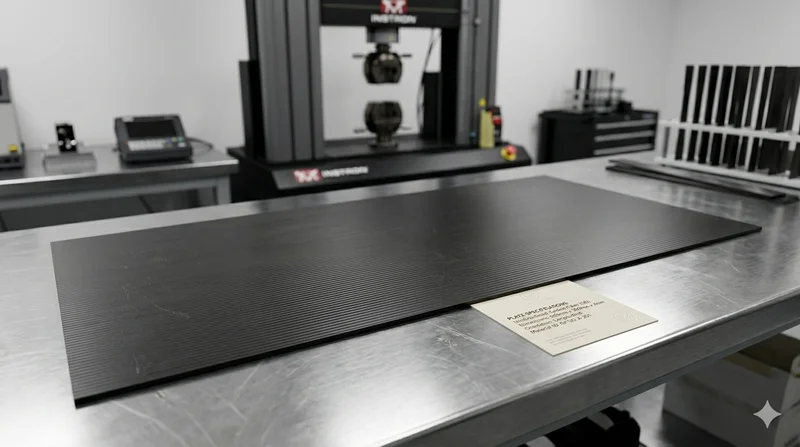
Carbon Fiber Plate — UD Unidirectional T700
Unidirectional carbon fiber plate with all fibers oriented in a single direction for maximum strength along the fiber axis. Essential for structural reinforcements, splints, and applications where load direction is predictable.
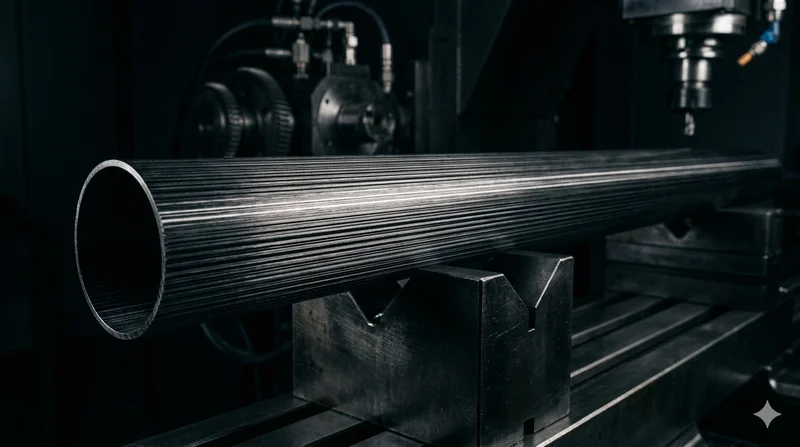
Round Carbon Fiber Tube — UD Unidirectional T700
Unidirectional (UD) round tube with all fibers aligned axially for maximum longitudinal stiffness. Ideal for applications requiring high bending rigidity with minimal weight, such as shafts, struts, and structural reinforcements.