
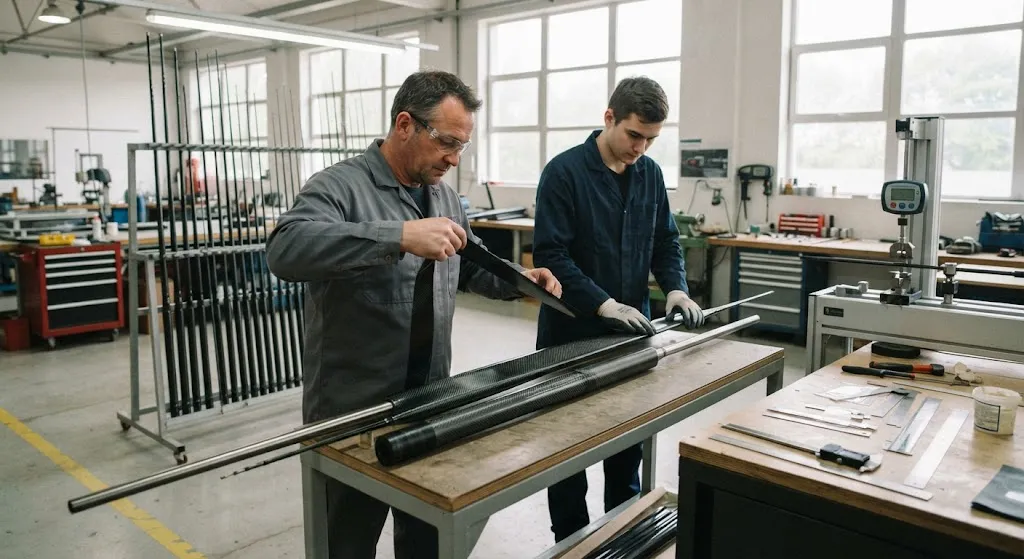
Carbon fiber fishing rod action design determines how a rod bends, recovers, and transmits feel to the angler — and it is a genuine engineering discipline rather than a matter of luck. The action of a rod, described loosely as fast, moderate, or slow, is the product of three controllabl
Introduction
Carbon fiber fishing rod action design determines how a rod bends, recovers, and transmits feel to the angler — and it is a genuine engineering discipline rather than a matter of luck. The action of a rod, described loosely as fast, moderate, or slow, is the product of three controllable variables: the distribution of fiber modulus along the blank, the wall thickness profile down the length, and the taper schedule built into the mandrel. Change any of these and the same carbon fiber material produces an entirely different fishing experience.
For brands and OEMs that source fishing rods, understanding how action is engineered matters twice: it decides whether a rod performs as promised on the water, and it determines whether a factory can reproduce the action consistently batch after batch. This article breaks down the two most powerful levers — modulus grading and wall thickness tuning — and shows how they combine with taper scheduling to hit a target action curve.
Action versus Power: The Two Axes of Rod Design
Before examining materials, it is essential to separate action from power, because the two terms are frequently conflated and they are controlled by different design decisions. Power describes the rod's lifting capacity — the lure or line weight range it handles — and is set mainly by the overall stiffness of the blank, which scales with diameter, wall thickness, and the fibers used. A bass casting rod and a deep-sea jigging rod may both be classified as fast action, yet their power ratings are entirely different.
Action, by contrast, describes where along the blank the bend occurs. A fast action rod bends mostly in the upper third, loading deeply near the tip; a moderate action rod distributes the bend further down the blank; a slow action rod bends progressively into the lower sections, often imparting a visible full-curve flex. Action is fundamentally a stiffness gradient problem: the designer controls how stiffness decreases from butt to tip to place the bend where it is wanted.
Modulus Grading: Building the Stiffness Gradient
The primary tool for creating an action is fiber modulus grading. Carbon fiber is available in a spectrum of tensile moduli, from standard modulus around 230 GPa to intermediate modulus in the 290-300 GPa range and high modulus fibers above 390 GPa. Layering these grades along the blank creates a smooth stiffness gradient that no single fiber can produce. The table below summarizes how modulus grade selection affects rod behavior:
| Fiber Grade | Tensile Modulus | Typical Effect on Rod | Common Position in Blank |
|---|---|---|---|
| Standard modulus (T300 class) | 230 GPa | Soft, forgiving bend, high strain to failure | Tip sections, slow action rods |
| Intermediate modulus (T700-T800 class) | 235-295 GPa | Balanced power and recovery, good feel | Mid sections, all-round rods |
| High modulus (M40-M46 class) | 377-460 GPa | Stiff, quick recovery, precise tip control | Butt and lower mid, fast action rods |
| Ultra-high modulus (M50+ class) | 490 GPa and above | Maximum stiffness, reduced damping | Premium fast action blanks |
The recipe is rarely a single grade. A typical fast action surf rod might run: high modulus fibers in the lower blank for lifting power and fast recovery, an intermediate modulus transition zone, and a standard or intermediate tip that stores energy and protects the line during the cast. Because high modulus fibers are stiffer but more brittle, the designer balances modulus against impact resistance — a rod that is too stiff in the wrong zone snaps on a hookset instead of loading.
Wall Thickness Tuning: Controlling Bending Stiffness Precisely
Modulus grades set the material stiffness, but wall thickness tuning adjusts the geometric stiffness — and it is the finer of the two levers. Bending stiffness of a tubular blank scales with the wall thickness in a nonlinear way: doubling the wall thickness increases the bending stiffness by roughly eight times for a given diameter. This strong sensitivity means that small, controlled changes in the number of layers — or in the width of a tapered wrap — produce precise adjustments to where and how the blank bends.
Manufacturers exploit this in two directions. Reducing layers toward the tip progressively softens the upper blank, moving the bend point upward for a fast action; adding reinforcing layers at the butt stiffens the lower third for lifting power. The taper of the mandrel performs a related function on diameter: a steep taper concentrates material at the butt and produces a progressive, deeper bending curve, while a gentle taper keeps the blank more uniform and shifts bending toward a fast, tip-dominated action.
Wall thickness tuning directly serves consistency targets in production. Because blanks are built from prepreg sheets cut to programmed width patterns, the thickness profile is defined by the cutting program rather than by human judgment. Reproducing the same width schedule layer by layer is what lets a factory deliver the same action from one production run to the next — the subject of the next section.
Taper Schedule and Layup Design in Practice
Putting action theory into production is a matter of layup design. The blank is wound or rolled from prepreg sheets onto a tapered steel mandrel; each sheet has a defined fiber orientation, a defined width at each station along the mandrel, and a defined modulus grade. The layup schedule — the stack of sheets and their width patterns — is the executable specification of the action curve, and it is typically developed through an iterative loop:
- Design the target action curve: Define bending deflection and recovery rate at several load points on the blank.
- Select the modulus gradient: Assign fiber grades to butt, mid, and tip zones from the available prepreg range.
- Build the width pattern: Program each layer's width profile so the combined wall thickness produces the required stiffness distribution.
- Prototype and measure: Roll sample blanks, cure them, and measure actual deflection against the target curve.
- Iterate: Adjust layer widths or grades and re-measure until the action curve matches within tolerance.
Measurement is the loop that closes the design. Production rods are checked on a deflection bench where a fixed load is applied at a fixed point and the bend curve recorded; the result is compared against the master curve either numerically or against an overlay template. Since modulus and wall thickness both shift with normal manufacturing variation, the factory holds the width schedule constant and monitors the deflection check as its statistical fingerprint of the action.
Production Consistency: What Brands Should Audit
When an OEM outsources rod production, the ability to hold action tolerances is a supply chain capability, not a given. Two metrics tell most of the story. The first is deflection scatter: mould a batch of blanks, measure the tip deflection under the standard load, and compare the coefficient of variation across pieces; a well-controlled line holds it under roughly 5 percent. The second is wall thickness consistency after cure, checked by weighing blanks or by ultrasonic measurement of tube wall at marked stations.
Weight is a convenient proxy that deserves attention in its own right. Carbon fiber rods are bought partly for lightness, and blank weight correlates with the amount of material placed and its modulus. A manufacturer that consistently hits the specified blank weight, deflection, and balance point is almost certainly holding both the modulus gradient and wall thickness profile — the two levers this article describes.
Frequently Asked Questions
How does fiber modulus affect fishing rod action?
Higher modulus fibers make the blank stiffer and quicker to recover, so they push the bend toward the tip and produce a faster, more precise action. Lower modulus fibers flex more per unit of force and store energy deeper along the blank, producing softer, slower, more forgiving actions. Rods divide modulus grades across the blank — high modulus at the butt for lifting power, lower modulus toward the tip — to create the stiffness gradient that defines the action curve.
What is the difference between rod action and rod power?
Power is the rod's lifting capacity, usually expressed as the recommended lure or line weight range; it is set mainly by the overall stiffness of the blank. Action is where and how the rod bends along its length: fast action bends mostly in the upper third, moderate action in the upper half, and slow action progressively toward the butt. Two rods of identical power can have completely different actions, and vice versa, because the two properties are controlled by different aspects of the design.
Can a factory reproduce the same rod action reliably across production batches?
Yes, if the action is engineered rather than improvised. Reliable reproduction requires a documented layup schedule (layer stack, width patterns, and fiber grades), controlled prepreg storage and material lot tracking, and an in-process deflection check on cured blanks against a master curve. Blanks manufactured from the same width pattern and modulus schedule with stable raw materials will show a coefficient of variation in deflection below about 5 percent, which anglers perceive as identical action.
Conclusion
Carbon fiber fishing rod action design is a balance of modulus grading, wall thickness tuning, and taper scheduling — three levers an engineer turns to place the bend exactly where the action curve demands. Brands that understand these levers can specify a target action precisely, evaluate supplier capabilities by deflection and weight data rather than by sample feel, and hold their product consistent from batch to batch. The same discipline that produces a premium fast action rod also controls cost, because material grades and layer counts are specified rather than guessed.
YongXian supplies carbon fiber fabrics, unidirectional tapes, and tailored prepreg systems for fishing rod blanks and sporting goods manufacturers. Explore our carbon fiber product range or contact our engineering team to discuss fiber grades and prepreg formats for your rod program.
Part of topic
Related Articles
- Carbon Fiber Mooring for Floating Offshore Wind: Fatigue and Corrosion in Deep Water
- Carbon Fiber Bicycle Frame Optimization: Layup Design and Manufacturing for Competitive Racing
- Carbon Fiber CFRP Retrofit for Infrastructure: Bridge and Building Seismic Strengthening
- Carbon Fiber Medical Imaging Equipment: Lightweight Gantry and Couch Structures for MRI/CT
- Carbon Fiber EV Battery Enclosures: Crash Safety and Electromagnetic Shielding Design
- Carbon Fiber Structures for Low-Altitude Economy: UAV Airframes and eVTOL Components
Interested in Our Products?
Contact our team for competitive pricing and technical specifications.
Get a QuoteRelated Products

Carbon Fiber Plate — 3K Twill T700 3.0mm
Medium-thickness 3.0mm carbon fiber plate offering significantly higher load capacity while maintaining attractive 3K twill finish. Suitable for structural brackets, reinforcement plates, and load-bearing panels.

Carbon Fiber Plate — 3K Twill T700 1.5mm
Thin 1.5mm carbon fiber plate with 3K twill weave surface. Lightweight and stiff, commonly used for covers, panels, drone bodies, and applications requiring a premium aesthetic appearance.

Square Carbon Fiber Tube — 3K Twill T700
Square cross-section carbon fiber tube manufactured with 3K twill weave for torsional strength. Preferred for structural frames, trusses, and support columns where rectangular geometry offers design flexibility.
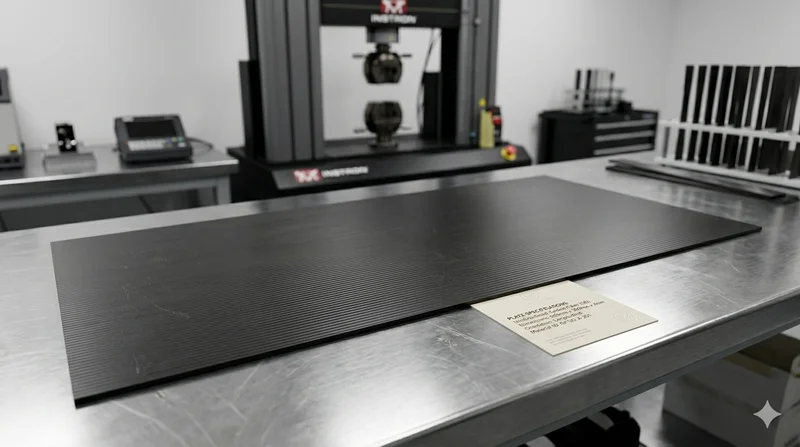
Carbon Fiber Plate — UD Unidirectional T700
Unidirectional carbon fiber plate with all fibers oriented in a single direction for maximum strength along the fiber axis. Essential for structural reinforcements, splints, and applications where load direction is predictable.
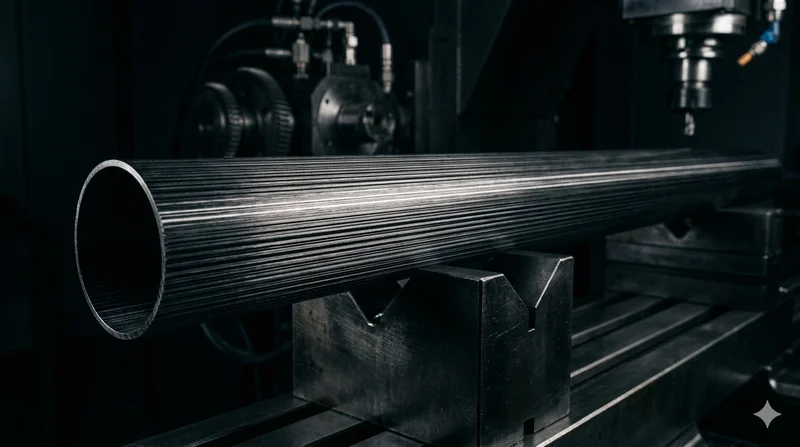
Round Carbon Fiber Tube — UD Unidirectional T700
Unidirectional (UD) round tube with all fibers aligned axially for maximum longitudinal stiffness. Ideal for applications requiring high bending rigidity with minimal weight, such as shafts, struts, and structural reinforcements.