
As electromagnetic spectrum utilization intensifies with 5G deployment, IoT proliferation, and higher-frequency wireless communications, electromagnetic interference (EMI) has become one of the most pressing design challenges for electronic equipment manufacturers. EMI can cause malfunction, data co
Introduction
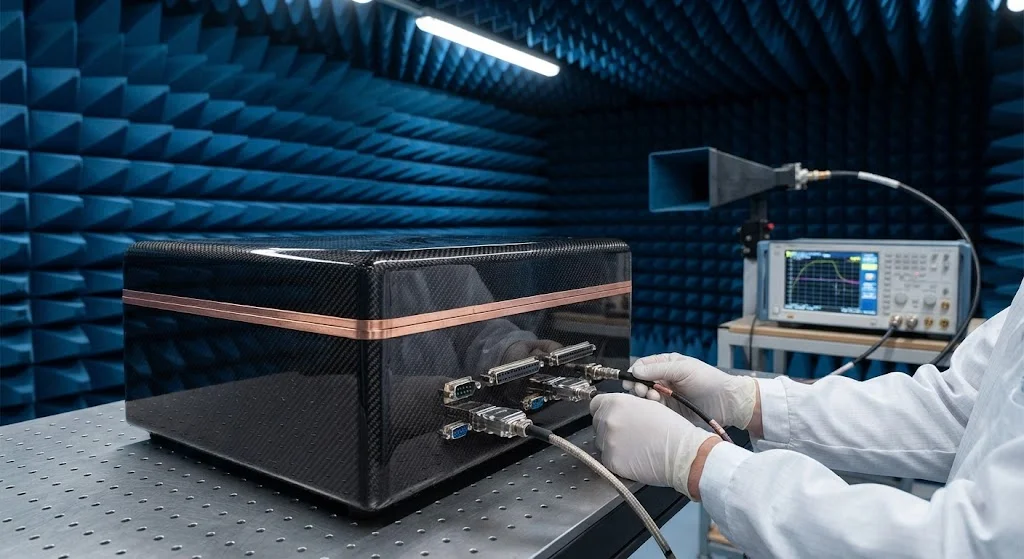
As electromagnetic spectrum utilization intensifies with 5G deployment, IoT proliferation, and higher-frequency wireless communications, electromagnetic interference (EMI) has become one of the most pressing design challenges for electronic equipment manufacturers. EMI can cause malfunction, data corruption, and safety hazards in sensitive electronic systems ranging from medical devices to autonomous vehicles. Shielding effectiveness — the ability of an enclosure or material to attenuate electromagnetic fields — is therefore a critical performance metric.
Traditional EMI shielding relies on metallic enclosures made from aluminum, steel, or copper, or on secondary conductive coatings applied to non-conductive housings. These solutions are effective but add weight, increase assembly complexity, and may create corrosion or thermal management challenges. Carbon fiber reinforced polymers (CFRPs) present an alternative that combines inherent structural load-bearing capability with EMI shielding effectiveness of 40-60 dB across key frequency bands — sufficient for most commercial and industrial applications. For 5G base station enclosures, satellite electronics housings, and aerospace avionics bays, carbon fiber EMI shielding offers a weight reduction of 30-50% compared with equivalent aluminum enclosures while meeting stringent shielding requirements. This article examines the physics, performance data, and design principles of carbon fiber electromagnetic interference shielding.
EMI Shielding Mechanisms in Carbon Fiber Composites
Carbon fiber composites attenuate electromagnetic radiation through three primary mechanisms, each contributing to the total shielding effectiveness:
- Reflection loss: The conductive carbon fibers reflect a portion of the incident electromagnetic wave at the material surface. Carbon fiber composites with fiber volume fractions of 50-60% exhibit surface resistivity of 0.5-5 Ω/sq, providing initial reflection attenuation of 15-25 dB. Higher conductivity — achieved through pitch-based carbon fibers or surface metallization — increases reflection losses.
- Absorption loss: Electromagnetic energy that penetrates the surface is absorbed through ohmic losses as eddy currents flow in the conductive fiber network. Absorption increases with material thickness and conductivity, following an exponential decay characterized by the skin depth. For typical CFRP at 1 GHz, the skin depth is approximately 2-3 mm, meaning a 3-4 mm thick laminate provides 20-30 dB of absorption loss.
- Multiple internal reflections: In multilayer composites, electromagnetic waves reflect multiple times between conductive fiber layers and the matrix interfaces, further dissipating energy. This mechanism is particularly effective in woven carbon fiber fabrics where the interlaced fiber bundles create numerous internal interfaces.
The total shielding effectiveness (SE) is the sum of these three mechanisms: SE_total = SE_reflection + SE_absorption + SE_multiple_reflections. The relative contribution of each mechanism depends on frequency, material thickness, fiber architecture, and matrix conductivity.
Shielding Effectiveness Across Frequency Ranges
Carbon fiber composite shielding effectiveness varies with frequency, material construction, and test method. The table below summarizes representative data for standard CFRP laminates measured according to ASTM D4935 or MIL-STD-285:
| Frequency Band | Frequency Range | CFRP SE (2 mm) | CFRP SE (4 mm) | Aluminum (1 mm) | Copper Foil (0.1 mm) |
|---|---|---|---|---|---|
| Low frequency | 30-200 MHz | 35-45 dB | 50-60 dB | 60-70 dB | 70-80 dB |
| VHF/UHF | 200 MHz-1 GHz | 40-50 dB | 55-65 dB | 65-75 dB | 75-85 dB |
| 5G Sub-6 GHz | 1-6 GHz | 45-55 dB | 55-70 dB | 70-80 dB | 80-90 dB |
| 5G mmWave | 24-40 GHz | 50-60 dB | 60-75 dB | 75-85 dB | 85-95 dB |
| Wi-Fi 6E | 6 GHz | 45-55 dB | 55-70 dB | 70-80 dB | 80-90 dB |
A 4 mm thick carbon fiber laminate achieves 55-70 dB shielding effectiveness across the 5G sub-6 GHz band, meeting the 40 dB minimum typically required for commercial electronic enclosures and the 60 dB target for military applications. The frequency-dependent increase in shielding effectiveness is advantageous for 5G applications, where higher frequencies are inherently easier to shield due to shorter wavelengths and higher absorption losses.
Design Guidelines for 5G and Aerospace Enclosures
Designing carbon fiber EMI shielding enclosures requires attention to several factors beyond material selection:
- Seam and joint design: Gaps, seams, and joints in the enclosure are the primary paths for electromagnetic leakage. Conductive gaskets, finger-stock contacts, or conductive adhesives must bridge all mechanical joints. A gap of 1 mm at 5 GHz can reduce shielding effectiveness by 20-30 dB.
- Penetration management: Cable entries, connectors, and ventilation openings require waveguide-below-cutoff filters, conductive honeycomb vents, or filtered connectors to maintain shielding integrity. A circular aperture with diameter less than λ/20 provides natural attenuation.
- Fiber orientation and layup: Unidirectional carbon fiber provides anisotropic shielding — effective in the fiber direction but weaker transverse to fibers. Woven fabrics or cross-ply layups provide more isotropic shielding. A quasi-isotropic [0/±45/90] layup achieves 5-10 dB higher SE than a unidirectional laminate of the same thickness.
- Surface treatments: Conductive surface coatings — nickel-graphite spray, copper electroless plating, or silver-filled paint — can boost shielding effectiveness by 5-15 dB for applications requiring >70 dB SE. These treatments also improve surface conductivity for grounding.
For 5G base station antenna enclosures, carbon fiber panels with embedded metallic mesh or expanded copper foil achieve 60-75 dB SE while providing the structural rigidity needed for outdoor exposure and wind loading. The weight reduction of 40-50% compared with aluminum enclosures simplifies tower mounting and reduces structural load requirements.
Carbon Fiber vs Traditional Metal Shielding
The choice between carbon fiber and metal shielding depends on the balance between shielding performance, weight, cost, and structural requirements:
- Weight: Carbon fiber enclosures weigh 40-60% less than equivalent aluminum enclosures, making them preferred for portable equipment, aerospace, and weight-sensitive applications.
- Structural integration: CFRP enclosures serve dual functions as structural load-bearing members and EMI shields, eliminating the need for separate mechanical and shielding structures.
- Corrosion resistance: Carbon fiber composites do not corrode, unlike aluminum and steel enclosures that require surface treatment or paint for outdoor environments.
- Cost: Carbon fiber enclosures have higher material and tooling costs than stamped aluminum, but total system cost may be lower when structural and shielding functions are combined and weight savings are valued.
- Shielding level: For extreme shielding requirements (>80 dB), copper or mu-metal enclosures remain superior. Carbon fiber excels in the 40-70 dB range that covers most commercial applications.
Frequently Asked Questions
What shielding effectiveness does carbon fiber achieve for 5G applications?
A 4 mm thick carbon fiber laminate achieves 55-70 dB shielding effectiveness across the 5G sub-6 GHz frequency band (1-6 GHz), meeting the 40 dB minimum required for most commercial electronic enclosures. For 5G mmWave frequencies (24-40 GHz), shielding effectiveness increases to 60-75 dB due to higher absorption losses at shorter wavelengths. With conductive surface coatings, shielding effectiveness can be boosted to 70-85 dB for demanding military and aerospace applications.
How do seams and joints affect carbon fiber EMI shielding?
Seams and joints are the primary paths for electromagnetic leakage in any shielding enclosure, including carbon fiber. A 1 mm gap at 5 GHz can reduce shielding effectiveness by 20-30 dB. Design solutions include conductive gaskets (silicone or fluorosilicone loaded with silver, nickel, or aluminum particles), finger-stock metal contacts at removable panels, and conductive adhesives for permanent joints. All cable entries must use filtered connectors or waveguide-below-cutoff tubes to maintain shielding integrity.
Can carbon fiber EMI shielding replace aluminum in aerospace avionics?
Carbon fiber EMI shielding is widely used in aerospace avionics bays and equipment enclosures, providing 45-65 dB shielding effectiveness with 40-50% weight reduction compared with aluminum. The combination of structural strength and EMI shielding in a single material is particularly valuable in aerospace, where every gram of weight reduction translates to fuel savings. Carbon fiber enclosures also eliminate the corrosion concerns of aluminum in the humid, salt-spray environments encountered in naval and coastal aviation.
Conclusion
Carbon fiber electromagnetic interference shielding provides a compelling combination of structural performance, weight reduction, and EMI attenuation for 5G infrastructure, aerospace electronics, and industrial equipment. With shielding effectiveness of 40-75 dB across the critical frequency bands, CFRP enclosures meet the requirements of most commercial and many military applications while delivering 30-50% weight savings over equivalent metal enclosures. Proper design of seams, joints, and penetrations is essential to maintain shielding integrity, and surface treatments can boost performance for demanding applications.
For electronic equipment manufacturers seeking lightweight, integrated shielding solutions, carbon fiber composites offer a proven, design-ready material system. YongXian supplies conductive carbon fiber fabrics and specialty weaves optimized for EMI shielding applications. Explore our carbon fiber product range or contact our engineering team to discuss material systems for your EMI shielding program.
Part of topic
Related Articles
- Carbon Fiber Deployable Structures for Satellites: Boom and Antenna Mast Applications
- Carbon Fiber Drone Propeller Blades: Lightweight Design for Endurance and Payload
- Carbon Fiber Marine Hydrofoil Structures: Speed and Efficiency for High-Performance Vessels
- Carbon Fiber Reusable Launch Vehicle Structures: Thermal Protection and Structural Integrity
- Carbon Fiber Underwater Robots and AUVs: Hydrostatic Pressure and Corrosion Resistance
- Carbon Fiber Electric Aircraft Propulsion: Lightweight Motor Housings and Nacelle Structures
Interested in Our Products?
Contact our team for competitive pricing and technical specifications.
Get a QuoteRelated Products

Carbon Fiber Plate — 3K Twill T700 1.5mm
Thin 1.5mm carbon fiber plate with 3K twill weave surface. Lightweight and stiff, commonly used for covers, panels, drone bodies, and applications requiring a premium aesthetic appearance.
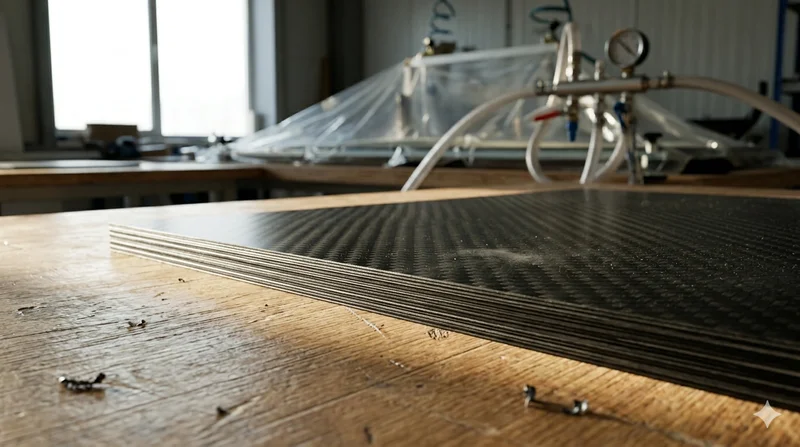
Carbon Fiber Plate — 3K Twill T700 3.0mm
Medium-thickness 3.0mm carbon fiber plate offering significantly higher load capacity while maintaining attractive 3K twill finish. Suitable for structural brackets, reinforcement plates, and load-bearing panels.
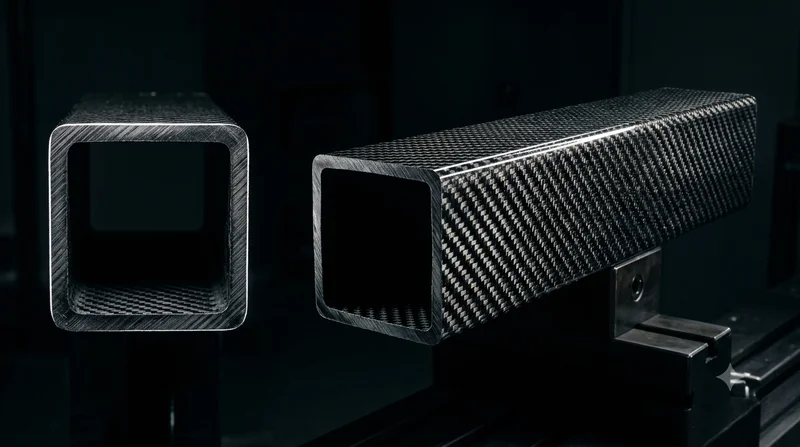
Square Carbon Fiber Tube — 3K Twill T700
Square cross-section carbon fiber tube manufactured with 3K twill weave for torsional strength. Preferred for structural frames, trusses, and support columns where rectangular geometry offers design flexibility.
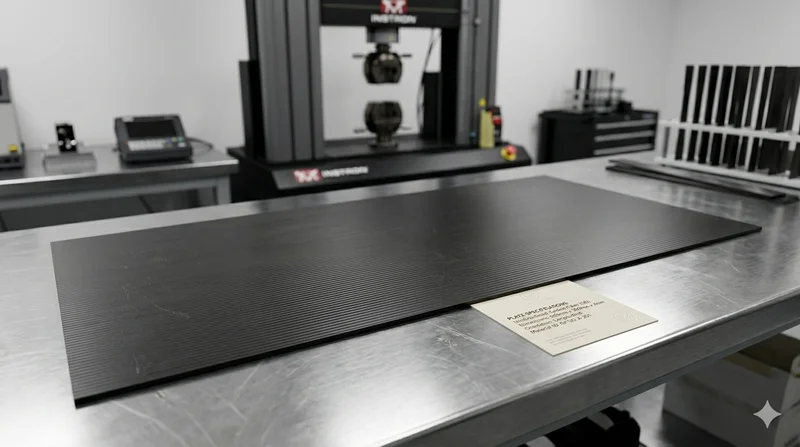
Carbon Fiber Plate — UD Unidirectional T700
Unidirectional carbon fiber plate with all fibers oriented in a single direction for maximum strength along the fiber axis. Essential for structural reinforcements, splints, and applications where load direction is predictable.
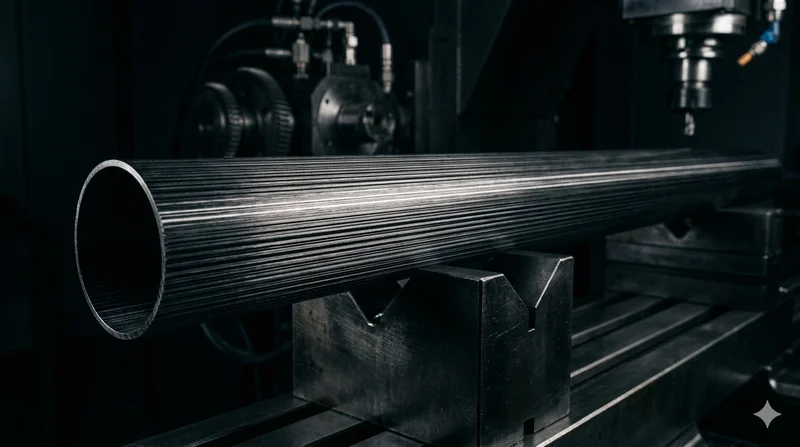
Round Carbon Fiber Tube — UD Unidirectional T700
Unidirectional (UD) round tube with all fibers aligned axially for maximum longitudinal stiffness. Ideal for applications requiring high bending rigidity with minimal weight, such as shafts, struts, and structural reinforcements.