Electric vehicle battery enclosures represent the largest single application of carbon fiber reinforced polymer (CFRP) in the automotive sector, accounting for approximately 40% of the global automotive CFRP market by value. The battery enclosure is the most safety-critical structural c
Introduction
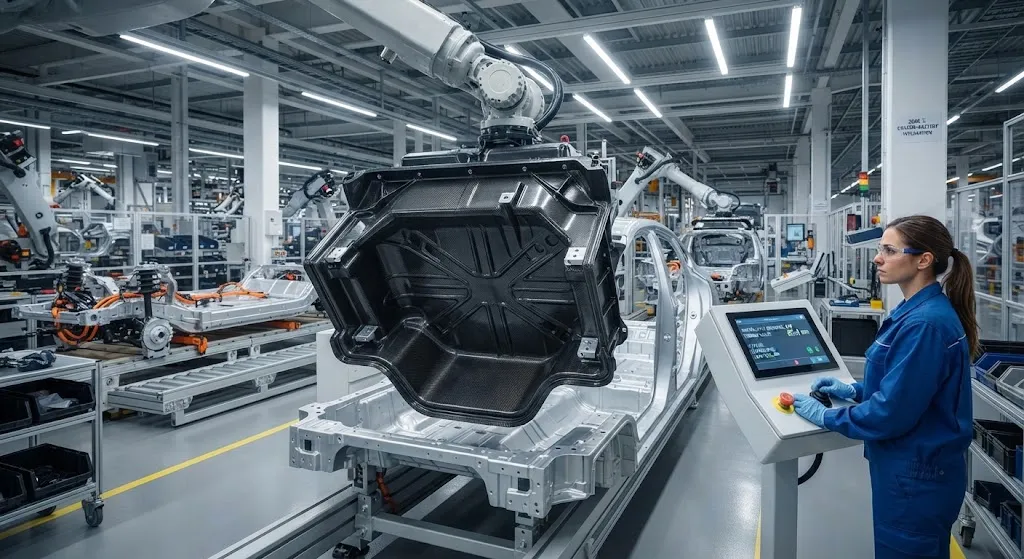
Electric vehicle battery enclosures represent the largest single application of carbon fiber reinforced polymer (CFRP) in the automotive sector, accounting for approximately 40% of the global automotive CFRP market by value. The battery enclosure is the most safety-critical structural component in an EV — it must simultaneously protect the battery cells from external impacts, contain thermal runaway events to prevent cabin intrusion, maintain structural integrity during side-impact and frontal collisions, and minimize weight to maximize driving range. Aluminum has dominated this application for the past decade, but CFRP is rapidly gaining market share as battery energy densities increase and safety regulations become more stringent.
For automotive OEMs, the CFRP battery enclosure offers a compelling combination of properties that aluminum cannot match: 30-40% lower weight at equivalent crash performance, inherent flame retardancy of certain resin systems, and the ability to mold complex geometries that integrate multiple functions into a single component. This article explains the structural design principles for CFRP battery enclosures, the thermal runaway containment requirements that drive material selection, and the manufacturing strategies that are making composite enclosures cost-competitive with aluminum at production volumes of 50,000-200,000 units per year.
Design Requirements for EV Battery Enclosures
Battery enclosures must satisfy four simultaneous engineering demands that create a uniquely challenging design space:
- Crash energy absorption: Side-impact and frontal collision scenarios require the enclosure to absorb 30-60 kJ of energy through controlled deformation without penetrating the battery cell modules. FMVSS 214 (side impact) and ECE R94 (frontal impact) define the regulatory framework.
- Thermal runaway containment: When a cell enters thermal runaway (temperatures exceeding 600°C), the enclosure must contain the resulting fire, hot gases, and molten electrolyte for a minimum of 5 minutes — enough time for occupants to evacuate. UN GTR 20 and GB 38031-2020 specify the containment requirements.
- Structural stiffness: The enclosure contributes 15-25% of the overall vehicle torsional stiffness, requiring bending stiffness sufficient to maintain battery module alignment and connection integrity under dynamic loads.
- Environmental sealing: IP67 or IP68 ingress protection against water, dust, and road salt splash, maintained over 15-year vehicle life with thermal cycling from -40°C to +80°C.
CFRP Enclosure Design Architecture
Modern CFRP battery enclosures use a sandwich construction with carbon fiber face sheets and a honeycomb or foam core, optimized for the competing requirements of crash absorption and thermal containment:
| Component | Material | Thickness | Function |
|---|---|---|---|
| Bottom tray (impact side) | CFRP with chopped fiber layer | 3-5 mm face + 15-25 mm core | Impact absorption, puncture resistance |
| Side walls | CFRP quasi-isotropic layup | 2-4 mm | Lateral crash, torsional stiffness |
| Top cover (cabin side) | CFRP with intumescent涂层 | 2-3 mm | Fire containment, thermal barrier |
| Internal ribs and mounting | CFRP or aluminum hybrid | Variable | Module support, heat dissipation |
| Seal interface | EPDM gasket + CFRP flange | — | IP67/68 environmental sealing |
The layup sequence is critical for crash performance. The bottom tray typically uses a [-45/0/45/90]₅ quasi-isotropic stack with chopped carbon fiber veil plies on the impact surface to promote progressive crush failure rather than brittle fracture. Side walls use fewer plies ([-45/0/45/90]₃) optimized for bending stiffness. The top cover incorporates intumescent coating or ceramic fiber veil layers that expand when exposed to flame, creating an insulating char layer that delays heat transfer to the cabin.
Thermal Runaway Containment Strategy
Thermal runaway containment is the most demanding requirement for CFRP battery enclosures, and it drives material selection more than any other factor. The containment strategy addresses three heat transfer mechanisms:
- Conduction: The CFRP wall must have low through-thickness thermal conductivity (0.3-0.8 W/m·K) to slow heat transfer from the cell to the cabin. Core materials like phenolic honeycomb (thermal conductivity 0.05-0.1 W/m·K) provide additional insulation.
- Convection: Venting channels in the enclosure design direct hot gases away from the cabin and toward controlled exhaust paths. The enclosure must maintain structural integrity while gases at 800-1,000°C flow through these channels.
- Radiation: Intumescent coatings on the cabin-facing surface reflect radiant heat and form insulating char, reducing the heat flux reaching the cabin floor by 80-90%.
Weight and Performance Comparison
The weight advantage of CFRP enclosures becomes quantifiable when comparing equivalent designs for a mid-size EV battery pack (75-100 kWh capacity):
| Parameter | Aluminum Enclosure | CFRP Enclosure | Advantage |
|---|---|---|---|
| Enclosure mass | 45-65 kg | 28-42 kg | 30-40% lighter |
| Crash energy absorption | 35-45 kJ | 40-55 kJ | 10-25% higher |
| Torsional stiffness contribution | 15-20% | 18-25% | Higher contribution |
| Thermal containment time | 5-8 min (with insulation) | 5-15 min (built-in) | Longer margin |
| Range improvement (per kg saved) | — | — | 0.5-0.8 km per kg |
| Part count | 15-25 parts | 3-8 parts | 60-80% fewer parts |
For a 75 kWh mid-size EV, the 20-30 kg weight saving from a CFRP enclosure translates to 10-24 km of additional driving range, or the equivalent of reducing battery capacity by 1.5-3 kWh — a direct cost offset of $150-450 at current cell prices. When combined with the reduction in part count and assembly operations, CFRP enclosures achieve cost parity with aluminum at production volumes above 80,000 units per year.
Manufacturing for High-Volume Production
Two manufacturing routes are emerging for high-volume CFRP battery enclosures:
- Compression molding of sheet molding compound (SMC): Short carbon fiber SMC (30-40% fiber content) is compression molded at 140-160°C with cycle times of 2-4 minutes. This approach achieves lower material cost ($12-18/kg) but at the expense of lower mechanical properties compared to continuous fiber laminates.
- Resin transfer molding (RTM) with continuous fiber: Preform fabrics are placed in a matched metal mold and injected with fast-cure epoxy resin. Cycle times of 5-10 minutes with fiber content of 50-58% provide superior crash and thermal performance. This is the preferred route for premium OEMs targeting NCAP 5-star safety ratings.
Frequently Asked Questions
How does CFRP perform in battery enclosure fire tests compared to aluminum?
In standardized fire tests (UN GTR 20, GB 38031-2020), CFRP enclosures with intumescent coatings consistently outperform aluminum by maintaining structural integrity for 8-15 minutes versus 3-8 minutes for uninsulated aluminum. The key difference is that CFRP's low thermal conductivity (0.3-0.8 W/m·K vs 150-200 W/m·K for aluminum) naturally slows heat transfer, while intumescent coatings add a phase-change insulation mechanism. Aluminum requires additional ceramic fiber blankets or aerogel insulation to achieve comparable containment times, adding weight and cost that partially offset aluminum's inherent weight advantage.
Can CFRP battery enclosures be repaired after a minor collision?
CFRP enclosures can be repaired for minor damage (surface scratches, small dents) using bonded composite patches that restore structural integrity to original specifications. For moderate damage affecting more than 15% of the enclosure area, replacement is typically recommended because repair of crash-absorbing structures requires careful verification of energy absorption capacity. Several OEMs have developed authorized repair procedures using pre-cured CFRP patch kits that can be applied in body shops within 2-4 hours.
What is the recyclability outlook for CFRP battery enclosures?
CFRP battery enclosures are 100% recyclable through established pyrolysis and solvolysis processes. Pyrolysis recovers carbon fiber at 60-80% of original strength, suitable for non-structural automotive applications. Solvolysis (chemical recycling) achieves higher fiber quality retention. The automotive industry is developing closed-loop recycling systems where end-of-life CFRP enclosures are collected, recycled, and the recovered fiber is used in new non-structural components. Current recycling infrastructure can handle projected end-of-life volumes through 2035.
Conclusion
CFRP battery enclosures represent the convergence of safety, performance, and lightweighting demands in electric vehicle design. The 30-40% weight reduction, 10-25% improvement in crash energy absorption, and superior thermal runaway containment make CFRP the material of choice for next-generation EV battery systems. As production volumes scale and manufacturing costs decrease, CFRP enclosures will transition from premium to mainstream automotive applications, contributing to the broader goal of maximizing EV driving range through structural lightweighting.
For automotive engineers evaluating CFRP battery enclosure options, material selection must consider the specific battery architecture, crash safety targets, and production volume requirements. Explore our automotive-grade carbon fiber materials, including high-impact fabric systems and flame-retardant resin options for battery enclosure applications, or contact our engineering team to discuss structural design support for your EV program.
Part of topic
Related Articles
- Carbon Fiber Mooring for Floating Offshore Wind: Fatigue and Corrosion in Deep Water
- Carbon Fiber Bicycle Frame Optimization: Layup Design and Manufacturing for Competitive Racing
- Carbon Fiber CFRP Retrofit for Infrastructure: Bridge and Building Seismic Strengthening
- Carbon Fiber Medical Imaging Equipment: Lightweight Gantry and Couch Structures for MRI/CT
- Carbon Fiber EV Battery Enclosures: Crash Safety and Electromagnetic Shielding Design
- Carbon Fiber Structures for Low-Altitude Economy: UAV Airframes and eVTOL Components
Interested in Our Products?
Contact our team for competitive pricing and technical specifications.
Get a QuoteRelated Products
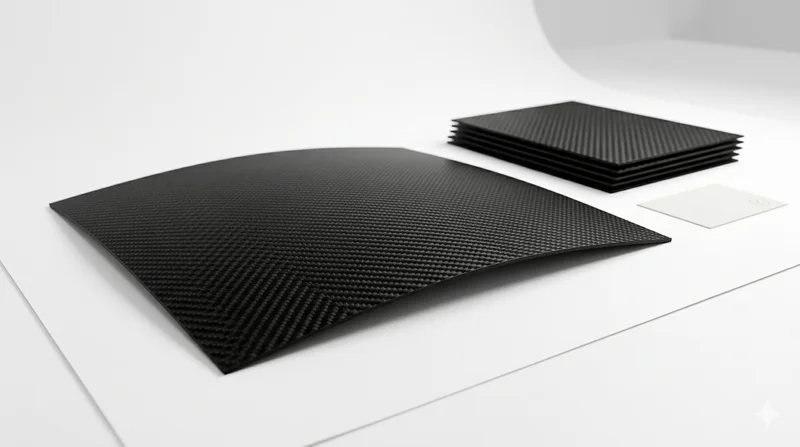
Carbon Fiber Plate — 3K Twill T700 1.5mm
Thin 1.5mm carbon fiber plate with 3K twill weave surface. Lightweight and stiff, commonly used for covers, panels, drone bodies, and applications requiring a premium aesthetic appearance.
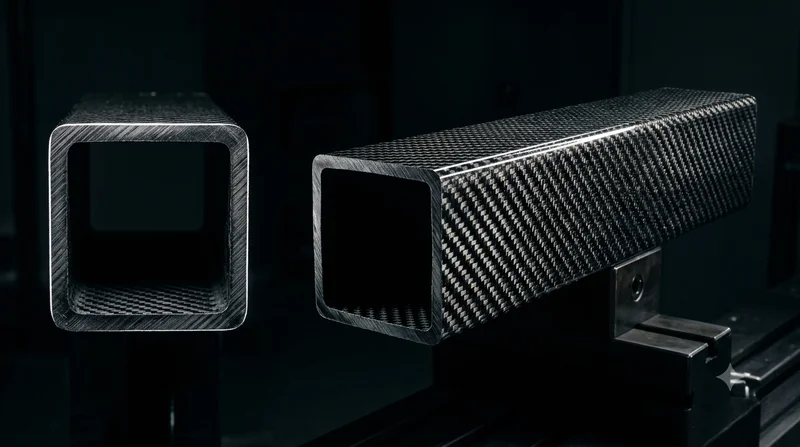
Square Carbon Fiber Tube — 3K Twill T700
Square cross-section carbon fiber tube manufactured with 3K twill weave for torsional strength. Preferred for structural frames, trusses, and support columns where rectangular geometry offers design flexibility.
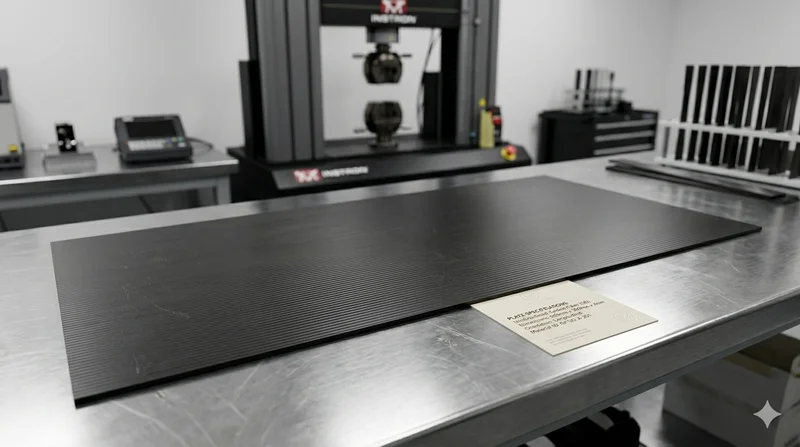
Carbon Fiber Plate — UD Unidirectional T700
Unidirectional carbon fiber plate with all fibers oriented in a single direction for maximum strength along the fiber axis. Essential for structural reinforcements, splints, and applications where load direction is predictable.
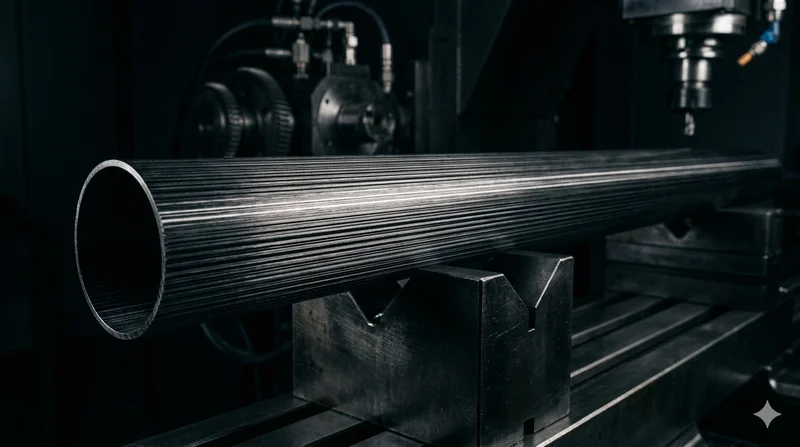
Round Carbon Fiber Tube — UD Unidirectional T700
Unidirectional (UD) round tube with all fibers aligned axially for maximum longitudinal stiffness. Ideal for applications requiring high bending rigidity with minimal weight, such as shafts, struts, and structural reinforcements.
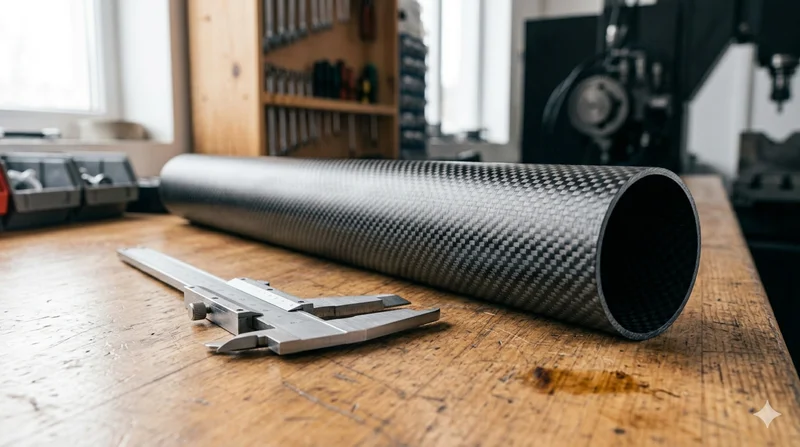
Round Carbon Fiber Tube — 3K Plain Weave T700
Standard round carbon fiber tube manufactured from Toray T700 grade fiber with 3K plain weave. Offers balanced strength and stiffness for general industrial applications including robotics, automation, sports equipment, and aerospace structures.