
The Nordic region is building the world's first generation of high-speed electric ferries, and every one of them wrestles with the same problem: battery weight. A battery pack stores energy at roughly a fortieth of the energy density of diesel fuel, so an electric ferry that must run a
Introduction
The Nordic region is building the world's first generation of high-speed electric ferries, and every one of them wrestles with the same problem: battery weight. A battery pack stores energy at roughly a fortieth of the energy density of diesel fuel, so an electric ferry that must run a fast schedule and keep reserve range can need tens of tonnes of batteries — weight that reduces payload, increases draft, and raises the power required to reach service speed. For slow displacement vessels this is manageable with heavy steel and marine aluminum hulls. For the high-speed catamarans and hydrofoils that dominate commuter routes in Norway, Sweden, and Denmark, it is not: hull weight becomes the single largest variable in the energy balance, and carbon fiber is the material that resolves it.
Carbon fiber composite hulls weigh 30-50 percent less than equivalent aluminum structures and up to 60-70 percent less than steel, with stiffness that permits long unsupported spans and fatigue behavior that suits the constant wave-loading of exposed commuter routes. This article explains the weight-compensation logic of electric ferry design, profiles the flagship Nordic programs now using carbon fiber hulls, and examines the manufacturing, safety, and economics that decide whether composite hulls scale from demonstrators to serial production.
The Weight-Compensation Logic: Why Carbon Fiber Fits Electric Ferries
Electric ferry economics are governed by a circular relationship: the heavier the vessel, the more energy it needs to reach service speed, the more battery capacity it must carry, and the heavier it becomes again. Each tonne of hull weight saved removes a multiple of battery weight from the compounding equation. Carbon fiber attacks this loop at its root:
- Structural weight reduction: A carbon fiber hull and deckhouse can be built at 40-55 percent of aluminum weight and 25-35 percent of steel weight for equivalent stiffness, directly converting saved mass into passenger capacity or battery capacity.
- Energy efficiency: Weight reduction lowers the power demand at every speed, which is disproportionately valuable for fast ferries where resistance grows roughly with the square of speed.
- Payload recovery: Every tonne saved on structure can be returned to payload — more passengers, more cargo, or more range — without touching overall displacement.
- Seakeeping and fatigue: Composite structures resist corrosion entirely, eliminating the galvanic and crevice corrosion that shortens aluminum hull life in salt water, and their fatigue behavior is well understood in sandwich construction used across decades of marine experience.
The table below compares structural approaches for a representative 24-30 meter high-speed catamaran commuter ferry, illustrating the weight and performance trade-offs that drive the composite decision:
| Parameter | Steel Hull | Aluminum Hull | Carbon Fiber Composite |
|---|---|---|---|
| Typical hull weight (% of LOA) | 40-45% | 28-32% | 14-18% |
| Structural weight vs aluminum | +80-100% | Baseline | -35-45% |
| Fatigue performance in seawater | Good (with coating) | Good (with protection) | Excellent (no corrosion) |
| Initial materials + build cost | Lowest | Moderate | Highest |
| Energy per crossing (relative) | High | Baseline | -20-30% |
| Lifespan maintenance burden | High (corrosion, painting) | Moderate | Low |
For a battery-electric fast ferry, the 30-45 percent hull weight saving relative to aluminum is not a refinement; it is often the difference between a workable design and an impossible one. Vessels built with composite hulls can carry the battery mass needed for all-day operation without exceeding the displacement and power limits of the route.
Nordic Flagship Programs
The Nordic region leads the adoption of carbon fiber in electric ferries, with several reference programs demonstrating the technology at commercial scale:
- Norway's zero-emission fast-ferry program: Norway has ordered and operated prototype electric fast ferries for the fjords and coastal routes, and the country's procurement framework explicitly prioritizes weight-optimized vessels. Norwegian yards have supplied carbon fiber ferry hulls for routes where aluminum designs could not meet the required combination of speed, battery range, and payload.
- Swedish hydrofoil services: Sweden has pioneered electric hydrofoil ferries, where carbon fiber is used not only for the hull but critically for the hydrofoil structures themselves — large, high-aspect-ratio lifting surfaces that must be light, stiff, and fatigue-resistant. The foils allow the vessel to lift clear of the water at speed, cutting resistance dramatically and extending battery range beyond what a conventional planing hull can achieve.
- Danish and Finnish commuter projects: Denmark and Finland have deployed or planned electric ferries on urban and cross-fjord connections, with composite construction favored where speed and payload constraints demand the lightest practical structure.
The pattern across these programs is consistent: carbon fiber appears first in the highest-value elements — foils, sponsons, superstructure, and hull panels — and expands to full-hull structures as yards gain manufacturing confidence and route operators accumulate in-service experience.
Manufacturing and Certification: Making Composite Hulls Serial
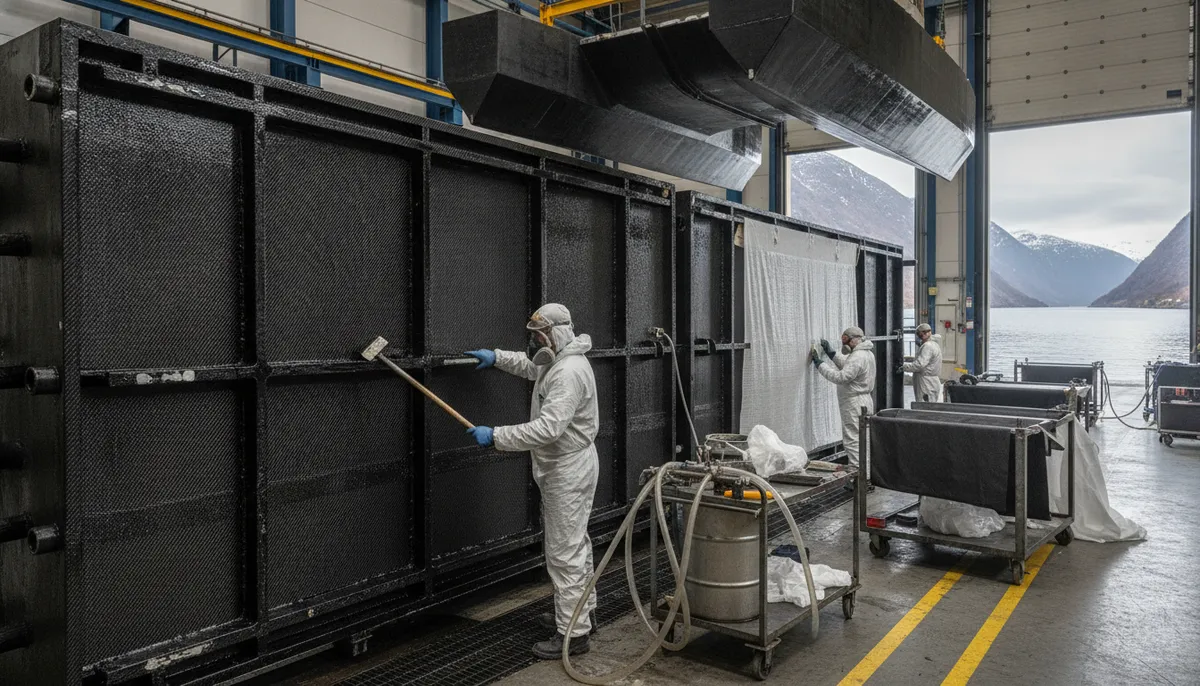
Carbon fiber ferry hulls are typically built using vacuum infusion or prepreg lamination over modular tooling, joined into full hulls with bonded and bolted assemblies. The shift from one-off yachts to serial ferry production has changed the manufacturing economics:
- Modular tooling and automation: Computer-controlled cutting, automated fiber placement, and reusable molds cut labor content, while pre-qualified laminate recipes reduce process variation.
- Out-of-autoclave processes: Vacuum-assisted resin transfer molding and infusion allow large hull sections to cure at low temperature and pressure, enabling bigger parts than autoclave capacity would permit.
- Hybrid joining: Composite hulls are increasingly joined to aluminum or steel frames and outfitting structures with bonded and bolted interfaces, combining the lightness of composites with the familiarity of metal outfitting.
- Classification and safety: Regulations for composites in passenger vessels are mature, with classification societies recognizing carbon fiber structures for high-speed craft (including structural fire protection measures where required), and battery-electric propulsion adds distinct fire-safety considerations that coating systems and barrier layers address.
These advances matter commercially: classification acceptance, fire-safety solutions, and qualified repair procedures are what convert carbon fiber from an exotic material into a type-approved option that ferry operators can finance and insure.
Economics: Higher Build Cost, Lower Operating Cost
Carbon fiber hulls cost more to build than aluminum — the materials and tooling premiums typically add 15-35 percent to hull construction cost — but the operating economics of electric ferries change the calculation. Weight savings reduce energy consumption by roughly 20-30 percent per crossing, which directly shrinks the highest recurring cost of an electric ferry: electricity. Lighter hulls may also permit smaller battery packs, cutting the most expensive single component on board. Over a 20-25 year vessel life, the combination of energy savings, reduced corrosion maintenance, and lower refurbishment cost can outweigh the build premium, particularly on high-frequency routes where crossings accumulate quickly. For designers, the golden rule is that every project has a crossover point: carbon fiber pays off when the route is fast, frequent, and exposed enough that weight dominates energy and maintenance budgets.
Frequently Asked Questions
Why is carbon fiber used in electric ferry hulls?
Batteries are heavy at roughly a fortieth of diesel's energy density, so electric ferries must minimize hull weight to carry batteries without sacrificing payload or range. Carbon fiber composites reduce structural weight by 30-50 percent versus aluminum and up to 60-70 percent versus steel, with corrosion-free fatigue performance — making them the most effective way to compensate for battery weight on fast, high-frequency routes.
How much weight does a carbon fiber hull save compared to aluminum?
For a typical high-speed catamaran ferry, a carbon fiber hull and superstructure weigh roughly 35-45 percent less than an equivalent aluminum structure, bringing total structural weight down to 14-18 percent of vessel length overall. In energy terms this typically reduces consumption by 20-30 percent per crossing, before accounting for any battery size reduction.
Are carbon fiber ferry hulls safe and class-approved?
Yes. Composite structures for passenger high-speed craft are recognized by major classification societies, with defined structural criteria, fatigue assessment, and fire-protection requirements. Battery-electric propulsion adds specific fire-safety considerations — flame-retardant resins, barrier coatings, and thermal runaway management — which are addressed in the design and certification of modern electric ferries.
Is a carbon fiber electric ferry cost-effective?
Carbon fiber adds roughly 15-35 percent to hull build cost, but operating economics improve: 20-30 percent lower energy consumption, potentially smaller battery packs, virtually eliminated corrosion maintenance, and lower refurbishment over a 20-25 year life. The payback is strongest on fast, frequent, exposed routes, where weight dominates the energy and maintenance budget.
Conclusion
Carbon fiber is not an optional refinement for Nordic electric ferries — it is the enabling material for high-speed electric service. By cutting structural weight 30-50 percent and eliminating corrosion, composite hulls allow designers to carry the batteries, reach the speeds, and run the schedules that electric commuter routes demand. Norway, Sweden, Denmark, and Finland are demonstrating the technology across hydrofoils, catamarans, and fast ferries, while manufacturing advances in infusion, modular tooling, and classification approval are pushing it toward serial production. For shipyards, composite suppliers, and operators, the direction is clear: as battery-electric fleets expand across the region's coastlines, the vessels that fly, or float, fastest will be the ones built lightest.
YongXian supplies carbon fiber fabrics, laminates, and structural materials for marine and high-speed craft construction. Explore our marine-grade carbon fiber products or contact our team to discuss specifications for electric ferry hull and hydrofoil programs.
Part of topic
Related Articles
- Carbon Fiber Rod Grips: Ergonomic Handle Design for Industrial and Sport Applications
- Carbon Fiber Propellers for Drones: Efficiency, Durability and Performance Optimization
- Carbon Fiber Tube for Sale: Comparing Listings and Avoiding Bad Specs
- Carbon Fiber Engine Parts: High-Temperature Performance for Racing and Performance Vehicles
- Carbon Fiber Body Parts: Automotive Exterior Panels and Structural Components
- Carbon Fiber Drone Body Manufacturing: Monocoque Design and Production Methods
Interested in Our Products?
Contact our team for competitive pricing and technical specifications.
Get a QuoteRelated Products

Carbon Fiber Plate — 3K Twill T700 1.5mm
Thin 1.5mm carbon fiber plate with 3K twill weave surface. Lightweight and stiff, commonly used for covers, panels, drone bodies, and applications requiring a premium aesthetic appearance.

Carbon Fiber Plate — 3K Twill T700 3.0mm
Medium-thickness 3.0mm carbon fiber plate offering significantly higher load capacity while maintaining attractive 3K twill finish. Suitable for structural brackets, reinforcement plates, and load-bearing panels.

Square Carbon Fiber Tube — 3K Twill T700
Square cross-section carbon fiber tube manufactured with 3K twill weave for torsional strength. Preferred for structural frames, trusses, and support columns where rectangular geometry offers design flexibility.
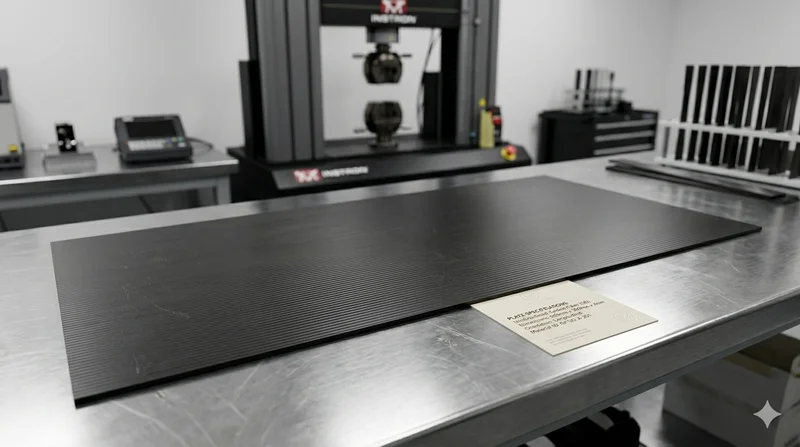
Carbon Fiber Plate — UD Unidirectional T700
Unidirectional carbon fiber plate with all fibers oriented in a single direction for maximum strength along the fiber axis. Essential for structural reinforcements, splints, and applications where load direction is predictable.
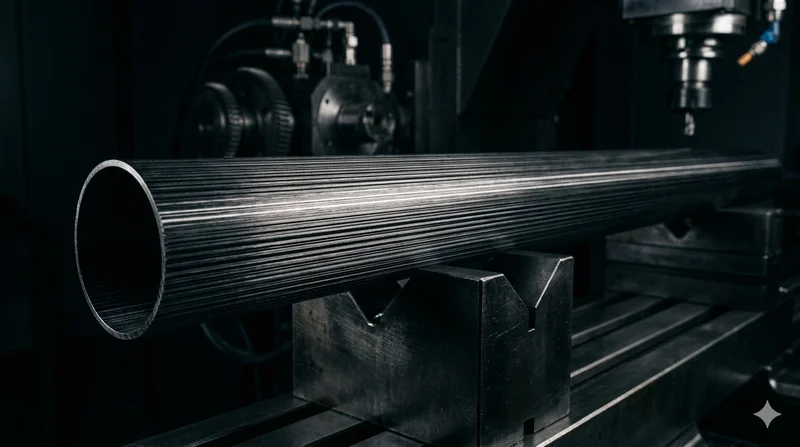
Round Carbon Fiber Tube — UD Unidirectional T700
Unidirectional (UD) round tube with all fibers aligned axially for maximum longitudinal stiffness. Ideal for applications requiring high bending rigidity with minimal weight, such as shafts, struts, and structural reinforcements.