Electric transit buses face a fundamental engineering challenge: battery weight consumes a significant portion of the vehicle's gross weight allowance, directly reducing the payload available for passengers and limiting driving range. A typical 12-meter battery electric bus carries 2,50
Introduction
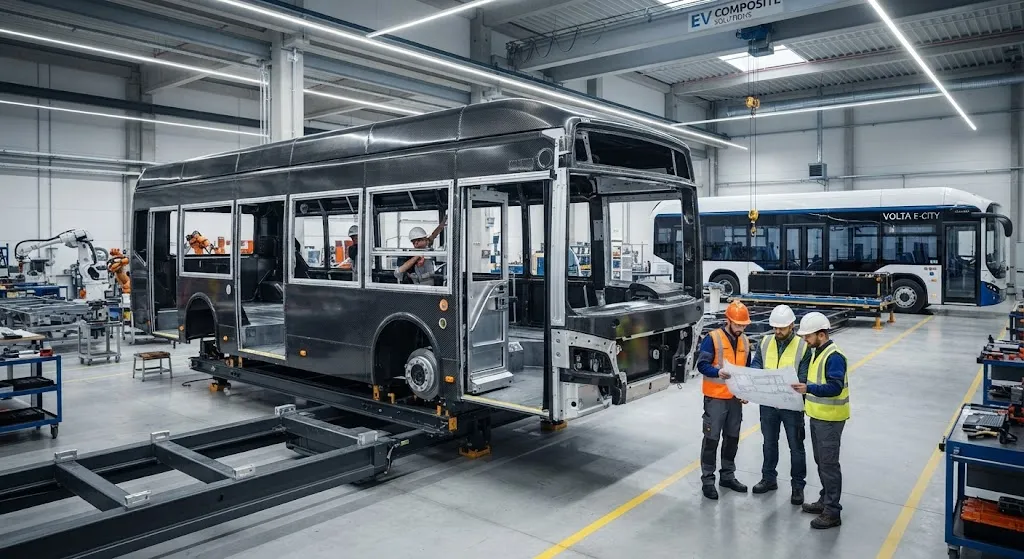
Electric transit buses face a fundamental engineering challenge: battery weight consumes a significant portion of the vehicle's gross weight allowance, directly reducing the payload available for passengers and limiting driving range. A typical 12-meter battery electric bus carries 2,500-3,500 kg of lithium-ion battery packs, representing 15-20% of gross vehicle weight. Carbon fiber composite body structures address this challenge by reducing curb weight by 1,500-2,500 kg compared to conventional steel or aluminum bus bodies, translating directly into extended range, reduced battery cost, or both.
Global electric bus deployments are accelerating rapidly, with China operating over 700,000 electric buses and European and North American cities committing to zero-emission transit fleets by 2030-2035. As operators demand longer range, faster charging, and lower total cost of ownership, carbon fiber body structures are emerging as a viable lightweighting solution for next-generation transit bus platforms. This article covers the structural design rationale, manufacturing methods, and economic analysis that transit bus OEMs and operators must understand when evaluating carbon fiber body structures.
Weight Budget Analysis: Where Carbon Fiber Delivers Maximum Impact
A conventional 12-meter steel-body transit bus has a curb weight of 12,000-13,000 kg, with the body structure accounting for approximately 3,500-4,000 kg (28-31% of curb weight). Replacing the steel body with carbon fiber composite reduces structure weight to 1,500-2,200 kg, depending on design requirements and production method:
| Body Component | Steel Weight (kg) | Carbon Fiber Weight (kg) | Weight Saving (kg) |
|---|---|---|---|
| Main side wall structure | 800-950 | 350-500 | 450-500 |
| Roof panel and reinforcement | 600-750 | 250-350 | 350-400 |
| Floor structure and crossmembers | 700-850 | 350-450 | 350-400 |
| Front and rear wall assemblies | 400-500 | 180-250 | 220-250 |
| Window frames and door surrounds | 350-450 | 150-200 | 200-250 |
| Underfloor battery mounting structure | 450-550 | 200-300 | 250-250 |
| Total body structure | 3,300-4,050 | 1,480-2,050 | 1,820-2,000 |
The 1,800-2,000 kg body weight reduction has cascading effects on vehicle design: suspension, brakes, tires, and drivetrain components can all be downsized, generating additional weight savings of 300-500 kg. Total vehicle weight reduction reaches 2,100-2,500 kg — equivalent to removing the weight of 25-30 passengers from the vehicle's static load.
Range Extension and Battery Optimization Strategies
Carbon fiber body weight savings can be deployed in two strategic directions, depending on operator requirements:
- Range extension with existing battery: Maintaining the original battery pack size and reducing curb weight by 2,000+ kg extends driving range by 15-22%. For a bus with a 350 kWh battery pack, this translates from 250 km baseline range to 290-305 km — sufficient to cover most urban transit routes without mid-day charging. This strategy suits operators with long routes or limited charging infrastructure.
- Battery size reduction for same range: Reducing battery capacity by 20-25% while maintaining original range cuts battery cost by $15,000-25,000 per bus (at current $150-180/kWh pack prices) and reduces battery weight by 500-900 kg. This additional weight saving can be redirected to passenger capacity or further battery reduction. This strategy suits operators with shorter routes and available overnight charging.
For transit agencies operating 100+ bus fleets, the cumulative battery cost savings from carbon fiber body structures can reach $1.5-2.5 million — significant against the incremental body structure cost of $40,000-60,000 per bus.
Structural Design Considerations for Transit Applications
Carbon fiber bus body structures must meet the same crashworthiness, durability, and serviceability requirements as steel and aluminum bodies, with specific design considerations for transit operations:
- Crash energy management: Carbon fiber composite structures absorb energy through fiber fracture, matrix cracking, and delamination — mechanisms that differ fundamentally from metal yielding. Bus body designs incorporate crush zones at front and rear structures using designed progressive collapse sequences, validated by full-scale crash testing per ECE R29 and EN 12767 standards.
- Impact and repair considerations: Transit buses operate in urban environments with frequent low-speed impacts (parking, curbside operations). Carbon fiber body panels are designed as modular, replaceable sections — side wall panels, roof sections, and bumper assemblies can be individually replaced following minor damage, with bonded repair methods for field service.
- Fire resistance: Public transit vehicles must meet stringent fire resistance requirements (ECE R118, NFPA 133). Carbon fiber body structures incorporate fire-retardant resin systems (phenolic or intumescent-modified epoxy) and fire barrier layers at critical locations to meet 5-10 minute fire survival requirements without structural compromise.
- Durability and corrosion resistance: Carbon fiber composites are inherently corrosion-resistant, eliminating the galvanic corrosion issues that affect aluminum bus bodies in salt-spray and deicing chemical environments. Design life of 15-20 years is achievable with appropriate resin systems and UV-protective coatings.
Manufacturing Approaches for Carbon Fiber Bus Bodies
Transit bus body structures employ several manufacturing methods, chosen based on production volume and structural requirements:
- Vacuum infusion (VARTM): The dominant method for medium-volume production (50-500 buses/year). Large dry carbon fiber fabric kits are placed in single-sided molds, vacuum-bagged, and resin is drawn through the laminate. Cycle times of 4-8 hours per panel and tooling costs of $200,000-500,000 per body section make this viable for transit bus production rates.
- Prepreg compression molding: Used for high-volume production (>500 buses/year) of smaller structural components. Chopped or continuous fiber prepreg is placed in matched metal molds and cured under heat and pressure. Cycle times of 10-30 minutes enable high throughput, but tooling investment of $1-3 million per component limits this to highest-volume programs.
- Pultrusion and filament winding: For standardized structural profiles — floor crossmembers, roof bows, and window frame sections. Pultruded carbon fiber profiles offer consistent quality and lowest per-meter cost for constant-cross-section structural members.
Total Cost of Ownership Analysis
The economic case for carbon fiber bus bodies combines incremental structure cost with operational savings over a 12-15 year service life:
- Incremental body cost: Carbon fiber body structure adds $40,000-60,000 per bus compared to aluminum body, and $60,000-80,000 compared to steel body.
- Battery cost saving: 20-25% battery reduction saves $15,000-25,000 per bus at current cell prices.
- Energy cost saving: 12-18% reduction in energy consumption per km (from reduced rolling resistance and inertial loads) saves $800-1,200 per bus annually at typical electricity rates.
- Reduced component sizing: Smaller brakes, suspension, and tires reduce maintenance costs by $500-800 per bus annually.
- Extended range operational value: Elimination of mid-day charging saves $3,000-5,000 per bus annually in charging infrastructure and operational time.
Net present value analysis over 12-year service life shows carbon fiber body structures achieving payback in 4-6 years for high-utilization urban transit operations, with cumulative savings of $60,000-100,000 per bus compared to aluminum body alternatives.
Frequently Asked Questions
How does carbon fiber bus body cost compare to aluminum body alternatives?
Carbon fiber body structures are 30-50% more expensive in upfront material and manufacturing cost compared to aluminum bus bodies, but 15-25% lighter. The cost premium is justified through total cost of ownership analysis: battery savings, energy efficiency gains, and reduced maintenance costs offset the incremental structure cost within 4-6 years for high-utilization transit operations. For operators purchasing 100+ buses, fleet-level negotiation can reduce the carbon fiber premium to 20-35% over aluminum, improving payback to 3-5 years.
What is the typical service life of a carbon fiber bus body?
Carbon fiber composite bus bodies are designed for 15-20 years of service life, equivalent to 1.0-1.5 million kilometers of urban transit operation. The composite structure's corrosion resistance is a significant advantage over aluminum bodies in coastal or winter salt-spray environments, where aluminum corrosion can limit body life to 12-15 years without protective coatings. Carbon fiber's fatigue resistance at typical transit loading levels (>10 million cycles) far exceeds the mechanical fatigue requirement, making resin degradation from UV exposure and thermal cycling the primary aging mechanism — managed through UV-resistant topcoats and appropriate resin selection.
Can existing bus maintenance facilities service carbon fiber body structures?
Yes, with minor training and tooling adaptation. Carbon fiber body panel replacement uses structural adhesive bonding and mechanical fastening methods compatible with existing bus maintenance practices. Field repair of minor damage (scratches, small impacts) follows standard composite repair procedures — cleaning, abrading, adhesive application, and vacuum bag or heat blanket cure — that can be performed by trained maintenance technicians without specialized composite manufacturing equipment. Transit agencies typically establish composite repair capabilities through 40-80 hours of training per maintenance team.
Conclusion
Carbon fiber composite bus body structures offer transit operators a compelling pathway to extend electric bus range, reduce battery costs, and lower total cost of ownership. The 1,800-2,000 kg body weight reduction cascades into vehicle-wide benefits — extended range, downsized components, and reduced energy consumption — that justify the incremental structure cost within 4-6 years for high-utilization urban transit operations. As manufacturing volumes increase and production methods mature, carbon fiber bus bodies will increasingly compete with aluminum as the lightweight structure of choice for next-generation electric transit platforms.
For transit bus OEMs and fleet operators evaluating carbon fiber body structures, the key considerations are production volume matching to manufacturing method, crashworthiness validation for regulatory approval, and total cost of ownership modeling against specific route and operating conditions. Explore our carbon fiber fabric and reinforcement range for transit vehicle applications, or contact our engineering team to discuss material specifications and structural design support for your electric bus program.
Related Articles
- Carbon Fiber Mooring for Floating Offshore Wind: Fatigue and Corrosion in Deep Water
- Carbon Fiber Bicycle Frame Optimization: Layup Design and Manufacturing for Competitive Racing
- Carbon Fiber CFRP Retrofit for Infrastructure: Bridge and Building Seismic Strengthening
- Carbon Fiber Medical Imaging Equipment: Lightweight Gantry and Couch Structures for MRI/CT
- Carbon Fiber EV Battery Enclosures: Crash Safety and Electromagnetic Shielding Design
- Carbon Fiber Structures for Low-Altitude Economy: UAV Airframes and eVTOL Components
Interested in Our Products?
Contact our team for competitive pricing and technical specifications.
Get a QuoteRelated Products
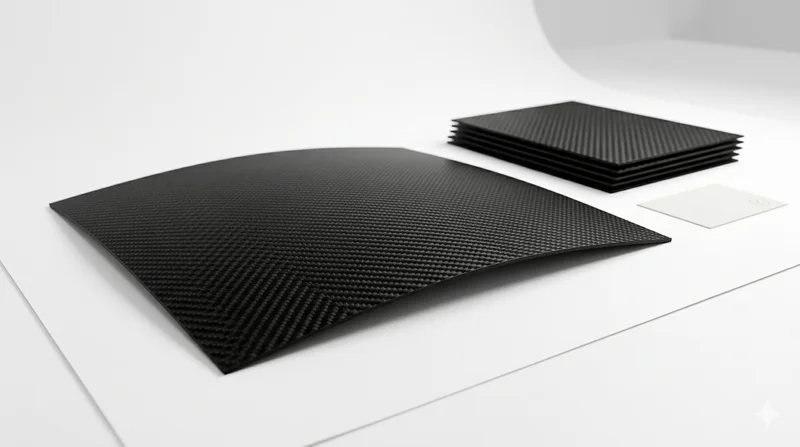
Carbon Fiber Plate — 3K Twill T700 1.5mm
Thin 1.5mm carbon fiber plate with 3K twill weave surface. Lightweight and stiff, commonly used for covers, panels, drone bodies, and applications requiring a premium aesthetic appearance.
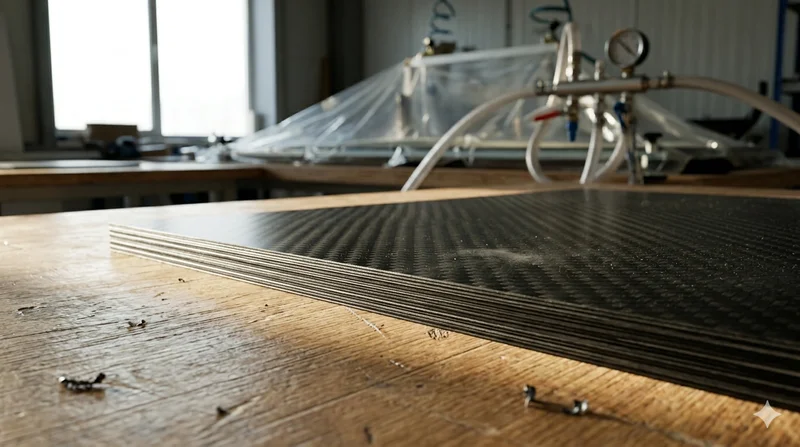
Carbon Fiber Plate — 3K Twill T700 3.0mm
Medium-thickness 3.0mm carbon fiber plate offering significantly higher load capacity while maintaining attractive 3K twill finish. Suitable for structural brackets, reinforcement plates, and load-bearing panels.
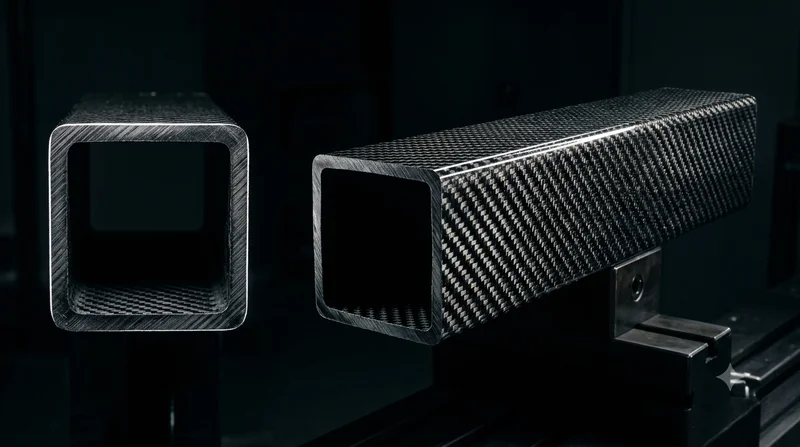
Square Carbon Fiber Tube — 3K Twill T700
Square cross-section carbon fiber tube manufactured with 3K twill weave for torsional strength. Preferred for structural frames, trusses, and support columns where rectangular geometry offers design flexibility.
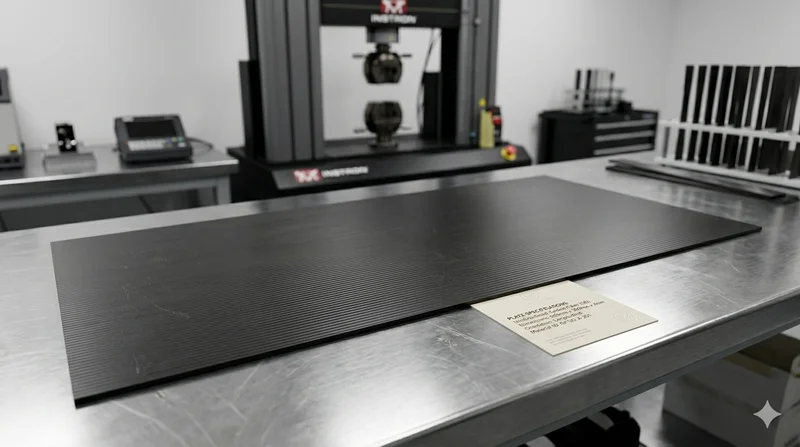
Carbon Fiber Plate — UD Unidirectional T700
Unidirectional carbon fiber plate with all fibers oriented in a single direction for maximum strength along the fiber axis. Essential for structural reinforcements, splints, and applications where load direction is predictable.
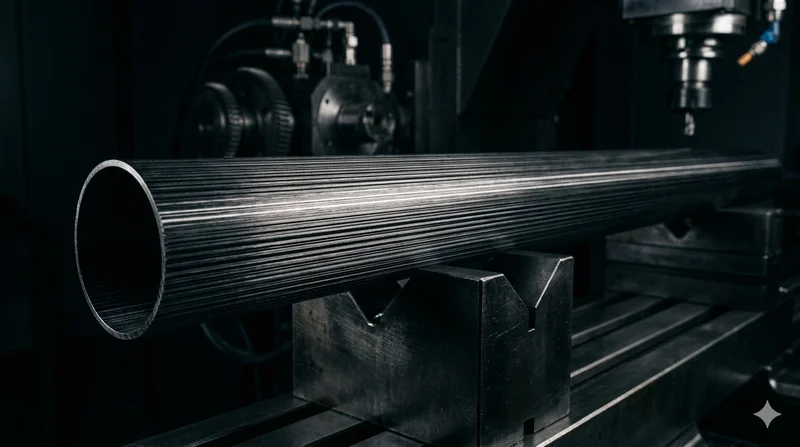
Round Carbon Fiber Tube — UD Unidirectional T700
Unidirectional (UD) round tube with all fibers aligned axially for maximum longitudinal stiffness. Ideal for applications requiring high bending rigidity with minimal weight, such as shafts, struts, and structural reinforcements.