
The electric aircraft revolution is creating a new class of propeller blade demand that differs fundamentally from traditional aviation. In conventional turboprop and piston-engine aircraft, propellers operate at relatively constant RPM with limited thrust variation, and blade life is m
Introduction
The electric aircraft revolution is creating a new class of propeller blade demand that differs fundamentally from traditional aviation. In conventional turboprop and piston-engine aircraft, propellers operate at relatively constant RPM with limited thrust variation, and blade life is measured in tens of thousands of hours. In eVTOL aircraft — particularly multi-rotor designs carrying 2-6 passengers on urban air routes of 30-100 km — propellers face a completely different operating envelope: frequent thrust reversals during hover-to-transition maneuvers, cyclic loading at blade pass frequencies of 50-200 Hz, bird-strike and debris-impact requirements at low altitude, and the acoustic signature constraints of urban flight operations.
Carbon fiber reinforced polymer (CFRP) is the only material class that meets the combined requirements of specific strength, fatigue endurance, acoustic damping, and manufacturing repeatability for eVTOL propellers. The market is projected to require 150,000-300,000 CFRP propeller blades per year by 2030, representing a new high-volume, high-performance application segment for carbon fiber producers. This article examines the engineering challenges, certification pathway, and production economics of CFRP propeller blades for the urban air mobility sector.
Blade Aerodynamic and Structural Requirements
eVTOL propeller blades operate across multiple flight regimes, each imposing distinct structural demands. The blade must deliver efficient thrust in hover (high disk loading, low advance ratio), smooth aerodynamic transition in forward flight (increasing advance ratio), and controlled deceleration during descent. These conditions create a multi-axial fatigue environment that is more severe than conventional helicopter rotors because eVTOL propellers are smaller, spin faster, and experience more frequent load reversals.
Key design parameters for an eVTOL propeller blade in the 2.0-3.5 m diameter class include:
- Blade mass: 1.5-4.0 kg per blade (compared to 15-50 kg for a helicopter main rotor blade), requiring tip speeds of 180-250 m/s for adequate thrust.
- Fatigue life: Minimum 200,000 flight cycles (one cycle = one takeoff-landing sequence) without crack initiation, per EASA SC-VTOL special condition. This equates to approximately 10,000 flight hours in typical urban air taxi operations.
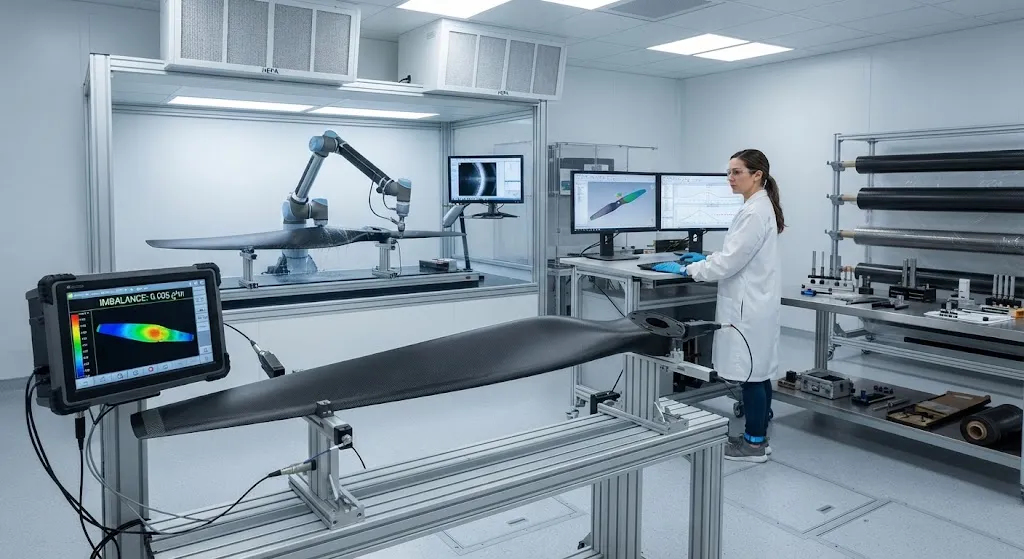
- Balance tolerance: Residual imbalance below 0.5 g·cm per blade to prevent vibration-induced fatigue in the motor and airframe. Achievable only with AFP or precision filament winding.
- Noise limits: Cumulative sound exposure below 87 dB(A) at community noise measurement points, requiring blade tip speed optimization and trailing-edge serration design.
- Impact resistance: Blade must remain attached and controllable after impact with a 0.5 kg bird at cruise speed, per EASA SC-VTOL.2165.
The structural design philosophy differs from traditional propellers. Rather than designing for ultimate load with a fixed safety factor, eVTOL blades are designed using damage-tolerant methodology: the blade must sustain a specified crack size without catastrophic failure, and inspection intervals must be established to detect cracks before they reach the critical length. This approach drives the selection of toughened resin systems and specific fiber orientations that promote stable crack growth rather than sudden fracture.
Material Selection: Carbon Fiber and Resin Systems
The material stack for an eVTOL CFRP propeller blade is a multi-layer optimization of fiber type, weave architecture, and resin chemistry. The selection must balance stiffness (for aerodynamic shape retention), strength (for ultimate load), fatigue resistance (for cyclic loading), and damping (for noise reduction).
| Component | Material | Function | Key Property |
|---|---|---|---|
| Spar cap (primary structure) | IM carbon fiber UD tape (24K) | Bending load carry, stiffness control | Tensile modulus 290-320 GPa |
| Skin (aerodynamic surface) | Intermediate-modulus carbon fabric (3K-6K) | Shape retention, impact resistance | High strain to failure >1.5% |
| Shear web (spar-skin junction) | Carbon fiber / Rohacell foam core | Shear load transfer, buckling resistance | Core density 80-120 kg/m³ |
| Leading edge | Hybrid carbon/aramid fabric + polyurethane strip | Impact and erosion protection | High elongation >3% |
| Trailing edge | Carbon/PEEK or carbon/PA6 overmold | Acoustic serration, shape control | Thermal stability, surface finish |
| Root fitting | Titanium Ti-6Al-4V or CFRP lug | Mechanical interface to motor hub | Fatigue strength at bolt holes |
The spar cap is the highest-performance element, typically manufactured from intermediate-modulus carbon fiber with a tensile modulus of 290-320 GPa. Unidirectional tape provides maximum specific stiffness in the blade span direction. The skin uses a woven or non-crimp fabric for multi-directional strength and damage tolerance. Resin selection is equally critical: standard toughened epoxies provide the baseline, but newer systems — particularly epoxy toughened with thermoplastic particles (CTBN rubber or PEKK particles) — offer 30-50% improvement in fatigue crack growth resistance, directly extending blade service life.
For high-production-rate programs (>10,000 blades/year), thermoplastic matrices (PEEK, PEKK, or PA6 with continuous carbon fiber) are emerging as an alternative. Thermoplastic CFRP offers faster forming cycles (no thermal cure required), recyclability, and the potential for in-service repair through local re-heating. However, thermoplastic systems face higher material costs (3-5× standard epoxy) and limited supply chain maturity as of 2026.
Manufacturing Processes and Production Scaling
eVTOL propeller blade manufacturing must bridge the gap between aerospace quality standards and automotive production volumes. Three primary manufacturing approaches are competing for this market:
- Prepreg layup with autoclave cure (aerospace baseline): Highest quality and most mature certification pathway, but cycle time of 8-12 hours per blade and material waste of 25-35% limit production rate to 500-2,000 blades per year per production line. Used by Joby Aviation, Lilium, and early Archer Aviation production.
- Resin transfer molding (RTM): Closed-mold process with shorter cycle times (2-4 hours) and lower waste (5-15%), suitable for volumes of 5,000-20,000 blades per year. Requires matched metal tooling and precise fiber preform placement. Being adopted by several Chinese eVTOL developers for mass production.
- Automated fiber placement (AFP) with out-of-autoclave cure: Emerging approach combining AFP layup precision with oven or heated-platen curing at lower temperatures (120-180°C vs. 180°C for standard autoclave). Cycle time of 3-6 hours, waste below 5%, and potential for 10,000-50,000 blades per year per line. This is the production pathway most likely to achieve automotive-scale economics.
Production scaling faces two critical bottlenecks: (1) non-destructive testing throughput — each blade requires ultrasonic C-scan inspection covering 100% of the bonded surface, which currently takes 30-60 minutes per blade; and (2) dynamic balancing — each blade must be individually balanced to <0.5 g·cm residual imbalance, requiring precision grinding stations that add 15-20 minutes per blade. Automated inspection and balancing systems are under development by several equipment suppliers and are expected to reduce these bottleneck times by 50-70% by 2028.
Certification Pathway: EASA SC-VTOL and FAA equivalents
eVTOL propeller blades must meet the most stringent certification requirements in aviation history, because these aircraft operate over populated areas with no autorotation capability in the event of motor failure. The certification framework follows these stages:
- Design load cases: The blade must demonstrate structural integrity under 20+ load cases defined by EASA SC-VTOL, including normal operation, abnormal operation (single motor failure), crash landing, and bird strike. Each load case requires finite element analysis and full-scale static testing.
- Fatigue substantiation: Full-scale fatigue testing to 3× the design life (600,000 cycles minimum) with ambient environmental conditioning. Testing is performed on a rotating rig that replicates the combined centrifugal, aerodynamic, and gravitational loads experienced in service.
- Damage tolerance demonstration: Testing must show that the blade can sustain a specified damage scenario (delamination, fiber breakage, or impact dent) without catastrophic failure, and that inspection intervals are sufficient to detect the damage before it reaches critical size.
- Blade containment: In the event of blade separation, the detached blade must not penetrate the cockpit or injure passengers. This requires a blade retention analysis and, in some cases, a full-scale blade-off test.
- Noise certification: Blade acoustic testing under EASA Appendix 7 or equivalent, demonstrating compliance with community noise limits at specified measurement points.
Certification timelines for eVTOL propeller blades typically span 24-36 months from initial design to type certificate. Pre-certification engagement with EASA or the FAA is essential — the regulatory framework is still evolving, and early dialogue with certification authorities helps avoid costly redesign cycles.
Frequently Asked Questions
How does a CFRP eVTOL propeller blade differ from a traditional helicopter rotor blade?
The differences are substantial. eVTOL propellers are smaller (2-3.5 m diameter vs. 8-20 m for helicopter rotors), spin faster (2,000-5,000 RPM vs. 250-400 RPM), and experience more frequent load reversals (every transition maneuver). Helicopter blades are designed for 5,000-10,000 hour lives with relatively constant RPM, while eVTOL blades must endure 200,000+ flight cycles with variable thrust. eVTOL blades are also more acoustically constrained — operating over urban areas requires 10-15 dB lower noise emission than helicopter blades. Structurally, eVTOL blades use higher fiber volume fractions (55-62% vs. 50-55%) and tougher resin systems to achieve the required fatigue life in a smaller form factor.
What is the cost target for a mass-produced CFRP eVTOL propeller blade?
Current prototype-stage CFRP eVTOL blades cost ¥8,000-15,000 per blade. Production cost targets for mature programs (>50,000 blades/year) are ¥1,500-3,000 per blade, which requires: (1) material waste below 5% through AFP and near-net-shape layup, (2) cycle times under 4 hours through out-of-autoclave cure processes, (3) automated inspection reducing NDT time to under 10 minutes per blade, and (4) supply chain scale for intermediate-modulus carbon fiber at 5,000+ tonnes per year. At the ¥1,500 target, CFRP propeller blades achieve cost parity with aluminum propellers on a per-thrust-hour basis, while delivering 60-70% weight reduction.
Can damaged CFRP eVTOL propeller blades be repaired in service?
Minor surface damage (chips, abrasions, small dents) can be repaired using approved field repair kits that include resin injection and local heat treatment. Major structural damage — delamination exceeding 25 mm diameter, fiber breakage in the spar cap, or root fitting damage — requires blade replacement. Current certification does not allow in-service repair of spar cap damage because the load path cannot be restored to original strength with field methods. However, several manufacturers are developing depot-level repair procedures that use locally applied heat and pressure to restore up to 90% of original strength for certain damage types, potentially reducing lifecycle costs by 20-30%.
Conclusion
CFRP propeller blades represent one of the highest-volume, highest-performance application segments for carbon fiber composites in the coming decade. The eVTOL industry's unique combination of fatigue life requirements, acoustic constraints, and mass production targets is driving innovation in blade design, material systems, and manufacturing processes that will benefit the broader composites market. For carbon fiber producers and propeller manufacturers, the window to establish production capability and certification readiness is narrowing as first-generation eVTOL aircraft approach type certification in 2026-2028.
For aerospace OEMs, propeller system integrators, and carbon fiber suppliers evaluating eVTOL blade programs, early engagement on material qualification and certification strategy is critical. Browse our carbon fiber product range for intermediate-modulus grades and prepreg systems suited to propeller blade applications, or contact our engineering team for technical consultation on eVTOL blade design and manufacturing process optimization.
Part of topic
Related Articles
- Carbon Fiber Mooring for Floating Offshore Wind: Fatigue and Corrosion in Deep Water
- Carbon Fiber Bicycle Frame Optimization: Layup Design and Manufacturing for Competitive Racing
- Carbon Fiber CFRP Retrofit for Infrastructure: Bridge and Building Seismic Strengthening
- Carbon Fiber Medical Imaging Equipment: Lightweight Gantry and Couch Structures for MRI/CT
- Carbon Fiber EV Battery Enclosures: Crash Safety and Electromagnetic Shielding Design
- Carbon Fiber Structures for Low-Altitude Economy: UAV Airframes and eVTOL Components
Interested in Our Products?
Contact our team for competitive pricing and technical specifications.
Get a QuoteRelated Products

Carbon Fiber Plate — 3K Twill T700 1.5mm
Thin 1.5mm carbon fiber plate with 3K twill weave surface. Lightweight and stiff, commonly used for covers, panels, drone bodies, and applications requiring a premium aesthetic appearance.

Square Carbon Fiber Tube — 3K Twill T700
Square cross-section carbon fiber tube manufactured with 3K twill weave for torsional strength. Preferred for structural frames, trusses, and support columns where rectangular geometry offers design flexibility.
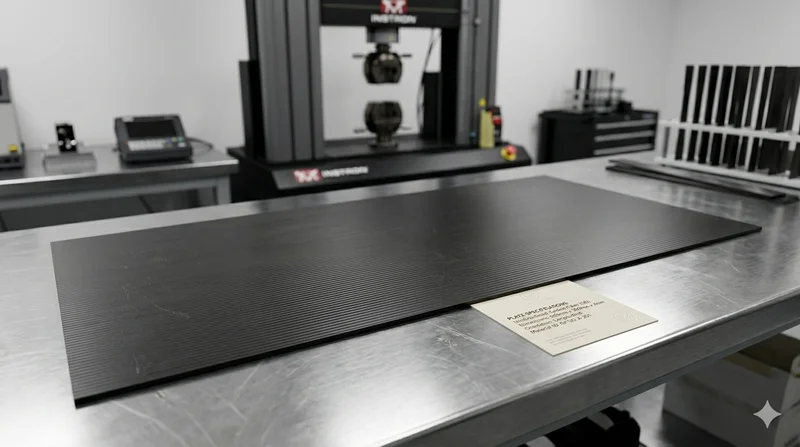
Carbon Fiber Plate — UD Unidirectional T700
Unidirectional carbon fiber plate with all fibers oriented in a single direction for maximum strength along the fiber axis. Essential for structural reinforcements, splints, and applications where load direction is predictable.
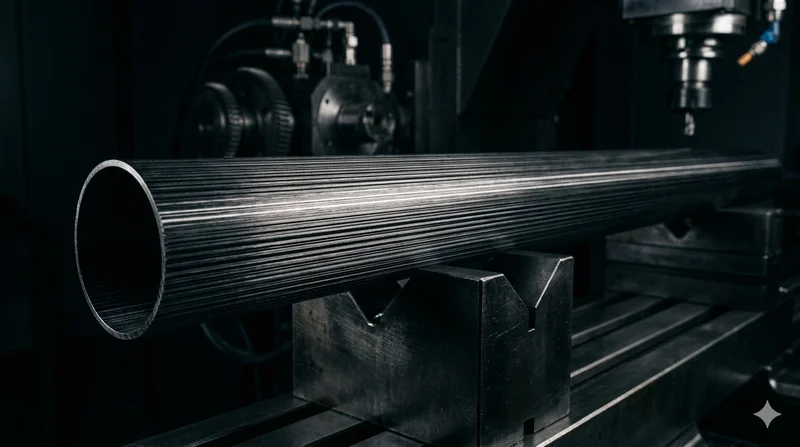
Round Carbon Fiber Tube — UD Unidirectional T700
Unidirectional (UD) round tube with all fibers aligned axially for maximum longitudinal stiffness. Ideal for applications requiring high bending rigidity with minimal weight, such as shafts, struts, and structural reinforcements.
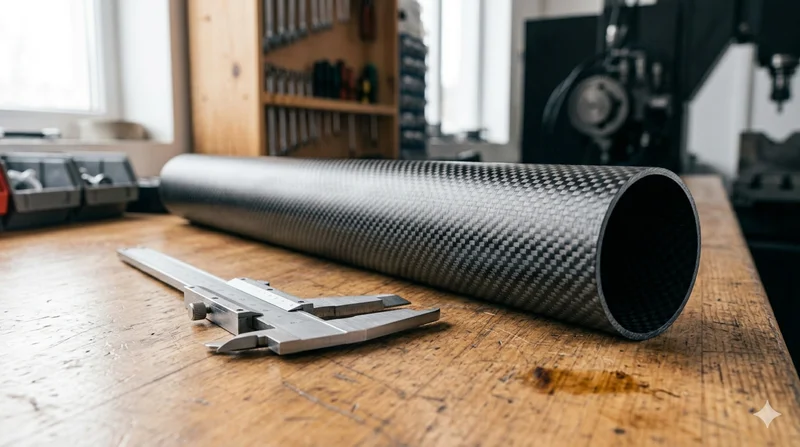
Round Carbon Fiber Tube — 3K Plain Weave T700
Standard round carbon fiber tube manufactured from Toray T700 grade fiber with 3K plain weave. Offers balanced strength and stiffness for general industrial applications including robotics, automation, sports equipment, and aerospace structures.