
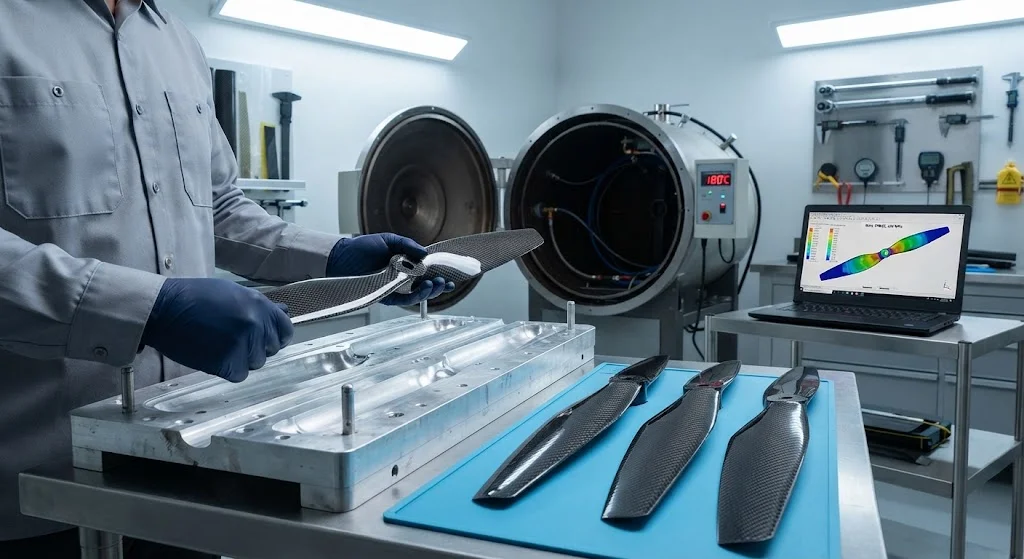
The global commercial drone market is projected to exceed 58 billion USD by 2030, with industrial applications in agriculture, inspection, logistics, and defense driving demand for longer flight times and heavier payload capacities. At the heart of drone performance is the propeller — the component
Introduction
The global commercial drone market is projected to exceed 58 billion USD by 2030, with industrial applications in agriculture, inspection, logistics, and defense driving demand for longer flight times and heavier payload capacities. At the heart of drone performance is the propeller — the component that converts motor torque into thrust. Traditional propeller blades made from injection-molded ABS plastic or aluminum serve adequately for consumer drones, but industrial platforms operating under demanding duty cycles require materials that deliver higher stiffness, lower weight, and superior fatigue resistance.
Carbon fiber reinforced polymer (CFRP) propeller blades address these requirements by offering a stiffness-to-weight ratio approximately three to four times that of aluminum and five to seven times that of ABS plastic. For a commercial quadcopter carrying a 2 kg inspection payload, switching from plastic to carbon fiber propellers can extend flight time from 22 minutes to 27-29 minutes — a 23-32% improvement that directly translates into broader operational coverage per battery charge. This article examines the engineering principles behind carbon fiber drone propeller blades, covering material selection, blade geometry, manufacturing methods, and field performance data.
Material Selection for Propeller Blade Applications
Carbon fiber propeller blades typically use unidirectional or woven carbon fiber fabrics impregnated with epoxy or toughened epoxy resin systems. The choice of material architecture depends on the blade's structural demands:
- Unidirectional carbon fiber: Provides maximum stiffness along the blade span where bending loads dominate. Most efficient for long, slender blades on fixed-wing drones and large multirotors.
- Woven carbon fiber (twill or plain weave): Offers balanced in-plane properties and better damage tolerance. Preferred for shorter, wider blades that experience complex loading including torsion.
- Hybrid layups: Carbon fiber combined with glass fiber or aramid in specific plies to tune stiffness, improve impact resistance, or reduce cost. A common approach uses carbon fiber for the spar cap and glass fiber for the shear web.
The matrix system is equally critical. Standard epoxy systems provide adequate performance for ambient-temperature operations, but drone propellers operating in extreme environments benefit from toughened epoxies with higher glass transition temperatures. A comparison of common material systems is shown below:
| Property | CF/Epoxy (Standard) | CF/Toughened Epoxy | CF/PEEK (Thermoplastic) |
|---|---|---|---|
| Tensile Strength | 1,500-1,800 MPa | 1,200-1,500 MPa | 1,800-2,100 MPa |
| Elastic Modulus | 135-150 GPa | 120-135 GPa | 140-160 GPa |
| Fatigue Life (10⁷ cycles) | 60-70% RUL | 65-75% RUL | 70-80% RUL |
| Max Service Temperature | 120 °C | 140 °C | 250 °C |
| Impact Resistance (Charpy) | 40-60 kJ/m² | 80-120 kJ/m² | 60-90 kJ/m² |
For most commercial drone propellers, standard or toughened epoxy with unidirectional carbon fiber represents the optimal balance of performance, manufacturability, and cost. PEEK-based systems justify their premium in military or high-temperature industrial applications where repeated bird-strike resistance or chemical exposure is required.
Blade Geometry and Aerodynamic Optimization
Carbon fiber's high stiffness enables propeller blade geometries that are impractical with plastic or metal. The key aerodynamic parameters influenced by material choice include:
- Blade aspect ratio: Carbon fiber's stiffness allows longer, narrower blades with higher aspect ratios, reducing induced drag and improving aerodynamic efficiency. A carbon fiber blade can achieve aspect ratios of 8-12, compared to 5-7 for plastic equivalents.
- Blade twist distribution: Precise control of chord-wise twist through automated fiber placement ensures optimal angle of attack along the blade span, maximizing thrust while minimizing torque requirements.
- Thickness-to-chord ratio: Thinner airfoil sections reduce profile drag but require higher material stiffness to prevent aeroelastic flutter. Carbon fiber enables thickness ratios of 6-8% at the tip, versus 10-12% for plastic blades.
- Pre-cone angle: Structural stiffness allows aggressive pre-cone angles that reduce blade root bending moments during hover, extending bearing and motor life.
Computational fluid dynamics (CFD) analysis of a representative 15-inch multirotor propeller shows that a carbon fiber blade with optimized twist and taper achieves 8-12% higher propulsive efficiency than an injection-molded plastic blade of identical planform. The improvement stems primarily from the ability to maintain precise airfoil geometry under load, whereas plastic blades deflect and lose aerodynamic performance at high throttle settings.
Manufacturing Processes
Carbon fiber drone propeller blades are manufactured using several processes, each suited to different production volumes and performance requirements:
- Prepreg layup with autoclave cure: The highest-quality method, producing blades with void content below 1% and fiber volume fractions of 55-60%. Suitable for low-to-medium volume production (100-5,000 units/year) in aerospace and military applications.
- Resin transfer molding (RTM): Closed-mold process offering good surface finish and dimensional accuracy. Fiber volumes of 50-55% are achievable. Preferred for medium-to-high volume commercial production.
- Vacuum infusion: Lower tooling cost than RTM, suitable for prototype and small-batch production. Slightly higher void content (2-3%) but adequate for most commercial drone applications.
- Pultrusion followed by CNC machining: Continuous process for high-volume blade spar production. Pultruded carbon fiber profiles are CNC-machined to final blade geometry, offering excellent fiber alignment and consistent quality.
The manufacturing workflow for a typical carbon fiber propeller blade involves: (1) ply cutting from prepreg rolls using automated cutting tables, (2) layup on a matched metal or composite mold with careful ply orientation control, (3) debulk and cure under vacuum and heat, (4) demolding and trimming using diamond-coated tools, (5) balance checking and dynamic balancing on a precision balancing machine, and (6) surface coating with erosion-resistant polyurethane or polyurea. Quality control includes ultrasonic inspection for delaminations, dimensional verification against CAD models, and rotational balance testing to within 0.1 g·cm.
Performance Data: Endurance and Payload Improvements
Field data from commercial drone operators demonstrates the tangible benefits of carbon fiber propeller blades across multiple application domains:
| Application | Plastic Propeller Flight Time | Carbon Fiber Flight Time | Improvement | Payload Change |
|---|---|---|---|---|
| Agricultural spraying (10L tank) | 12 minutes | 15 minutes | +25% | +0.5 kg |
| Infrastructure inspection (4K camera) | 22 minutes | 28 minutes | +27% | +0.3 kg |
| Package delivery (2 kg payload) | 15 minutes | 19 minutes | +27% | +0.8 kg |
| Thermal mapping (radiometric camera) | 20 minutes | 25 minutes | +25% | +0.2 kg |
| Military ISR (sensor turret) | 35 minutes | 44 minutes | +26% | +1.2 kg |
The consistent 25-27% flight time improvement across diverse platforms reflects the fundamental physics: lighter propellers reduce the total aircraft weight, allowing the same battery energy to sustain flight longer. Additionally, the reduced rotational inertia of carbon fiber blades improves motor responsiveness and reduces energy consumption during altitude changes and aggressive maneuvers.
Vibration Reduction and Acoustic Benefits
Carbon fiber propeller blades exhibit significantly lower vibration levels than plastic equivalents due to their higher stiffness and more uniform mass distribution. Vibration reduction of 40-60% is commonly reported, with direct benefits for:
- Image stabilization: Reduced vibration eliminates the need for heavy gimbal systems on inspection drones, further reducing aircraft weight.
- Sensor accuracy: LiDAR and photogrammetry systems produce cleaner data with lower propeller-induced vibration, improving point cloud density and accuracy.
- Acoustic signature: Stiffer blades maintain their designed airfoil shape more accurately, reducing broadband noise by 3-5 dB compared to flexible plastic blades that flutter at high RPM.
- Component longevity: Lower vibration extends the service life of motors, bearings, and electronic components, reducing maintenance costs for fleet operators.
Frequently Asked Questions
How much lighter are carbon fiber propeller blades compared to aluminum?
Carbon fiber propeller blades are typically 40-50% lighter than aluminum blades of equivalent size and stiffness. For a 15-inch multirotor propeller, a carbon fiber blade weighs approximately 18-22 grams compared to 35-45 grams for aluminum. The weight reduction is accompanied by a 2-3× improvement in stiffness-to-weight ratio, enabling more efficient blade geometries that further enhance aerodynamic performance.
Are carbon fiber propeller blades compatible with standard drone motors?
Yes, carbon fiber propeller blades use the same hub mounting interfaces as plastic or aluminum blades — typically M5 or M6 threaded shafts with adapter rings for different motor bell diameters. The lower weight and rotational inertia of carbon fiber blades often improve motor efficiency and reduce current draw, extending battery life. No motor controller changes are required, though operators may need to recalibrate ESC settings to optimize for the changed propeller characteristics.
What is the typical service life of a carbon fiber propeller blade?
Carbon fiber propeller blades typically last 3-5 times longer than plastic blades under equivalent operating conditions. In commercial inspection operations, carbon fiber blades maintain their aerodynamic performance for 200-400 flight hours before requiring replacement, compared to 50-100 hours for plastic blades. The primary wear mechanism is leading-edge erosion from dust and rain, which can be mitigated with polyurethane erosion protection coatings.
Conclusion
Carbon fiber drone propeller blades represent a mature, high-impact upgrade for commercial and industrial UAV platforms. The 25-32% improvement in flight endurance and 15-25% increase in payload capacity directly translate into broader operational coverage, higher productivity per flight, and lower total cost of ownership for drone fleet operators. Material selection between standard epoxy, toughened epoxy, and thermoplastic systems allows optimization for specific operating environments, while manufacturing processes from prepreg autoclave to RTM scale across production volumes.
For drone manufacturers and fleet operators seeking to maximize mission performance, carbon fiber propeller blades offer a proven, drop-in solution with measurable return on investment. YongXian supplies high-modulus carbon fiber fabrics and prepreg materials optimized for propeller blade applications. Explore our carbon fiber product range or contact our engineering team to discuss material systems for your drone propeller program.
Part of topic
Related Articles
- Carbon Fiber Deployable Structures for Satellites: Boom and Antenna Mast Applications
- Carbon Fiber Electromagnetic Interference Shielding: EMI Solutions for Electronics and 5G
- Carbon Fiber Marine Hydrofoil Structures: Speed and Efficiency for High-Performance Vessels
- Carbon Fiber Reusable Launch Vehicle Structures: Thermal Protection and Structural Integrity
- Carbon Fiber Underwater Robots and AUVs: Hydrostatic Pressure and Corrosion Resistance
- Carbon Fiber Electric Aircraft Propulsion: Lightweight Motor Housings and Nacelle Structures
Interested in Our Products?
Contact our team for competitive pricing and technical specifications.
Get a QuoteRelated Products

Carbon Fiber Plate — 3K Twill T700 1.5mm
Thin 1.5mm carbon fiber plate with 3K twill weave surface. Lightweight and stiff, commonly used for covers, panels, drone bodies, and applications requiring a premium aesthetic appearance.

Carbon Fiber Plate — 3K Twill T700 3.0mm
Medium-thickness 3.0mm carbon fiber plate offering significantly higher load capacity while maintaining attractive 3K twill finish. Suitable for structural brackets, reinforcement plates, and load-bearing panels.

Square Carbon Fiber Tube — 3K Twill T700
Square cross-section carbon fiber tube manufactured with 3K twill weave for torsional strength. Preferred for structural frames, trusses, and support columns where rectangular geometry offers design flexibility.
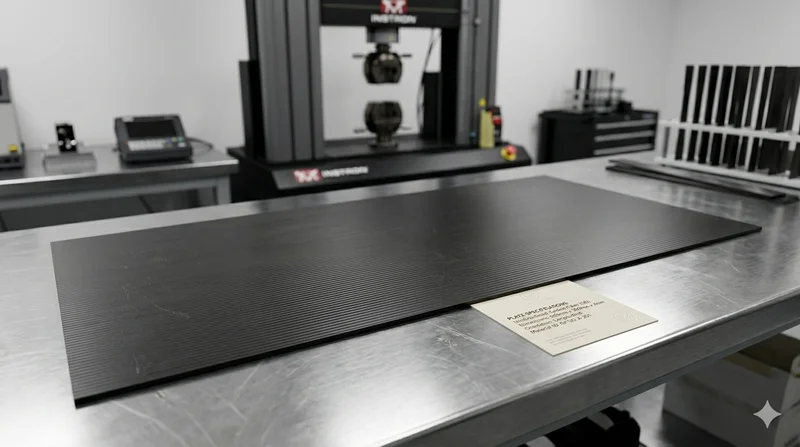
Carbon Fiber Plate — UD Unidirectional T700
Unidirectional carbon fiber plate with all fibers oriented in a single direction for maximum strength along the fiber axis. Essential for structural reinforcements, splints, and applications where load direction is predictable.
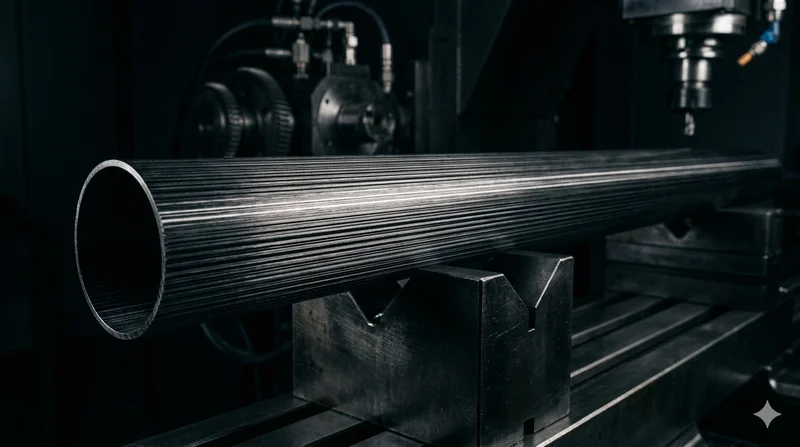
Round Carbon Fiber Tube — UD Unidirectional T700
Unidirectional (UD) round tube with all fibers aligned axially for maximum longitudinal stiffness. Ideal for applications requiring high bending rigidity with minimal weight, such as shafts, struts, and structural reinforcements.