
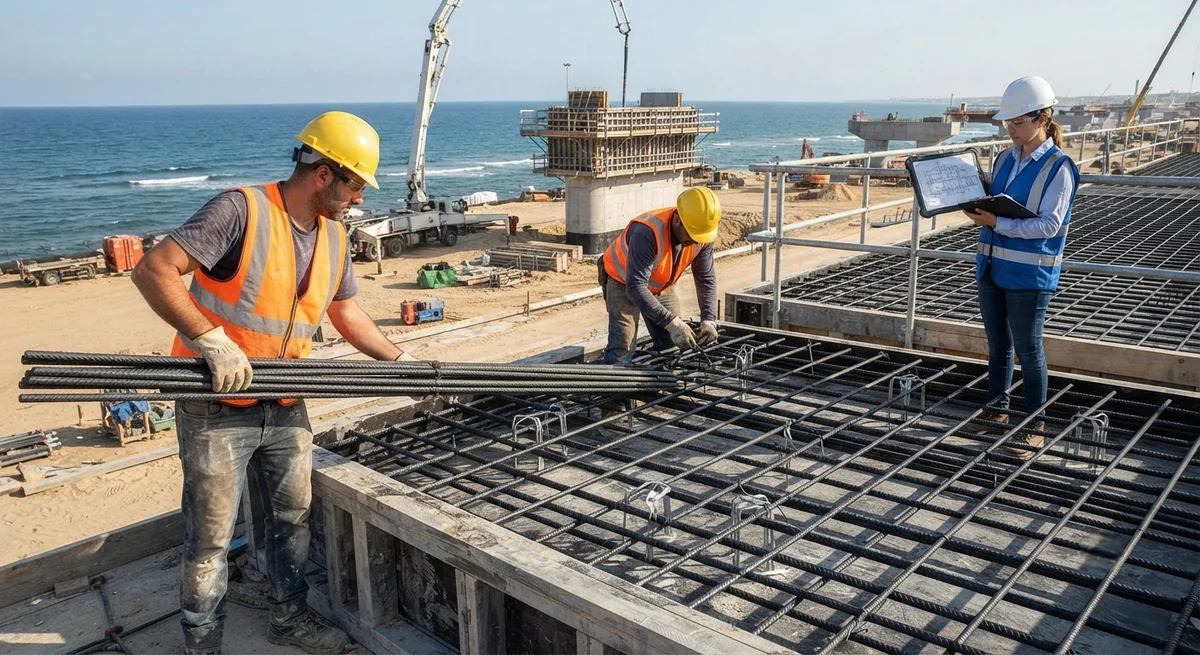
Steel reinforcement is the backbone of modern concrete construction, but it has one fundamental weakness: corrosion. In marine environments, bridge decks treated with deicing salts, and industrial facilities exposed to chemicals, steel rebar corrodes and spalls the surrounding concrete,
Introduction
Steel reinforcement is the backbone of modern concrete construction, but it has one fundamental weakness: corrosion. In marine environments, bridge decks treated with deicing salts, and industrial facilities exposed to chemicals, steel rebar corrodes and spalls the surrounding concrete, requiring expensive repairs and reducing service life. Carbon fiber reinforced polymer (CFRP) rebar offers an alternative that eliminates corrosion as a failure mechanism while providing comparable or superior tensile strength at a fraction of the weight.
CFRP rebar is not a drop-in replacement for steel — its different modulus, bond behavior, and lack of ductility require engineers to follow dedicated design rules. This article explains the material properties of CFRP rebar, its bond strength and crack control behavior in concrete, and the design codes that now govern its use, giving structural engineers and construction buyers the information they need to specify it correctly.
Material Properties of CFRP Rebar
CFRP rebar is manufactured by pultruding continuous carbon fibers through a resin bath and forming them into bars with a surface treatment that ensures mechanical bond with concrete. The key material properties differ substantially from steel:
| Property | CFRP Rebar | Steel Rebar (Grade 60) | Design Implication |
|---|---|---|---|
| Tensile strength | 1,800-2,500 MPa | 420 MPa (yield) | Much higher, but no yielding |
| Modulus of elasticity | 120-150 GPa | 200 GPa | Lower stiffness, larger deflections |
| Density | 1.5-1.6 g/cm³ | 7.85 g/cm³ | 75-80% lighter |
| Elongation at failure | 1.5-2.0% | 12-18% | Brittle failure, no ductility warning |
| Corrosion resistance | Excellent, inert | Corrodes in chloride environments | Extended service life in harsh environments |
| Thermal expansion | 0.2-0.6 × 10⁻⁶/°C (longitudinal) | 11.7 × 10⁻⁶/°C | Low thermal stresses with concrete |
Two properties dominate design thinking. First, CFRP rebar has no yield point — it behaves elastically to failure, which means structures reinforced with it fail without the visual warning that steel yielding provides. Second, its elastic modulus is roughly 60-75% of steel, so serviceability (deflection and crack width) often governs design rather than strength.
Bond Strength and Development Length
Bond between rebar and concrete is the mechanism that transfers load from the bar to the surrounding concrete, and it governs development length, splice length, and crack behavior. CFRP rebar achieves bond through surface treatment rather than the deformations of steel rebar. Common surface treatments include:
- Sand-coated surface: Silica sand particles bonded to the bar surface provide mechanical interlock. This is the most common treatment, achieving bond strengths comparable to deformed steel bars.
- Spiral-wrapped or helically wound surface: A carbon fiber tow wrapped around the bar creates a rib-like profile that improves mechanical anchorage.
- Indented or dimpled surface: Moulded indentations on the bar surface provide bond without adding material.
Bond strength for CFRP rebar in normal-strength concrete typically ranges from 8-15 MPa, compared with 10-20 MPa for deformed steel. However, because CFRP bars have lower stiffness, the bond stress distribution differs, and design codes require development lengths that are typically 1.2-1.5 times those of steel for equivalent bar diameters. The bond also degrades more under cyclic loading and at elevated temperature, which design codes address through reduction factors.
Crack Control and Serviceability
Crack control is critical in CFRP-reinforced concrete because the lower modulus of the rebar produces wider cracks for a given tensile stress, and because CFRP does not yield to redistribute stress. Design codes address serviceability through two mechanisms:
- Crack width limits: Codes such as ACI 440.1R and the Canadian CSA S806 limit calculated crack widths — typically 0.5 mm for exterior exposure and 0.7 mm for interior — by controlling the maximum bar spacing.
- Deflection control: Because CFRP bars are less stiff, members experience larger deflections under service loads. Designers compensate by using higher reinforcement ratios, deeper sections, or by taking advantage of the cracked section's higher moment capacity.
The practical consequence is that CFRP-reinforced members are often designed to be deflection-controlled with reinforcement ratios 1.3-2 times higher than an equivalent steel design. The corrosion resistance eliminates the traditional reason for limiting crack widths (protecting the steel), so wider cracks are acceptable from a durability standpoint — but aesthetics and user perception still limit crack widths in visible structures.
Durability in Corrosive Environments
The principal economic case for CFRP rebar is durability in environments where steel corrodes. The corrosion of steel rebar in chloride-contaminated concrete is an electrochemical process that CFRP completely avoids:
- Marine structures: Tidal zones, splash zones, and seawater-immersed structures where chloride ingress is inevitable. CFRP rebar eliminates the need for corrosion allowances, epoxy-coated steel, or cathodic protection systems.
- Bridge decks and road structures: Deicing salt exposure in cold climates is the most widespread corrosion driver. CFRP-reinforced bridge decks are being adopted by highway agencies across North America and Europe.
- Industrial facilities: Chemical plants, wastewater treatment, and food processing facilities where acidic or alkaline environments attack steel.
Life-cycle cost analyses consistently show CFRP rebar becomes economical when structures are designed for service lives beyond 50-75 years in corrosive environments, because the higher initial material cost is offset by eliminating maintenance and repair cycles. A 2024 life-cycle study of a marine bridge deck estimated CFRP rebar reduced 100-year total ownership costs by 15-25% compared with epoxy-coated steel.
Design Codes and Standards
CFRP rebar design is now governed by mature codes in several jurisdictions, and the design provisions have converged on similar methodologies:
- ACI 440.1R (USA): Guide for the design and construction of structural concrete reinforced with FRP bars, providing strength reduction factors and serviceability provisions.
- CSA S806 (Canada): Design and construction of building structures with fibre-reinforced polymers, one of the earliest comprehensive FRP concrete codes.
- fib Bulletin 40 (Europe): FRP reinforcement in RC structures, forming the basis for European national provisions.
- ACI 440.11 (USA): Building code requirements for structural concrete reinforced with FRP bars, now referenced in the International Building Code.
Common features across these codes include strength reduction factors of 0.55-0.65 for flexure and shear (reflecting the brittle failure mode), limits on compressive strength of concrete below which FRP bond is unreliable, and explicit crack width and deflection verification requirements. Material standards including ASTM D7957 for CFRP bars specify dimensional tolerances, surface treatment verification, and minimum tensile properties.
Frequently Asked Questions
Can CFRP rebar directly replace steel rebar in existing designs?
Not without redesign. Because CFRP rebar has a lower elastic modulus and no yield point, a direct one-for-one bar substitution produces larger deflections, wider cracks, and a different failure mode. Engineers must redesign members using FRP-specific provisions: typically increasing reinforcement area by 30-100%, checking deflection and crack width limits, and applying the lower strength reduction factors. The concrete geometry can usually remain the same, but the bar layout, spacing, and development lengths change. Attempting a direct substitution without redesign is unsafe and violates the requirements of ACI 440.11 and similar codes.
How does CFRP rebar behave in fire conditions?
CFRP rebar loses strength at elevated temperatures because the polymer resin softens and decomposes above roughly 300-400°C, while the carbon fibers themselves retain strength to over 1,000°C. Design codes therefore limit CFRP-reinforced concrete to applications where fire resistance is not a governing requirement, or where the concrete cover is sufficient to keep the bars below critical temperature during a fire. For structures requiring fire ratings, designers either specify a minimum cover thickness based on fire endurance calculations, add thermal barriers, or use hybrid systems with steel in fire-critical zones. Concrete cover requirements for fire are typically larger for CFRP than for steel reinforcement.
Is CFRP rebar more expensive than steel rebar?
Yes, on a per-meter basis. CFRP rebar typically costs 5-10 times more than equivalent steel rebar, and the material cost per structure is higher even accounting for the design differences. However, the relevant comparison is life-cycle cost in corrosive environments: when a structure must last 75-100 years in a marine or deicing-salt environment, eliminating corrosion maintenance and repair can make CFRP cheaper over the structure's life by 15-25% or more. For non-corrosive interior applications, steel remains the economically rational choice. The decision is therefore an asset-owner life-cycle analysis, not a materials price comparison.
Conclusion
CFRP rebar has matured from a niche product into a code-governed reinforcement option with a strong economic case in corrosive environments. Its corrosion immunity, high tensile strength, and light weight make it the preferred choice for marine structures, bridge decks, and industrial facilities designed for long service lives. The engineering trade-offs — lower stiffness, brittle failure, and modified bond behavior — are well understood and are addressed by established design codes including ACI 440.11 and CSA S806.
For structural engineers and construction buyers, the key is to treat CFRP rebar as a design material with its own rules rather than a steel substitute. Explore our carbon fiber reinforcement products including CFRP bars and profiles, or contact our technical team for material specifications and design support for your project.
Part of topic
Related Articles
- Carbon Fiber Mooring for Floating Offshore Wind: Fatigue and Corrosion in Deep Water
- Carbon Fiber Bicycle Frame Optimization: Layup Design and Manufacturing for Competitive Racing
- Carbon Fiber CFRP Retrofit for Infrastructure: Bridge and Building Seismic Strengthening
- Carbon Fiber Medical Imaging Equipment: Lightweight Gantry and Couch Structures for MRI/CT
- Carbon Fiber EV Battery Enclosures: Crash Safety and Electromagnetic Shielding Design
- Carbon Fiber Structures for Low-Altitude Economy: UAV Airframes and eVTOL Components
Interested in Our Products?
Contact our team for competitive pricing and technical specifications.
Get a QuoteRelated Products

Carbon Fiber Plate — 3K Twill T700 3.0mm
Medium-thickness 3.0mm carbon fiber plate offering significantly higher load capacity while maintaining attractive 3K twill finish. Suitable for structural brackets, reinforcement plates, and load-bearing panels.

Carbon Fiber Plate — 3K Twill T700 1.5mm
Thin 1.5mm carbon fiber plate with 3K twill weave surface. Lightweight and stiff, commonly used for covers, panels, drone bodies, and applications requiring a premium aesthetic appearance.

Square Carbon Fiber Tube — 3K Twill T700
Square cross-section carbon fiber tube manufactured with 3K twill weave for torsional strength. Preferred for structural frames, trusses, and support columns where rectangular geometry offers design flexibility.
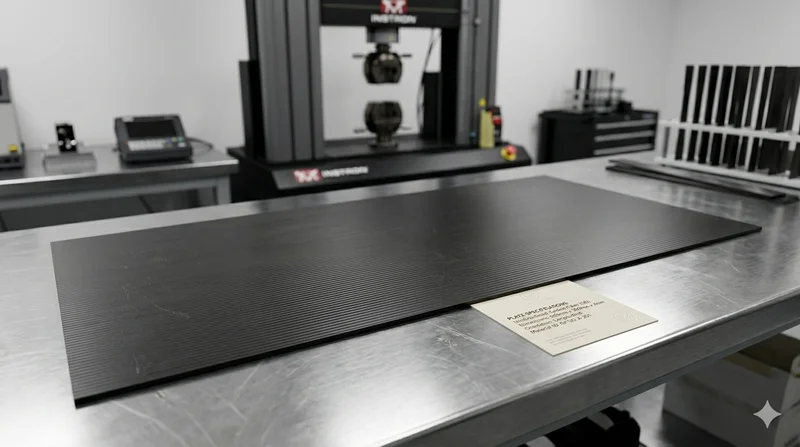
Carbon Fiber Plate — UD Unidirectional T700
Unidirectional carbon fiber plate with all fibers oriented in a single direction for maximum strength along the fiber axis. Essential for structural reinforcements, splints, and applications where load direction is predictable.
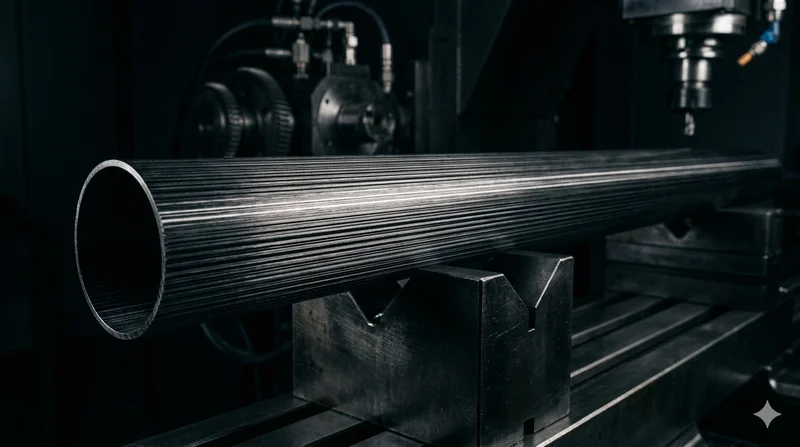
Round Carbon Fiber Tube — UD Unidirectional T700
Unidirectional (UD) round tube with all fibers aligned axially for maximum longitudinal stiffness. Ideal for applications requiring high bending rigidity with minimal weight, such as shafts, struts, and structural reinforcements.