
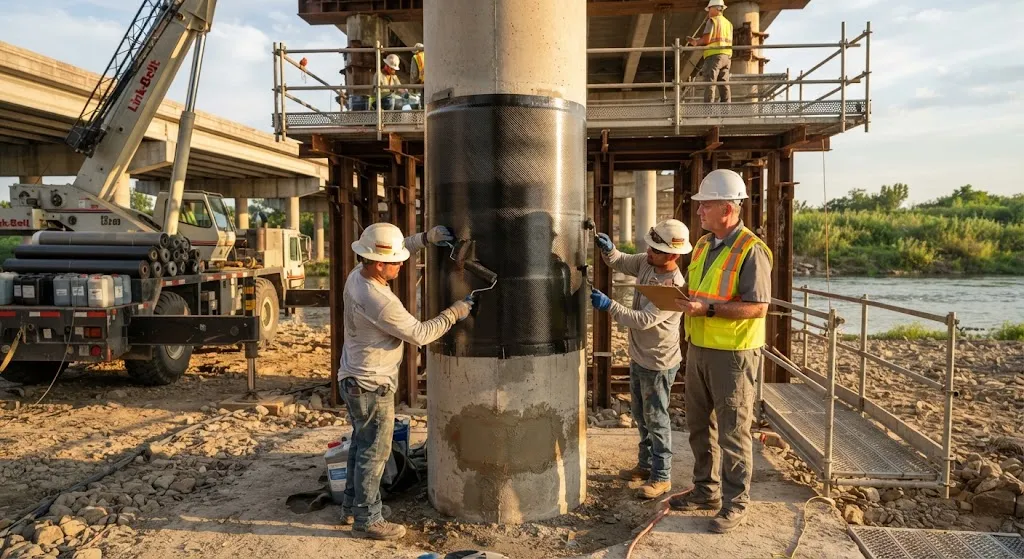
Carbon fiber reinforced polymer (CFRP) retrofit systems have transformed the way engineers approach infrastructure rehabilitation, particularly for seismic strengthening of bridges and buildings. Traditional strengthening methods — steel jacketing, concrete enlargement, or post-tensioning — add weig
Introduction
Carbon fiber reinforced polymer (CFRP) retrofit systems have transformed the way engineers approach infrastructure rehabilitation, particularly for seismic strengthening of bridges and buildings. Traditional strengthening methods — steel jacketing, concrete enlargement, or post-tensioning — add weight to structures that may already be load-limited, and they often require extended shutdowns that disrupt traffic and economic activity. CFRP retrofit eliminates these constraints: the material weighs approximately 1.6 g/cm³ compared to steel's 7.8 g/cm³, can be applied without heavy equipment, and cures to full strength within days rather than weeks.
For aging infrastructure worldwide, CFRP retrofit represents a cost-effective path to extending service life while meeting updated seismic design codes. The global CFRP retrofit market for infrastructure is projected to exceed $2.5 billion by 2030, driven by aging bridges in North America and Europe, rapid urbanization in Asia-Pacific, and increasingly stringent seismic performance standards. This article examines how CFRP retrofit systems are designed, specified, and installed for bridge and building seismic strengthening applications.
Part of topic
Related Articles
- Carbon Fiber Mooring for Floating Offshore Wind: Fatigue and Corrosion in Deep Water
- Carbon Fiber Bicycle Frame Optimization: Layup Design and Manufacturing for Competitive Racing
- Carbon Fiber Medical Imaging Equipment: Lightweight Gantry and Couch Structures for MRI/CT
- Carbon Fiber EV Battery Enclosures: Crash Safety and Electromagnetic Shielding Design
- Carbon Fiber Structures for Low-Altitude Economy: UAV Airframes and eVTOL Components
- Carbon Fiber Satellite Structures: Dimensional Stability for Space Environment Cycling
Interested in Our Products?
Contact our team for competitive pricing and technical specifications.
Get a QuoteRelated Products
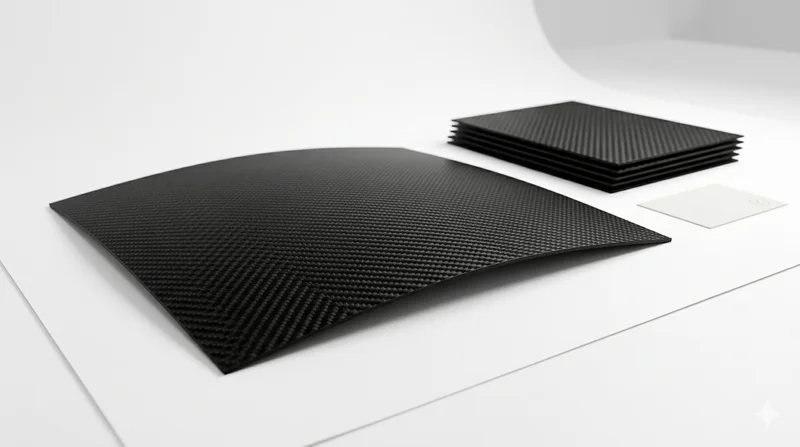
Carbon Fiber Plate — 3K Twill T700 1.5mm
Thin 1.5mm carbon fiber plate with 3K twill weave surface. Lightweight and stiff, commonly used for covers, panels, drone bodies, and applications requiring a premium aesthetic appearance.
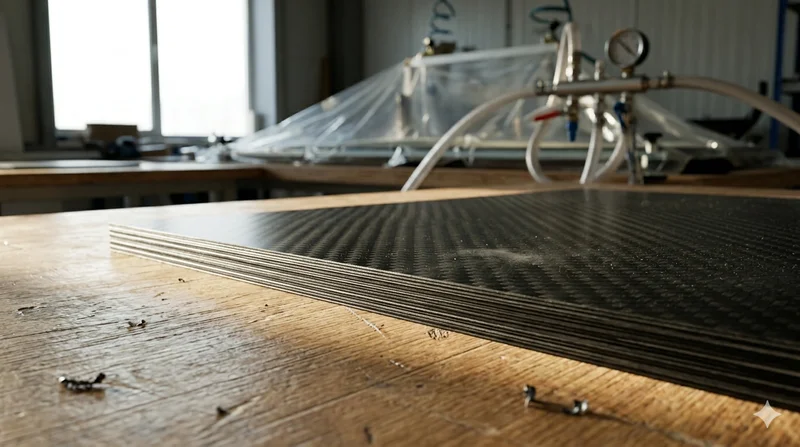
Carbon Fiber Plate — 3K Twill T700 3.0mm
Medium-thickness 3.0mm carbon fiber plate offering significantly higher load capacity while maintaining attractive 3K twill finish. Suitable for structural brackets, reinforcement plates, and load-bearing panels.
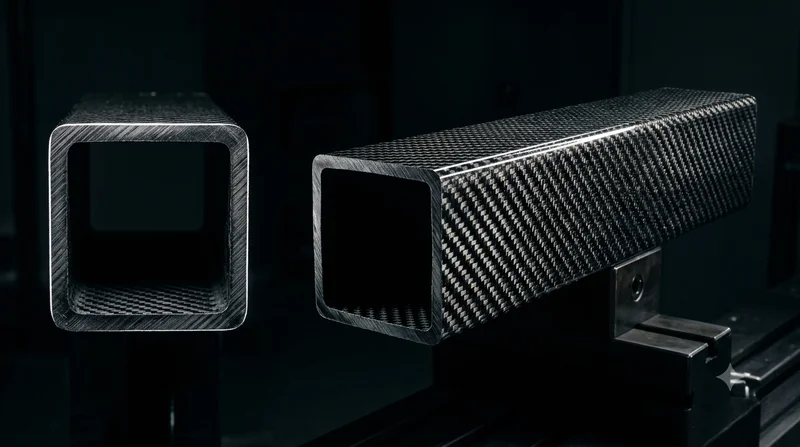
Square Carbon Fiber Tube — 3K Twill T700
Square cross-section carbon fiber tube manufactured with 3K twill weave for torsional strength. Preferred for structural frames, trusses, and support columns where rectangular geometry offers design flexibility.
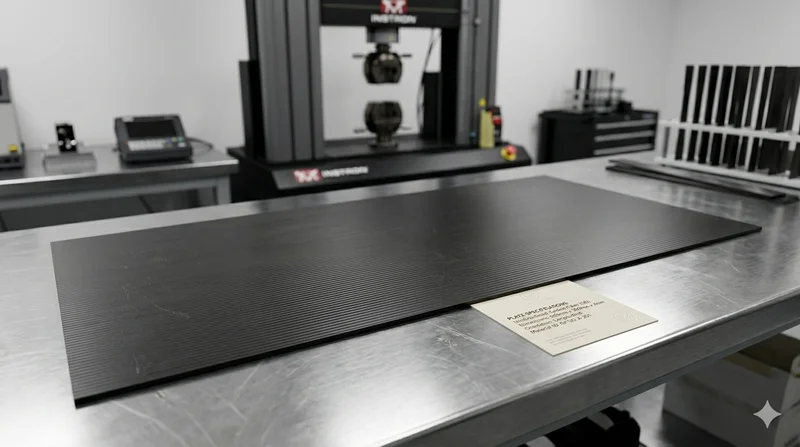
Carbon Fiber Plate — UD Unidirectional T700
Unidirectional carbon fiber plate with all fibers oriented in a single direction for maximum strength along the fiber axis. Essential for structural reinforcements, splints, and applications where load direction is predictable.
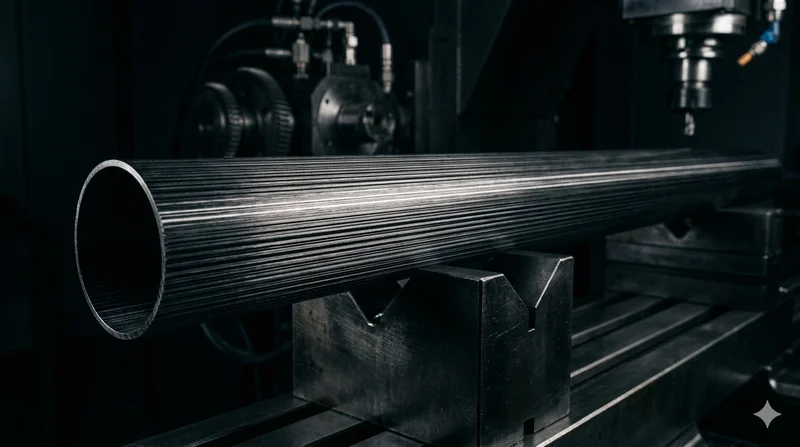
Round Carbon Fiber Tube — UD Unidirectional T700
Unidirectional (UD) round tube with all fibers aligned axially for maximum longitudinal stiffness. Ideal for applications requiring high bending rigidity with minimal weight, such as shafts, struts, and structural reinforcements.