
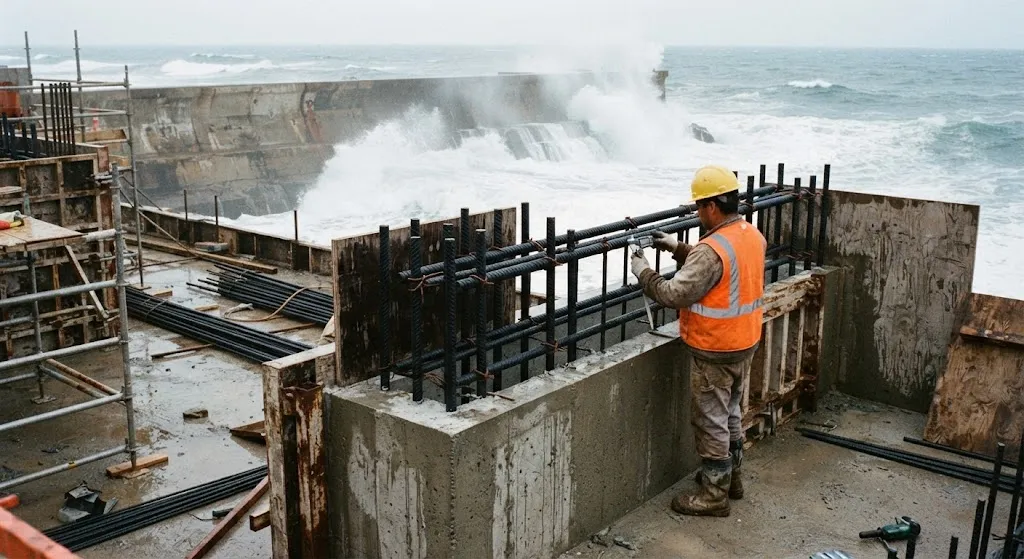
Corrosion of steel reinforcement is the single largest cause of premature failure in concrete structures worldwide. In marine environments, chemical plants, and wastewater facilities, chloride ions and aggressive chemicals penetrate concrete cover and attack steel rebar, causing expansion, cracking,
Introduction
Corrosion of steel reinforcement is the single largest cause of premature failure in concrete structures worldwide. In marine environments, chemical plants, and wastewater facilities, chloride ions and aggressive chemicals penetrate concrete cover and attack steel rebar, causing expansion, cracking, and spalling that can reduce a structure's service life from a designed 75 years to under 20. The economic cost is staggering: the US Federal Highway Administration estimates that corrosion-related deterioration costs the US alone over $8 billion annually in bridge repairs, while the global cost of corrosion across all infrastructure exceeds $2.5 trillion per year.
Carbon fiber composite rebar — also known as CFRP rebar or GFRP rebar when using glass fiber — eliminates corrosion as a failure mechanism entirely. Unlike protected steel options such as epoxy coating or stainless steel alloys, CFRP rebar does not corrode in chloride, acid, or alkaline environments regardless of concrete cover quality. This article evaluates CFRP rebar performance specifically in corrosive environments, examining how it performs in marine splash zones, chemical processing plants, and wastewater treatment facilities, and providing the life-cycle cost data that owners and engineers need to justify the material premium.
Why Steel Fails in Corrosive Environments
Understanding why CFRP rebar succeeds requires understanding why steel fails. Steel corrosion in concrete is an electrochemical process driven by three conditions: an anode (where iron dissolves), a cathode (where oxygen is reduced), and an electrolyte (the concrete pore solution containing dissolved chlorides or hydroxides). In corrosive environments, these conditions are inevitable:
| Environment | Primary Corrosion Driver | Steel Failure Timeline | Consequence |
|---|---|---|---|
| Marine splash zone | Chloride ingress from seawater spray | 5-15 years to cracking | Section loss, structural capacity reduction |
| Chemical plant floor | Acid/alkali spill exposure | 3-10 years to severe damage | Concrete contamination, shutdown |
| Wastewater treatment | H₂S, sulfuric acid, chloride | 8-20 years to failure | Structural compromise, environmental risk |
| Deicing salt exposure | Chloride from road salts | 15-30 years to cracking | Bridge deck replacement |
| Swimming pool structures | Chlorinated water atmosphere | 10-20 years to spalling | Facility closure for repair |
The critical failure mechanism is not surface rust — it is the volumetric expansion of corrosion products (rust occupies 2-6 times the volume of the steel it replaces) that generates internal tensile stresses exceeding concrete's tensile strength. Once cracking initiates, a positive feedback loop accelerates deterioration: cracks allow faster chloride penetration, which accelerates corrosion, which generates more cracking. CFRP rebar breaks this cycle at its root by eliminating the corrosion reaction entirely.
Marine and Offshore Applications
The marine environment is the most demanding application for reinforcement materials, and it is where CFRP rebar provides the most compelling economic case. Specific marine applications include:
- Tidal and splash zones: The most corrosive zone of any marine structure, where alternating wet-dry cycles maximize chloride concentration in concrete pore solution. CFRP rebar eliminates the need for cathodic protection systems, which cost $50-150 per square meter and require ongoing monitoring and power supply.
- Seawater-immersed structures: Piers, breakwaters, and underwater foundations where concrete is permanently saturated. CFRP rebar maintains full strength in permanently wet conditions, unlike steel which suffers accelerated pitting corrosion.
- Coastal bridge decks: Highway bridges in coastal regions face salt spray and deicing salt exposure. CFRP-reinforced bridge decks in North America and Europe have demonstrated zero corrosion damage after 15+ years of service.
- Marine fender systems: Dock fenders and berthing structures that experience impact loading in saltwater environments. CFRP rebar maintains structural integrity where steel fender piles corrode and lose section.
Life-cycle cost analyses consistently favor CFRP rebar in marine applications. A 2023 study of a coastal bridge deck in the southeastern United States found that CFRP reinforcement reduced 75-year total ownership costs by 22% compared with epoxy-coated steel, even accounting for the higher initial material cost. The savings came primarily from eliminating three major repair cycles that steel-reinforced decks would require.
Chemical Plant and Industrial Applications
Chemical processing facilities present a different corrosion challenge than marine environments. Instead of chloride-driven pitting, chemical plants expose reinforcement to a cocktail of acids, alkalis, solvents, and oxidizers that attack both the steel and the concrete matrix. CFRP rebar's advantages in these environments extend beyond corrosion resistance:
- Acid resistance: CFRP rebar is inert to most organic and inorganic acids at concentrations encountered in industrial spills, including sulfuric, hydrochloric, nitric, and acetic acid. Steel corrodes rapidly in pH below 4, losing 0.1-1.0 mm of section per year in strong acid environments.
- Alkali resistance: While concrete itself is alkaline (pH 12-13), chemical plants may expose floors and structures to concentrated sodium hydroxide or potassium hydroxide solutions that degrade concrete cover, exposing reinforcement. CFRP rebar maintains full strength in alkaline conditions.
- Solvent resistance: Many industrial solvents — including acetone, toluene, and methanol — do not attack CFRP rebar, while they can degrade certain concrete admixtures and accelerators that protect steel.
- Temperature cycling: Chemical plants often experience thermal cycling from process operations. CFRP rebar's coefficient of thermal expansion (0.2-0.6 × 10⁻⁶/°C) is much closer to concrete (10-12 × 10⁻⁶/°C) than steel (12 × 10⁻⁶/°C), reducing thermal stresses at the rebar-concrete interface.
Chemical plant flooring is a particularly strong application for CFRP rebar, where acid-resistant concrete overlays are reinforced with CFRP to prevent the reinforcement corrosion that would otherwise limit floor life to 10-15 years in aggressive chemical environments.
Wastewater Treatment Facilities
Wastewater treatment plants combine several aggressive factors: hydrogen sulfide (H₂S) gas from anaerobic decomposition, sulfuric acid produced by bacterial oxidation of H₂S, chlorinated water in disinfection areas, and varying pH levels throughout the treatment process. Steel reinforcement in these environments typically fails within 15-25 years, requiring costly shutdowns and repairs.
CFRP rebar addresses wastewater treatment corrosion through three mechanisms:
- H₂S resistance: Hydrogen sulfide gas and its oxidized product, sulfuric acid, attack concrete and steel reinforcement. CFRP rebar is chemically inert to H₂S and sulfuric acid at concentrations found in wastewater treatment.
- Chlorine resistance: Chlorinated water used in disinfection processes contains hypochlorous acid that accelerates steel corrosion. CFRP rebar maintains full mechanical properties in chlorinated environments.
- Microbial-induced corrosion immunity: Thiobacillus and other sulfate-reducing bacteria produce localized acidic conditions that aggressively attack steel. CFRP rebar is unaffected by biological corrosion mechanisms.
The economic case is strengthened by the fact that wastewater treatment plants cannot be easily taken offline for repairs. Every day of shutdown costs municipalities $50,000-200,000 in alternative treatment and regulatory penalties. CFRP-reinforced structures extend service intervals and reduce unplanned shutdowns, providing operational savings that complement the material durability benefits.
Life-Cycle Cost Comparison
The decision to specify CFRP rebar versus protected steel alternatives is ultimately an economic one. The following comparison shows the total ownership cost over 75 years for a representative marine bridge deck application:
| Rebar Option | Initial Cost ($/m²) | Repair Cycles (75 yr) | Repair Cost ($/m²) | 75-Year Total ($/m²) |
|---|---|---|---|---|
| Unprotected steel | 45 | 3-4 | 300-500 | 945-2,045 |
| Epoxy-coated steel | 65 | 2-3 | 250-400 | 565-1,265 |
| Stainless steel | 180 | 0-1 | 0-300 | 180-480 |
| CFRP rebar | 120 | 0 | 0 | 120 |
While stainless steel approaches CFRP rebar in life-cycle cost, it weighs 5 times more, making transportation and installation more expensive and carbon-intensive. CFRP rebar's weight advantage — approximately 75-80% lighter than steel — also reduces crane requirements and installation time on construction sites, providing additional savings that are not captured in the simple cost comparison above.
Frequently Asked Questions
How does CFRP rebar perform in fire conditions at chemical plants?
CFRP rebar loses structural capacity at elevated temperatures because the polymer resin softens and decomposes above approximately 300-400°C. However, concrete provides inherent fire protection through its low thermal conductivity, and the required concrete cover thickness for CFRP is typically 5-10 mm greater than for steel. In chemical plant applications, fire risk assessment considers the specific fire scenario: pool fires from solvent spills reach 800-1,000°C but are typically short-duration, while structural fires may persist longer. For facilities with high fire risk, designers specify minimum concrete cover based on fire endurance calculations, add intumescent coatings, or use hybrid reinforcement with steel in fire-critical zones.
Can CFRP rebar be cut and bent on site like steel rebar?
CFRP rebar can be cut with standard power tools (diamond blade or abrasive wheel), but it cannot be bent on site after manufacturing — it is a pultruded product with a fixed shape. This means all bending must be done during fabrication, requiring accurate shop drawings and prefabrication. While this adds a planning step compared to steel rebar, it eliminates field bending errors and ensures consistent geometry. For complex geometries, CFRP rebar is available in straight bars, L-shapes, U-shapes, and custom forms from the manufacturer.
What is the minimum concrete cover required for CFRP rebar in marine environments?
Minimum cover requirements vary by code, but typical values for CFRP rebar in marine environments are 40-50 mm for exposure class XC4 (wet, rarely dry) and 50-65 mm for XD1-XD3 (chloride environments), compared with 35-50 mm for steel. The slightly greater cover for CFRP reflects its lower fire resistance rather than corrosion concerns — in fact, CFRP rebar can tolerate thinner cover than steel from a corrosion standpoint because it does not corrode. ACI 440.1R and fib Bulletin 40 provide the specific cover tables for different exposure conditions.
Conclusion
Carbon fiber composite rebar eliminates corrosion as a failure mechanism in the most demanding concrete environments — marine splash zones, chemical processing plants, and wastewater treatment facilities. The life-cycle cost data consistently shows CFRP rebar becoming the most economical option within 15-25 years of service in corrosive environments, with total ownership costs 15-30% lower than even protected steel alternatives over a 75-year design life. The weight advantage, installation speed, and elimination of ongoing corrosion monitoring add further economic value beyond the raw material cost comparison.
For structural engineers and facility owners evaluating reinforcement options for aggressive environments, CFRP rebar represents a proven, code-governed solution that converts a recurring maintenance liability into a one-time capital investment. Explore our CFRP rebar product range for marine and chemical plant applications, or contact our engineering team for life-cycle cost analysis and design support for your specific project requirements.
Part of topic
Related Articles
- Carbon Fiber High-Speed Train Brake Discs: Thermal Stability and Wear Resistance
- Carbon Fiber Helicopter Rotor Blade Spar Design: Fatigue Life and Erosion Protection
- Carbon Fiber Automotive Side Panels: High-Gloss Class-A Surface Finish for Premium Vehicles
- Carbon Fiber Deployable Structures for Satellites: Boom and Antenna Mast Applications
- Carbon Fiber Electromagnetic Interference Shielding: EMI Solutions for Electronics and 5G
- Carbon Fiber Drone Propeller Blades: Lightweight Design for Endurance and Payload
Interested in Our Products?
Contact our team for competitive pricing and technical specifications.
Get a QuoteRelated Products

Carbon Fiber Plate — 3K Twill T700 1.5mm
Thin 1.5mm carbon fiber plate with 3K twill weave surface. Lightweight and stiff, commonly used for covers, panels, drone bodies, and applications requiring a premium aesthetic appearance.

Carbon Fiber Plate — 3K Twill T700 3.0mm
Medium-thickness 3.0mm carbon fiber plate offering significantly higher load capacity while maintaining attractive 3K twill finish. Suitable for structural brackets, reinforcement plates, and load-bearing panels.

Square Carbon Fiber Tube — 3K Twill T700
Square cross-section carbon fiber tube manufactured with 3K twill weave for torsional strength. Preferred for structural frames, trusses, and support columns where rectangular geometry offers design flexibility.
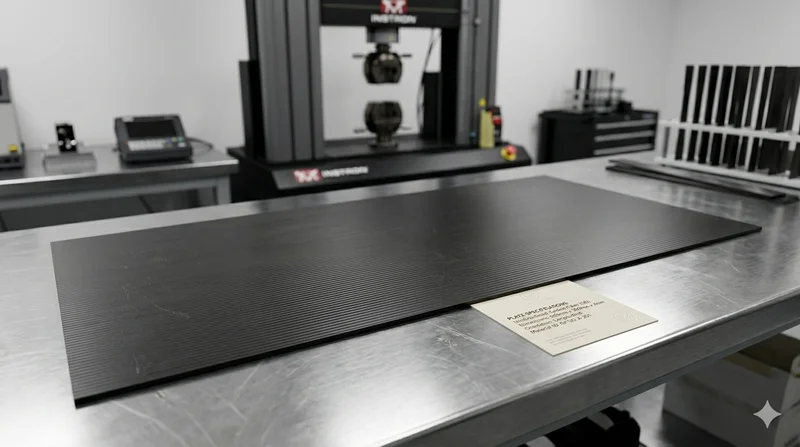
Carbon Fiber Plate — UD Unidirectional T700
Unidirectional carbon fiber plate with all fibers oriented in a single direction for maximum strength along the fiber axis. Essential for structural reinforcements, splints, and applications where load direction is predictable.
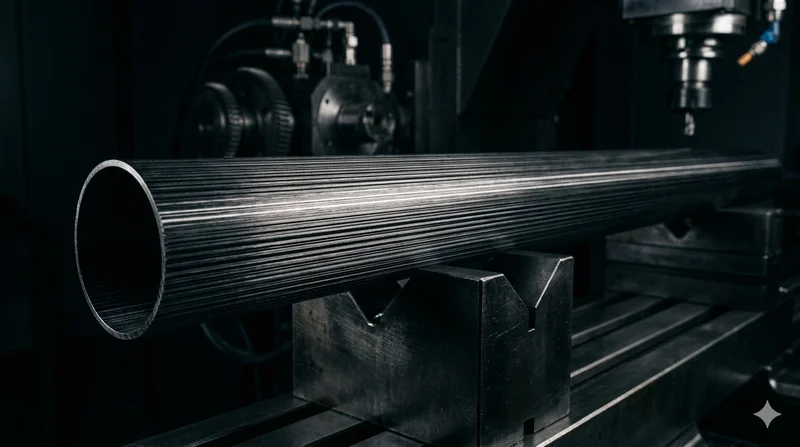
Round Carbon Fiber Tube — UD Unidirectional T700
Unidirectional (UD) round tube with all fibers aligned axially for maximum longitudinal stiffness. Ideal for applications requiring high bending rigidity with minimal weight, such as shafts, struts, and structural reinforcements.