
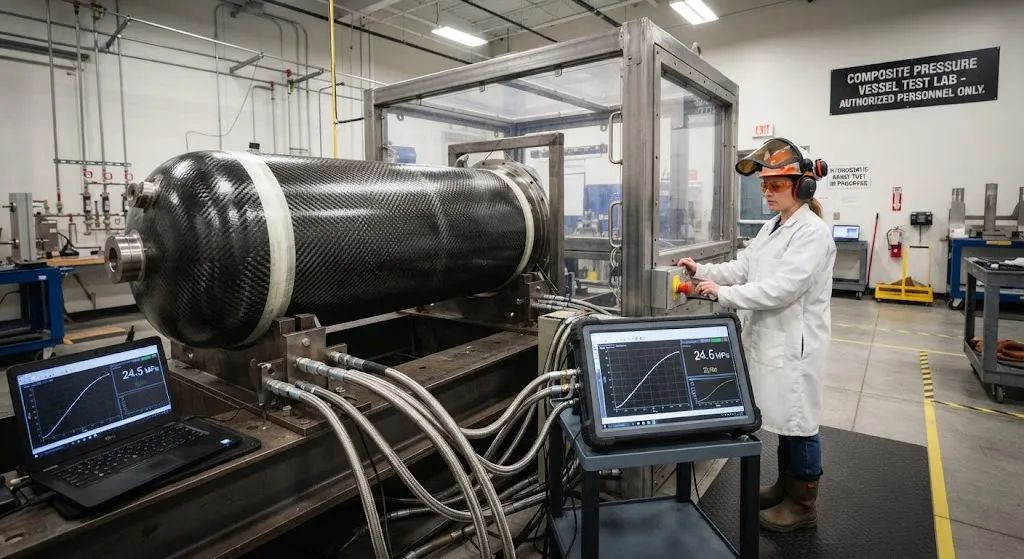
Compressed natural gas moves quietly under the radar of composite industry commentary, yet it sustains one of the largest recurring demand streams for carbon fiber pressure vessels in the world. Natural gas vehicles remain a mainstream choice for bus fleets, urban delivery trucks and ta
Introduction
Compressed natural gas moves quietly under the radar of composite industry commentary, yet it sustains one of the largest recurring demand streams for carbon fiber pressure vessels in the world. Natural gas vehicles remain a mainstream choice for bus fleets, urban delivery trucks and taxi operators across Asia and the Middle East, where fuel economics are attractive and refueling infrastructure already exists. Every one of those vehicles carries a pressure vessel, and increasingly that vessel is a carbon fiber Type III or Type IV cylinder rather than a heavy steel bottle.
Two forces are shaping the CNG cylinder market in 2026. First, the engineering convergence with hydrogen: CNG Type IV cylinders and hydrogen Type IV cylinders are manufactured on the same winding lines, with overlapping materials and standards, which means CNG volumes keep carbon fiber pressure vessel capacity warm while hydrogen scales. Second, fleet retrofit economics: switching a bus fleet from diesel to CNG costs a fraction of electrification, and lighter composite cylinders directly improve the payload and range that make the switch pay. This article examines both forces and the safety framework that governs CNG cylinders.
CNG Cylinder Technology: Type III and Type IV
CNG vehicles store gas at service pressures of typically 20-25 MPa (200-250 bar), and the cylinder types used for on-board storage are defined by their liner and reinforcement architecture. Type I cylinders are all-steel, Type II use steel with hoop-wrapped composite reinforcement, Type III use a metal liner fully wrapped with carbon fiber, and Type IV use a polymer liner fully wrapped with carbon fiber. The table below compares their key characteristics:
| Cylinder Type | Liner Material | Weight vs Steel | Service Pressure | Typical Use |
|---|---|---|---|---|
| Type I | Steel | Baseline | 20 MPa | Legacy vehicles, low-cost markets |
| Type II | Steel | -30 to -40% | 20-25 MPa | Medium fleets, partial composite cost |
| Type III | Aluminum | -50 to -60% | 20-25 MPa | Buses and trucks, proven track record |
| Type IV | Polymer | -60 to -70% | 20-25 MPa | Buses, taxis, hydrogen-ready lines |
The weight equation drives the adoption pattern. A bus carries multiple cylinders, and vehicle weight directly affects passenger payload and fuel economy; replacing steel cylinders with Type IV units can reduce the onboard storage system weight by more than half. That saving pays for part of the higher cylinder cost over the vehicle's life, and it is the reason composite CNG cylinders dominate new bus fleets in mature natural gas vehicle markets.
Bus Fleet Economics and the Retrofit Business
The economic case for CNG buses rests on fuel price differentials, infrastructure availability and retrofit cost. Converting a diesel bus to run on natural gas costs a fraction of replacing it with an electric bus, requires no grid upgrades, and keeps the refueling cycle at minutes rather than hours. Composite cylinders improve the retrofit economics in three ways:
- Payload preservation: Lighter Type IV cylinders keep lost passenger capacity from the added storage system to a minimum, protecting fare revenue on routes with tight load factors.
- Range and placement freedom: Composite cylinders can be shaped into roof-mounted or underfloor modules, freeing chassis space and allowing range targets to be met without cutting into the passenger cabin.
- Fleet standardization: Operators running both CNG and early hydrogen pilots can standardize on Type IV tank architecture, easing parts inventory and technician training across both fuels.
Across Asia and the Middle East, the installed base of natural gas vehicles remains large and in some markets is growing again as compressed biomethane — renewable natural gas — gives the fuel a lower carbon story. Each replacement and each new bus order renews demand for certified composite cylinders, and the service parts market for in-service fleets extends that demand for a decade or more.
Safety, Certification and Periodic Inspection
Safety is the governing frame for CNG cylinders, and the regulatory landscape is well established. Vehicles and cylinders must meet the requirements of UN Regulation R110 for CNG vehicles, with ISO 11439 as the core cylinder standard covering design, manufacturing and testing. The key safety elements include:
- Design and burst requirements: Cylinders are designed with a burst pressure ratio of 2.25 or higher against service pressure, verified by hydraulic burst tests on sample units.
- Pressure relief devices: Thermal pressure relief devices prevent catastrophic rupture under fire exposure by venting gas in a controlled way.
- Periodic inspection: In-service cylinders undergo visual, leak and pressure checks at prescribed intervals, with composite cylinders inspected for impact damage, abrasion and liner degradation.
- Leak-before-burst behavior: Type IV cylinders are engineered so that any liner breach vents gas gradually rather than allowing sudden structural failure.
For manufacturers, the certification burden is significant but well defined: type approval testing, batch testing and the maintenance of audited quality systems are prerequisite to every market. For fleet operators, the inspection regime adds a recurring service cost that composite cylinders' longer service life and lower failure modes partially offset.
Shared Production Lines with Hydrogen
The strongest strategic argument for CNG in the carbon fiber supply chain is volume stability. Hydrogen storage is the sector's headline growth story, but hydrogen vehicle sales remain a fraction of natural gas vehicle sales globally. CNG cylinder production keeps winding lines, autoclave capacity and skilled labor utilized at scale today, while hydrogen programs learn on the same equipment for tomorrow. The material overlap is direct: the same high-strength carbon fiber tow, the same epoxy resin systems, and the same filament winding and cure processes serve both CNG Type IV and hydrogen Type IV vessels, with cylinder size and pressure ratings being the main differences.
This convergence has three practical consequences. First, carbon fiber suppliers see CNG as a volume base that smooths demand volatility and justifies capacity investment. Second, cylinder manufacturers amortize tooling and certification across both markets, lowering unit costs for each. Third, fleet operators who buy Type IV CNG today position their fuel systems and technician skill base for a future hydrogen transition. The CNG market is therefore not a legacy afterthought — it is the commercial foundation on which the composite pressure vessel industry scales.
Frequently Asked Questions
What is the difference between Type III and Type IV CNG cylinders?
Type III cylinders use a metal liner, typically aluminum, fully wrapped with carbon fiber, while Type IV cylinders use a polymer liner fully wrapped with carbon fiber. Type IV units are 10-20 percent lighter than Type III and are preferred for buses and taxis where weight affects payload; Type III retains a longer proven service track record.
How much weight do carbon fiber CNG cylinders save compared with steel?
Type IV cylinders are roughly 60-70 percent lighter than equivalent steel cylinders and 50-60 percent lighter for Type III with aluminum liners. On a multi-cylinder bus installation, switching from steel to composite can halve the onboard storage system weight, preserving passenger payload and improving fuel economy.
What standards govern carbon fiber CNG cylinders?
CNG vehicle cylinders are governed by UN Regulation R110 and ISO 11439, which define design, burst pressure ratio, batch testing and periodic in-service inspection requirements. Cylinders must pass hydraulic burst tests and incorporate thermal pressure relief devices and leak-safe design features.
Why does CNG matter for the carbon fiber pressure vessel industry?
Natural gas vehicle fleets across Asia and the Middle East generate high recurring demand for Type III and Type IV cylinders, and these are manufactured on the same winding lines with the same materials as hydrogen vessels. CNG volumes provide the demand base that keeps pressure vessel capacity utilized while hydrogen scales.
Conclusion
Carbon fiber CNG cylinders are the volume backbone of the composite pressure vessel market. Type III and Type IV technology has matured under rigorous UN R110 and ISO 11439 certification, bus and truck fleets across Asia and the Middle East continue to convert from steel storage to composite weight savings, and the shared winding infrastructure with hydrogen means CNG demand reinforces rather than competes with the industry's next growth chapter. For cylinder manufacturers and carbon fiber suppliers alike, CNG is not an afterthought — it is the market that pays for the machines hydrogen will one day use at full capacity.
YongXian supplies high-strength carbon fiber tow, fabrics and epoxy systems to pressure vessel manufacturers producing Type III and Type IV cylinders. Explore our carbon fiber material range or contact our engineering team to discuss vessel winding specifications and material supply programs.
Part of topic
Related Articles
- Carbon Fiber Mooring for Floating Offshore Wind: Fatigue and Corrosion in Deep Water
- Carbon Fiber Bicycle Frame Optimization: Layup Design and Manufacturing for Competitive Racing
- Carbon Fiber CFRP Retrofit for Infrastructure: Bridge and Building Seismic Strengthening
- Carbon Fiber Medical Imaging Equipment: Lightweight Gantry and Couch Structures for MRI/CT
- Carbon Fiber EV Battery Enclosures: Crash Safety and Electromagnetic Shielding Design
- Carbon Fiber Structures for Low-Altitude Economy: UAV Airframes and eVTOL Components
Interested in Our Products?
Contact our team for competitive pricing and technical specifications.
Get a QuoteRelated Products

Carbon Fiber Plate — 3K Twill T700 3.0mm
Medium-thickness 3.0mm carbon fiber plate offering significantly higher load capacity while maintaining attractive 3K twill finish. Suitable for structural brackets, reinforcement plates, and load-bearing panels.

Carbon Fiber Plate — 3K Twill T700 1.5mm
Thin 1.5mm carbon fiber plate with 3K twill weave surface. Lightweight and stiff, commonly used for covers, panels, drone bodies, and applications requiring a premium aesthetic appearance.

Square Carbon Fiber Tube — 3K Twill T700
Square cross-section carbon fiber tube manufactured with 3K twill weave for torsional strength. Preferred for structural frames, trusses, and support columns where rectangular geometry offers design flexibility.
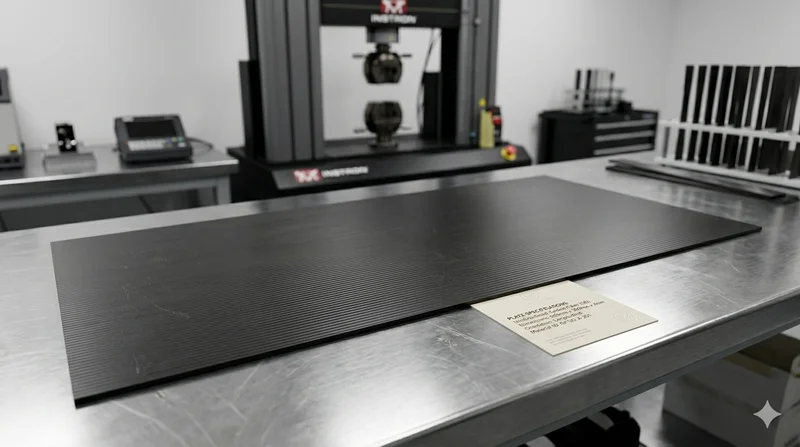
Carbon Fiber Plate — UD Unidirectional T700
Unidirectional carbon fiber plate with all fibers oriented in a single direction for maximum strength along the fiber axis. Essential for structural reinforcements, splints, and applications where load direction is predictable.
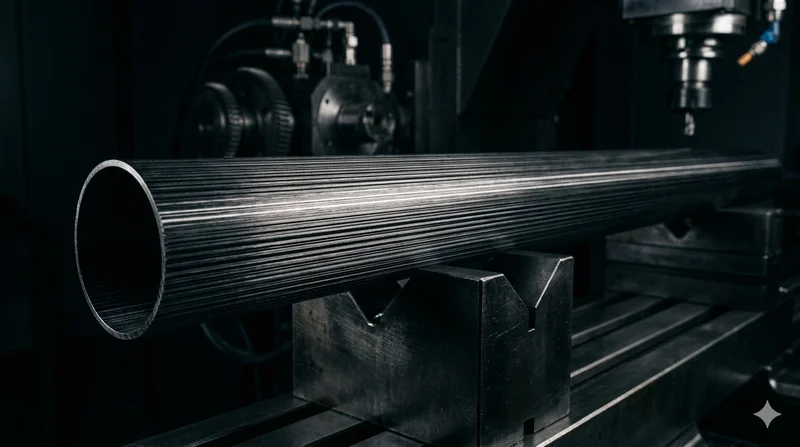
Round Carbon Fiber Tube — UD Unidirectional T700
Unidirectional (UD) round tube with all fibers aligned axially for maximum longitudinal stiffness. Ideal for applications requiring high bending rigidity with minimal weight, such as shafts, struts, and structural reinforcements.