A carbon fiber sheet for vacuum bagging is a consolidated panel produced by drawing air out of a sealed envelope so that atmospheric pressure compacts the plies while the resin cures. The process sits between hand layup and autoclave curing: it delivers far lower void content than open molding at a
Introduction
A carbon fiber sheet for vacuum bagging is a consolidated panel produced by drawing air out of a sealed envelope so that atmospheric pressure compacts the plies while the resin cures. The process sits between hand layup and autoclave curing: it delivers far lower void content than open molding at a fraction of autoclave tooling cost, which is why small shops, race teams and prototype labs use it to turn dry carbon fiber sheets and resin into flat or lightly curved panels every day.
This guide explains how the vacuum bagging process actually works step by step, which carbon fiber sheet material properties matter most under full atmospheric pressure, how to pair carbon fiber sheets and resin so panels come out consistent batch after batch, and where carbon fiber sheet uses end in real programs. You will also find a spec table with typical 2026 price bands and a short supplier checklist you can run before placing an order.
Carbon Fiber Sheet for Vacuum Bagging: How the Process Works
Every vacuum bagging cycle follows the same four stages, and each stage decides whether the finished sheet will be tight and void-free or full of porosity:
- Preparation: the mold or table is cleaned and coated with release agent, and the dry carbon fiber sheet is cut slightly oversize so the edges stay under full pressure during the cycle.
- Layup: plies are stacked in the designed orientation, resin is applied by roller or infusion, and a release film plus breather cloth is placed over the laminate to absorb excess resin and conduct air flow.
- Bag sealing: the vacuum bag is taped or sealed around the perimeter, with the vacuum port positioned over the breather so the entire envelope evacuates evenly.
- Vacuum and cure: the pump pulls the bag down to the target level, pressure is held through the gel and cure window, and a post-cure at elevated temperature finishes the cross-linking before the sheet is demolded.
The pressure you actually get is limited but useful: a well-sealed system holds 0.8-0.95 bar of differential, which compacts plies firmly and drives void content down to the low single digits. The table compares vacuum bagging against the two neighboring processes on the numbers that matter:
| Process | Compacting pressure | Typical void content | Tooling cost index | Best fit |
|---|---|---|---|---|
| Hand layup | Atmospheric only | 5-10 percent | 30-50 | Large, non-critical skins |
| Vacuum bagging | 0.8-0.95 bar | 1-4 percent | 70-100 | Flat panels, prototypes, small production |
| Autoclave | 4-7 bar plus heat | Below 1 percent | 250-400 | Certified aerospace parts |
For a standard carbon fiber sheet, vacuum bagging lands in the sweet spot: mechanical properties within a few percent of autoclave material at a tooling price a two-person shop can justify.
Carbon Fiber Sheet Material: What Matters Under Vacuum
Under full atmospheric pressure the sheet does not fail gently — a weak layup shows up as waviness, resin-starved patches or edge delamination. Four material properties decide the outcome, and you should write them into the purchase specification rather than trusting a product photo:
| Property | Typical target | Why it matters under vacuum |
|---|---|---|
| Fiber areal weight | 120-400 gsm | Controls how much resin each ply must carry; too heavy a cloth starves at the corners |
| Weave style | Plain or 2x2 twill | Twill drapes better over slight curvature; plain weave stays flatter on true flat sheets |
| Fiber volume fraction | 55-62 percent | Higher volume raises stiffness but demands consistent resin metering |
| Moisture content | Below 0.2 percent | Wet fabric boils voids into the laminate during cure |
Quasi-isotropic stacking (0/90/plus-minus 45) is the default for flat carbon fiber sheet material because it keeps properties balanced in-plane; unidirectional plies are added only when one direction carries a known load. If your supplier cannot state areal weight and weave style per roll on the certificate, you are buying commodity cloth with no traceability.
Carbon Fiber Sheets and Resin: Pairing for Consistent Panels
The best fabric still makes bad panels if the resin system does not match the cycle. Pairing carbon fiber sheets and resin comes down to four variables, and each one has a failure signature you can recognize on the first demold:
- Resin family: general-purpose epoxy cures at room temperature with a post-cure at 60-80 C; high-temperature systems need 120 C plus and are only worth the cost when the part sees service heat.
- Resin content: target 35-42 percent by weight for hand-assisted vacuum work; too low leaves dry spots, too high squeezes out under the bag and weakens the fiber-dominated strength.
- Working life: pot life must cover your layup time plus 30 minutes margin — resin that gels mid-layup traps air you can never remove later.
- Cure schedule: hold full vacuum through gel, then release only after the exotherm peak has passed; early release is the most common cause of edge wrinkling.
Write the pairing into a one-page process sheet: fabric lot, resin batch, mix ratio, cure ramp and vacuum level. Shops that run that sheet for every batch see panel-to-panel variation drop visibly within a month.
Carbon Fiber Sheet Uses: From Prototypes to Production Parts
Vacuum-bagged sheet shows up in more places than most buyers expect. The usual carbon fiber sheet uses cluster into four groups, and each group stresses a different property, so knowing which one you belong to determines the spec you should order:
- Flat structural panels: drone bulkheads, machine covers and test fixtures where stiffness-to-weight beats absolute strength.
- Skins over core: sandwich panels for marine decks and vehicle floors, where the bagged sheet becomes the load-facing face sheet.
- Prototype molds and plugs: short-run tools that must hold dimension for ten to fifty parts before being re-skinned.
- Finishing stock: sheets bought flat, post-cured and CNC-machined into brackets, plates and reinforcement strips.
Budget accordingly: flat panels in 2-3 mm thickness typically run 60-140 USD per 300 x 400 mm sheet for standard 3K twill at ten-piece quantities, with certified aerospace-grade material at two to three times that. Cut-to-size and flatness certification add 15-30 percent on top — cheap if a warped sheet would scrap the assembly that follows.
Frequently Asked Questions
What vacuum level does a carbon fiber sheet for vacuum bagging need?
Hold at least 0.8 bar of differential, ideally 0.9 or better, and watch the gauge rather than the pump label. A gauge that decays more than 0.05 bar in ten minutes after the pump is isolated indicates a leak in the bag seal or port, and a leaking bag produces the same void content as open molding no matter how good the fabric is. Fix the leak before you mix resin.
Can I vacuum bag a carbon fiber sheet without an autoclave?
Yes, and for flat or gently curved panels the mechanical properties land within a few percent of autoclave material because the compaction pressure, not the heat, does most of the densification work. What you give up is the certified paperwork and the sub-one-percent void content that aerospace programs require. For prototypes, motorsport secondary parts and industrial panels, vacuum bagging alone is normally sufficient.
How do I choose between carbon fiber sheet material weaves for vacuum work?
Pick plain weave for true flat sheets because it resists distortion under the bag, and pick 2x2 twill when the part has gentle curvature because it drapes without wrinkling. Areal weight matters more than the weave name: 200 gsm is the versatile middle for 2-3 mm panels, while 120 gsm cloth suits thin skins and 400 gsm builds thickness fast in fewer plies. Ask for a small fabric sample and drape it over your mold before committing to a roll.
Conclusion
Vacuum bagging turns dry fabric and measured resin into consistent carbon fiber sheets without autoclave money, provided you hold the vacuum, respect the working life and specify the fabric instead of trusting photographs. Start from the four-stage process, write areal weight, weave, resin content and cure schedule into your purchase specification, and run the vacuum-decay check before every mix. When you are ready to source, review our stocked weaves and cut-to-size options on the carbon fiber sheet product pages or contact our team with your thickness, size and volume — we will match the sheet material and resin guidance to your cycle.
Part of topic
Related Articles
- Carbon Fiber Sheet for Mold Making: Design, Specs and Sourcing
- Carbon Fiber Plate for Tooling: Design, Specs and Sourcing
- Carbon Fiber Compression Molded Plate: Process, Specs and Sourcing
- Carbon Fiber Plate Machining: Tolerances, Cost and Suppliers
- Carbon Fiber Plate vs Aluminum Plate: Key Differences Compared
- Carbon Fiber Tube vs Aluminum Tube: Key Differences Compared
Interested in Our Products?
Contact our team for competitive pricing and technical specifications.
Get a QuoteRelated Products
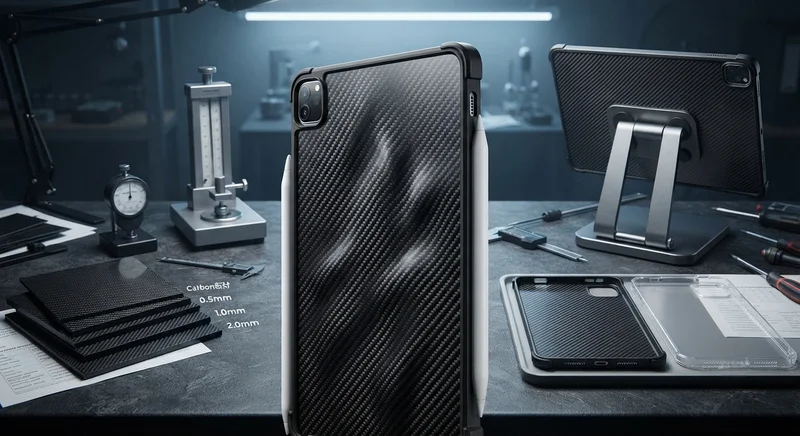
Carbon Fiber Tablet Case — Ultra-Light Protective Shell
Lightweight carbon fiber protective case for tablets and iPads. Molded from T700 3K prepreg with reinforced corner protection. Adds minimal weight while providing superior rigidity and drop protection compared to polycarbonate or silicone cases. Ideal for field workers, enterprise deployments, and professionals requiring durable tablet protection.
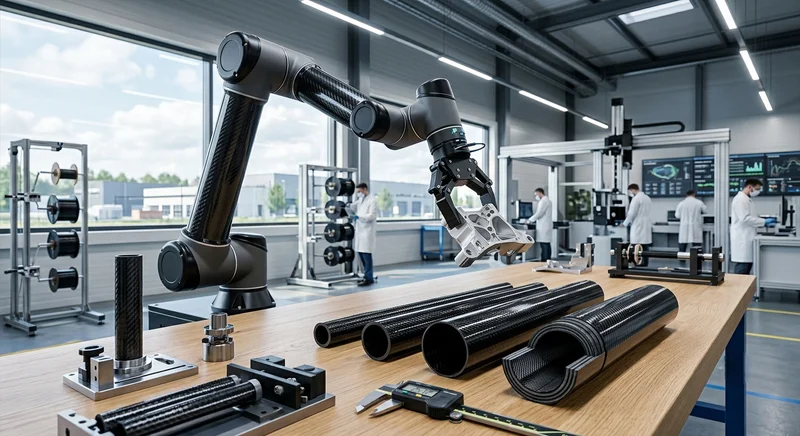
Carbon Fiber Robotic Arm Tube — High-Stiffness Lightweight Replacement
Precision-wound carbon fiber tubes for robotic arm links, replacing steel or aluminum in collaborative robots (cobots) and industrial manipulators. Achieve 3× the specific stiffness of aluminum with significant weight reduction, enabling faster acceleration and higher payload capacity.
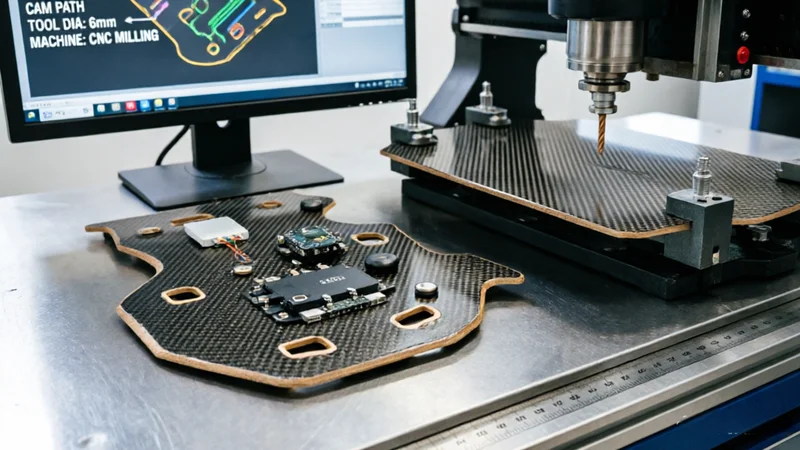
Carbon Fiber Drone Frame Base Plate — 3K Twill T700
CNC-machined carbon fiber base plates for drone frame assemblies. Cut from 3K twill weave T700 prepreg with precision CNC routing. Pre-drilled mounting patterns compatible with common flight controller and power distribution board layouts. Available in 1.5mm to 5mm thickness.
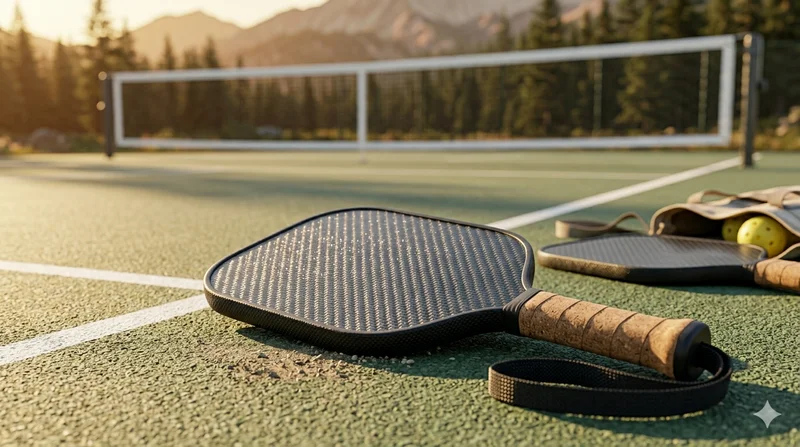
Carbon Fiber Pickleball Paddle
High-performance pickleball paddle with Toray T700 carbon fiber face and polypropylene honeycomb core. Delivers excellent power-to-weight ratio, spin generation, and vibration dampening for competitive play.
Round Carbon Fiber Tube — UD Unidirectional T700
Unidirectional (UD) round tube with all fibers aligned axially for maximum longitudinal stiffness. Ideal for applications requiring high bending rigidity with minimal weight, such as shafts, struts, and structural reinforcements.