A carbon fiber plate for tooling is a flat composite panel machined into jigs, fixtures, drill templates, check gauges and assembly aids — the parts of a production line that must hold dimension all shift without weighing the station down. Compared with aluminum, carbon plate is four times lighter,
Introduction
A carbon fiber plate for tooling is a flat composite panel machined into jigs, fixtures, drill templates, check gauges and assembly aids — the parts of a production line that must hold dimension all shift without weighing the station down. Compared with aluminum, carbon plate is four times lighter, has a near-zero coefficient of thermal expansion so fixtures do not drift between a cold morning shop and a warm afternoon cell, and does not gall when a steel locating pin runs against it.
This guide covers key decisions on buying a carbon fiber plate for tooling: how to pick carbon fiber plate thickness from the span and load of the fixture, when a custom carbon fiber plate is worth the lead time over stock sizes, what the carbon fiber plate should cost in 2026, and the four supplier checks that separate a precision plate from a decorative sheet.
Carbon Fiber Plate for Tooling: Why Shops Are Replacing Aluminum
Three physical properties drive the switch from aluminum to carbon tooling plate, and each one shows up on the shop floor rather than in a brochure:
- Weight: carbon plate runs 1.55-1.65 g/cm3 against 2.7 for aluminum, so a drill jig that two operators used to lift together now hangs on a single arm or a balancer without fatigue.
- Thermal stability: the coefficient of thermal expansion sits near 2 to 4 ppm per degree Celsius in the plate plane versus 23 for aluminum, so a fixture gauged at 20 C stays within a hundredth of a millimeter through a 15 degree shop swing.
- Surface and wear: the epoxy matrix takes repeated clamping and locating-pin contact without the galling aluminum shows, and a scratched area can be spot-repaired instead of scrapped and re-milled.
The table puts typical tooling-plate numbers side by side for a standard 300 x 400 mm fixture plate:
| Property | Carbon tooling plate | Aluminum tooling plate | What it changes on the floor |
|---|---|---|---|
| Density | 1.55-1.65 g/cm3 | 2.70 g/cm3 | Balancers and arms move to lighter class |
| In-plane CTE | 2-4 ppm/C | 23 ppm/C | Gauge drift across shift temperature swings |
| Flexural modulus | 45-75 GPa | 69 GPa | Stiffness at equal thickness, less sag on long spans |
| Relative plate cost | 100 | 45-60 | Higher material cost, lower handling and rework cost |
Carbon does not win everywhere: impact-heavy drop fixtures and high-temperature ovens above the resin glass transition still favor aluminum or steel. The right question is not which material is better, but which failure mode your fixture actually sees.
Carbon Fiber Plate Thickness: Matching Stiffness to the Fixture
Thickness is the lever that dominates both cost and deflection, so choose it from the unsupported span rather than from a catalog default. A plate bends as the cube of thickness, which means doubling thickness multiplies stiffness eightfold — and roughly doubles the price of the blank:
- Under 150 mm span: 3-5 mm plate handles drill jigs and small locating plates with deflection well under 0.05 mm under hand clamping loads.
- 150-400 mm span: 6-10 mm is the working range for assembly fixtures and check plates; ask for the flexural modulus of the actual layup, not a generic figure.
- Above 400 mm span: 12-20 mm plate, or a ribbed and bonded structure, keeps long gauges flat; at this size consider adding a machined aluminum backbone if the fixture also carries side loads.
- Locating faces: wherever a pin or block registers, leave 0.5-1 mm of extra thickness so the face can be re-milled flat after the first year of service.
Write the carbon fiber plate thickness together with a flatness callout: 0.2 mm over 300 mm is a realistic commercial tolerance for machined plate, and tighter costs rise fast — each additional tenth comes from hand scraping or precision grinding.
Custom Carbon Fiber Plate: When Stock Sizes Are Not Enough
Stock plates cover maybe seventy percent of tooling needs — standard 300 x 400 or 500 x 600 mm blanks in 3, 5 and 10 mm. Beyond that, a custom carbon fiber plate earns its keep in three situations:
- Integrated features: counterbored bolt patterns, coolant channels or pockets machined from solid save an assembly step, but they require plate thick enough that remaining wall sections still meet the stiffness target.
- Non-standard layup: fixtures that must be stiff in one direction only can specify quasi-isotropic or bias layups that stock plate does not carry, trading off-plane balance for in-plane performance you actually need.
- Oversize one-piece plates: gauges longer than 600 mm are better as a single custom plate with a certified layup than as two plates jointed, because the joint becomes the compliance you were trying to eliminate.
Custom adds 15-30 percent to the blank price and one to two weeks of lead time; ask whether the surcharge covers only cutting or also the certificated layup sheet. If your fixture list repeats quarterly, order the most-used sizes as a scheduled batch instead of one-offs.
Carbon Fiber Plate: Cost, Lead Time and Supplier Checks
For 2026 regional stock, a 5 mm quasi-isotropic 3K twill plate at 300 x 400 mm runs roughly 90-150 USD per piece at ten-up quantities; 10 mm plate sits near 260-420 USD, and certified aerospace-grade material with full traceability runs two to three times commodity twill. Cut-to-size, edge sealing and flatness certification add 15-30 percent combined. Run these four checks before the first production order:
- Certificate scope: confirm the batch certificate names fiber grade, resin system, cure cycle and measured flexural modulus — no measured data means nominal numbers.
- Flatness method: ask how flatness is measured and on which surface; granite table plus dial indicator is the baseline, and the report should state the value, not just pass or fail.
- Machinability trial: request one sample coupon milled with your feeds and speeds; delamination at the hole edge or fuzz on the cut face means tooling and matrix are a mismatch for your process.
- Repeatability record: for blanket orders, ask for dimensional results from the last three batches — consistency matters more than first-article price.
Once a supplier passes all four, freeze the specification — thickness, layup, flatness tolerance, edge finish and certificate wording — into your PO template so every carbon fiber plate for tooling arrives identical to the one you qualified.
Frequently Asked Questions
Is a carbon fiber plate for tooling stiffer than aluminum at the same thickness?
In-plane stiffness of carbon tooling plate is comparable to aluminum at equal thickness — flexural modulus ranges overlap around 45-75 GPa against 69 GPa — but carbon delivers that stiffness at 40 percent of the weight, and the gain shows in handling: a lighter fixture settles faster on a balancer. Where carbon clearly wins is thermal stability: over a 15 degree shop swing aluminum grows roughly ten times more than carbon, which is what pushes precision gauges toward composite tooling.
Can I machine a carbon fiber plate for tooling with standard CNC equipment?
Yes, with carbide or diamond tooling, dry or with light extraction, and feeds tuned to avoid heat build-up — the same machines that cut aluminum cut carbon plate every day. Use climb milling where possible, sacrificial backing at through-cuts, and compressed air rather than flood coolant. Standard equipment will not forgive a dull tool: wear accelerates in the abrasive fiber, so change tools by parts cut, not by calendar.
When does aluminum still beat a carbon fiber plate for tooling?
Keep aluminum for fixtures that take repeated impact or dropping, that work above the resin glass transition temperature — typically 120-180 C — or that need welded construction with grounded electrical continuity. Carbon also loses on very low-volume one-off jigs where the material premium cannot be recovered, and on press-fit steel bushings over large areas. Qualify by failure mode: if the fixture fails by denting, weld or heat, aluminum remains the simpler answer.
Conclusion
A carbon fiber plate for tooling earns its price when the fixture must stay light, hold gauge through temperature swings and survive thousands of clamp cycles — three jobs aluminum does poorly at the same weight. Pick thickness from span, not habit; treat custom plate as a scheduled batch; and run the four supplier checks on every new source before the first production order. To compare stocked thicknesses and layups, browse our carbon fiber plate range or contact our team with your fixture drawing — we will answer with a machinable plate specification, not a generic quote.
Part of topic
Related Articles
- Carbon Fiber Sheet for Mold Making: Design, Specs and Sourcing
- Carbon Fiber Sheet for Vacuum Bagging: Design, Specs and Sourcing
- Carbon Fiber Compression Molded Plate: Process, Specs and Sourcing
- Carbon Fiber Plate Machining: Tolerances, Cost and Suppliers
- Carbon Fiber Plate vs Aluminum Plate: Key Differences Compared
- Carbon Fiber Tube vs Aluminum Tube: Key Differences Compared
Interested in Our Products?
Contact our team for competitive pricing and technical specifications.
Get a QuoteRelated Products
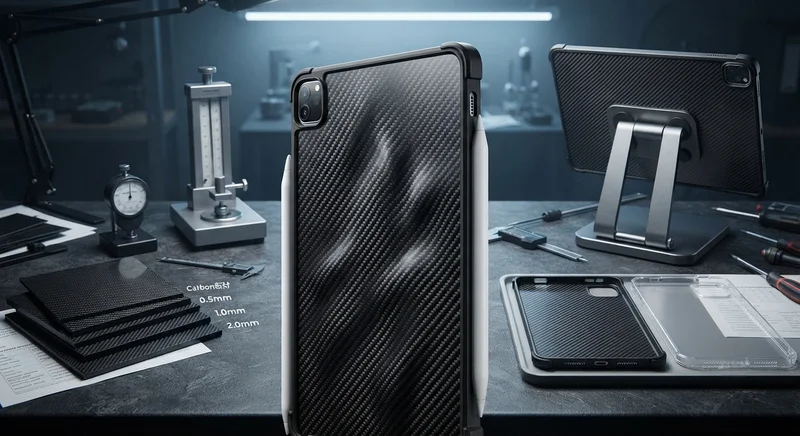
Carbon Fiber Tablet Case — Ultra-Light Protective Shell
Lightweight carbon fiber protective case for tablets and iPads. Molded from T700 3K prepreg with reinforced corner protection. Adds minimal weight while providing superior rigidity and drop protection compared to polycarbonate or silicone cases. Ideal for field workers, enterprise deployments, and professionals requiring durable tablet protection.
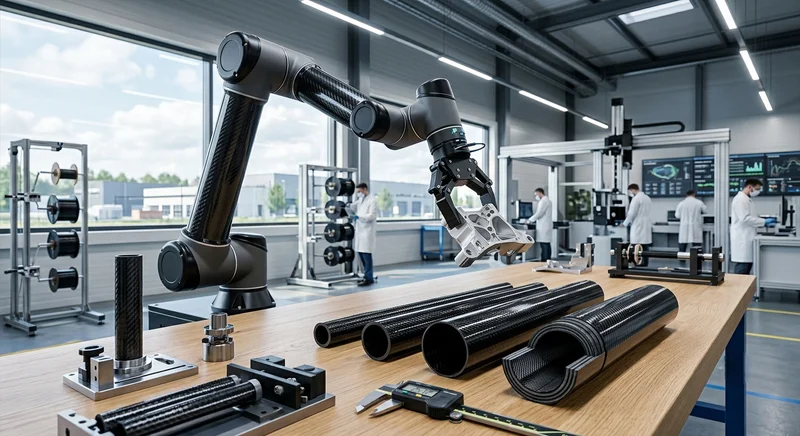
Carbon Fiber Robotic Arm Tube — High-Stiffness Lightweight Replacement
Precision-wound carbon fiber tubes for robotic arm links, replacing steel or aluminum in collaborative robots (cobots) and industrial manipulators. Achieve 3× the specific stiffness of aluminum with significant weight reduction, enabling faster acceleration and higher payload capacity.
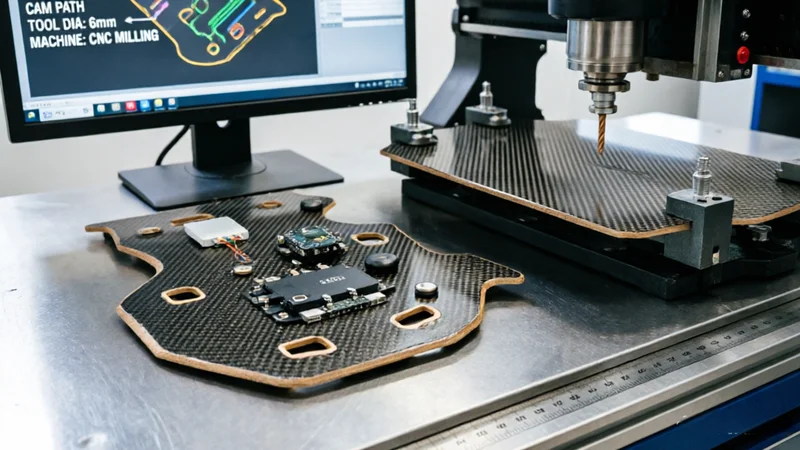
Carbon Fiber Drone Frame Base Plate — 3K Twill T700
CNC-machined carbon fiber base plates for drone frame assemblies. Cut from 3K twill weave T700 prepreg with precision CNC routing. Pre-drilled mounting patterns compatible with common flight controller and power distribution board layouts. Available in 1.5mm to 5mm thickness.
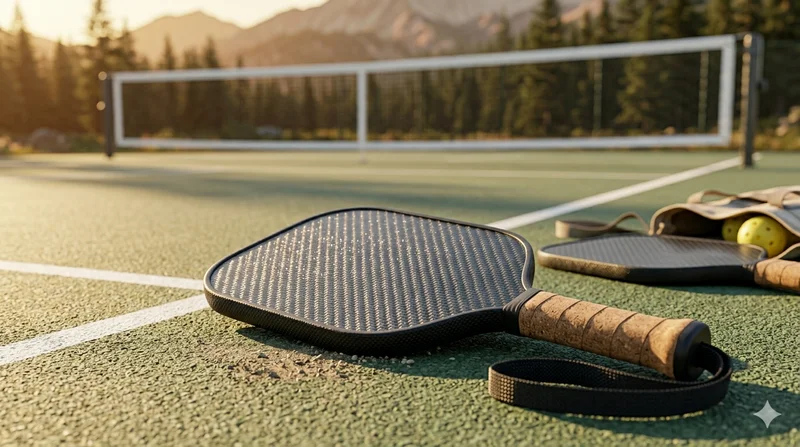
Carbon Fiber Pickleball Paddle
High-performance pickleball paddle with Toray T700 carbon fiber face and polypropylene honeycomb core. Delivers excellent power-to-weight ratio, spin generation, and vibration dampening for competitive play.
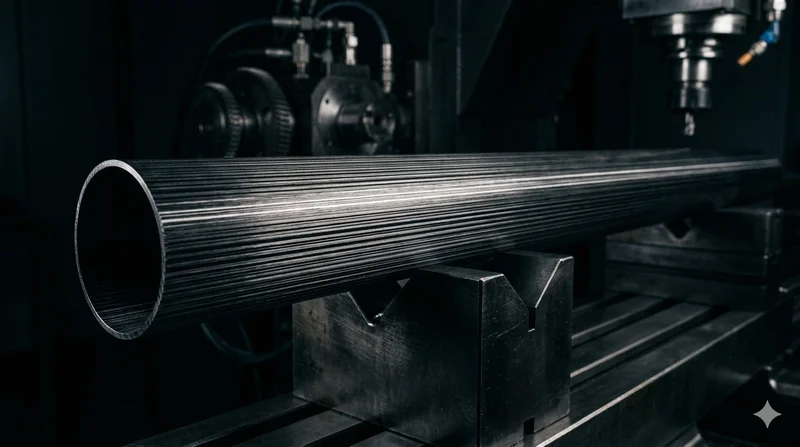
Round Carbon Fiber Tube — UD Unidirectional T700
Unidirectional (UD) round tube with all fibers aligned axially for maximum longitudinal stiffness. Ideal for applications requiring high bending rigidity with minimal weight, such as shafts, struts, and structural reinforcements.