A carbon fiber sheet for mold making is a thin composite sheet that carries the mold shell itself, the plug or pattern that gives the final part its shape and the mold that repeats it. Because the mold absorbs the forming pressure instead of the finished part, the sheet can stay thin, which is why c
Introduction
A carbon fiber sheet for mold making is a thin composite sheet that carries the mold shell itself, the plug or pattern that gives the final part its shape and the mold that repeats it. Because the mold absorbs the forming pressure instead of the finished part, the sheet can stay thin, which is why carbon fiber sheet for mold making is a practical route for low and medium volume composite production.
This guide explains how the mold process actually works step by step, which material properties matter for the mold shell, how the resin system is chosen for the mold, and where carbon fiber sheet uses end in real programs. You will also find a spec table with typical 2026 price bands and a supplier checklist you can run before ordering.
The sheet is usually a single ply of release grade material, and the mold spec records shell thickness, resin, release and cure together, because the shell and the part now share the same forming pressure.
Carbon Fiber Sheet for Mold Making: How the Mold Process Works
Every mold built on a carbon fiber sheet follows the same stages, and each stage decides whether the resulting mold holds detail or drifts:
- Plug preparation: the plug profile is dressed, sealed and wrapped, and the carbon fiber sheet is shaped over it with release between plug and sheet.
- Mold shell layup: plies are stacked over the plug with resin, release and a vacuum bag or breather arranged for controlled flow.
- Cure: the bag pulls the shell tight while the resin cures, then the mold is cooled, demolded and trimmed.
- Repeat: the trimmed shell goes back into the next layup, and the loop repeats until the part is filled.
The pressure picture is the key difference from open molding. A carbon fiber sheet for mold making runs at roughly 0.8-0.95 bar of differential through the cure, which is enough to compact plies while keeping the mold shell from springing back. The table compares molding routes on the numbers that matter:
| Route | Compacting pressure | Typical void content | Tooling cost index | Best fit |
|---|---|---|---|---|
| Open pour | Atmospheric only | 5-10 percent | 30-50 | Large, non-critical skins |
| Mold on carbon sheet | 0.8-0.95 bar | 1-4 percent | 70-100 | Low-medium volume production |
| Hard tooling | 4-7 bar plus heat | Below 1 percent | 250-400 | Certified aerospace parts |
For a standard carbon fiber sheet, mold making lands in the useful range: the shell holds detail, the void content stays low, and the tooling cost is a fraction of hard tooling.
Venting discipline is what separates a good mold from a leaky one. The breather cloth and vacuum port must cover the full laminate area, and trapped air shows up later as dry spots or voids after demold. Keep bag coverage to the laminate region rather than the whole plug when the part is thin, and log the vacuum level per mold.
Carbon Fiber Sheet for Mold Making: Material and Resin for the Mold Shell
The sheet you choose for the mold shell is usually a release grade or prepreg sheet, and the resin is chosen for the mold rather than the part. Material properties that matter:
- Fiber areal weight: 120-400 gsm for thin shells, higher for structural mold tooling.
- Weave: plain weave for flat shells, twill when the plug has curvature.
- Resin system: epoxy for most mold shells, high temperature systems when the mold must survive post cure heat.
- Release: a mold release compatible with the resin and the composite, applied to the shell only.
Write the mold spec into one page: shell material, resin, release, cure schedule and vacuum level. Shops that run this page per batch avoid drift between plugs.
Carbon Fiber Sheet Uses: From Prototype Molds to Production Tools
Vacuum bagging molds appear wherever composites must be produced repeatedly without hard tooling. The carbon fiber sheet uses cluster into four groups:
- Prototype molds: one off plugs that must hold dimension for a handful of parts.
- Small batch production: shells for series parts where hard tooling is uneconomic.
- Repair molds: remakes after core damage or plug wear.
- Testing molds: shells for validation lots before tooling investment.
Budget accordingly: prototype shells in 2-3 mm sheet typically run 60-140 USD per plug for standard 3K twill, while certified aerospace grade material runs two to three times that.
Frequently Asked Questions
Can a carbon fiber sheet for mold making replace a hard mold?
Yes, for low and medium volume programs. A mold built on a carbon fiber sheet reaches the production volume where hard tooling cost and lead time no longer pay back, while keeping void content low enough for structural parts.
Does the resin for the mold differ from the resin for the part?
Usually the same epoxy system is used for both, but when the part is high temperature the mold shell may need a higher temperature resin, and the release must be chosen for that system.
How do you make a mold from a carbon fiber sheet without an autoclave?
Same vacuum bagging route as the part: bag the shell over the plug, pull vacuum through cure, cool, demold and trim. For high performance parts an autoclave remains the reference standard.
Conclusion
A carbon fiber sheet for mold making turns the mold into a repeatable manufacturing step rather than a one off pattern. Pick the shell material and resin from the mold spec, run the vacuum cure within its pressure window, and source the sheet with the same traceability standards you would hold the part to. When you are ready to source, review our mold shell and sheet product pages on the carbon fiber sheet product pages or contact our team with your part volume, sheet thickness and volume. We will match the sheet and mold guidance to your cycle.
Part of topic
Related Articles
- Carbon Fiber Plate for Tooling: Design, Specs and Sourcing
- Carbon Fiber Sheet for Vacuum Bagging: Design, Specs and Sourcing
- Carbon Fiber Compression Molded Plate: Process, Specs and Sourcing
- Carbon Fiber Plate Machining: Tolerances, Cost and Suppliers
- Carbon Fiber Plate vs Aluminum Plate: Key Differences Compared
- Carbon Fiber Tube vs Aluminum Tube: Key Differences Compared
Interested in Our Products?
Contact our team for competitive pricing and technical specifications.
Get a QuoteRelated Products
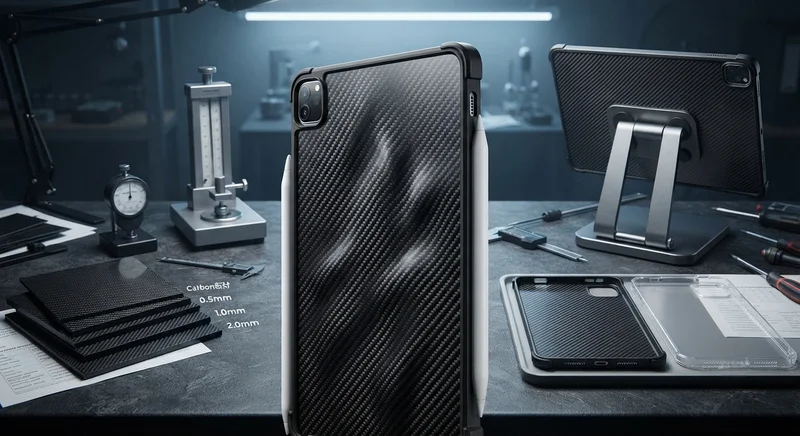
Carbon Fiber Tablet Case — Ultra-Light Protective Shell
Lightweight carbon fiber protective case for tablets and iPads. Molded from T700 3K prepreg with reinforced corner protection. Adds minimal weight while providing superior rigidity and drop protection compared to polycarbonate or silicone cases. Ideal for field workers, enterprise deployments, and professionals requiring durable tablet protection.
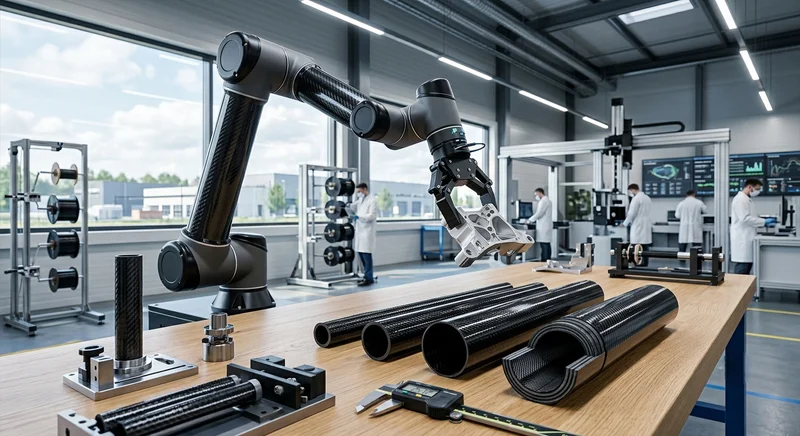
Carbon Fiber Robotic Arm Tube — High-Stiffness Lightweight Replacement
Precision-wound carbon fiber tubes for robotic arm links, replacing steel or aluminum in collaborative robots (cobots) and industrial manipulators. Achieve 3× the specific stiffness of aluminum with significant weight reduction, enabling faster acceleration and higher payload capacity.
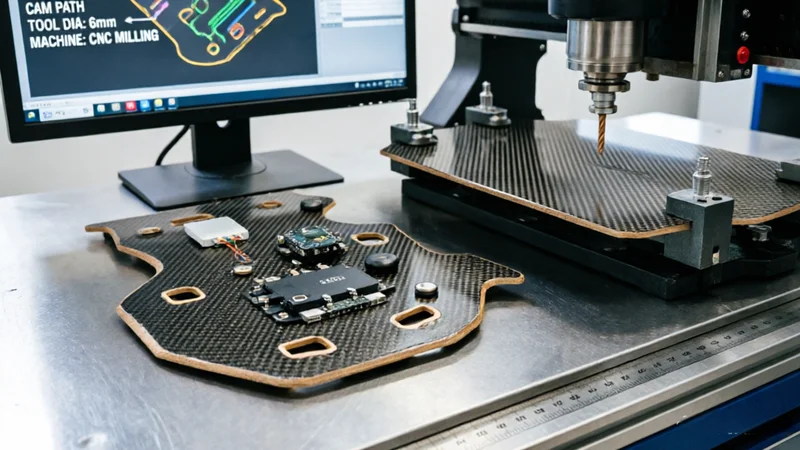
Carbon Fiber Drone Frame Base Plate — 3K Twill T700
CNC-machined carbon fiber base plates for drone frame assemblies. Cut from 3K twill weave T700 prepreg with precision CNC routing. Pre-drilled mounting patterns compatible with common flight controller and power distribution board layouts. Available in 1.5mm to 5mm thickness.

Carbon Fiber Pickleball Paddle
High-performance pickleball paddle with Toray T700 carbon fiber face and polypropylene honeycomb core. Delivers excellent power-to-weight ratio, spin generation, and vibration dampening for competitive play.
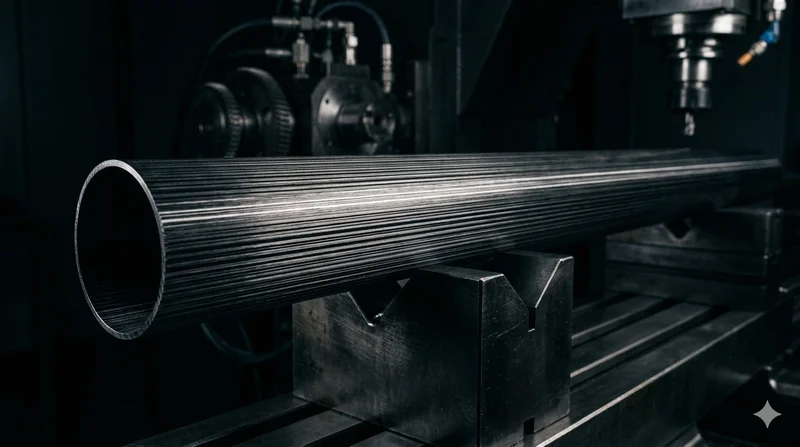
Round Carbon Fiber Tube — UD Unidirectional T700
Unidirectional (UD) round tube with all fibers aligned axially for maximum longitudinal stiffness. Ideal for applications requiring high bending rigidity with minimal weight, such as shafts, struts, and structural reinforcements.