The carbon fiber plate vs aluminum plate decision shows up in drone chassis plates, robot bases, camera rig plates, jig surfaces and any flat structural part where mass is budgeted and stiffness cannot be traded away. Both materials arrive as flat sheet in standard sizes, both take holes and pockets
Introduction
The carbon fiber plate vs aluminum plate decision shows up in drone chassis plates, robot bases, camera rig plates, jig surfaces and any flat structural part where mass is budgeted and stiffness cannot be traded away. Both materials arrive as flat sheet in standard sizes, both take holes and pockets, and both look credible in a spec sheet. The real split is that carbon fiber plate delivers roughly three times the stiffness per kilogram and stays dimensionally stable with temperature, while aluminum plate costs three to five times less per part, machines without dust extraction, and tolerates impact without hidden delamination. This article compares the two materials property by property, shows how carbon fiber plate thickness changes the math, touches on FR4 as the low-cost third option, and maps each material to the applications where it wins.
If you are choosing a plate for a load-bearing mount or a chassis, the sections below give you numbers you can put in a design review instead of arguing from material habit.
Carbon Fiber Plate vs Aluminum Plate: Property Table
The table compares a standard 3K twill carbon fiber plate (epoxy, quasi-isotropic layup) against a 6061-T6 aluminum plate of the same thickness. Values are engineering norms; supplier datasheets vary by layup and temper, but the ratios between columns stay stable.
| Property | Carbon fiber plate | Aluminum plate (6061-T6) | Practical effect |
|---|---|---|---|
| Density | 1.55-1.60 g/cm3 | 2.70 g/cm3 | Carbon plate is about 42 percent lighter at equal thickness |
| In-plane modulus | 40-60 GPa (quasi-iso) | 69 GPa | Similar raw stiffness, half the mass |
| Bending stiffness per kg | about 3x aluminum | baseline | Same deflection at roughly one third the mass |
| Tensile strength | 500-800 MPa | 310 MPa | Carbon plate is 1.6-2.6x stronger in-plane |
| Compressive strength | 400-600 MPa | 210 MPa | Carbon leads but is layup-sensitive |
| Impact behavior | Delaminates, brittle | Dents, yields | Aluminum warns before failing; carbon does not |
| Thermal expansion | -1 to 3 um/m K (in-plane) | 23.6 um/m K | Carbon holds flatness through temperature swings |
| Thermal conductivity | 5-30 W/m K | 167 W/m K | Aluminum spreads heat; carbon insulates |
| Electrical behavior | Semiconductive, anisotropic | Conductive | Aluminum grounds and shields; carbon needs isolation |
| Machining | Diamond tooling, sealed edges | Standard carbide | Aluminum is 2-4x cheaper to process |
| Typical cost, 3 mm plate | 40-120 USD/m2 | 12-25 USD/m2 | Aluminum is 3-5x cheaper |
The pattern matches the tube comparison: carbon wins every mass-normalized metric, aluminum wins cost, damage tolerance and process simplicity. The plate geometry adds one variable the tube does not have — thickness — because bending stiffness scales with the cube of thickness, so small changes in carbon fiber plate thickness move deflection more than any material swap at constant mass.
Carbon Fiber Plate Thickness: Doing the Math
For a plate in bending, stiffness goes with the cube of thickness while mass goes linear. Doubling aluminum thickness multiplies bending stiffness by eight and mass by four; replacing an aluminum plate with carbon at the same thickness halves the mass and roughly doubles the stiffness-to-weight ratio. The practical design sequence is:
- Fix the deflection limit first: calculate the aluminum thickness that meets it, then find the carbon thickness that meets the same limit at 45-55 percent of the mass.
- Watch buckling in compression: a 2 mm carbon plate can look stiff in bending but local buckling between fasteners governs; add ribs or step up to 3 mm.
- Check hole crush: carbon fiber plate thickness around fasteners must resist bearing load; oversized washers or bonded inserts spread the pressure that would otherwise crush the laminate.
- Re-run the mass budget: the saved mass often pays for the price premium in motor sizing, battery life or shipping.
A common mistake is ordering carbon at the same thickness as the aluminum part "to be safe". That gives you a plate twice as stiff and half as heavy than needed, spending premium material on stiffness the design never asked for.
Carbon Fiber Plate vs FR4 and Aluminum on Cost
FR4 glass-epoxy laminate sits below both: about 1.8-2.0 g/cm3, 15-25 GPa in-plane modulus, and 5-15 USD/m2 for 3 mm sheet. It is the right answer for electrical insulation plates, low-load brackets and disposable jigs where carbon fiber plate vs aluminum plate is not even the question — the question is whether any structural material is needed at all. FR4 machines cleanly with standard tooling, does not conduct, and keeps cost minimal, but it sags under load and offers none of carbon's specific stiffness.
The three-way split is therefore: aluminum for cheap, tough, weldable structures; FR4 for insulating, low-stress parts; carbon fiber plate for mass-critical stiff structures — drone chassis, aerospace brackets, metrology fixtures and high-end sporting equipment. When carbon fiber plate vs fr4 comes up on a budget review, run the deflection calculation first: if FR4 meets it, buy FR4; if it does not, carbon is usually the next step rather than thicker aluminum.
Machining, Fastening and Joining Plates
Aluminum plate drills and routs with standard carbide at 300-600 m/min, taps cleanly, and welds if the frame needs it. Carbon fiber plate needs diamond-coated or PCD tooling, dust extraction, and edge sealing to prevent delamination; every hole should be undersize and reamed, or drilled with a backup board, to avoid exit breakout. Countersinks cut at low speed with a sharp tool, because a dull bit lifts the top ply.
Fastening follows the same logic. Use bonded inserts, through-bolts with spreader plates, or oversized rivets designed for composite bearing loads. Isolate carbon from bare aluminum hardware in wet or salt environments to prevent galvanic corrosion. Thermal behavior splits too: aluminum's 167 W/m K conductivity pulls heat away from motors and drivers mounted on the plate, while carbon's low conductivity keeps heat local — fine for structural mounts, a problem for anything using the plate as a heat sink.
Frequently Asked Questions
Is carbon fiber plate stronger than aluminum plate?
In-plane tension and compression, yes: a quasi-isotropic carbon fiber plate delivers 500-800 MPa tensile strength against 310 MPa for 6061-T6 at less than 60 percent of the density. Aluminum wins on impact and elongation — it dents and yields visibly before failing, while carbon fiber plate delaminates internally with little surface warning. For abuse-prone parts, that difference decides the material choice.
How thick should a carbon fiber plate be instead of aluminum?
Start from deflection, not habit. Calculate the aluminum thickness that meets your limit, then choose the carbon plate that meets the same limit — typically 45-55 percent of the aluminum mass, often one standard thickness step thinner in carbon. Check fastener bearing and local buckling before finalizing, because hole crush and panel buckling, not bending, govern thin carbon plates.
When is aluminum plate still the better choice?
Choose aluminum plate when absolute cost dominates, when the part takes impact or drop loads, when you need welding or heat spreading, or when the mass saving does not change system performance. Typical wins are machine bases, guards, heat-sinking brackets, prototypes and any high-volume part where the carbon premium cannot be recovered.
Conclusion
The carbon fiber plate vs aluminum plate choice is a mass-versus-cost and warning-versus-no-warning trade, not a verdict on which material is objectively better. Carbon fiber plate wins stiffness per kilogram by about 3x, in-plane strength by 1.6-2.6x and dimensional stability through temperature swings, and it pays with three to five times the cost per part, brittle delamination and diamond-tool machining. Aluminum plate wins absolute cost, impact tolerance, thermal conductivity and process simplicity, and it stays the right answer whenever the extra mass does not compromise the system — with FR4 covering the insulating, low-stress tier below both. Fix the deflection limit, check the failure mode you can tolerate, and the thickness math picks the material. To compare plate stock, layup options and cut-to-size service, browse our carbon fiber plate range or contact our engineering team with your drawing and load requirements.
Part of topic
Related Articles
- Carbon Fiber Compression Molded Plate: Process, Specs and Sourcing
- Carbon Fiber Plate Machining: Tolerances, Cost and Suppliers
- Carbon Fiber Tube vs Aluminum Tube: Key Differences Compared
- Carbon Fiber Plate Polishing Service: Process, Tolerance and Cost
- Carbon Fiber Tube Polishing: Process, Tolerance and Cost
- Carbon Fiber Rod Diameter Sizes: Standard Specs and Selection
Interested in Our Products?
Contact our team for competitive pricing and technical specifications.
Get a QuoteRelated Products
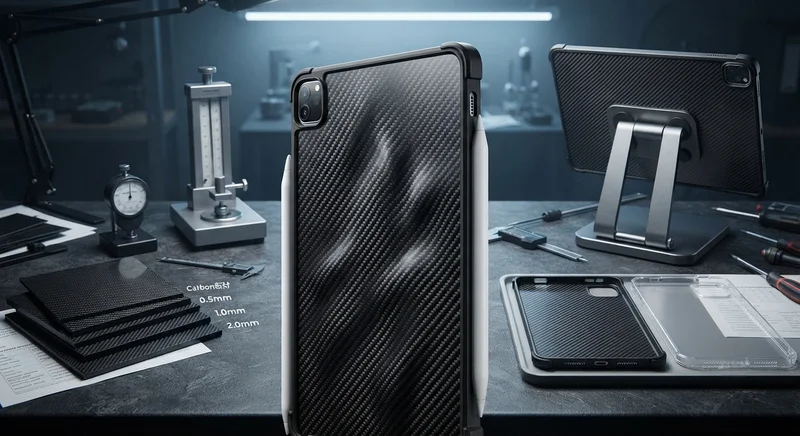
Carbon Fiber Tablet Case — Ultra-Light Protective Shell
Lightweight carbon fiber protective case for tablets and iPads. Molded from T700 3K prepreg with reinforced corner protection. Adds minimal weight while providing superior rigidity and drop protection compared to polycarbonate or silicone cases. Ideal for field workers, enterprise deployments, and professionals requiring durable tablet protection.
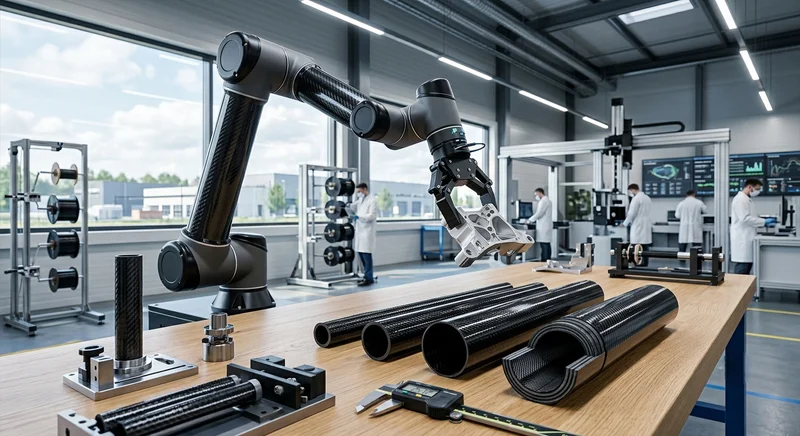
Carbon Fiber Robotic Arm Tube — High-Stiffness Lightweight Replacement
Precision-wound carbon fiber tubes for robotic arm links, replacing steel or aluminum in collaborative robots (cobots) and industrial manipulators. Achieve 3× the specific stiffness of aluminum with significant weight reduction, enabling faster acceleration and higher payload capacity.
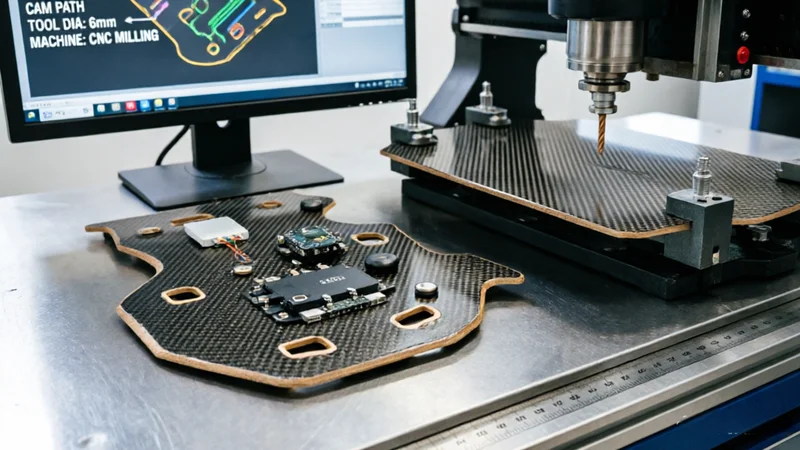
Carbon Fiber Drone Frame Base Plate — 3K Twill T700
CNC-machined carbon fiber base plates for drone frame assemblies. Cut from 3K twill weave T700 prepreg with precision CNC routing. Pre-drilled mounting patterns compatible with common flight controller and power distribution board layouts. Available in 1.5mm to 5mm thickness.
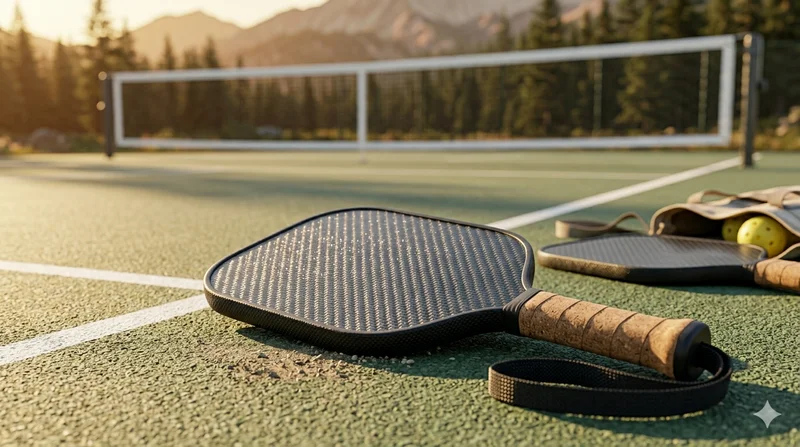
Carbon Fiber Pickleball Paddle
High-performance pickleball paddle with Toray T700 carbon fiber face and polypropylene honeycomb core. Delivers excellent power-to-weight ratio, spin generation, and vibration dampening for competitive play.
Round Carbon Fiber Tube — 3K Plain Weave T700
Standard round carbon fiber tube manufactured from Toray T700 grade fiber with 3K plain weave. Offers balanced strength and stiffness for general industrial applications including robotics, automation, sports equipment, and aerospace structures.