Carbon fiber rod diameter sizes decide almost everything about how a finished part behaves: stiffness jumps with the fourth power of diameter in bending, weight climbs with the square, and fastener fits change the moment you step one size up. Stock solid rod normally runs from 1 mm whip stock up to
Introduction
Carbon fiber rod diameter sizes decide almost everything about how a finished part behaves: stiffness jumps with the fourth power of diameter in bending, weight climbs with the square, and fastener fits change the moment you step one size up. Stock solid rod normally runs from 1 mm whip stock up to 12 mm structural bar, with square and flat formats cut from the same laminate families. This guide lists the standard carbon fiber rod diameter sizes, shows the tolerance and weight numbers behind each size, and gives a selection framework so you can order a carbon fiber solid rod that fits the load instead of the first row in a supplier spreadsheet.
Whether you are cutting kite spars, building a robot linkage, or replacing steel pins with something lighter, the table below turns "we need rods" into a diameter a factory can quote the same day.
Standard Carbon Fiber Rod Diameter Sizes
The table below is the stock range most composite shops keep for round solid rod. Weight is calculated at a laminate density of 1.6 g/cm3; tolerance is the typical supplier guarantee on ground or pulled stock. Applications are the jobs each diameter usually lands in, not marketing claims.
| Diameter (mm) | Weight (g/m) | Typical Tolerance | Common Use |
|---|---|---|---|
| 1.0 | 1.3 | +/- 0.03 | Kite spars, antenna whips, model aircraft |
| 1.5 | 2.8 | +/- 0.03 | Arrow shafts, tent poles, sensor booms |
| 2.0 | 5.0 | +/- 0.05 | Model frames, pushrods, light struts |
| 3.0 | 11.3 | +/- 0.05 | Robot linkages, jigs, guide rails |
| 4.0 | 20.1 | +/- 0.05 | Structural pins, tripod legs, shafts |
| 5.0 | 31.4 | +/- 0.08 | Fixture arms, handle cores, axles |
| 6.0 | 45.2 | +/- 0.08 | Machine guards, heavy linkages |
| 8.0 | 80.4 | +/- 0.10 | Load pins, standoffs, roller cores |
| 10.0 | 125.7 | +/- 0.12 | Heavy shafts, test fixtures |
| 12.0 | 181.0 | +/- 0.15 | Structural bar, high-load pins |
Square rod and flat stock run in parallel sizes: common squares are 3 x 3, 5 x 5, 8 x 8 and 10 x 10 mm, while carbon fiber rods and strips for flat applications are typically sold 1 to 3 mm thick by 10 to 50 mm wide. Off-size diameters between the listed steps exist, but they are custom pulls with minimum order quantities and longer lead times.
Carbon Fiber Rod 1mm and Other Small Diameters
The 1 mm carbon fiber rod 1mm buyers ask for most often is whip stock: kites, antenna elements, micro airframe longerons, and arrow shafts. At 1.3 grams per meter it weighs less than a paperclip per meter while staying far stiffer than fiberglass of the same diameter, but it is also brittle in pure bending at the tips and must be cut with an abrasive wheel rather than a saw that crushes the section.
Small diameters share three practical rules. First, straightness grades matter more than tensile numbers: a 1 mm rod pulled to 0.2 mm per meter runout will not fly straight in a model, no matter how strong the laminate is. Second, surface finish on small rod is usually as-pulled; if you need a press fit into a 1 mm hole, ream or sand to measure rather than assuming nominal diameter. Third, gluing small rod into sockets works best with a thin epoxy film and a light scuff; thick gap-filling glue hides misalignment instead of fixing it.
Carbon Fiber Solid Rod vs Hollow Tube
For the same outer diameter, a solid rod carries more mass and more bending stiffness than a thin-wall tube, but the tube wins once you normalize by weight. A 6 mm solid rod weighs about 45 grams per meter; a 6 mm tube with 1 mm walls weighs roughly 31 grams per meter and keeps most of the bending stiffness, because material at the outer surface does most of the work.
- Choose solid rod when: you need to drill, thread, or pin the end, when the rod rides in a bushing, or when point loads would dent a thin wall.
- Choose hollow tube when: the span is long, weight is the constraint, and the ends can be capped or bonded rather than machined.
- Watch the wall limit: tubes under 1 mm wall crush easily under set screws; use an insert or step up one diameter.
A carbon fiber solid rod remains the default for jigs and fixtures because fasteners and pins are unavoidable there. Reserve hollow sections for long spans where every gram pays back in deflection.
Diameter Tolerance, Straightness and Cutting
Three specs control whether a rod fits the assembly: diameter tolerance, straightness, and end squareness. Pultruded stock usually holds the diameter bands listed in the chart; ground rod holds tighter but costs more. Straightness is graded in millimeters of runout per meter, with precision grades at 0.1 to 0.2 mm/m and standard grades at 0.5 mm/m.
Cutting carbon fiber rod requires an abrasive cut-off wheel on a high-speed spindle, light feed, and dust extraction; a toothed saw crushes the section and delaminates the outer plies. Deburr the end with fine sandpaper, and if the rod must seat against a shoulder, face the end square on a fixture before assembly. Length tolerance of plus or minus 0.5 mm is normal for cut stock; tighter lengths should be specified up front rather than corrected after delivery.
Selecting Rod Diameter for Your Application
Run this sequence before you open the order form:
- List the load type: axial pin, bending span, or pure tension, and whether it cycles.
- Check the fit first: bushing bore, socket depth, and clamp opening usually eliminate half the diameters before any strength math.
- Estimate deflection: for a simply supported span, stiffness rises with the fourth power of diameter, so one size up is a large jump, not a small one.
- Budget the cut: every additional cut face costs setup time; order random lengths when parts vary, full lengths when you will trim in-house.
- Plan the finish: ends threaded, capped, or left as-pulled changes which tolerance grade you actually need.
- Confirm stock: the diameters in this chart ship from inventory; between sizes become a custom run.
If two diameters both pass the fit and deflection checks, take the smaller one and add a bonded collar only where a local stiffener is cheaper than the next rod size.
Frequently Asked Questions
What diameter carbon fiber rod should I use for a robot linkage?
For most indoor robot arms and pushrods, 3 mm to 5 mm solid rod covers light and medium loads; step to 6 mm when the span exceeds about 300 mm or the joint reverses direction under load. Check the bushing bore first, because the fit often fixes the diameter before strength does, and keep a carbon fiber solid rod spare in one size up for cells that run long shifts.
How tight is the diameter tolerance on stock rod?
Standard pulled or ground stock holds the plus-or-minus bands in the chart: roughly 0.03 to 0.05 mm on 1 to 4 mm rod and 0.08 to 0.12 mm on larger sizes. Straightness is a separate grade; ask for runout per meter if the rod guides a sensor or slides in a sleeve, because diameter can be perfect while the rod still bows.
Can I thread or sleeve the end of a carbon fiber rod?
Threading small rod is risky because the cut reduces the section that carries load; prefer a bonded metal insert or a crimped end cap for 1 to 4 mm sizes. Larger rod, 8 mm and up, can be carefully threaded with a sharp die and light cuts, or drilled for a threaded insert. Always scuff, clean, and epoxy the joint rather than relying on thread friction alone.
Conclusion
Carbon fiber rod diameter sizes are a short list with big consequences: 1 mm whip stock through 12 mm structural bar covers kites to machine fixtures, stiffness scales with the fourth power of diameter, and the choice between solid rod and hollow tube is really a choice between fastener-friendly sections and weight-optimal spans. Fit and straightness usually narrow the field before strength math does, so confirm the bushing, the cut length, and the stock diameter first, then step up one chart row only when deflection demands it. For stock diameters, cut-to-length service, and help checking your linkage loads, browse our carbon fiber rod range or contact our engineering team with your drawing.
Related Articles
- Carbon Fiber Tube Polishing: Process, Tolerance and Cost
- Carbon Fiber Plate Thickness Chart: Standard Sizes and Selection
- Carbon Fiber Scrap Buyers: Channels, Pricing and Notes | YongXian
- Carbon Fiber Plate Waste Recycling: Process, Yield and Economics
- Carbon Fiber Sheet Recycling Service: Process, Yield and Economics
- Carbon Fiber Rod Testing Service: Methods, Standards and Cost | YongXian
Interested in Our Products?
Contact our team for competitive pricing and technical specifications.
Get a QuoteRelated Products
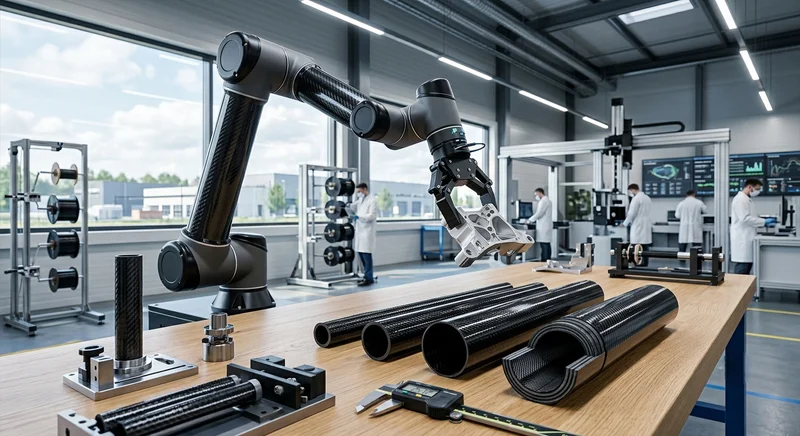
Carbon Fiber Robotic Arm Tube — High-Stiffness Lightweight Replacement
Precision-wound carbon fiber tubes for robotic arm links, replacing steel or aluminum in collaborative robots (cobots) and industrial manipulators. Achieve 3× the specific stiffness of aluminum with significant weight reduction, enabling faster acceleration and higher payload capacity.
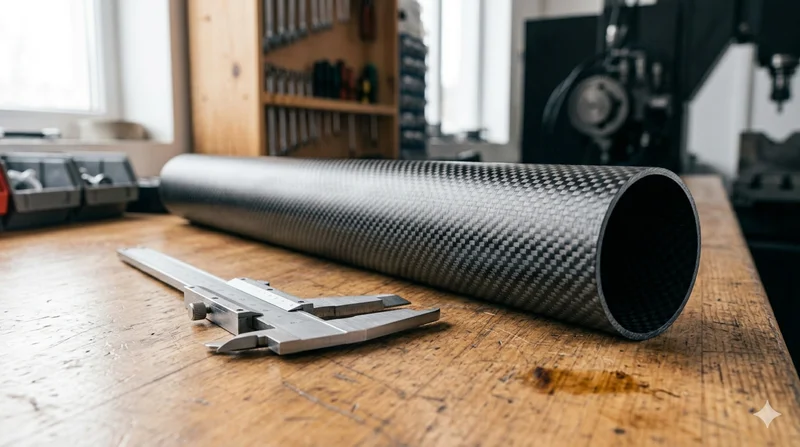
Round Carbon Fiber Tube — 3K Plain Weave T700
Standard round carbon fiber tube manufactured from Toray T700 grade fiber with 3K plain weave. Offers balanced strength and stiffness for general industrial applications including robotics, automation, sports equipment, and aerospace structures.
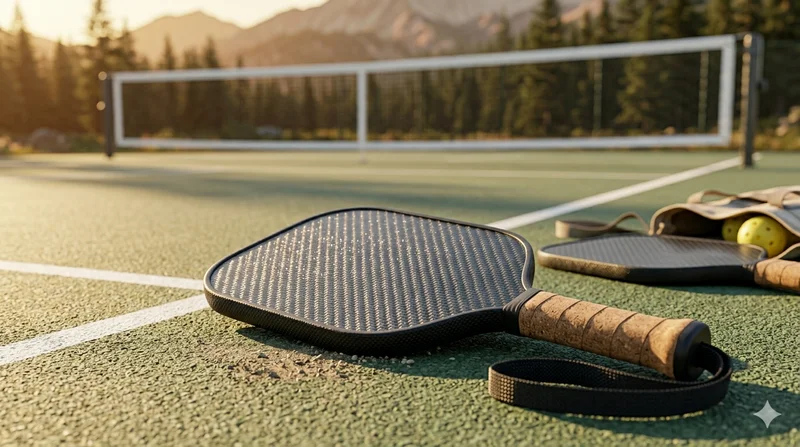
Carbon Fiber Pickleball Paddle
High-performance pickleball paddle with Toray T700 carbon fiber face and polypropylene honeycomb core. Delivers excellent power-to-weight ratio, spin generation, and vibration dampening for competitive play.
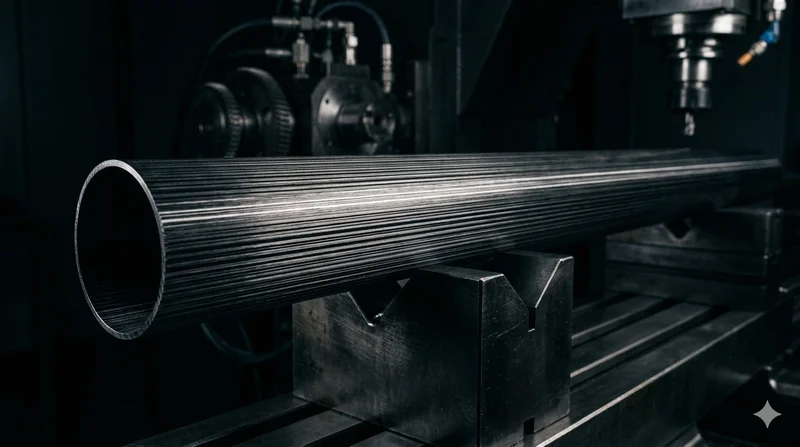
Round Carbon Fiber Tube — UD Unidirectional T700
Unidirectional (UD) round tube with all fibers aligned axially for maximum longitudinal stiffness. Ideal for applications requiring high bending rigidity with minimal weight, such as shafts, struts, and structural reinforcements.
Carbon Fiber Plate — 3K Twill T700 3.0mm
Medium-thickness 3.0mm carbon fiber plate offering significantly higher load capacity while maintaining attractive 3K twill finish. Suitable for structural brackets, reinforcement plates, and load-bearing panels.