Carbon fiber tube polishing is the operation that turns a saw-cut, slightly cloudy tube into a glossy, dimensionally predictable part ready for display, optical mounts, or tight slip fits. Buyers usually ask for polish after carbon fiber tube cutting, but polishing is not a cosmetic afterthought: it
Introduction
Carbon fiber tube polishing is the operation that turns a saw-cut, slightly cloudy tube into a glossy, dimensionally predictable part ready for display, optical mounts, or tight slip fits. Buyers usually ask for polish after carbon fiber tube cutting, but polishing is not a cosmetic afterthought: it removes a controlled amount of material from the outer diameter, changes surface roughness by an order of magnitude, and interacts with the tolerance you designed the joint around. This guide walks the full process, from prep through the final buff, quantifies how much diameter you give up, answers whether carbon fiber tube strength survives the abrasive, and gives the cost numbers a carbon fiber tube shop actually quotes.
If you have ever received tubes that looked polished on the sample but dull on production, or pressed a polished tube into a bore that no longer fit, the sections below explain what went wrong and how to specify the finish so the second order lands right.
What Carbon Fiber Tube Polishing Covers
Polishing in this context means improving the outer surface of a cured tube: leveling the resin-rich skin, closing pinholes from the mandrel, and bringing surface roughness down from as-cut values to a specular finish. It is different from reaming the inner diameter, cutting to length, or machining end features, although all of them often appear on the same work order.
- Surface leveling: removing ridges and seam marks left by the wrap or the mandrel release.
- Pinhole closure: filling micro-voids in the resin layer so the gloss does not show pitting.
- Roughness reduction: taking outer-surface Ra from roughly 3 to 6 micrometers down to 0.4 to 0.8 micrometers.
- Diameter control: removing a predictable 0.05 to 0.15 mm from the outer diameter across the full polished length.
What polishing does not do is fix ovality from a bad cure, straighten a bowed tube, or restore wall thickness that a previous aggressive grind already removed. Those need re-manufacture, not another pass on the buffing wheel.
Carbon Fiber Tube Cutting Before the Polish
Sequence matters: cut first, polish second. After carbon fiber tube cutting with an abrasive wheel, the end faces are square but the outer skin near the cut can be frayed and micro-cracked; polishing before facing would grind those defects into the finish instead of removing them. Face both ends, deburr the inner and outer edges with fine abrasive paper, and only then mount the tube for OD polishing.
Length tolerance also interacts with polish. If you order cut-to-length tubes at nominal length and then polish the OD, the ends stay at the cut length while the diameter drops, which is usually fine. If the tube must slip into a shoulder after polishing, specify the finished length after polish, not before, so the shop does not deliver a part that is both short and undersized.
Polishing Process Steps and Grit Progression
The table below is a standard manual-to-semi-automatic sequence used on round carbon fiber tubes. Material removed is cumulative per side; Ra values are typical measured results on resin-rich outer surfaces, not laboratory ideals.
| Step | Abrasive / Tool | Target Ra | OD Removed | Purpose |
|---|---|---|---|---|
| 1. Prep | Diamond cut-off, 240 grit paper | as-cut | 0.00 | Square ends, knock down burrs |
| 2. Fill | Low-shrink epoxy paste | as-cut | 0.00 | Close pinholes and seams |
| 3. Rough wet sand | 180 grit, wet | 3.2-6.3 um | 0.05-0.08 | Level ridges and filler |
| 4. Medium wet sand | 400 grit, wet | 1.6-3.2 um | 0.02-0.04 | Remove 180 grit scratches |
| 5. Fine wet sand | 800 grit, wet | 0.8-1.6 um | 0.01-0.02 | Prepare for compound |
| 6. Buff | Cloth wheel + polishing compound | 0.4-0.8 um | 0.00-0.01 | Specular gloss |
| 7. Protect (optional) | Clear UV coat, sprayed | 0.4-0.8 um | +0.02-0.04 | Lock gloss, block yellowing |
Total OD loss on steps 1 through 6 lands near 0.08 to 0.15 mm, which is why polished tubes are often ordered 0.2 mm oversize on diameter when the fit is critical. Skipping the fill step is the most common shortcut: it saves an hour and leaves pinholes that scatter light and read as defects under showroom lighting.
Does Polishing Affect Carbon Fiber Tube Strength?
Done to the sequence above, carbon fiber tube strength is essentially unchanged in tension and compression, because the removed material is resin skin and surface plies that carry little of the axial load. Three failure modes still appear when the process goes wrong:
- Over-sanding: grinding through the first structural ply reduces wall thickness directly; a 0.2 mm loss on a 1 mm wall is a 20 percent section cut and shows up in burst and flexure tests.
- Deep scratches: skipping grits and jumping from 180 straight to buff leaves notches that become crack initiators under cyclic bending.
- Heat and solvent damage: aggressive dry buffing can soften the resin surface with friction heat; aggressive solvents can blush or craze the matrix.
For static display parts and most mounts, polished tubes hold rated strength comfortably. For flight or fatigue-critical hardware, polish gently, keep every grit step, and verify wall thickness with ultrasonic measurement after the final buff rather than trusting the removal table alone.
Carbon Fiber Tube Shop: Cost and Lead Time
Shop pricing for polishing tracks labor time more than material. Small-batch manual polish on tubes under 25 mm OD typically runs 0.40 to 1.20 USD per unit for a full seven-step finish, with setup adding 40 to 80 USD per batch. Automated lathe polishing with a trailing cloth head drops per-unit cost about 30 percent above 500 pieces but adds fixture cost. Lead time is usually 3 to 7 working days inside a normal tube order; polish-only rework on parts you already received adds a week plus return freight.
When you request a quote from a carbon fiber tube shop, send four things: finished OD with tolerance, required Ra or a gloss reference sample, polished length and whether ends stay matte, and annual volume. Shops that receive all four answer in one round; shops that receive only "polish please" answer with assumptions you will discover at inspection.
Frequently Asked Questions
How much diameter does carbon fiber tube polishing remove?
Expect roughly 0.08 to 0.15 mm off the outer diameter through a full wet-sand and buff sequence, before any optional clear coat. If your joint tolerance is tighter than 0.1 mm, order the tube oversize and treat polishing as a sizing operation, or specify a maximum finished OD and let the shop choose the grit path that hits it.
Can a polished tube still be cut to length afterward?
Yes, but face the ends after polish and re-deburr, because the buff can round the edge slightly and the cut will expose raw laminate again. If both OD polish and tight length matter, do the final length cut first, protect the polished zone with tape, and only touch the ends afterward.
Is a mirror polish worth it for machine fixtures?
Usually not. Fixtures care about diameter control, flat end faces, and scratch resistance, not gloss; a fine 800-grit satin finish delivers the dimensional accuracy at half the labor cost. Save full mirror polish for visible products, optical barrels, and anything a customer will hold in their hand.
Conclusion
Carbon fiber tube polishing is a controlled material-removal process, not a beauty pass: face the ends after carbon fiber tube cutting, fill before you sand, walk the grit progression without skipping, expect 0.08 to 0.15 mm of diameter loss, and keep every structural ply intact so carbon fiber tube strength stays at spec. Specify finished diameter, target Ra, polished length, and volume when you approach a carbon fiber tube shop, and you will get a quote you can compare instead of a guess you have to inspect your way out of. To review polished tube stock, tolerance options, and finishing services, browse our carbon fiber tube range or contact our team with your drawing and required Ra.
Part of topic
Related Articles
- Carbon Fiber Rod Diameter Sizes: Standard Specs and Selection
- Carbon Fiber Plate Thickness Chart: Standard Sizes and Selection
- Carbon Fiber Scrap Buyers: Channels, Pricing and Notes | YongXian
- Carbon Fiber Plate Waste Recycling: Process, Yield and Economics
- Carbon Fiber Sheet Recycling Service: Process, Yield and Economics
- Carbon Fiber Rod Testing Service: Methods, Standards and Cost | YongXian
Interested in Our Products?
Contact our team for competitive pricing and technical specifications.
Get a QuoteRelated Products
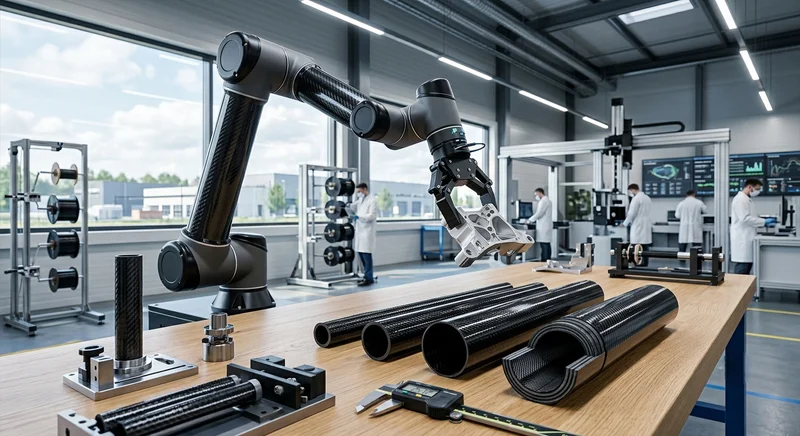
Carbon Fiber Robotic Arm Tube — High-Stiffness Lightweight Replacement
Precision-wound carbon fiber tubes for robotic arm links, replacing steel or aluminum in collaborative robots (cobots) and industrial manipulators. Achieve 3× the specific stiffness of aluminum with significant weight reduction, enabling faster acceleration and higher payload capacity.
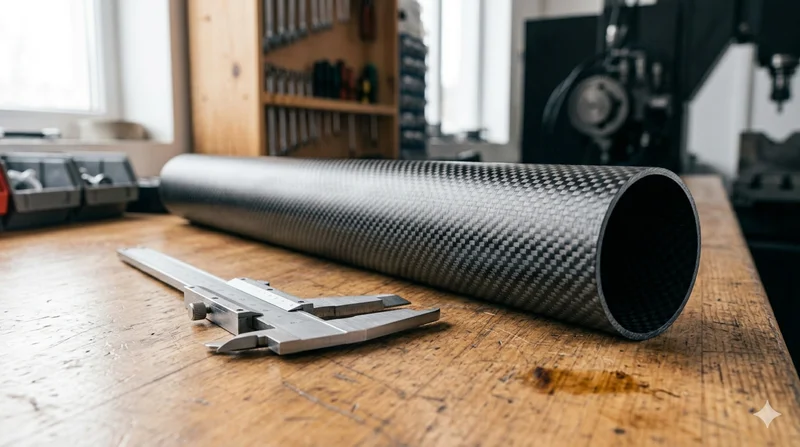
Round Carbon Fiber Tube — 3K Plain Weave T700
Standard round carbon fiber tube manufactured from Toray T700 grade fiber with 3K plain weave. Offers balanced strength and stiffness for general industrial applications including robotics, automation, sports equipment, and aerospace structures.
Carbon Fiber Pickleball Paddle
High-performance pickleball paddle with Toray T700 carbon fiber face and polypropylene honeycomb core. Delivers excellent power-to-weight ratio, spin generation, and vibration dampening for competitive play.
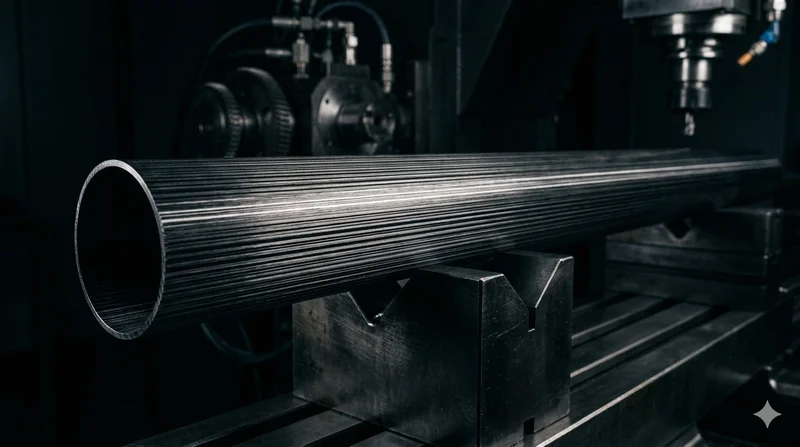
Round Carbon Fiber Tube — UD Unidirectional T700
Unidirectional (UD) round tube with all fibers aligned axially for maximum longitudinal stiffness. Ideal for applications requiring high bending rigidity with minimal weight, such as shafts, struts, and structural reinforcements.
Carbon Fiber Plate — 3K Twill T700 3.0mm
Medium-thickness 3.0mm carbon fiber plate offering significantly higher load capacity while maintaining attractive 3K twill finish. Suitable for structural brackets, reinforcement plates, and load-bearing panels.