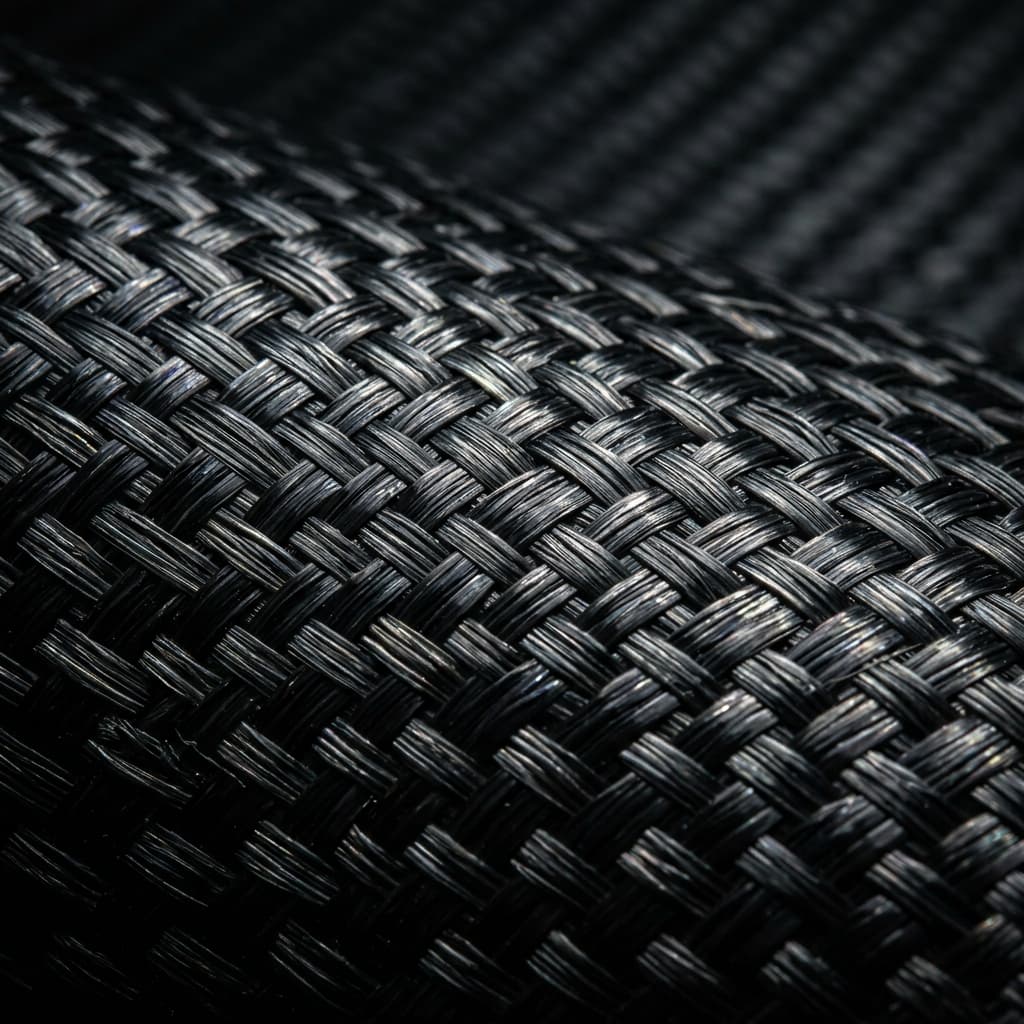
A carbon fiber composite core testing service turns a supplier datasheet into evidence you can put in a qualification file. Core properties vary slab to slab, and a certificate with no lot number proves nothing about the panel on your line. Independent testing closes that gap: standardized methods,
Introduction
A carbon fiber composite core testing service turns a supplier datasheet into evidence you can put in a qualification file. Core properties vary slab to slab, and a certificate with no lot number proves nothing about the panel on your line. Independent testing closes that gap: standardized methods, calibrated equipment, and a report that maps every result to the material you actually received.
This guide walks through the mechanical tests, the non-destructive inspection options and the sampling logic a carbon fiber composite core qc service uses to accept or reject a lot — plus what to demand from a lab before you sign the purchase order.
Carbon Fiber Composite Core Testing Service: The Test Menu
Four mechanical tests and one environmental test cover most qualification programs. The methods below are the ones buyers ask for by number, so ask your lab to cite them explicitly.
| Property | Standard method | Typical specimen | What it proves | Pass signal |
|---|---|---|---|---|
| Flatwise compression | ASTM C365 | 50 x 50 mm core coupon | Core crush strength and modulus | Within 10 percent of datasheet |
| Core shear (L and W) | ASTM C272 | Rectangular core block | Shear strength and modulus | Meets design allowables |
| Facing adhesion | ASTM C297 | Skin-core disc | Bond line integrity | Cohesive failure in core, not at glue line |
| Moisture uptake | ASTM C272 soak, gravimetric | Sealed and unsealed samples | Water ingress risk in service | Below 2 percent mass gain after 24 h |
| Density and cell size | ISO or internal method | Coupon from slab edge | Batch consistency | Within plus or minus 5 percent of order |
Numbers above are acceptance examples, not universal limits — your design allowable sets the real threshold. A testing service that reports values without the method, the conditioning state and the specimen dimensions has given you numbers, not data.
Non-Destructive Inspection: What Each Method Sees
Once parts are built, destructive tests are off the table for the panels you will ship. Non-destructive methods fill the gap, but each one sees a different defect.
- Tap testing: fast and cheap, finds delamination and large voids by sound change; operator-dependent, good for Class 1 and 2 screening.
- Ultrasonic pulse-echo: maps core thickness and detects water pockets and disbonds to about 10 mm resolution; needs couplant and a scan plan.
- Thermography: infrared imaging of bond line defects over large areas in seconds; shallow defects only, needs thermal contrast.
- X-ray computed tomography: the reference method for cell crush and porosity in research programs; slow, costly, and reserved for failure analysis.
Pair the method to the defect you fear most. Wet cores hide from tap testing and show up clearly on ultrasonic scans, which is why marine and wind programs make ultrasound a gate rather than an option.
Carbon Fiber Composite Core QC Service: Sampling and Lot Rules
A carbon fiber composite core qc service does not test everything; it tests enough to protect the lot. Common practice follows an inspection level around AQL 2.5 for visual defects and one destructive coupon per lot per property for mechanical data. Three rules keep the sample honest:
- Coupon source: cut specimens from the same slab and same cure run as the panels, never from a reference board kept in the lab.
- Conditioning first: condition coupons to the stated temperature and humidity before test — dry-as-molded values overstate wet-service performance.
- Independent witness: for source qualification, have one coupon tested at a second lab; inter-lab spread above 15 percent means the method needs tightening.
Reject rules should be written before testing starts: any result below the design allowable fails the lot, two marginal results trigger a re-test of double the sample, and three failures scrap the lot rather than downgrade it to non-critical use.
Carbon Fiber Composite Core Testing Service USA: Lab Turnaround
Domestic carbon fiber composite core testing service USA labs typically quote three to seven working days for a standard mechanical package and seven to fourteen days when environmental conditioning adds soak time. Expedited ultrasonic scanning of built panels can run next-day for a fee. Expect a report with specimen photos, raw curves, conditioning log, equipment calibration dates and a clear pass or fail statement — a certificate without curves is a summary, not a test report.
Cost scales with scope: a basic density and flatwise package lands in the low hundreds of dollars per lot, while full mechanical plus NDT on a built panel reaches four figures. Budget one qualification run per supplier and one surveillance coupon per production lot; that cadence catches drift early without testing every panel you ship.
Report review is where lazy programs skip steps. A usable report ties each curve to a specimen ID, states the crosshead speed and the conditioning humidity, and lists the calibration due date of the load cell. When two coupons from one lot disagree by more than 15 percent, the correct response is not to average them — it is to map density across the slab, because a density gradient explains most of that spread before any chemistry does.
Frequently Asked Questions
Should I test every lot or only the first article?
Qualify the supplier with a full first-article package, then run surveillance testing on one coupon set per production lot. Full testing of every lot is justified only for aerospace and defense programs where the cost of a field failure dwarfs lab fees.
What is the difference between a mill certificate and a test report?
A mill certificate states what the producer measured at the factory, often on reference samples. A test report from an independent service documents what was measured on your lot, with method, conditioning and specimen dimensions. Qualification files need the second.
How fast can NDT catch a wet core?
Ultrasonic scanning detects moisture pockets and disbonds within minutes of contact and can be run on panels in the field with a portable unit. Tap testing is slower to trust and can miss deep wet zones entirely, so ultrasound is the reliable gate after water exposure.
Conclusion
A carbon fiber composite core testing service is the difference between assuming core quality and proving it. Fix the test menu, source coupons from your own lots, pair destructive data with ultrasonic NDT, and every panel that ships carries evidence — not optimism.
YongXian supplies carbon fiber composite core materials with lot certificates and supports buyer-appointed testing on every batch. Browse our composite materials or send your test plan and panel specification for a quotation with test slots included.
Part of topic
Related Articles
- Carbon Fiber Composite Core Bonding Service: Adhesive Selection, Surface Prep and Cure
- Carbon Fiber Composite Core Coating Service: Protective Coatings
- Carbon Fiber Composite Core Cleaning Service: Cleaning Processes
- Carbon Fiber Composite Core Cutting Service: CNC Core Cutting
- Carbon Fiber Composite Curing Service: Oven and Cure Profiles
- Prusament PETG Carbon Fiber: Print Settings and Mechanical Behavior
Interested in Our Products?
Contact our team for competitive pricing and technical specifications.
Get a QuoteRelated Products
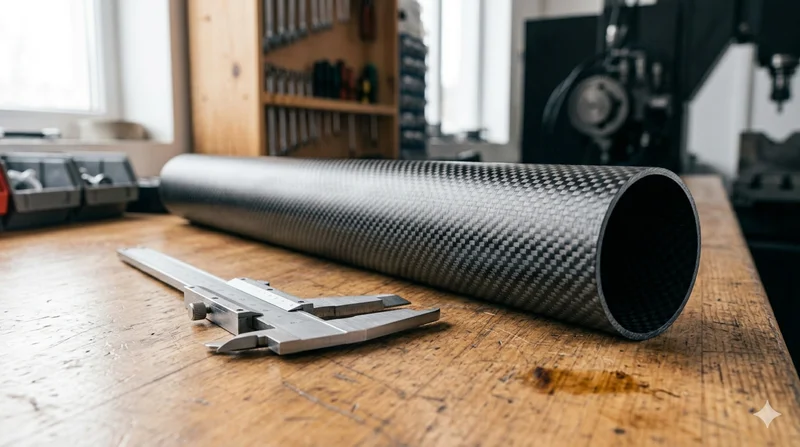
Round Carbon Fiber Tube — 3K Plain Weave T700
Standard round carbon fiber tube manufactured from Toray T700 grade fiber with 3K plain weave. Offers balanced strength and stiffness for general industrial applications including robotics, automation, sports equipment, and aerospace structures.
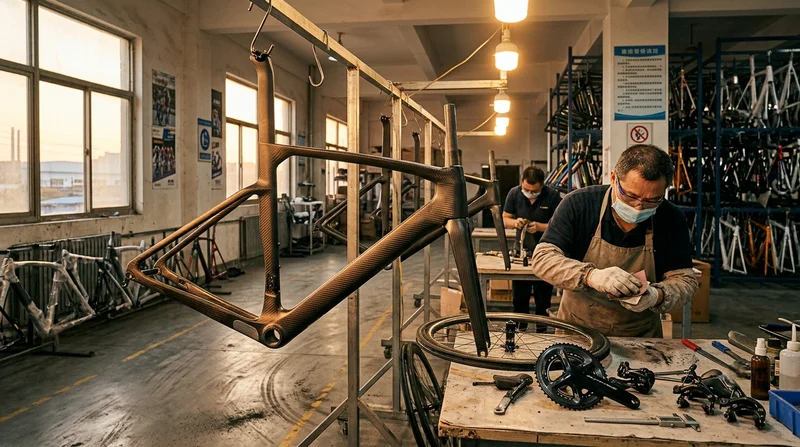
Custom Carbon Fiber Bicycle Frame
Full-custom carbon fiber bicycle frame manufactured to your geometry specifications. We produce road, gravel, mountain, and track frames using high-modulus carbon fiber layups optimized for each riding discipline. Monocoque construction with internal cable routing, available with disc or rim brake mounts.
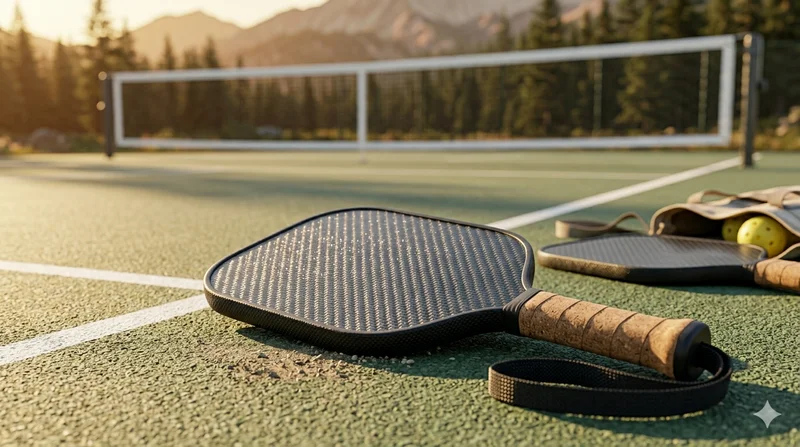
Carbon Fiber Pickleball Paddle
High-performance pickleball paddle with Toray T700 carbon fiber face and polypropylene honeycomb core. Delivers excellent power-to-weight ratio, spin generation, and vibration dampening for competitive play.
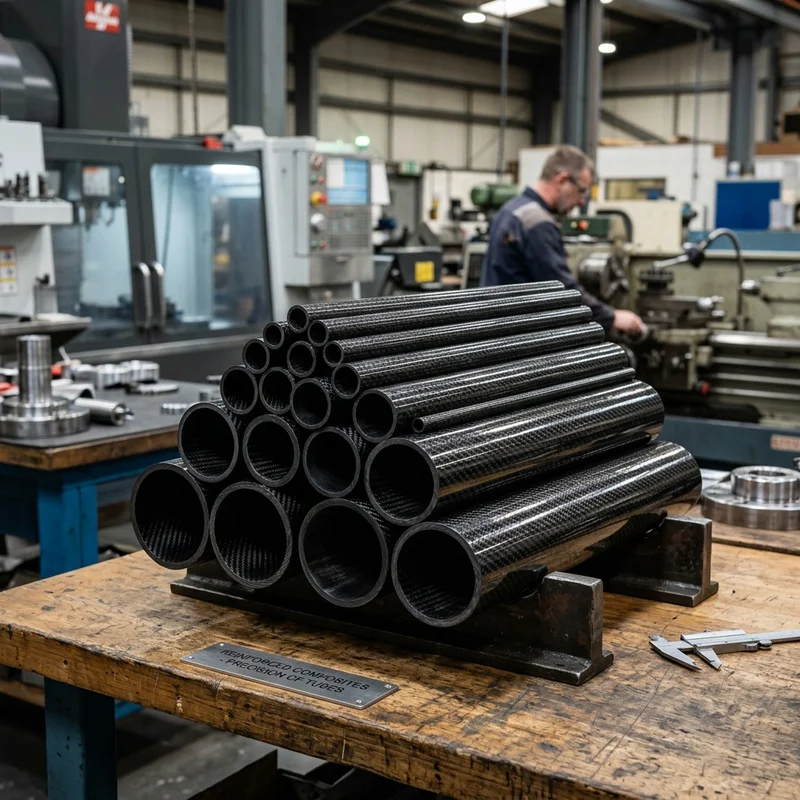
Round Carbon Fiber Tube — 3K Twill
Lightweight and ultra-stiff round tubes ideal for drone frames, robotics, and structural applications.
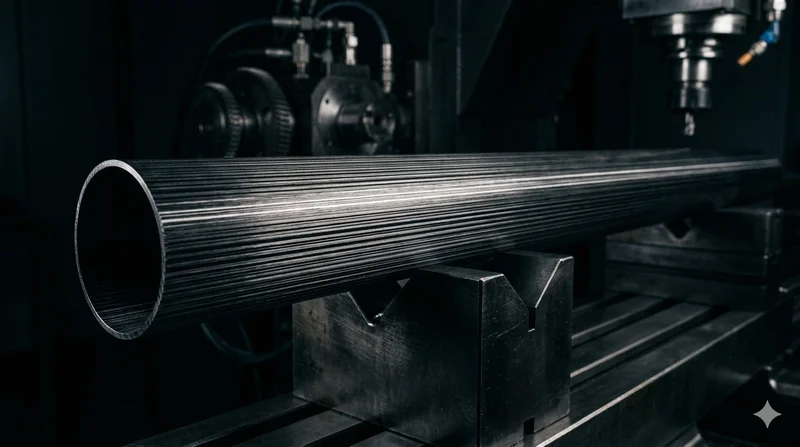
Round Carbon Fiber Tube — UD Unidirectional T700
Unidirectional (UD) round tube with all fibers aligned axially for maximum longitudinal stiffness. Ideal for applications requiring high bending rigidity with minimal weight, such as shafts, struts, and structural reinforcements.