A carbon fiber composite core bonding service decides whether your sandwich panel survives a thermal cycle and a year of service loads. The skins carry tension, but the adhesive line transfers shear into the core, and once that line is weak no carbon fiber layup can compensate. Buyers who outsource
Introduction
A carbon fiber composite core bonding service decides whether your sandwich panel survives a thermal cycle and a year of service loads. The skins carry tension, but the adhesive line transfers shear into the core, and once that line is weak no carbon fiber layup can compensate. Buyers who outsource bonding need more than a glue recipe: they need a documented process window, a fixture that holds the bond line to tolerance, and proof that the joint will not creep under temperature.
This guide walks through adhesive families, surface preparation, cure control and the acceptance tests a bonding service must run before a panel leaves the floor — plus the questions to ask when you qualify a carbon fiber composite core bonding fabrication shop.
Carbon Fiber Composite Core Bonding Service: Scope and Deliverables
A full-service bonding scope covers four deliverables: substrate preparation, adhesive selection and metering, fixture and cure, then destructive or non-destructive acceptance. Anything less is a partial job that moves risk to your assembly line. The table below summarizes the adhesive families you will actually be quoted.
| Adhesive family | Open time | Cure schedule | Typical peel strength | Best fit |
|---|---|---|---|---|
| Two-part epoxy paste | 30-90 min | 24 h at 23 C, or 2 h at 80 C | 3-6 kN/m | Structural foam bonds, tooling, repairs |
| Epoxy film adhesive | days at room temp | 120-180 C autoclave, 60-120 min | 4-8 kN/m | Aerospace prepreg sandwich panels |
| Polyurethane | 20-40 min | 24 h at 23 C | 2-5 kN/m | Flexible cores, large panels, vibration |
| Acrylic (MMA) | 8-15 min | full strength in 24 h | 2-4 kN/m | Mixed materials, quick fixtures |
| Pressure-sensitive film | unlimited | heat + pressure in autoclave | 1-3 kN/m | Temporary tack, low-load panels |
Numbers are typical ranges from public datasheets, not a substitute for the lot certificate that arrives with your kit. A bonding service that cannot map your core, skin resin system and cure equipment to one row is quoting a catalog, not a process.
Surface Preparation and Fit-Up
Most bond failures trace back to preparation, not adhesive chemistry. Core surfaces release agents, foam dust and honeycomb cell debris all create a weak boundary layer. A disciplined carbon fiber composite core bonding service runs the following sequence and records it per lot:
- Cut and contour: CNC or knife-cut the core to drawing, then vacuum all cells — honeycomb traps dust that no wipe removes.
- Deburr and dry: sand foam edges lightly, blow off chips, and hold parts at least 4 hours at low humidity before bonding.
- Prime if specified: water-based or solvent primer on balsa and closed-cell foam improves peel by 20 to 40 percent; let it flash fully.
- Dry-fit the assembly: check gaps over 0.5 mm and shim or re-cut — adhesive will not bridge a 2 mm void under light clamp pressure.
- Control the environment: hold 18-25 C and below 65 percent relative humidity; log the dew point on the traveler.
Fit-up tolerance matters as much as cleanliness. A core that is 1 mm proud on one edge changes clamp pressure distribution across the whole panel, and the bond line thickness drifts out of the range the adhesive was qualified for.
Carbon Fiber Composite Core Bonding Fabrication: Fixture and Cure
Cure is where a carbon fiber composite core bonding fabrication shop earns its fee. Pressure must be uniform, temperature must be measured at the part rather than the oven air, and ramp rates must respect the core. Foam cores outgas above 80 C; honeycomb cells can trap pressure if vents are sealed. The fixture stack usually looks like this:
- Release film and breather over the layup so vacuum can pull through without sticking to the tool.
- Rubber bladder or caul plate that distributes bag pressure evenly across stiff and soft zones.
- Thermocouples on the bond line, not just on the tool — one on a thick joint and one on a thin edge.
- Documented ramp and hold: for example 2 C per minute to 80 C, hold 120 minutes, cool below 40 C before demolding.
Demolding too early is a classic defect: the adhesive is green, the panel looks fine, and weeks later the skins relax and the core debonds at the edges. A qualified service will not release a panel until the bond line has passed a quick probe test and the cure log is signed.
Carbon Fiber Composite Core Bonding Service USA: Qualification and Lead Time
Programs in the United States often need a domestic carbon fiber composite core bonding service USA shop for country-of-origin records, ITAR-controlled drawings and short iteration loops. Domestic converters typically quote two to four weeks for a first article and one to two weeks for repeat lots, while imported bonding adds ocean freight plus a requalification of the adhesive lot on receipt.
Qualification itself is not expensive: ask for a process specification, an adhesive lot certificate, a peel or lap-shear result from a witness coupon cured with your panel, and a cross-section of one bonded edge showing bond line thickness. Four documents, one afternoon of review, and you know whether the shop runs a process or a habit. Verify that the witness coupons come from the same cure cycle as your parts — coupons cured on a separate run prove nothing about your lot.
Frequently Asked Questions
Can bonding replace mechanical fasteners in a sandwich panel?
For distributed loads, a properly designed adhesive joint carries shear more evenly than bolts and avoids hard points that crush the core. Keep fasteners for point loads, removable access panels and interfaces that must be disassembled. Many designs use both: bonded skins with bolted edge fittings.
How do I verify the bond line before shipping?
Run three checks on every lot: visual inspection for voids and squeeze-out, a peel or lap-shear test on witness coupons from the same cure, and non-destructive inspection such as tap testing or ultrasonic C-scan on at least one panel per batch. Record bond line thickness — outside the adhesive qualified window means the panel is rejected, not downgraded.
What is the typical lead time for a bonded sandwich panel order?
Repeat lots on a qualified adhesive usually ship in two to three weeks. First articles need one week for fixture build plus one to two weeks for trial and documentation, so plan three to four weeks end to end. Custom core contours or autoclave cure add about a week.
Conclusion
A carbon fiber composite core bonding service is worth paying for when it documents preparation, controls the cure, and proves the bond line with coupons from your own run. Ask for the process window in writing, trial one lot, and keep the cure log with the panel.
YongXian supplies carbon fiber composite core materials and bonding-ready sandwich kits with lot certificates. Browse our composite materials or send your panel size, core type and cure equipment for a quotation.
Part of topic
Related Articles
- Carbon Fiber Composite Core Testing Service: Flatwise, Shear and NDT
- Carbon Fiber Composite Core Coating Service: Protective Coatings
- Carbon Fiber Composite Core Cleaning Service: Cleaning Processes
- Carbon Fiber Composite Core Cutting Service: CNC Core Cutting
- Carbon Fiber Composite Curing Service: Oven and Cure Profiles
- Prusament PETG Carbon Fiber: Print Settings and Mechanical Behavior
Interested in Our Products?
Contact our team for competitive pricing and technical specifications.
Get a QuoteRelated Products
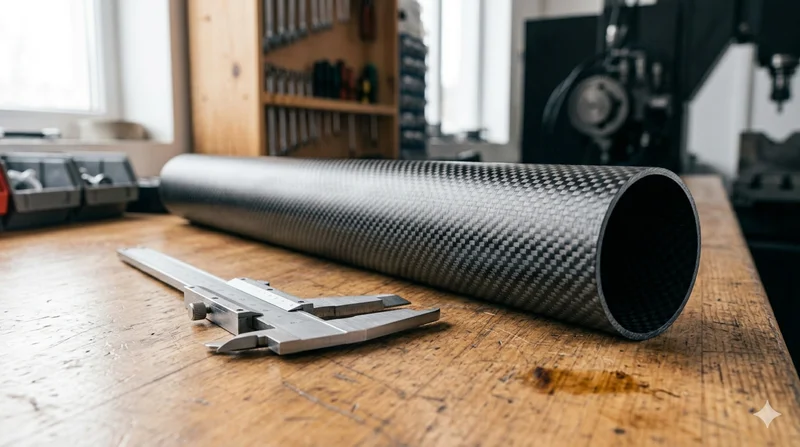
Round Carbon Fiber Tube — 3K Plain Weave T700
Standard round carbon fiber tube manufactured from Toray T700 grade fiber with 3K plain weave. Offers balanced strength and stiffness for general industrial applications including robotics, automation, sports equipment, and aerospace structures.

Custom Carbon Fiber Bicycle Frame
Full-custom carbon fiber bicycle frame manufactured to your geometry specifications. We produce road, gravel, mountain, and track frames using high-modulus carbon fiber layups optimized for each riding discipline. Monocoque construction with internal cable routing, available with disc or rim brake mounts.
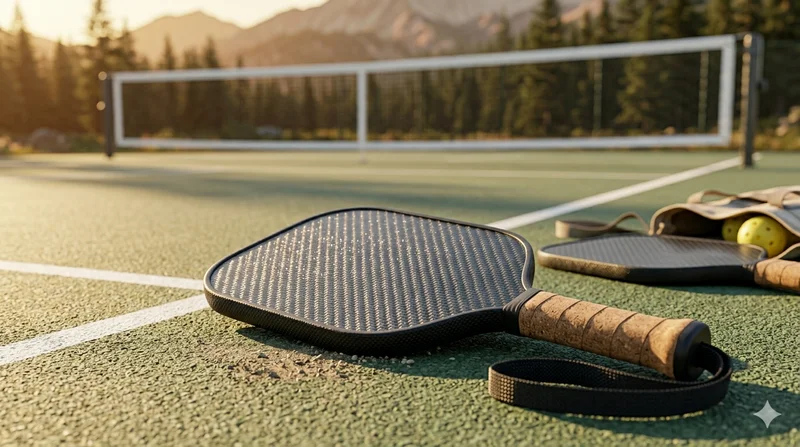
Carbon Fiber Pickleball Paddle
High-performance pickleball paddle with Toray T700 carbon fiber face and polypropylene honeycomb core. Delivers excellent power-to-weight ratio, spin generation, and vibration dampening for competitive play.
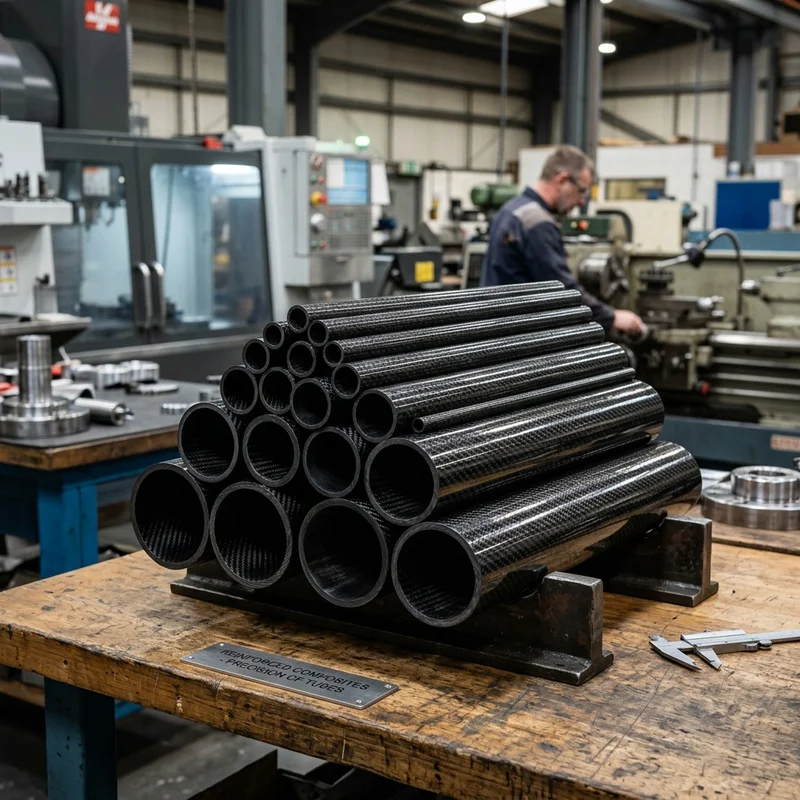
Round Carbon Fiber Tube — 3K Twill
Lightweight and ultra-stiff round tubes ideal for drone frames, robotics, and structural applications.
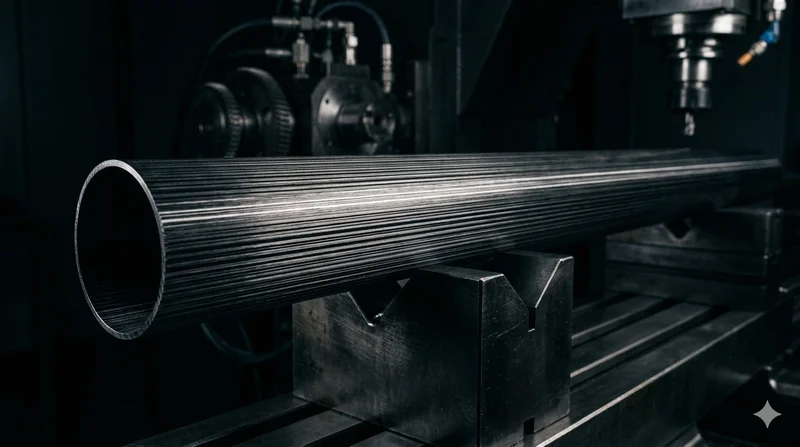
Round Carbon Fiber Tube — UD Unidirectional T700
Unidirectional (UD) round tube with all fibers aligned axially for maximum longitudinal stiffness. Ideal for applications requiring high bending rigidity with minimal weight, such as shafts, struts, and structural reinforcements.