A carbon fiber composite core cleaning service prepares cut foam and honeycomb cores so adhesive and resin actually bond: it removes cutting dust, machining oils, release agents and absorbed moisture, then proves the surface is clean enough to wet out. Skip that step and the panel fails at the bond
Introduction
A carbon fiber composite core cleaning service prepares cut foam and honeycomb cores so adhesive and resin actually bond: it removes cutting dust, machining oils, release agents and absorbed moisture, then proves the surface is clean enough to wet out. Skip that step and the panel fails at the bond line — often weeks later, under load, where no visual inspection would have caught it.
This guide walks through the cleaning chain a core shop runs, compares aqueous, solvent and plasma methods for the common core materials, and lists what to fix in the purchase order before the first kit is washed.
Carbon Fiber Composite Core Cleaning Service: The Process Chain
A controlled cleaning line runs in a fixed order: dry vacuum to lift loose debris, aqueous or solvent wash to dissolve oils, rinse where a bath is used, forced-air or dehumidified drying, then a surface energy check before the part is released. Reversing the order — wiping before vacuuming — grinds dust into the face and leaves the very contamination you meant to remove. Every bath has a life; a shop that never changes its chemistry is cleaning parts in dirt.
| Contaminant | Origin | Best removal | Missed symptom |
|---|---|---|---|
| Cutting dust | CNC routing and sawing | Dry vacuum, then wash | Wet-out voids, fish-eyes in resin |
| Machining oil | Tool coolant and guide rails | Alkaline aqueous wash | Adhesive peel strength drops |
| Release agent | Mold surfaces and storage film | Solvent wipe, then plasma | Coating or resin beads up |
| Absorbed moisture | Open-cell foam, humid storage | Oven or dehumidified dry | Blistering after cure |
| Static dust | Dry climate, plastic handling | Ionizing air, then vacuum | Repeated re-clean cycles |
Ask which row your incoming lot sits in. A shop that treats every part with one wipe is not removing contaminants; it is spreading them.
Carbon Fiber Composite Core Cleaning Service USA: What Changes Locally
A United States cleaning shop shortens the loop: you can watch a bath changeover, review the drying log the same week, and hold a rejected lot without waiting for a return container. Environmental rules cost more — solvent capture, waste water treatment, air permits — so the shop tends to favor aqueous lines and plasma over open solvent tanks. Labor is higher too, which pushes the shop toward certified, documented work rather than bulk washes.
For programs that need country-of-origin records, Nadcap or AS9100 process control and retained samples, a carbon fiber composite core cleaning service USA usually costs less total than a cheaper overseas wash plus a re-clean, a failed bond and a schedule slip. Bulk commodity foam still cleans well offshore; tight aerospace lots and urgent recovery do not.
Carbon Fiber Composite Core Cleaning Fabrication: Preparation Before Bonding
Carbon fiber composite core cleaning fabrication is where cleaning meets the bond plan. The adhesive supplier publishes a surface preparation class; your shop must meet it and record how. Wiping with the solvent the adhesive manufacturer recommends is not optional, because an incompatible solvent can leave a film weaker than the one it removed. Share the adhesive and cure cycle early and the cleaning spec writes itself.
- Sequence: vacuum first, wash second, dry third, verify last — never reorder to save time.
- Cleanroom grade: bag open-cell cores within the stated hours after cleaning; foam re-contaminates fast.
- Handling: nitrile gloves only; bare hands re-deposit skin oil within minutes.
- Verification: water-break or dyne test on the face you will bond, logged by lot.
Typical lead time is three to seven working days for a repeat lot and two weeks for a first article with full records. Same-day turnaround usually means the parts were wiped, not cleaned.
Drying, Inspection and Documentation
Moisture is the contaminant that hides longest. Open-cell foam can hold several percent by weight after an aqueous wash; curing over it traps steam and opens blisters that no amount of adhesive will close. Dry to a measured target, not to a schedule, and verify with a moisture meter or a weight check before the kit leaves the cell.
- Record: bath lot and date, wash time, dryer setpoint, final moisture, operator sign-off.
- Verify: dyne test or water-break check on three pieces per lot, photographed.
- Retain: a witness coupon per bath change, kept with the certificate for twelve months.
- Reject: visible oil film, water beading, dust after bagging, mixed lots in one kit.
When you audit, ask for the last bath change log and the last failed dyne result. A shop that cannot produce either is cleaning from habit, not from control.
Frequently Asked Questions
Can cores be cleaned before cutting instead of after?
Some shops clean slabs before contour cutting to save a step, but the cut face is fresh contamination afterwards — dust, tool heat marks and burrs. The bond face must be cleaned after cutting, every time. Pre-cleaning the slab is a useful extra step, not a replacement.
Which cleaning method is best for honeycomb cores?
Dry vacuum plus a light aqueous wipe on the cut face, followed by controlled drying, because soaking a honeycomb panel drives water into the cells and takes days to remove. Plasma works well on the skin but cannot reach inside cells. Avoid aggressive solvent soaks that soften the node adhesive.
How long after cleaning can I bond the core?
Bond within the window the adhesive supplier states — commonly four to eight hours in a controlled shop, less in a dusty environment. If the window is missed, re-clean rather than hope the surface is still good. Ask your cleaning supplier to print the window on the kit label; it removes the argument later.
Conclusion
A carbon fiber composite core cleaning service is judged by its bath logs, moisture records and dyne results — not by how quickly parts leave the cell. Fix the sequence, the verification method and the re-clean window in the purchase order, and demand a logged first article before any production lot is washed.
YongXian cleans and kits foam and honeycomb cores with bath records, moisture checks and export paperwork. Browse our composite materials or send your adhesive, cure cycle and annual volume for a cleaning quotation.
Part of topic
Related Articles
- Carbon Fiber Composite Core Testing Service: Flatwise, Shear and NDT
- Carbon Fiber Composite Core Bonding Service: Adhesive Selection, Surface Prep and Cure
- Carbon Fiber Composite Core Coating Service: Protective Coatings
- Carbon Fiber Composite Core Cutting Service: CNC Core Cutting
- Carbon Fiber Composite Curing Service: Oven and Cure Profiles
- Prusament PETG Carbon Fiber: Print Settings and Mechanical Behavior
Interested in Our Products?
Contact our team for competitive pricing and technical specifications.
Get a QuoteRelated Products
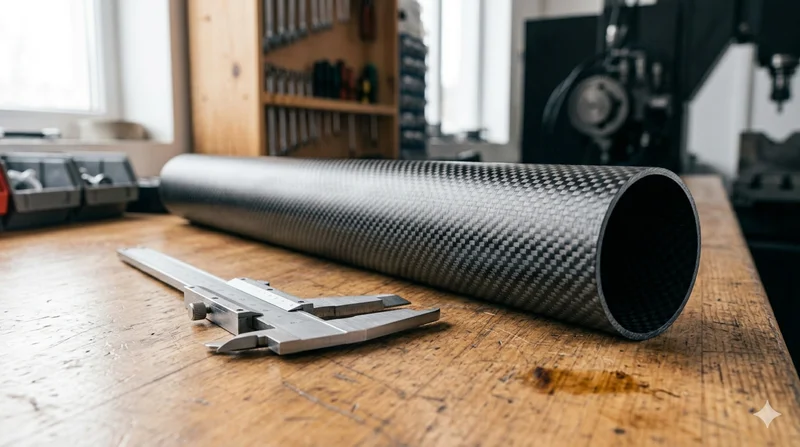
Round Carbon Fiber Tube — 3K Plain Weave T700
Standard round carbon fiber tube manufactured from Toray T700 grade fiber with 3K plain weave. Offers balanced strength and stiffness for general industrial applications including robotics, automation, sports equipment, and aerospace structures.

Custom Carbon Fiber Bicycle Frame
Full-custom carbon fiber bicycle frame manufactured to your geometry specifications. We produce road, gravel, mountain, and track frames using high-modulus carbon fiber layups optimized for each riding discipline. Monocoque construction with internal cable routing, available with disc or rim brake mounts.
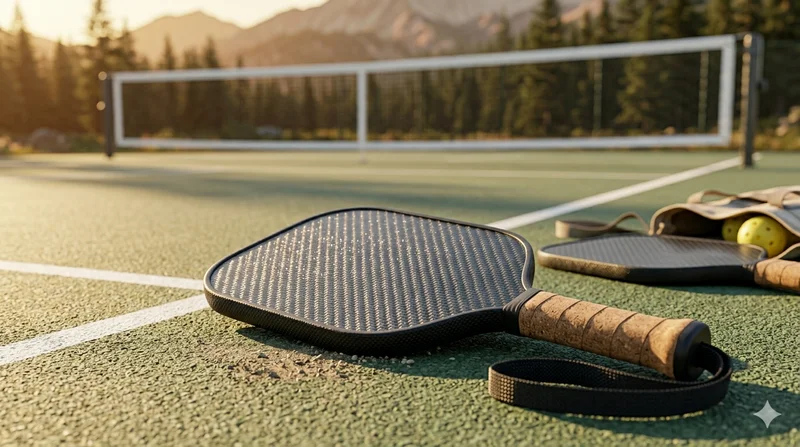
Carbon Fiber Pickleball Paddle
High-performance pickleball paddle with Toray T700 carbon fiber face and polypropylene honeycomb core. Delivers excellent power-to-weight ratio, spin generation, and vibration dampening for competitive play.

Carbon Fiber Trekking Pole
Lightweight carbon fiber trekking pole manufactured from high-grade carbon fiber tube. Weighs only 160g per pole while providing superior shock absorption and durability for hiking, trail running, and backpacking.
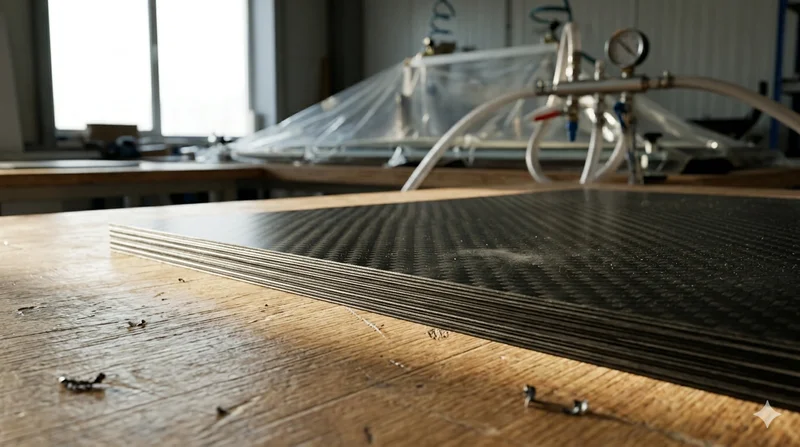
Carbon Fiber Plate — 3K Twill T700 3.0mm
Medium-thickness 3.0mm carbon fiber plate offering significantly higher load capacity while maintaining attractive 3K twill finish. Suitable for structural brackets, reinforcement plates, and load-bearing panels.