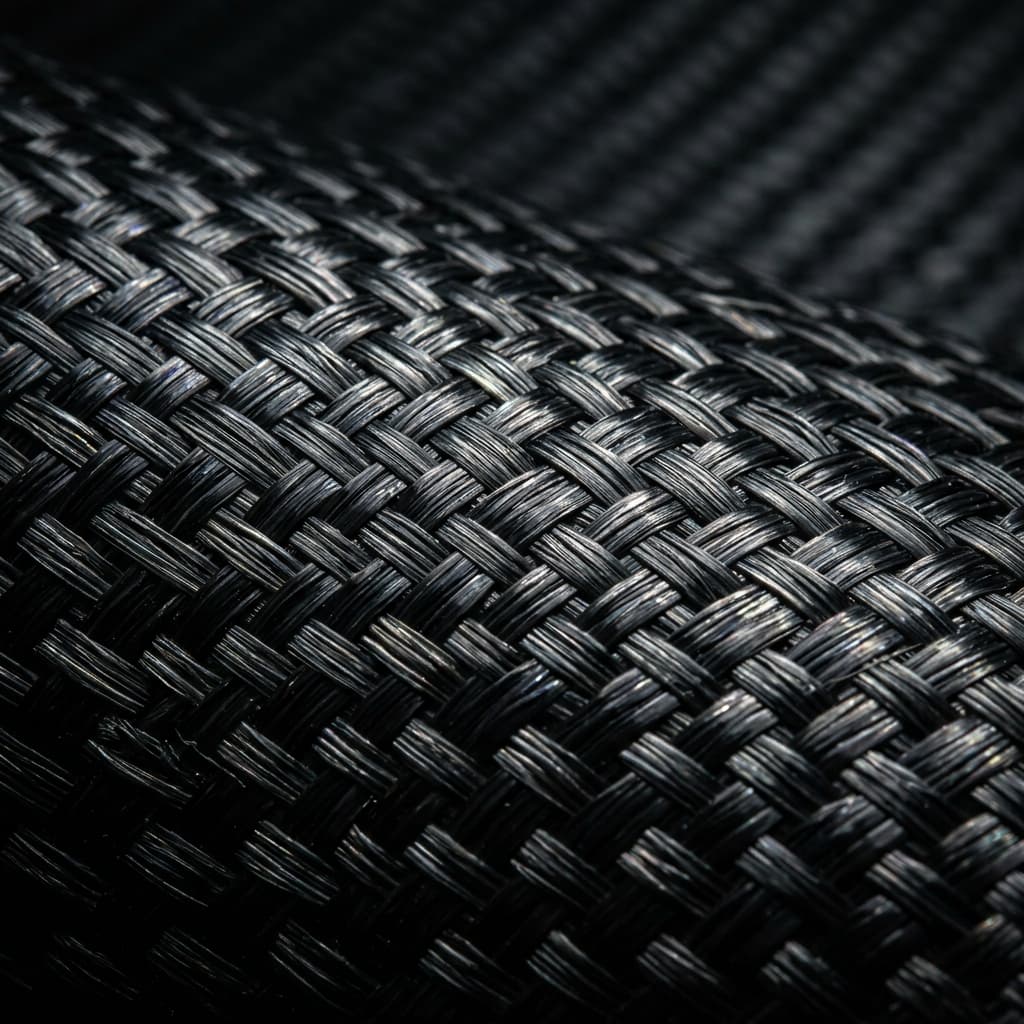
A carbon fiber composite curing service is not just renting floor space in an oven. The shop that accepts your wet layup or prepreg panel owns the ramp rate, the soak uniformity, the vacuum level and the data that proves the cycle ran inside specification. This guide covers what to ask for, which in
Introduction
A carbon fiber composite curing service is not just renting floor space in an oven. The shop that accepts your wet layup or prepreg panel owns the ramp rate, the soak uniformity, the vacuum level and the data that proves the cycle ran inside specification. This guide covers what to ask for, which instruments matter, and how to compare quotes from a job shop and a controlled aerospace cell.
It also explains why two shops quoting the same part can differ by 40 percent in price and still both be technically correct — the difference sits in instrumentation, not in kilowatt hours.
What a Carbon Fiber Composite Curing Service Actually Runs
Most services run one of four families of cycles. Ambient cure for hand layup laminates uses a room-temperature hardener and often a post-cure at 80 degrees for eight hours. Standard structural epoxy cures at 120 degrees for 90 minutes, then 150 degrees for two hours. High-temperature systems for engine bay or underhood parts reach 180 degrees with a long post-cure at 200 degrees. Autoclave cycles for aerospace flat panels combine 7 bar pressure with 120 or 180 degrees programs and demand a pressure-rated bag.
| Cycle family | Peak temperature | Typical pressure | Best fit | Instrumentation required |
|---|---|---|---|---|
| Ambient plus post-cure | 80-100 degrees Celsius | Atmospheric | Hand layup tools, non-structural panels | Chamber air thermocouple only |
| Standard structural epoxy | 120-150 degrees Celsius | Atmospheric or light vacuum | Automotive, marine, industrial parts | Part thermocouple, vacuum log |
| High-temperature epoxy | 180-200 degrees Celsius | Vacuum bag or light pressure | Engine bays, underhood brackets | Multiple part thermocouples, ramp verification |
| Autoclave aerospace | 120 or 180 degrees Celsius | 5-7 bar | Flat stiffeners, wing skins, fairings | Full profile per part, pressure trace, certified operator |
Ask which family your resin system requires, then confirm the shop can hold that family with measured data, not with a controller setpoint alone.
Oven Uniformity and Ramp Control
Temperature uniformity across the chamber decides whether the part at the front of the oven sees the same cure as the part at the back. A service that claims plus or minus 3 degrees Celsius across the working volume should show you a quarterly survey report with sensor positions mapped to your load pattern. Without that report, plus or minus 10 degrees is common in older boxes and will shift the glass transition by 10 to 15 degrees across one batch.
Ramp rate matters for thick sections. Above 3 degrees per minute, the exotherm in a 20 mm laminate can overshoot the setpoint by 30 degrees or more and cook the core while the surface still looks fine. The shop should log the actual ramp from the part thermocouple, not from the oven air sensor.
- Survey frequency: quarterly uniformity surveys with NIST-traceable sensors, at least five points for a small oven.
- Ramp logging: part thermocouple data at one-minute intervals, delivered with the certificate of cure.
- Door and load rules: written limits on how many parts share one cycle and where racks may sit.
- Recovery time: how long the oven needs to return to setpoint after loading a cold part.
A shop that hides recovery time in the fine print will quietly extend your cycle, and your delivery date will move without anyone signing a change order.
Vacuum, Bagging and Instrumentation Choices
Vacuum removes volatiles and consolidates plies, but only if the bag holds. Target levels are usually 0.5 to 0.9 bar of vacuum for atmospheric cures, held to within 0.05 bar for the whole cycle. A leak rate above 5 millibars per minute means the bag is failing and void content will climb.
| Instrument | What it tells you | When to insist on it |
|---|---|---|
| Air thermocouple | Chamber setpoint tracking | Always, as a baseline |
| Part thermocouple | Real laminate temperature and exotherm | Any part thicker than 5 mm |
| Vacuum gauge with logger | Bag integrity through the cycle | Every vacuum-bagged part |
| Pressure transducer (autoclave) | Actual consolidation pressure | Aerospace and stiffened structures |
| Dielectric or DSC sample | Degree of cure on a witness coupon | First article and any process change |
Witness coupons cost almost nothing and catch a hardener lot that gels late. If the shop will not run one, ask why.
Carbon Fiber Composite Curing Service USA: Capacity and Lead Times
Domestic capacity splits into three tiers. Job shops with single ovens and manual bagging quote fast and cheap for prototypes, usually three to five business days, but they rarely publish uniformity data. Mid-size shops with two to five ovens, logged cycles and a quality system sit at one to two weeks with documented processes. Aerospace cells with autoclaves, certified operators and Nadcap-adjacent practices run two to four weeks and price by the loaded hour.
- Prototype tier: 3-5 days, atmospheric ovens, single thermocouple, best for fit checks and low-risk parts.
- Production tier: 7-14 days, logged cycles, part thermocouples, lot traceability, suitable for series automotive and industrial.
- Controlled tier: 14-28 days, full data packages, process qualification on file, required when your customer audits the cure record.
Capacity booking follows seasonality: fourth-quarter automotive pushes fill ovens in October and November, while aerospace flat work often sits quieter in the same window. Ask for the earliest slot with your resin system already qualified, not the earliest slot on the calendar.
Pricing Models and What Drives the Quote
Three pricing models dominate. By the cycle: a flat fee per oven run, which suits small identical parts and hides overloading risk. By the hour: oven hours plus labor, which suits large tools and custom fixtures. By the part: a piece price that bundles bagging labor, consumables and scrap allowance, which suits series production once the process is stable.
The largest swings come from consumables and rework. A double-bag, sealed-edge vacuum envelope can add 15 to 30 percent to a single-bag quote. Rework on a failed bag is often billed at the full cycle again. Ask what happens to your part if the bag fails at hour three — full re-cycle, or a documented salvage attempt.
| Cost driver | Typical impact on quote | How to control it |
|---|---|---|
| Oven hours and energy | 30-40 percent | Batch compatible parts in one cycle |
| Bagging labor | 20-35 percent | Standardize bag drawings and sealing tape |
| Consumables (film, breather, sealant) | 10-20 percent | Buy consumables through the shop or agree a not-to-exceed |
| Scrap and rework allowance | 5-15 percent | First article with witness coupons before series release |
| Data package and certificates | 5-10 percent | Request only the reports your customer audits |
Frequently Asked Questions
Can you cure a part that was laid up at another shop?
Yes, if the resin system and layup documentation travel with the part. Send the resin datasheet, the intended cure schedule, the laminate thickness and the bag drawing. A curing service without that package will either refuse the job or run a generic cycle that may miss your glass transition target.
What data should accompany every cured part?
At minimum: cycle ID, oven ID, date, actual temperature profile from the part thermocouple, vacuum log, resin lot number, and a signed release statement. Aerospace customers add pressure traces and operator certification. If a quote omits the data package, assume it is not included in the price.
How do I compare two quotes that look different?
Normalize to the same cycle family, the same instrumentation level and the same consumable standard, then compare cost per part including scrap allowance. A cheap quote with one air thermocouple and no vacuum logger is not comparable to a logged quote — the risk sits in the gap, not in the line items.
Conclusion
The right carbon fiber composite curing service sells a controlled cycle — uniformity survey, part-level temperature data, vacuum logs and the records that prove the laminate reached its glass transition — not a rented oven slot. Match the cycle family to your resin, insist on instrumentation that fits the thickness, and keep the certificate with the batch record.
YongXian runs qualified carbon fiber composite curing cycles with logged profiles, lot traceability and export documentation. Browse our composite materials or send your resin system, part thickness and annual volume for a quotation.
Part of topic
Related Articles
- Prusament PETG Carbon Fiber: Print Settings and Mechanical Behavior
- Small Carbon Fiber Rods: Diameters, Stock Lengths, and Uses
- How to Create Carbon Fiber Parts: Tooling Choices Compared
- A sheet of carbon fiber: Anatomy of Cloth, Resin, and Cure
- Full Carbon Fiber Plates: 100% Laminate vs Hybrid Layups
- How to Make Carbon Fiber Parts: Wet Layup to Autoclave
Interested in Our Products?
Contact our team for competitive pricing and technical specifications.
Get a QuoteRelated Products

Custom Carbon Fiber Bicycle Frame
Full-custom carbon fiber bicycle frame manufactured to your geometry specifications. We produce road, gravel, mountain, and track frames using high-modulus carbon fiber layups optimized for each riding discipline. Monocoque construction with internal cable routing, available with disc or rim brake mounts.
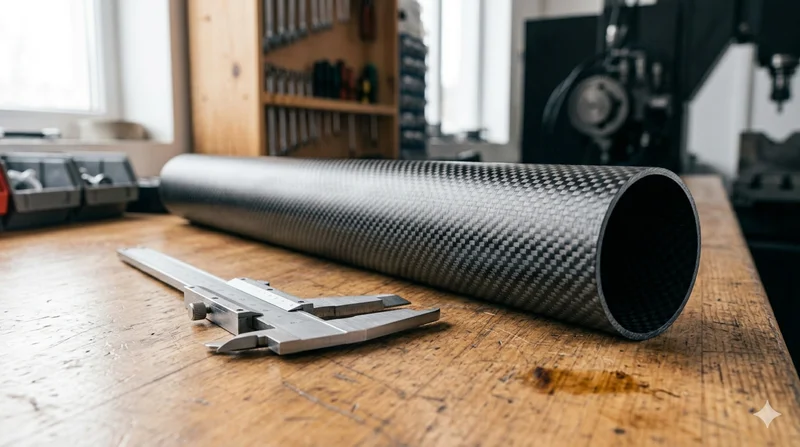
Round Carbon Fiber Tube — 3K Plain Weave T700
Standard round carbon fiber tube manufactured from Toray T700 grade fiber with 3K plain weave. Offers balanced strength and stiffness for general industrial applications including robotics, automation, sports equipment, and aerospace structures.
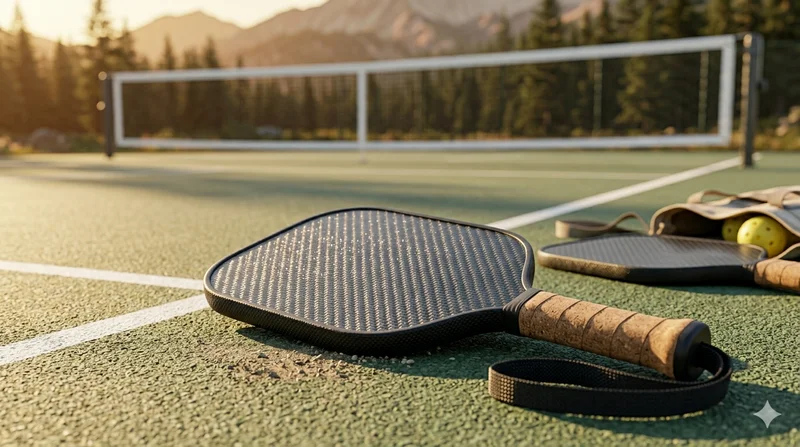
Carbon Fiber Pickleball Paddle
High-performance pickleball paddle with Toray T700 carbon fiber face and polypropylene honeycomb core. Delivers excellent power-to-weight ratio, spin generation, and vibration dampening for competitive play.
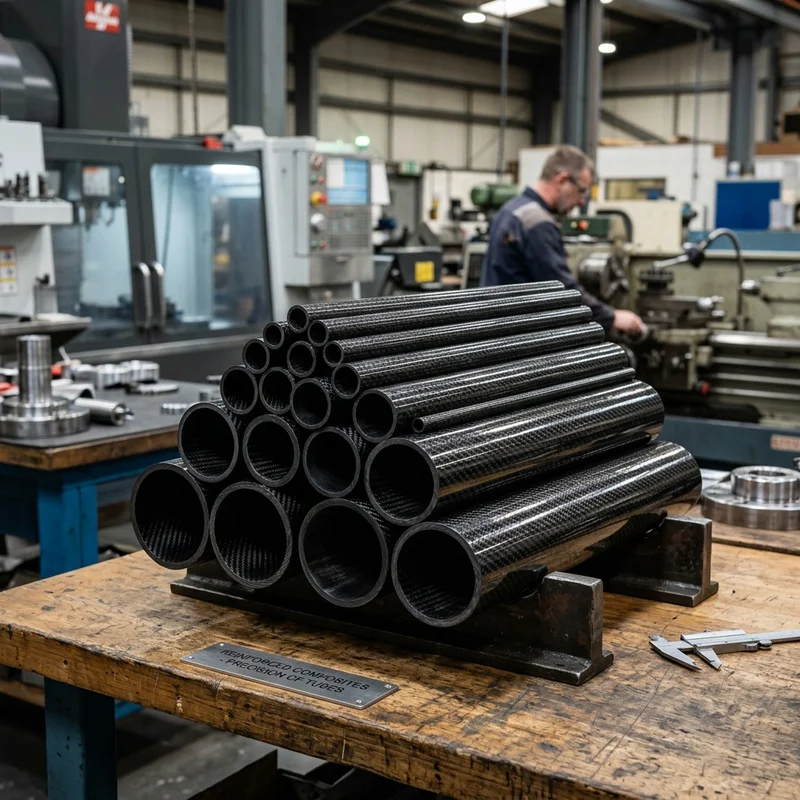
Round Carbon Fiber Tube — 3K Twill
Lightweight and ultra-stiff round tubes ideal for drone frames, robotics, and structural applications.
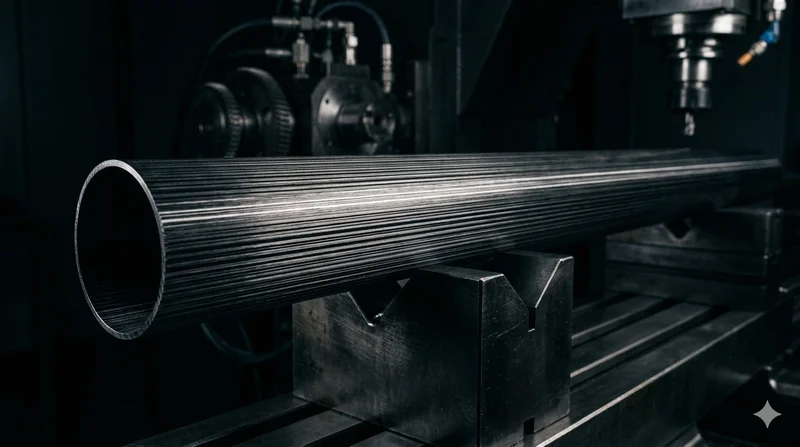
Round Carbon Fiber Tube — UD Unidirectional T700
Unidirectional (UD) round tube with all fibers aligned axially for maximum longitudinal stiffness. Ideal for applications requiring high bending rigidity with minimal weight, such as shafts, struts, and structural reinforcements.