A carbon fiber composite core cutting service takes your CAD nest and turns foam blocks and honeycomb panels into fitted core pieces: routed contours, scored bends, sealed edges and a kit that drops into the mold without shims. The cutting itself is cheap; the tolerances, edge quality and lot tracea
Introduction
A carbon fiber composite core cutting service takes your CAD nest and turns foam blocks and honeycomb panels into fitted core pieces: routed contours, scored bends, sealed edges and a kit that drops into the mold without shims. The cutting itself is cheap; the tolerances, edge quality and lot traceability that come with it decide whether your laminate cures flat or spends a week in rework.
This guide walks through the workflow a core cutting shop runs, compares CNC router, oscillating knife and waterjet for the common core materials, and lists what to fix in the purchase order before the first sheet is nested.
Carbon Fiber Composite Core Cutting Service: How the Workflow Runs
Most shops follow the same seven steps: file review, material check against your density and temperature spec, nesting to a shared cutting plan, machine setup with a documented tool, first-article cut, edge sealing and labeling, then packing by assembly sequence. A shop that skips first article on a new nest is guessing at the tool offset; a shop that mixes kits from two lots hands you a density mismatch you will not find until the panel is cured.
| Method | Typical tolerance | Best for | Trade-off |
|---|---|---|---|
| CNC router | plus or minus 0.5 mm | PMI, PVC and PET foam blocks | Dust control, tool wear on dense foam |
| Oscillating knife | plus or minus 0.3 mm | Honeycomb and soft foam sheets | Slower on thick blocks, blade heat |
| Waterjet | plus or minus 0.25 mm | Dense cores and tight contours | Moisture must be dried before bonding |
| Contour saw | plus or minus 1.0 mm | Straight ripping and slab sizing | Coarse edge, needs finishing |
Ask which row your part actually sits in. A quote that promises quarter-millimeter accuracy on a 40 mm PMI block with a router is quoting the machine, not the process.
Carbon Fiber Composite Core Cutting Service USA: What Changes Locally
A United States cutting shop shortens the loop: files stay under one set of export rules, you can attend the nest review in person, and a replacement kit ships in days instead of waiting for a container. Labor costs more, so the shop tends to take aerospace and certified work — AS9100 flow-down, Nadcap process control, lot retention — rather than commodity rips of standard block.
For programs that need country-of-origin records, controlled drawings or lot certificates held for years, a carbon fiber composite core cutting service USA usually costs less in total than a cheaper overseas nest plus a second inspection, a re-cut and a schedule slip. Standard foam blocks still price better offshore; custom nests and urgent recovery do not.
Carbon Fiber Composite Core Cutting Fabrication: Nesting and Lead Time
Carbon fiber composite core cutting fabrication is mostly a nesting problem. Share your CAD early and the shop nests contours across sheets, keeps grain direction consistent on foam, and tells you the real scrap rate before you sign. Nesting after the material is bought usually means the material is already the wrong density or the wrong cell size.
- File format: STEP or DXF flat pattern, plus the assembly that consumes each piece.
- Grain and cell direction: mark the axis that must stay straight; honeycomb crushes differently off-axis.
- Kerf and offset: confirm which side of the line the tool walks, in writing.
- Kitting labels: one lot number per kit, with part mark, thickness and revision on every bag.
Typical lead time is five to ten working days for a repeat nest and two to three weeks for a first article with documentation. Anything under three days is a stock cut with your label on it.
Edge Quality, Sealing and Inspection
The edge is where cores fail. A torn honeycomb face reduces adhesive contact; an unsealed foam edge wicks moisture and crushes under vacuum bag pressure. Good shops seal cut edges on honeycomb, deburr foam, and check thickness at three points per piece with a calibrated gauge.
- Reject: crushed cells at the cut, delaminated skin, oil marks, mixed lots in one bag.
- Record: machine, operator, tool life and nest revision on the batch sheet.
- Retain: one coupon per lot for twelve months, longer for aerospace programs.
Dimensional reports should name the gauge, the calibration date and the three points measured on each piece, not just a pass mark. For honeycomb, add a cell-damage count at the cut edge; for foam, a quick tap test along the edge finds crushed skin that a caliper will not see. Shops that photograph the first article from two angles make the later dispute a lot shorter.
Frequently Asked Questions
Which core material is hardest to cut cleanly?
Close-cell PMI and high-density PVC show every tool mark, so they favor a sharp router bit and a slow feed. Honeycomb favors an oscillating knife because a router tears the nodes. Whatever the material, ask for a first-article edge photo before the production nest runs.
Can you cut cores to my CAD without a physical template?
Yes, if the file is a flat pattern with a stated kerf and offset. Shops that require a template are protecting themselves against an unverified file; get the file reviewed in writing and the requirement usually disappears. Keep the released revision in the purchase order so the shop cannot cut a superseded nest.
How are cut cores packed and shipped?
Vacuum-bagged with desiccant, one lot per carton, labeled with part mark, thickness, density and revision, and stacked flat so honeycomb edges are not point-loaded. Ask for packing photos before shipment on a first order; they cost nothing and prevent most damage claims.
Conclusion
A carbon fiber composite core cutting service is judged by its nest review, first-article record and edge inspection — not by the machine brand on the wall. Fix kerf, offset, lot policy and retention in the purchase order, and demand a first-article cut before any production nest runs.
YongXian cuts and kits foam and honeycomb cores to your CAD with lot certificates and export paperwork. Browse our composite materials or send your drawings, material and annual volume for a cutting quotation.
Part of topic
Related Articles
- Carbon Fiber Composite Core Testing Service: Flatwise, Shear and NDT
- Carbon Fiber Composite Core Bonding Service: Adhesive Selection, Surface Prep and Cure
- Carbon Fiber Composite Core Coating Service: Protective Coatings
- Carbon Fiber Composite Core Cleaning Service: Cleaning Processes
- Carbon Fiber Composite Curing Service: Oven and Cure Profiles
- Prusament PETG Carbon Fiber: Print Settings and Mechanical Behavior
Interested in Our Products?
Contact our team for competitive pricing and technical specifications.
Get a QuoteRelated Products
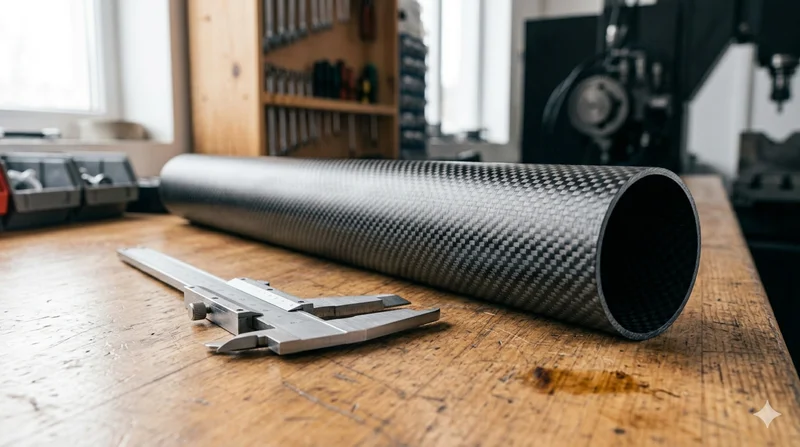
Round Carbon Fiber Tube — 3K Plain Weave T700
Standard round carbon fiber tube manufactured from Toray T700 grade fiber with 3K plain weave. Offers balanced strength and stiffness for general industrial applications including robotics, automation, sports equipment, and aerospace structures.

Custom Carbon Fiber Bicycle Frame
Full-custom carbon fiber bicycle frame manufactured to your geometry specifications. We produce road, gravel, mountain, and track frames using high-modulus carbon fiber layups optimized for each riding discipline. Monocoque construction with internal cable routing, available with disc or rim brake mounts.
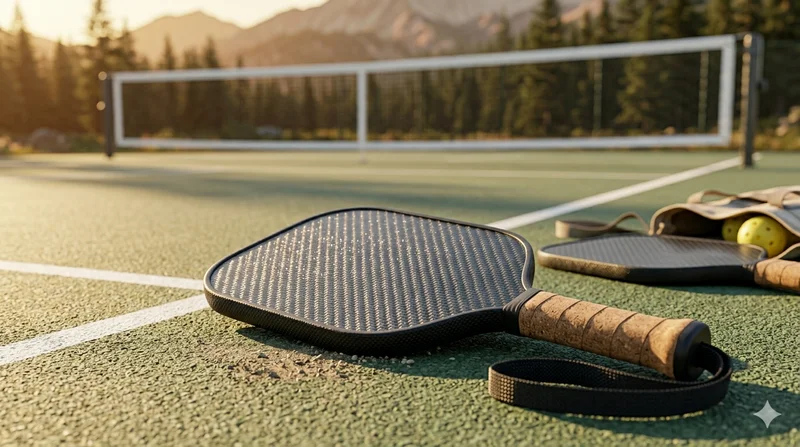
Carbon Fiber Pickleball Paddle
High-performance pickleball paddle with Toray T700 carbon fiber face and polypropylene honeycomb core. Delivers excellent power-to-weight ratio, spin generation, and vibration dampening for competitive play.

Carbon Fiber Trekking Pole
Lightweight carbon fiber trekking pole manufactured from high-grade carbon fiber tube. Weighs only 160g per pole while providing superior shock absorption and durability for hiking, trail running, and backpacking.
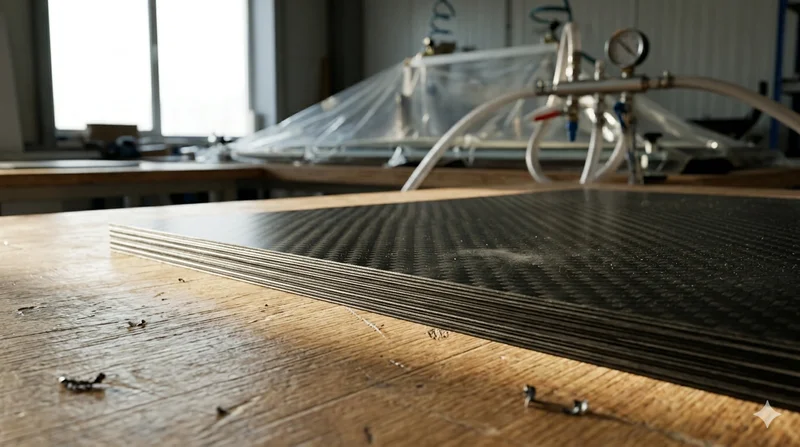
Carbon Fiber Plate — 3K Twill T700 3.0mm
Medium-thickness 3.0mm carbon fiber plate offering significantly higher load capacity while maintaining attractive 3K twill finish. Suitable for structural brackets, reinforcement plates, and load-bearing panels.