A carbon fiber composite core coating service puts a controlled film on cut foam and honeycomb cores so they survive handling, humidity and fire rules: moisture barriers on open-cell stock, edge sealers on honeycomb, and fire-retardant topcoats where the specification demands them. Coating after cut
Introduction
A carbon fiber composite core coating service puts a controlled film on cut foam and honeycomb cores so they survive handling, humidity and fire rules: moisture barriers on open-cell stock, edge sealers on honeycomb, and fire-retardant topcoats where the specification demands them. Coating after cutting is deliberate — the cut face is the vulnerability — and a film applied at the wrong thickness or cured at the wrong temperature costs more than no film at all.
This guide walks through the coating chain a core shop runs, compares knife-over, spray and dip methods for the common core materials, and lists what to fix in the purchase order before the first lot is coated.
Carbon Fiber Composite Core Coating Service: The Process Chain
A controlled coating line runs in a fixed order: verify the cleaned face, mask what must stay bare, apply the film at a measured wet thickness, level and degas, cure to the supplier curve, then inspect coverage and thickness before release. Coating a face that still holds dust pushes the contamination under the film, where it becomes a holiday — a pinhole that wicks moisture for years. Every coating has a pot life; a shop that mixes by eye is gambling with the batch.
| Coating type | Purpose | Typical dry film | Failure if wrong |
|---|---|---|---|
| Moisture barrier | Seal open-cell foam edges | 80-150 microns | Weight gain, blistering after cure |
| Honeycomb edge sealer | Close cut cells, block wicking | 50-120 microns | Crushed edge, poor bond line |
| Fire-retardant topcoat | Meet smoke and flame rules | 100-250 microns | Failed burn test, re-coat |
| Primer for paint | Key the surface for finish paint | 15-30 microns | Paint fish-eyes, peeling |
| Conductive coat | Static bleed on panels | 20-60 microns | No ESD path, dust attraction |
Ask which row your specification sits in. A shop that applies one clear coat to everything is not protecting parts; it is adding weight and hiding the surface.
Carbon Fiber Composite Core Coating Service USA: What Changes Locally
A United States coating shop shortens the loop: you can watch a spray booth run, review the cure log the same week, and hold a rejected lot without waiting for a return container. Environmental and safety rules cost more — volatile organic compound capture, oven permits, worker training — so the shop tends to favor water-based barriers and low-overspray methods over open dip tanks. Labor is higher too, which pushes the shop toward certified, documented coating work rather than bulk clears.
For programs that need country-of-origin records, Nadcap or AS9100 process control and retained panels, a carbon fiber composite core coating service USA usually costs less total than a cheaper overseas coat plus a re-coat, a failed burn test and a schedule slip. Commodity foam still coats well offshore; tight aerospace lots and urgent recovery do not.
Carbon Fiber Composite Core Coating Fabrication: Spec and Sequencing
Carbon Fiber Composite Core Coating Fabrication is where the coating spec meets the assembly drawing. The laminate supplier publishes a compatible coating list; using anything outside it risks solvent attack on the core or a bond line that never reaches strength. Share the fire rating, the finish paint system and the cure cycle early and the coating spec writes itself. Sequence matters as much as chemistry: coat the core before bonding when the film must wrap the edge, after bonding when the film is a cosmetic topcoat.
- Substrate check: confirm the cleaned face passed the dyne test within the coating window.
- Thickness: wet film comb on the first panel, dry film gauge on the cured panel.
- Masking: bond areas stay bare; masking tape residue is a bond defect, not a cosmetic one.
- Cure: log oven setpoint, part temperature and time — ambient cure in a cold shop is a different product.
Typical lead time is five to ten working days for a repeat lot and two to three weeks for a first article with full records. Same-day coating usually means the film went on wet and left early.
Inspection, Defects and Documentation
Most coating defects are visible if someone looks before the panel is packed. The four that matter most are holidays and pinholes that wick, orange peel that signals wrong viscosity, solvent trap that softens under heat, and thickness outside the range that the burn test assumes. Inspect with light at a low angle, gauge three points per panel, and photograph the first article from the bond side and the show side.
- Record: coating lot and date, mixed ratio, wet and dry film readings, oven curve, operator sign-off.
- Verify: coverage check under low-angle light, plus a burn-test coupon when the spec calls for it.
- Retain: one coated witness panel per lot for twelve months, longer for aerospace.
- Reject: pinholes, runs, tape ghosting, bare bond areas, mixed lots in one kit.
When you audit, ask for the last failed thickness reading and what was done about it. A shop that has never failed a reading is either very good or not measuring.
Frequently Asked Questions
Should cores be coated before or after contour cutting?
Coat after cutting whenever the cut face is exposed in the assembly, because coating first leaves a fresh unsealed face at every edge. Coat before cutting only when the film is a full-surface barrier and the shop re-seals the cut edges afterwards. Confirm which case you are buying in writing.
How long must a coating cure before bonding?
Cure to the supplier curve, then wait the stated recoat or bond window — commonly twenty-four hours at room temperature, less in a warm shop. A touch-dry surface is not a cured film. Ask for the cure record with the batch, not a verbal assurance that it sat overnight.
Can a coated core be reworked if the film is wrong?
Light orange peel can be scuffed and re-coated within the same product family. Solvent trap, pinholes or the wrong chemistry usually mean strip and start again, because solvent under the film keeps attacking the core. The decision belongs in a written deviation, not in a rush-day compromise.
Conclusion
A carbon fiber composite core coating service is judged by its cure logs, film readings and retained panels — not by how glossy the show face looks. Fix the coating type, thickness range, bond-area masking and cure record in the purchase order, and demand a gauged first article before any production lot is coated.
YongXian coats and kits foam and honeycomb cores with cure records, thickness data and export paperwork. Browse our composite materials or send your fire rating, finish system and annual volume for a coating quotation.
Part of topic
Related Articles
- Carbon Fiber Composite Core Testing Service: Flatwise, Shear and NDT
- Carbon Fiber Composite Core Bonding Service: Adhesive Selection, Surface Prep and Cure
- Carbon Fiber Composite Core Cleaning Service: Cleaning Processes
- Carbon Fiber Composite Core Cutting Service: CNC Core Cutting
- Carbon Fiber Composite Curing Service: Oven and Cure Profiles
- Prusament PETG Carbon Fiber: Print Settings and Mechanical Behavior
Interested in Our Products?
Contact our team for competitive pricing and technical specifications.
Get a QuoteRelated Products
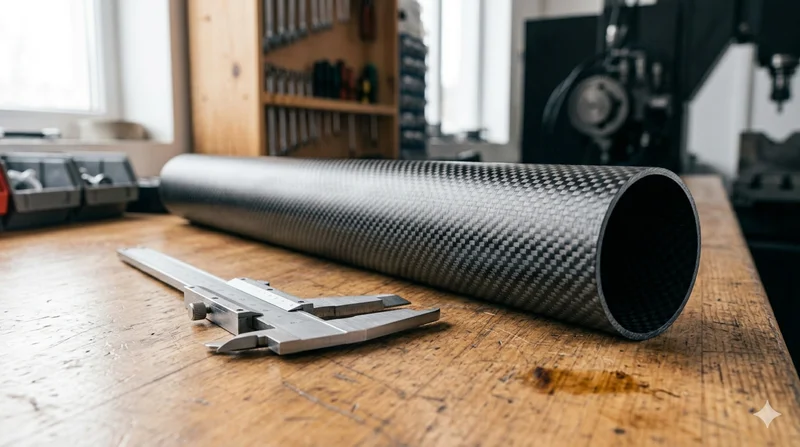
Round Carbon Fiber Tube — 3K Plain Weave T700
Standard round carbon fiber tube manufactured from Toray T700 grade fiber with 3K plain weave. Offers balanced strength and stiffness for general industrial applications including robotics, automation, sports equipment, and aerospace structures.

Custom Carbon Fiber Bicycle Frame
Full-custom carbon fiber bicycle frame manufactured to your geometry specifications. We produce road, gravel, mountain, and track frames using high-modulus carbon fiber layups optimized for each riding discipline. Monocoque construction with internal cable routing, available with disc or rim brake mounts.
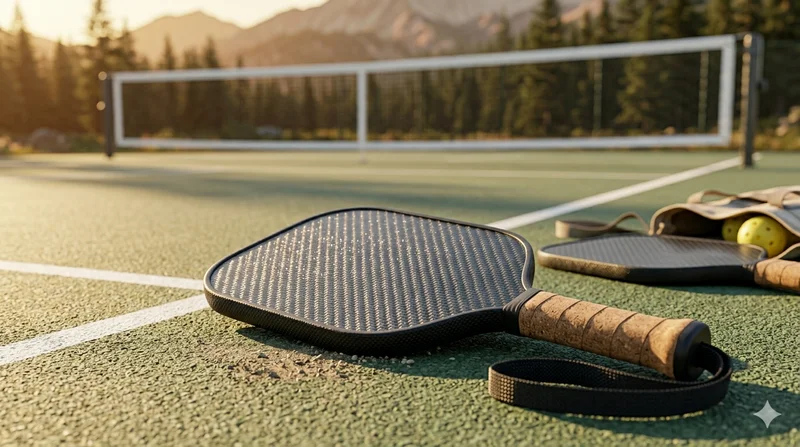
Carbon Fiber Pickleball Paddle
High-performance pickleball paddle with Toray T700 carbon fiber face and polypropylene honeycomb core. Delivers excellent power-to-weight ratio, spin generation, and vibration dampening for competitive play.

Carbon Fiber Trekking Pole
Lightweight carbon fiber trekking pole manufactured from high-grade carbon fiber tube. Weighs only 160g per pole while providing superior shock absorption and durability for hiking, trail running, and backpacking.
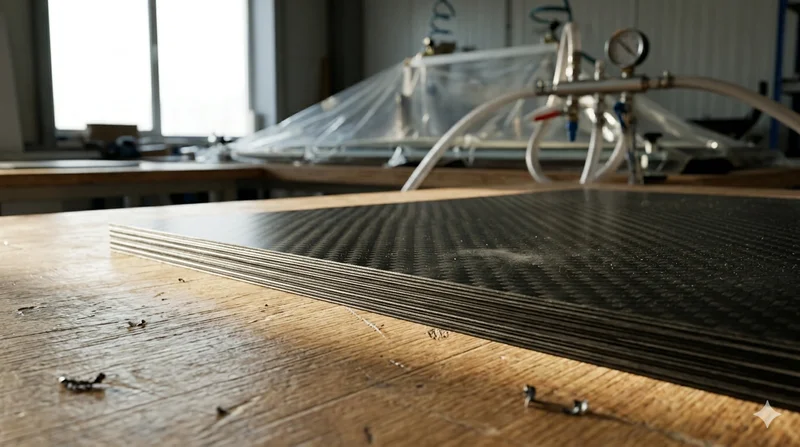
Carbon Fiber Plate — 3K Twill T700 3.0mm
Medium-thickness 3.0mm carbon fiber plate offering significantly higher load capacity while maintaining attractive 3K twill finish. Suitable for structural brackets, reinforcement plates, and load-bearing panels.