
Choosing a carbon fibre tube supplier is mostly an evidence problem: the catalog looks identical across a dozen factories, the prices differ by a factor of three, and the difference only shows up two months after the tubes arrive in your assembly line. The suppliers worth shortlisting are the ones w
Introduction
Choosing a carbon fibre tube supplier is mostly an evidence problem: the catalog looks identical across a dozen factories, the prices differ by a factor of three, and the difference only shows up two months after the tubes arrive in your assembly line. The suppliers worth shortlisting are the ones who answer specific questions with documents and measurements rather than adjectives, and this guide lists exactly which questions to ask and what a credible answer looks like.
We cover the quality signals that reveal whether you are dealing with a carbon fibre tube manufacturer or a trading desk, which fiber and process data should appear on the quotation, how to read a certificate without being fooled by a scanned logo, and how to structure a carbon fiber tube custom order so dimensional defects surface at first article rather than in production.
How to Vet a Carbon Fibre Tube Supplier Before You Commit
Run the same six questions past every candidate and compare the answers side by side. A manufacturer answers from process records; a reseller answers from a brochure, and the gaps become obvious once you ask for numbers instead of ranges.
| Question to ask | Weak answer | Credible answer |
|---|---|---|
| Which fiber grade and tow size? | High strength carbon, aerospace grade | T300 or T700 equivalent, 12K tow, named lot with supplier certificate |
| How is the tube cured? | Standard curing | Mandrel wrap or pultrusion with oven profile, stated temperature and dwell |
| What tolerance on OD and wall? | Plus or minus 0.1 mm | Drawing-based figure per size, with the inspection method named |
| Can I see a material certificate? | We have certification | Batch traceable mill certificate plus ISO 9001 scope covering tube making |
| What is the defect rate? | Very low, under 1% | Recorded ppm or AQL level with the rejection criteria written down |
| Do you provide first article inspection? | Samples on request | Dimensional report per drawing before the production run starts |
The middle column is where deals die politely. If a supplier cannot convert any answer into a number, a document or a test method, you are buying a photograph of a factory rather than the factory itself.
Carbon Fibre Tube Manufacturer Capabilities Worth Checking
Process capability is what makes two visually identical tubes behave differently under load, so ask which forming method backs the part you are buying and whether it matches your application.
- Mandrel wrapping: best for round tubes with fiber angles you specify, typically giving the tightest wall control and the cleanest fiber alignment for structural work.
- Pultrusion: lowest cost per meter for constant cross-sections, but the fibers run almost entirely along the axis, so the tube handles bending well and crushes poorly.
- Filament winding: the right answer for pressure and hoop-loaded parts, since helical layers resist internal pressure that pultruded stock cannot.
- In-house machining: cutting, facing and bonding fixtures on site means tolerances are held after cure rather than negotiated afterwards by a third party.
Ask to see the machine list, not the showroom. A carbon fibre tube manufacturer that owns its winding equipment, ovens and cut-off saws can explain cycle times; one that subcontracts all three will explain relationships instead.
Carbon Fiber Tubing Suppliers: Certificates and Traceability
Certificates are the easiest place for a trading company to look impressive and the hardest place for it to stay consistent. ISO 9001 tells you a quality system exists, not that your tubes were made to it, so the detail that matters is scope: the certificate should name tube or composite manufacture, and the audit date should be current.
Traceability is the sharper test. Ask for the batch number printed on the packing list and follow it back to a fiber lot and a cure record. Carbon fiber tubing suppliers who keep that chain intact can tell you which roll of tow went into your order and what happened in the oven that day; suppliers who cannot will offer to retest a sample instead, which measures the sample rather than the batch you received.
Carbon Fiber Tube Custom Orders: Tolerances, MOQ and Lead Times
Custom work is where supplier quality either compounds or collapses. Put the drawing, the critical dimensions and the inspection method in the purchase order itself, because a quotation attachment has a way of disappearing before production starts.
Expect minimum order quantities of 50 to 200 pieces on custom mandrel-wrapped sizes, lead times of 15 to 30 days after drawing approval, and a first article stage that adds roughly a week. That week is the cheapest insurance in the whole transaction: it converts an argument about expectations into a measured report before you have paid for volume.
Frequently Asked Questions
How do I know a carbon fibre tube supplier is the actual manufacturer?
Ask for a video walkthrough of the winding or pultrusion line, request the machine list, and place a small trial order with an unusual dimension. Real factories adjust the tooling and quote the change; intermediaries come back with a new price and a longer lead time because they are buying the part themselves.
What tolerance should I specify on a carbon fiber tube custom order?
For general structural use, plus or minus 0.1 mm on outer diameter and plus or minus 0.05 mm on wall thickness is a realistic ask on mandrel-wrapped tube. Anything tighter needs a stated measurement method and usually a price step, so agree the method alongside the number.
Do carbon fiber tubing suppliers provide material certificates with every shipment?
Reputable suppliers attach a batch certificate referencing the fiber lot and cure record, and many will include a dimensional report for custom sizes. If a supplier offers certificates only as a paid extra, treat that as a signal about how routine traceability is inside the company.
Conclusion
A carbon fibre tube supplier earns your order by answering six questions with numbers, documents and test methods instead of adjectives, and by letting a first article prove the drawing before volume starts. Check the forming process against your load case, follow the batch number back to the fiber lot, and put the inspection method in the purchase order.
YongXian manufactures mandrel-wrapped and pultruded carbon fibre tube stock to drawing, with batch traceability and first article inspection on custom sizes. Browse our carbon fiber range or contact our engineering team with your drawing and annual volume.
Part of topic
Related Articles
- Carbon Fiber Tubing Suppliers: MOQ, Lead Time and Tolerance Comparison
- Carbon Fiber Suppliers Near Me: How to Vet a Local Composite Source
- Carbon Fiber Supplier in India: Import vs Local Sourcing
- Carbon Fiber Custom Parts Near Me: How to Find and Vet a Local Shop
- Carbon Fiber Fabric Supplier Checklist for B2B Buyers
- How to Evaluate a Custom Carbon Fiber Parts Manufacturer
Interested in Our Products?
Contact our team for competitive pricing and technical specifications.
Get a QuoteRelated Products

Round Carbon Fiber Tube — 3K Plain Weave T700
Standard round carbon fiber tube manufactured from Toray T700 grade fiber with 3K plain weave. Offers balanced strength and stiffness for general industrial applications including robotics, automation, sports equipment, and aerospace structures.
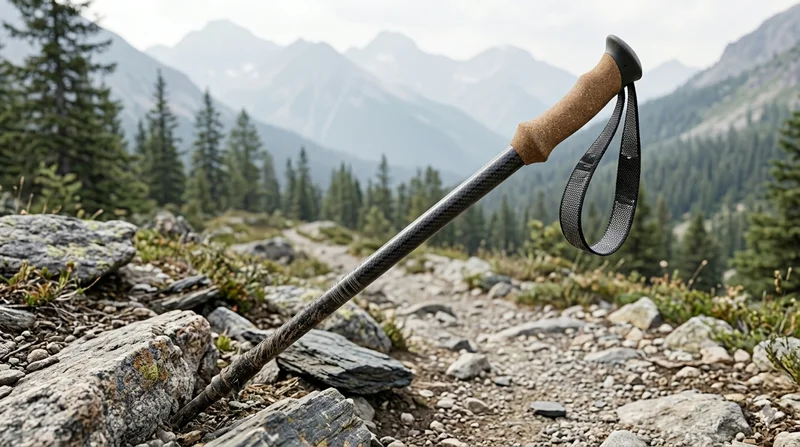
Carbon Fiber Trekking Pole
Lightweight carbon fiber trekking pole manufactured from high-grade carbon fiber tube. Weighs only 160g per pole while providing superior shock absorption and durability for hiking, trail running, and backpacking.

Carbon Fiber Pickleball Paddle
High-performance pickleball paddle with Toray T700 carbon fiber face and polypropylene honeycomb core. Delivers excellent power-to-weight ratio, spin generation, and vibration dampening for competitive play.

Square Carbon Fiber Tube — 3K Twill T700
Square cross-section carbon fiber tube manufactured with 3K twill weave for torsional strength. Preferred for structural frames, trusses, and support columns where rectangular geometry offers design flexibility.

Round Carbon Fiber Tube — UD Unidirectional T700
Unidirectional (UD) round tube with all fibers aligned axially for maximum longitudinal stiffness. Ideal for applications requiring high bending rigidity with minimal weight, such as shafts, struts, and structural reinforcements.