
Choosing a custom carbon fiber parts manufacturer is closer to hiring an engineering partner than placing a purchase order: the wrong shop delivers parts that look right and fail in service, while the right one helps you design out cost before the first mold is cut. Most buyers compare price sheets
Introduction
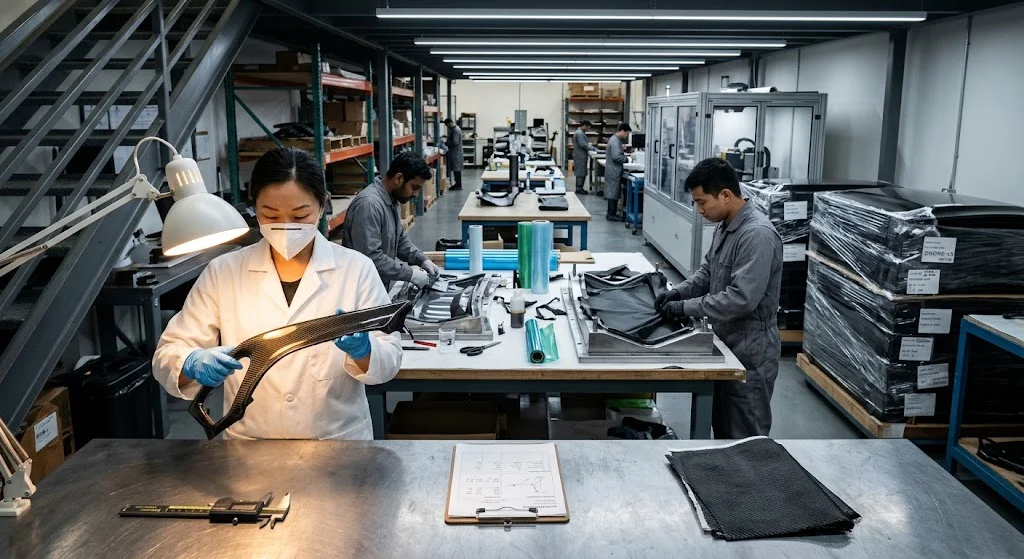
Choosing a custom carbon fiber parts manufacturer is closer to hiring an engineering partner than placing a purchase order: the wrong shop delivers parts that look right and fail in service, while the right one helps you design out cost before the first mold is cut. Most buyers compare price sheets and lead times, and miss the four dimensions that actually predict what will arrive — layup discipline, tooling quality, quality-system depth and transparent process data.
This guide gives a six-dimension framework you can run on any supplier, then applies it to the common dilemmas: whether carbon fiber custom parts near me beat an overseas factory, what custom carbon fiber parts for cars require that one-off builds do not, and how custom carbon fiber parts for motorcycle volumes change the economics.
Custom Carbon Fiber Parts Manufacturer: Six Evaluation Dimensions
Score each supplier on these six axes before quoting comparison begins; a shop strong on three and weak on three is a predictable risk, not a bargain.
| Dimension | What to ask for | Red flag |
|---|---|---|
| 1. Layup capability | Prepreg and hand layup options, fabric weights, cure cycle documentation | Only "we do carbon" with no fabric or resin named |
| 2. Tooling | In-house mold making, CNC trim fixtures, mold temperature logs | Molds outsourced with no ownership of fit issues |
| 3. Tolerance control | CMM reports, declared tolerances per feature, First Article report | Tolerances "checked by eye" or never stated |
| 4. Quality system | ISO 9001, process traceability, batch records for resin and fabric | No batch numbers on incoming material |
| 5. Cost structure | Breakdown of tooling, piece price and consumables; NRE terms | Single lump quote with no tooling line |
| 6. Lead time honesty | Mold time + cure + finishing quoted separately, capacity stated | "Two weeks" for a new mold program |
A custom carbon fiber parts manufacturer that answers all six questions in writing, with photos of similar jobs, is already ahead of most of the market — the rest of the evaluation is verifying those claims against references.
Carbon Fiber Custom Parts Near Me: Local Workshop vs Overseas Factory
Proximity buys iteration speed: a shop within driving distance lets you hand over a broken part in the morning and review a corrected mold the same week. Distance buys unit cost: overseas plants amortize tooling across thousands of pieces and run dedicated prepreg autoclaves that local job shops rarely justify. Neither wins outright, and the decision should follow your program stage rather than habit.
- Prototype stage: buy local. Same-day feedback on fit fixes days of email latency per revision.
- Pilot run (50-500 pieces): split tooling — local master mold, overseas production tool if volumes justify it.
- Series production: qualify the overseas plant with an on-site audit and a locked golden sample before releasing tooling.
- Aftermarket spares: local, always — holding inventory beats cheap units nobody can reorder.
Custom Carbon Fiber Parts for Cars: What Automotive Programs Demand
Automotive work adds requirements that hobby shops never face: PPAP-style documentation, UV-stable clear coats rated for years of sun, heat-cycle testing near engine-bay temperatures, and crash-relevant parts that need material certificates per batch. A supplier experienced only in camera housings and desk gadgets will underestimate cure shrinkage on Class-A surfaces and the flatness tolerance a hood demands. Ask specifically about their experience with painted exterior panels, bonded assemblies and parts that must survive 100 thermal cycles between -40 and 80 C.
- Surface class: Class-A finish requires tooling gelcoat and controlled cure, not post-sanding alone.
- Batch traceability: every lot of resin and fabric documented, tied to your part numbers.
- Validation support: UV, thermal cycle and impact data produced from your parts, not brochures.
Custom Carbon Fiber Parts for Motorcycle: Small-Batch Realities
Motorcycle programs usually run in dozens, not thousands, which changes the economics completely. At 30 pieces per order, a hand-layup shop with a single mold beats an autoclave line on price every time; at 500 pieces, matched-metal tooling pays for itself and dimensional repeatability improves sharply. The trap is scaling without re-qualifying: hand layup tolerances drift between operators, so before doubling volume, demand a capability study showing the same critical dimensions across three consecutive batches.
One practical habit survives every sourcing decision: keep a signed golden sample plus its measurement report in a drawer. When a later batch drifts, that sample settles arguments faster than any specification clause, and it is the cheapest insurance in the whole program.
Frequently Asked Questions
How many quotes should I collect before choosing a custom carbon fiber parts manufacturer?
Three is the useful number: enough to compare process approaches and tooling philosophies, few enough that you can visit at least one plant and audit it properly. Quote comparison only works when all three bid the same drawing revision, material specification and annual volume — send those three things identically or the numbers are meaningless.
Who owns the mold when I pay for tooling?
You should — state it in the contract before deposit. Ask for mold drawings, cure schedules and a written release clause so the tool can be collected or transferred; suppliers who resist this rarely plan to keep your business long, and IP disputes over molds are the most common source of ended relationships in this industry.
What is a realistic lead time for new carbon fiber parts?
Allow two to three weeks for mold construction, one week for first articles including finishing and inspection, then three to seven days per production batch depending on cure and paint schedules. Any quote promising production parts in under two weeks from a greenfield drawing is either skipping inspection or has a mold it has not told you about.
Conclusion
Evaluate every custom carbon fiber parts manufacturer on layup, tooling, tolerances, quality system, cost transparency and lead-time honesty — in that order — and let program stage decide between local and overseas. The cheapest first article is rarely the cheapest program, and a supplier who documents their process is the one still answering the phone in year three.
YongXian manufactures custom carbon fiber parts to customer drawings, with layup documentation and batch traceability as standard. Browse our carbon fiber range or contact our engineering team to discuss your drawings and annual volumes.
Part of topic
Related Articles
- Carbon Fiber Supplier for SpaceX-Class Programs: What Aerospace Buying Requires
- Carbon Fiber Drone Price Guide: What Each Class Costs in 2026
- Carbon Fiber Manufacturer in India: Capacity, Capabilities and Buyer Notes
- Carbon Fibre Custom Plate: A UK Buyer Guide
- Carbon Fiber Cloth Supplier Guide: How to Evaluate 3K, 12K and Weave Types
- Carbon Fiber Tube Price in BD: Bangladesh Market and Import Guide
Interested in Our Products?
Contact our team for competitive pricing and technical specifications.
Get a QuoteRelated Products

Round Carbon Fiber Tube — 3K Plain Weave T700
Standard round carbon fiber tube manufactured from Toray T700 grade fiber with 3K plain weave. Offers balanced strength and stiffness for general industrial applications including robotics, automation, sports equipment, and aerospace structures.
Carbon Fiber Trekking Pole
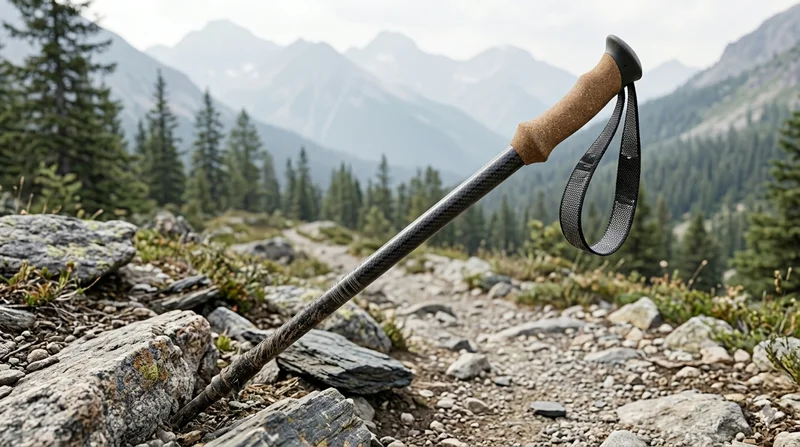
Lightweight carbon fiber trekking pole manufactured from high-grade carbon fiber tube. Weighs only 160g per pole while providing superior shock absorption and durability for hiking, trail running, and backpacking.

Carbon Fiber Pickleball Paddle
High-performance pickleball paddle with Toray T700 carbon fiber face and polypropylene honeycomb core. Delivers excellent power-to-weight ratio, spin generation, and vibration dampening for competitive play.

Square Carbon Fiber Tube — 3K Twill T700
Square cross-section carbon fiber tube manufactured with 3K twill weave for torsional strength. Preferred for structural frames, trusses, and support columns where rectangular geometry offers design flexibility.

Carbon Fiber Plate — 3K Twill T700 3.0mm
Medium-thickness 3.0mm carbon fiber plate offering significantly higher load capacity while maintaining attractive 3K twill finish. Suitable for structural brackets, reinforcement plates, and load-bearing panels.