
Searching for carbon fiber custom parts near me usually starts with a map pin and ends with a guess, because the results mix machine shops that have never touched composites, distributors who resell imported panels, and two-person workshops that do excellent layup work out of an unmarked unit. The d
Introduction
Searching for carbon fiber custom parts near me usually starts with a map pin and ends with a guess, because the results mix machine shops that have never touched composites, distributors who resell imported panels, and two-person workshops that do excellent layup work out of an unmarked unit. The distance matters less than the capability, and the way to use a local search is to turn it into a shortlist you can verify with questions rather than a directory you trust by proximity.
This guide covers where these searches actually lead, how to compare carbon fiber near me suppliers on capability instead of reviews, what to ask a custom carbon fiber parts manufacturer before releasing a drawing, and when buying carbon fiber sheets for sale near me and cutting them yourself is the smarter route than commissioning a part.
Carbon Fiber Custom Parts Near Me: Where to Actually Search
Local search results cluster into four kinds of businesses, and knowing which one you are looking at saves a round of emails before you even call.
| Shop type | What they actually do | Fit for your part |
|---|---|---|
| General CNC machine shop | Cuts metal and plastic all day; composites as an occasional side job | Good for trimmed plates and simple 2D profiles, weak on layup and cores |
| Composite specialist | Design, mold, layup, cure and post-machining under one roof | Best fit for structural parts, aerodynamic shapes and small series |
| Distributor with in-house cutting | Sells sheet and tube, cuts to your outline on a router | Ideal for flat gaskets, panels and brackets cut from stock sheet |
| Garage or one-man studio | Hand layup, small molds, flexible scheduling | Strong for prototypes and cosmetic pieces, limited on repeatable tolerance |
Search terms that separate them are telling: shops that write layup, infusion, prepreg or cure cycle on their own page are speaking from experience; shops that only mention carbon fiber once next to a photo of a car are usually reselling.
Carbon Fiber Near Me Suppliers: Building a Three-Name Shortlist
Take the four categories and reduce them to three names you would actually call. Reviews tell you about delivery manners; these five checks tell you about capability.
- Ask what they make, not whether they can. A supplier who answers with three recent parts, materials and quantities is more useful than one who says yes to everything before seeing your drawing.
- Request a process photo set. Mold, layup, vacuum bag and post-cure images from their own shop floor separate fabricators from brokers in one glance.
- Check the material trail. Ask which fabric and resin they stock, in what grades, and whether you get the roll or batch reference on the invoice for your part.
- Confirm the tolerance they hold. Post-cure machining tolerance on holes and interfaces, stated as a number, is the difference between a part that bolts on and a part that needs reaming.
- Ask for a lead time in writing. Prototype timing and production timing are different promises; get both, plus what happens to the schedule if the mold needs a second pass.
Three names, each with written answers to those five checks, give you a real shortlist instead of a page of sponsored results.
How to Vet a Custom Carbon Fiber Parts Manufacturer Locally
Once a shop is on your shortlist, the visit or the video call decides it. Watch how they talk about your part: a custom carbon fiber parts manufacturer will ask about load direction, interface tolerances, heat exposure and how the part will be attached, because those four answers change the layup schedule.
Push on the questions that expose process control. Who writes the cut file, and does it come from your CAD or from a traced template? Is the cure monitored with a thermocouple in the part or only with oven air temperature? What happens when the incoming fabric batch fails the weight check? Which steps are in-house and which are farmed out — machining, non-destructive testing, finishing? Shops that answer from records answer quickly; shops that answer from memory ask for a callback, and that callback tells you how the rest of the job will run.
Commercially, local work usually means lower minimums and faster iterations: prototypes in one to two weeks, small series of 10 to 50 pieces with tooling amortized over the batch. Compare that against the total cost of shipping a drawing overseas, waiting three weeks for first article, and paying freight twice if the first article fails.
Carbon Fiber Sheets for Sale Near Me: Stock Material versus Custom
Not every job needs a fabricator. If your part is flat or can be formed from flat stock — brackets, panels, gaskets, reinforcement plates — buying carbon fiber sheets for sale near me and cutting them locally is often cheaper, faster and entirely under your control. Stock sheet comes in common thicknesses from 0.5 to 12 mm in woven or quasi-isotropic layups, and a local distributor with a router can turn your DXF into parts the same week.
The trade-off is real: stock sheet has fixed fiber orientations and no integrated cores or formed flanges, so anything three-dimensional, stiffened or sandwich-structured still belongs with the composite shop. A workable split for most programs is to buy local sheet for the flat pieces, and commission the custom parts from the vetted manufacturer for everything that needs a mold — then keep both suppliers honest by measuring the first article from each against the same drawing.
Frequently Asked Questions
How do I know carbon fiber custom parts near me are actually made locally?
Ask to see the mold and the cure schedule on site, or request a short video of your part type going through layup. If the shop cannot show a local process, the job is being placed elsewhere, which is not automatically wrong — but it changes the lead time, the communication loop and who is responsible when a dimension fails.
What should a custom carbon fiber parts manufacturer ask me before quoting?
They should ask about loads and direction, interface dimensions and tolerances, temperature exposure, attachment method, quantity and target date. A quote produced without those answers is a guess, and guesses get corrected with change orders.
Is local sheet stock as good as imported material?
Grade and weave determine quality, not distance. Ask for the fiber grade and roll certificate whether the sheet comes from two kilometers away or from overseas, and compare cost per square meter at your required thickness before judging either option.
Conclusion
Finding carbon fiber custom parts near me is a screening problem, not a map problem: sort the local results into machine shops, composite specialists, distributors and small studios, reduce them to three names, and test each with the same five written questions. Buy local sheet where the part is flat, commission the mold work where it is not, and measure both first articles against the drawing.
YongXian manufactures custom carbon fiber parts to drawing with documented layup and inspection, and ships to local workshops and end customers worldwide. Browse our carbon fiber range or send your drawing for a quote.
Part of topic
Related Articles
- Carbon Fiber Tubing Suppliers: MOQ, Lead Time and Tolerance Comparison
- Carbon Fiber Suppliers Near Me: How to Vet a Local Composite Source
- Carbon Fiber Supplier in India: Import vs Local Sourcing
- Carbon Fiber Fabric Supplier Checklist for B2B Buyers
- Choosing a Carbon Fibre Tube Supplier: Quality Signals to Check
- How to Evaluate a Custom Carbon Fiber Parts Manufacturer
Interested in Our Products?
Contact our team for competitive pricing and technical specifications.
Get a QuoteRelated Products

Round Carbon Fiber Tube — 3K Plain Weave T700
Standard round carbon fiber tube manufactured from Toray T700 grade fiber with 3K plain weave. Offers balanced strength and stiffness for general industrial applications including robotics, automation, sports equipment, and aerospace structures.
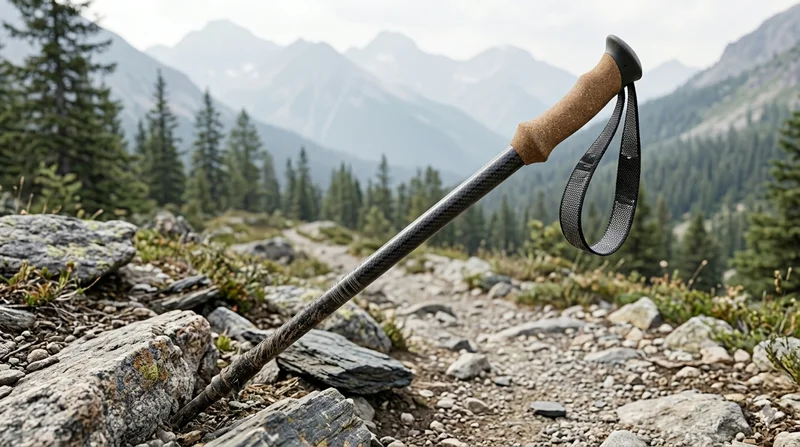
Carbon Fiber Trekking Pole
Lightweight carbon fiber trekking pole manufactured from high-grade carbon fiber tube. Weighs only 160g per pole while providing superior shock absorption and durability for hiking, trail running, and backpacking.

Carbon Fiber Pickleball Paddle
High-performance pickleball paddle with Toray T700 carbon fiber face and polypropylene honeycomb core. Delivers excellent power-to-weight ratio, spin generation, and vibration dampening for competitive play.

Square Carbon Fiber Tube — 3K Twill T700
Square cross-section carbon fiber tube manufactured with 3K twill weave for torsional strength. Preferred for structural frames, trusses, and support columns where rectangular geometry offers design flexibility.

Round Carbon Fiber Tube — 3K Twill
Lightweight and ultra-stiff round tubes ideal for drone frames, robotics, and structural applications.