
Choosing a carbon fiber supplier in India versus importing from East Asia is a sourcing decision that trades landed cost against lead time, documentation burden and supply-chain risk. India now hosts a growing base of carbon fiber manufacturers serving domestic aerospace, automotive, defense and spo
Introduction
Choosing a carbon fiber supplier in India versus importing from East Asia is a sourcing decision that trades landed cost against lead time, documentation burden and supply-chain risk. India now hosts a growing base of carbon fiber manufacturers serving domestic aerospace, automotive, defense and sporting-goods programs, and the right local partner can cut a four-week ocean lead time to five days. The wrong one ties up capital in material that fails incoming inspection, and the price advantage disappears.
This guide covers where Indian carbon fiber manufacturer in India capacity actually sits on the global curve, typical carbon fiber sheet price in India compared with Chinese and Japanese quotes, how customs and GST affect the landed number, and the criteria that separate the best carbon fiber supplier from a trading desk that answers the phone.
Carbon Fiber Manufacturer in India: What Capacity Actually Exists
India's carbon fiber manufacturing base splits into three tiers, and the tier determines what you can actually buy.
| Tier | What they make | Strengths | Risks |
|---|---|---|---|
| Large composite converters | Prepreg, prepreg panels, molded parts | AS9100 or IATF certified, lot traceability, import named-grade fiber | Higher price, MOQ in hundreds of kilograms |
| Mid-size fabricators | CNC cut kits, tubes, sheets to size | Flexible MOQ, quick turnaround on cut parts | Fiber grade may vary lot to lot |
| Raw material importers | Relabeled rolls from Japan, China, Taiwan | Stock availability on standard twill | No lot certificate, reseller margin baked in |
True domestic carbon fiber production at the filament level remains limited; most Indian carbon fiber manufacturer in India operations convert imported tow into fabric, prepreg or finished parts. That is not a weakness for a buyer who values local machining and short lead times, but it does mean the fiber grade traceability question is non-negotiable. Ask which mill the tow came from, request the import documentation, and match the lot number on your certificate against the reel label.
Carbon Fiber Sheet Price in India: Landed Cost Math
The carbon fiber sheet price in India you see in a quotation is ex-works or ex-warehouse, and the landed number depends on customs duty, GST and inland freight. A typical 3 mm twill sheet at 1000 x 1000 mm costs more per square meter in India than the same sheet FOB Shanghai, but the comparison only works when both sides are normalized.
- Customs duty: Carbon fiber and prepreg attract duty in the 7 to 15 percent band depending on HS classification, and the classification for woven fabric versus finished sheet is not always the same.
- GST: 18 percent is standard on carbon fiber products, and it is recoverable for a registered GST taxpayer but is cash flow until the credit is claimed.
- Inland freight: Port to factory in Gujarat or Maharashtra adds 2 to 5 percent; factory door to factory door across India can add more.
- Inventory carrying cost: A local supplier stocking 200 kg of common twill saves you the cost of holding 500 kg in bonded storage.
For a first order under 50 kg, local purchase from a carbon fiber supplier in India usually wins on landed cost and always wins on lead time. Above 500 kg with stable specifications, importing named-grade fiber and converting locally becomes competitive, especially when the converter has a customs bond.
Best Carbon Fiber Supplier: The Criteria That Matter
Whether you buy local or import, the best carbon fiber supplier for a given program is the one that meets the following bar. Score each candidate against these lines before you negotiate price.
- Fiber grade traceability: Named grade, mill of origin, lot number on the certificate, and import documentation that matches.
- Quality system: AS9100 for aerospace work, IATF 16949 for automotive, ISO 9001 as a minimum for general industrial.
- Incoming inspection data: Weight per square meter, visual defect count, and dimensional check on cut sheets.
- Commercial terms: Payment against inspection, credit terms for repeat buyers, and a written policy on defective material.
- Technical support: Ability to advise on layup, resin system and cure cycle, not just sell rolls.
A supplier that hits four of these five lines and quotes 5 percent higher than a competitor is usually the cheaper option when you count scrap, rework and downtime.
Import vs Local: Decision Framework
Use the following decision rules to settle the import-versus-local question for your specific case rather than relying on a general rule of thumb.
| Situation | Recommendation | Reason |
|---|---|---|
| Prototype, under 20 kg | Local Indian supplier | Speed, no customs, small MOQ |
| Production, 200 kg+ per month, stable spec | Import named-grade tow, convert locally | Grade control, lower fiber cost at volume |
| Aerospace or defense program | Certified converter with import traceability | Audit trail, lot control, approved supplier list |
| Urgent replacement, line down | Local stock, accept grade variance | Lead time dominates, document the substitution |
For most mid-volume industrial users, the practical path is dual sourcing: a certified carbon fiber supplier in India for production-critical lots and a named-grade import channel for cost-sensitive volume. Run a qualification order through each channel before you commit annual volume, and keep the incoming inspection data for both so you can compare actual delivered quality, not just invoice price.
Frequently Asked Questions
Is Indian carbon fiber the same quality as Japanese or Chinese carbon fiber?
The quality question is about the fiber, not the country of conversion. Most carbon fiber used in India is imported tow from Japanese, Chinese or Taiwanese mills, converted locally into fabric, prepreg or parts. A certified Indian converter working with named T700-class tow produces parts equivalent to the same tow converted elsewhere; the risk sits with unbranded relabeled stock, which can appear in any market.
What customs duty applies to carbon fiber imported into India?
Woven carbon fiber fabric and prepreg typically attract duty in the 7 to 15 percent range depending on HS code, plus 18 percent GST on the assessable value. Confirm the exact classification with your customs broker before you compare quotes, because a misclassified HS code can add several points of duty after the goods arrive.
How do I verify a carbon fiber supplier in India is not a pure reseller?
Ask for the import invoice with the fiber brand visible, request a factory or warehouse walkthrough, and place a small trial order with an unusual width or cut size. A converter adjusts and quotes; a reseller comes back with a new price and longer lead time because they are placing the order with someone else.
Conclusion
A carbon fiber supplier in India earns its place in your supply chain when the fiber grade is traceable, the quality system matches your program, and the landed cost math holds after duty and GST. Compare Indian carbon fiber manufacturer in India capacity against import options with normalized numbers, and define the best carbon fiber supplier by inspection data rather than by quotation headline.
YongXian supplies carbon fiber sheet, tube and fabric to global buyers with named-grade traceability and roll-level inspection records. Browse our carbon fiber range or request a quotation for your specification.
Part of topic
Related Articles
- Carbon Fiber Tubing Suppliers: MOQ, Lead Time and Tolerance Comparison
- Carbon Fiber Suppliers Near Me: How to Vet a Local Composite Source
- Carbon Fiber Custom Parts Near Me: How to Find and Vet a Local Shop
- Carbon Fiber Fabric Supplier Checklist for B2B Buyers
- Choosing a Carbon Fibre Tube Supplier: Quality Signals to Check
- How to Evaluate a Custom Carbon Fiber Parts Manufacturer
Interested in Our Products?
Contact our team for competitive pricing and technical specifications.
Get a QuoteRelated Products

Round Carbon Fiber Tube — 3K Plain Weave T700
Standard round carbon fiber tube manufactured from Toray T700 grade fiber with 3K plain weave. Offers balanced strength and stiffness for general industrial applications including robotics, automation, sports equipment, and aerospace structures.
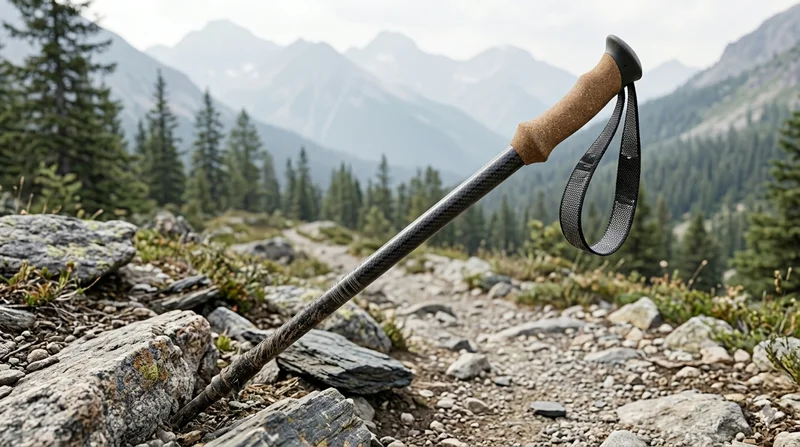
Carbon Fiber Trekking Pole
Lightweight carbon fiber trekking pole manufactured from high-grade carbon fiber tube. Weighs only 160g per pole while providing superior shock absorption and durability for hiking, trail running, and backpacking.

Carbon Fiber Pickleball Paddle
High-performance pickleball paddle with Toray T700 carbon fiber face and polypropylene honeycomb core. Delivers excellent power-to-weight ratio, spin generation, and vibration dampening for competitive play.

Square Carbon Fiber Tube — 3K Twill T700
Square cross-section carbon fiber tube manufactured with 3K twill weave for torsional strength. Preferred for structural frames, trusses, and support columns where rectangular geometry offers design flexibility.

Carbon Fiber Plate — 3K Twill T700 3.0mm
Medium-thickness 3.0mm carbon fiber plate offering significantly higher load capacity while maintaining attractive 3K twill finish. Suitable for structural brackets, reinforcement plates, and load-bearing panels.