
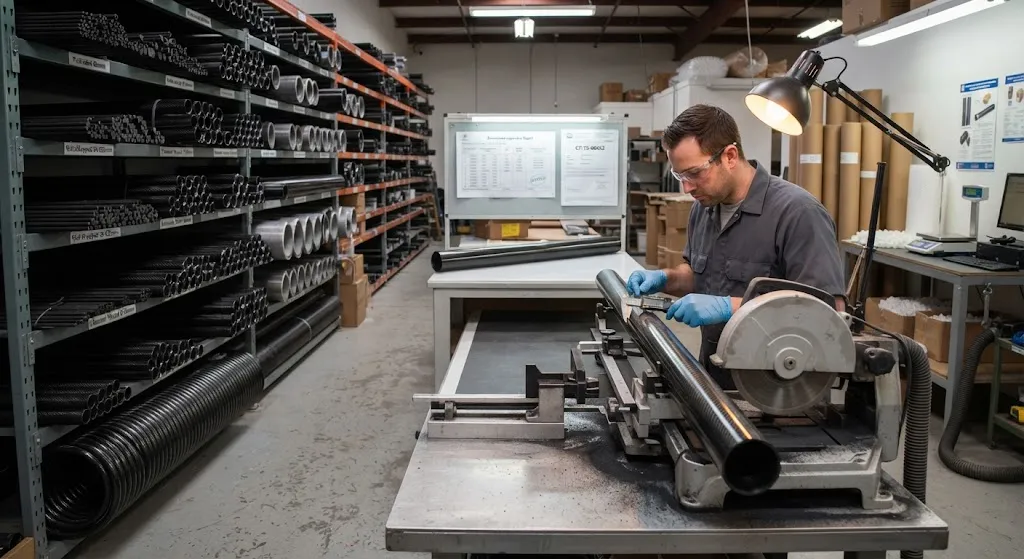
A carbon fiber tube shop is more than a warehouse of round stock: it is the place where engineers, fabricators, and product teams source the tubes that carry loads, transmit torque, and define the stiffness of everything from drone arms and camera rigs to automotive drive shafts and aerospace struct
Introduction
A carbon fiber tube shop is more than a warehouse of round stock: it is the place where engineers, fabricators, and product teams source the tubes that carry loads, transmit torque, and define the stiffness of everything from drone arms and camera rigs to automotive drive shafts and aerospace structures. Choosing the right carbon fiber tube shop matters because tube quality varies widely between suppliers — wall thickness, fiber volume fraction, straightness, and surface finish differ by process and by supplier discipline — and the wrong source can turn a simple purchase into a rework loop. This article explains what a carbon fiber tube shop supplies, how to qualify a CFRP tube supplier, and how to order custom and standard carbon fiber tubes with pricing and lead times you can plan around.
What a Carbon Fiber Tube Shop Supplies: Stock, Custom, and Services
Carbon fiber tube suppliers come in several forms, and the right one depends on whether you need one standard tube for a prototype or a thousand custom tubes for a production run. Some buyers need a few meters of standard stock from a composite tube store, others a steady volume from a carbon fiber tube dealer, and a third group full custom tubes with tuned properties — the supplier type should match that need. The table below compares the four supplier types an engineer typically meets:
| Supplier Type | Stock Range | Custom Capability | Typical MOQ | Lead Time | Price Level |
|---|---|---|---|---|---|
| Online stockist | Standard sizes | Limited cutting only | 1 piece | 1-3 days | Low-medium |
| Specialized dealer | Broad standard range | Cutting, drilling, fittings | 1-10 pieces | 3-7 days | Medium |
| Custom manufacturer | Small standard stock | Full custom: diameter, wall, modulus, process | 50-200 pieces | 2-6 weeks | Medium-high |
| Full-service supplier | Wide range | Custom plus engineering and certification | 20-100 pieces | 3-8 weeks | High |
Three practical implications follow. First, for prototypes and repair work, a stockist or dealer with fast shipping is usually enough. Second, once the tube enters a production part, the custom manufacturer becomes more attractive because the tooling cost is amortized over volume and the diameter, wall thickness, and fiber modulus can be tuned to the load case. Third, certified industries — aerospace, medical, motorsport — should work with a full-service carbon fiber tube shop that can provide material certificates and batch traceability, even though the price per meter is higher.
How to Qualify a CFRP Tube Supplier
Qualifying a CFRP tube supplier takes the same discipline as qualifying any critical material source. The checklist below covers the questions that separate a reliable carbon fiber tube shop from a trading middleman:
- Process transparency: Ask whether the tube is pultruded, roll-wrapped, or filament-wound, and at what fiber volume fraction. Pultrusion gives straight, dense tubes at low cost; roll-wrapping gives cosmetic 3K surfaces; filament winding gives high hoop strength.
- Material data: Request the tensile modulus, compressive and flexural strength, wall thickness tolerance, and straightness specification for each tube family you plan to buy.
- Inspection reports: A real manufacturer issues dimensional inspection reports and batch certificates; a reseller cannot reproduce the process data behind the numbers.
- Sample policy: Confirm that samples are available before volume orders and that the sample matches the production spec, not a hand-picked best piece.
- Secondary operations: Check whether the shop can cut square, drill, thread, or bond fittings in-house, because outsourcing these steps adds lead time and tolerance stack-up.
- Honest lead times: Ask what the current production schedule looks like and whether standard sizes ship from stock; a supplier that answers with real dates is easier to plan around.
Run through this checklist before sending a purchase order, and ask for a reference customer in your industry — the answers will tell you quickly whether the carbon fiber tube shop is a manufacturer with process control or a trader selling someone else's variable quality.
Beyond the paperwork, two physical checks catch most quality problems in delivered tubes. The first is wall thickness consistency: measure the wall at four points around the circumference with a micrometer and compare the spread — a reputable carbon fiber tube shop holds wall variation to roughly 0.1-0.2 mm on standard pultruded tubes, while sloppy production shows 0.3-0.5 mm of variation that ruins concentricity. The second is straightness: lay the tube on a flat surface and measure the gap at the midpoint; rolled or poorly cured tubes bow visibly, and bowing beyond a few millimeters per meter creates alignment problems in assemblies.
Ordering Custom and Standard Carbon Fiber Tubes: Process and Pricing
Once the supplier is qualified, ordering is a four-step process: specify the tube, confirm the process, approve the sample, then place the volume order. The table below gives representative planning prices per meter for common tube configurations, useful for budgeting before you request a quote:
| Tube Configuration | Diameter | Typical Price per Meter (USD) |
|---|---|---|
| Pultruded, standard modulus | 6-20 mm | 5-15 |
| Pultruded, standard modulus | 20-50 mm | 15-40 |
| Roll-wrapped, 3K fabric | 20-60 mm | 30-80 |
| Filament-wound, high modulus | 30-100 mm | 50-150 |
| Aerospace prepreg, autoclave cured | 10-100 mm | 100-400+ |
When ordering, write a specification that includes outer diameter and tolerance, wall thickness, fiber type and modulus, resin system, fiber volume fraction, surface finish, and straightness. For custom tubes, the manufacturer will quote tooling separately if a new die or mandrel is needed, and will ask for a drawing or dimensioned sketch before quoting. Approve a sample or a first-article inspection report, then release the volume order with a confirmed schedule — this sequence keeps both price and delivery date predictable, which is exactly what a good carbon fiber tube shop is for.
Finally, agree on the documentation package before the order ships. A standard delivery from a qualified carbon fiber tube shop includes a packing list, a dimensional inspection report, and a batch certificate of analysis stating fiber type, resin system, fiber volume fraction, and cure cycle. For certified industries, ask for full traceability back to the raw fiber lot and the cure records. Tubes should be packed in rigid cartons with end caps so that the ends are not crushed in transit — damage in shipping is one of the most common reasons a perfect tube arrives unusable.
Frequently Asked Questions
What should I look for in a carbon fiber tube shop?
Look for process transparency, real material data, and inspection reports. Confirm whether the supplier manufactures or resells, check the fiber volume fraction and wall thickness tolerance of the tubes you need, and verify that samples match production quality. Also compare lead times and MOQ honestly: a stockist suits prototypes, while a custom manufacturer with its own tooling suits production volumes and tuned properties.
What is the minimum order quantity for custom carbon fiber tubes?
Custom carbon fiber tube MOQs typically range from 50 to 200 pieces for a dedicated die or mandrel run, because tooling and setup costs must be amortized. Some full-service suppliers accept 20-100 pieces when a standard mandrel can be reused. For small quantities, buy standard sizes from a stockist or dealer, or ask the manufacturer whether a standard mandrel size can be used before paying for new tooling.
How are carbon fiber tubes priced?
Price per meter depends on process, fiber modulus, diameter, and wall thickness. Pultruded standard-modulus tubes range from roughly $5-40 per meter, roll-wrapped 3K tubes from $30-80, filament-wound high-modulus tubes from $50-150, and aerospace prepreg tubes from $100-400+ per meter. Volume, surface finish, secondary operations, and certification add to the base price, so request a quotation with the full specification to get a planning figure.
Conclusion
The right carbon fiber tube shop matches the supplier type to your stage: a stockist for prototypes, a dealer for standard production, a custom manufacturer for tuned tubes at volume, and a full-service supplier for certified industries. Qualifying a CFRP tube supplier with the checklist above — process, data, inspection, samples, secondary operations, and honest lead times — removes most of the quality risk before the purchase order is sent, and a disciplined ordering process keeps price and delivery predictable. With the right carbon fiber tube supplier, the tube stops being a procurement gamble and becomes a controlled engineering input.
When you need standard or custom carbon fiber tubes, review our carbon fiber tube and profile range or contact our engineering team with your diameter, wall thickness, and load requirements, and we will help you specify the right tube configuration and provide a clear quotation.
Part of topic
Related Articles
- Carbon Fibre for Sale: Reading Listings, Grades and Lead Times
- Carbon Fiber Near Me: Why Local Sourcing Beats Cross-Border for Prototyping
- Carbon Fiber Rod Blanks: Supply Chain and Custom Cutting Services
- Carbon Fiber Sheet Price: Factors Affecting Cost per Square Meter
- Carbon Fibre Sheet Supplier UK: Sourcing Options and Specification Checklist
- Carbon Fiber Sheets Near Me Suppliers: Local Stock vs Factory Direct
Interested in Our Products?
Contact our team for competitive pricing and technical specifications.
Get a QuoteRelated Products
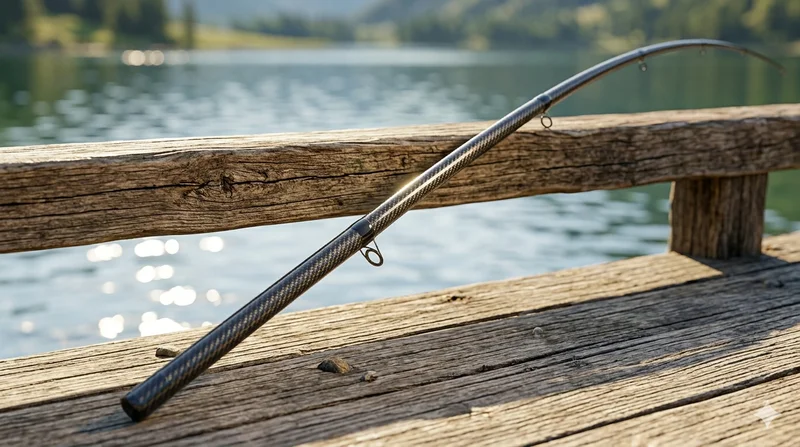
Carbon Fiber Fishing Rod Blank
High-quality carbon fiber fishing rod blank manufactured from multiple grades of Toray carbon fiber cloth. Available in a wide range of lengths, powers, and actions for freshwater and saltwater applications. Suitable for OEM rod building.

Carbon Fiber Plate — 3K Twill T700 3.0mm
Medium-thickness 3.0mm carbon fiber plate offering significantly higher load capacity while maintaining attractive 3K twill finish. Suitable for structural brackets, reinforcement plates, and load-bearing panels.

Carbon Fiber Plate — 3K Twill T700 1.5mm
Thin 1.5mm carbon fiber plate with 3K twill weave surface. Lightweight and stiff, commonly used for covers, panels, drone bodies, and applications requiring a premium aesthetic appearance.

Square Carbon Fiber Tube — 3K Twill T700
Square cross-section carbon fiber tube manufactured with 3K twill weave for torsional strength. Preferred for structural frames, trusses, and support columns where rectangular geometry offers design flexibility.
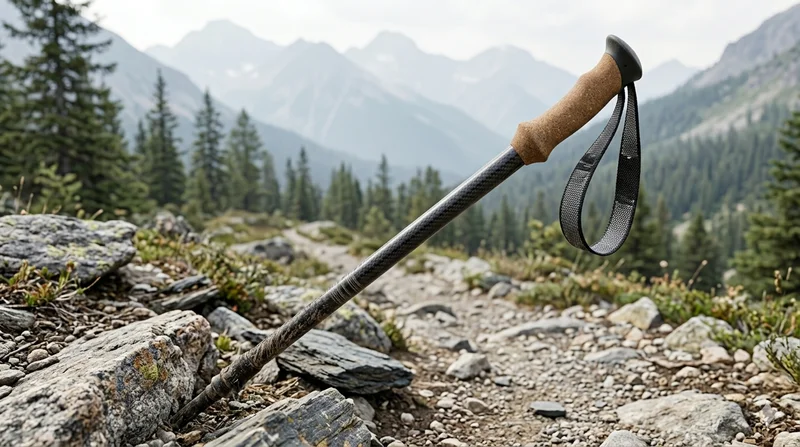
Carbon Fiber Trekking Pole
Lightweight carbon fiber trekking pole manufactured from high-grade carbon fiber tube. Weighs only 160g per pole while providing superior shock absorption and durability for hiking, trail running, and backpacking.