
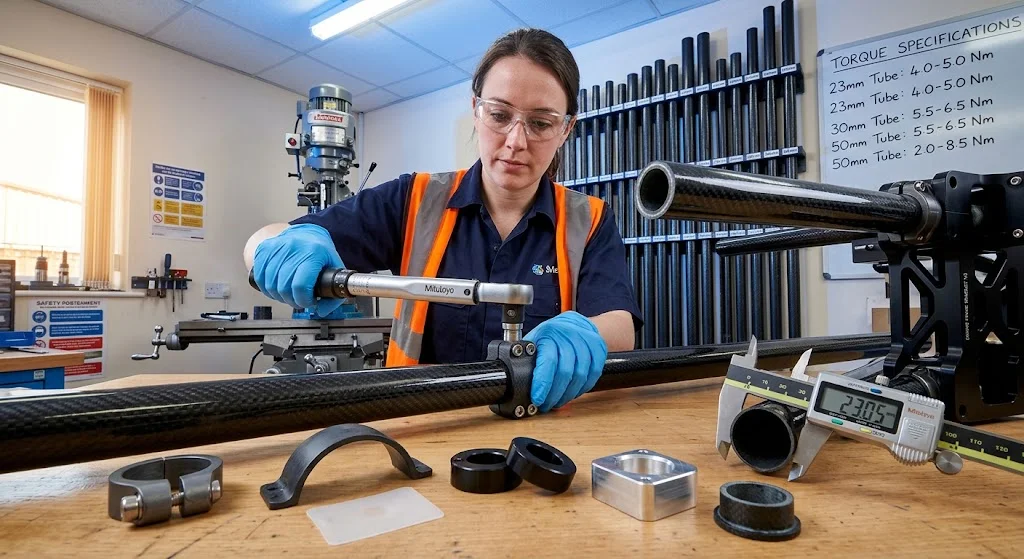
Carbon fiber tube clamps are the small, unglamorous parts that decide whether a lightweight structure stays together. A drone arm, robot link, bicycle frame, tripod leg or camera boom is rarely one continuous tube; it is a set of tubes joined by clamps, and the joint usually fails before the tube do
Introduction
Carbon fiber tube clamps are the small, unglamorous parts that decide whether a lightweight structure stays together. A drone arm, robot link, bicycle frame, tripod leg or camera boom is rarely one continuous tube; it is a set of tubes joined by clamps, and the joint usually fails before the tube does. Choosing carbon fiber tube clamps well means understanding that carbon fibre is strong along its fibres and weak across them, that it does not yield to warn of overload, and that it forms a galvanic couple with aluminium when water is present. Get those three facts right and the hardware becomes simple.
This guide explains why a clamp that works on an aluminium tube can damage a carbon one, compares the four main clamp styles, and shows how to size hardware for a carbon fiber tube connection, including the popular 23 mm outside diameter tube. It closes with the practical rules that keep a clamped joint from crushing the tube it is meant to support.
Why Carbon Fiber Tube Clamps Need Special Care
The first issue is crushing. A bolt tightened directly against a carbon tube concentrates load on a small area and can split the wall at a torque that would only dent aluminium. Carbon fiber tube clamps solve this by spreading the load over a wide, conforming contact patch, and by capping the bolt torque to a fraction of what the same bolt would take on steel. A rough rule is to keep bolt torque at or below about half the value used for an aluminium tube of the same size, and to use a torque wrench every time rather than judgement.
The second issue is stress concentration at holes. A hole drilled through a carbon tube cuts the fibres that carry the load and creates a stress raiser that can start a crack. Where a through-bolt is unavoidable, the hole should be drilled slightly oversize, sealed with resin, and backed by a bonded insert or a sleeve so the clamp grips a metal surface rather than bare laminate. The third issue is galvanic corrosion: where an aluminium clamp sits on a carbon tube and moisture is present, the carbon acts as a cathode and the aluminium corrodes. The fix is a thin isolating layer, either an anodised or coated clamp or a fibre-reinforced plastic shim between the two materials.
Carbon Fiber Tube Clamps: Styles and Hardware
Four clamp families cover almost every carbon tube joint, and they differ in how much contact area they offer and how the load leaves the tube.
- Split clamps: A ring with a single slit and one or two bolts that closes onto the tube. Light and cheap, best for light radial loads on thin-walled tubes.
- Saddle clamps: A D-shaped bracket with a broad, curved seat that spreads load over half the tube circumference. The best choice for high bending loads and larger tubes.
- Shaft collars: A one-piece or two-piece ring that grips by friction to locate or stop a tube axially. Good for positioning, but a set-screw version can damage fibres and should be avoided on structural joints.
- Bolted brackets and corner blocks: Machined blocks that clamp the tube and bolt to another member, often used at T-joints and chassis nodes. Heaviest, but they carry the highest loads and give the most repeatable assembly.
| Clamp style | Typical tube OD | Best load type | Wall support | Weight | Typical use |
|---|---|---|---|---|---|
| Split clamp, single bolt | 6-25 mm | Light radial | Moderate | Low | Drone arms, sensor mounts |
| Split clamp, twin bolt | 10-40 mm | Medium radial and axial | Good | Low-medium | Robot links, tripods |
| Saddle clamp | 20-60 mm | High bending | Excellent | Medium | Bike frames, booms |
| Shaft collar | 6-50 mm | Axial location | Moderate | Low | Positioning, stops |
| Bolted bracket or block | Up to 50 mm | High combined | Excellent | High | T-joints, chassis nodes |
The table shows the basic trade: as the load grows, the clamp must spread contact over more of the tube and add metal, which costs weight. A single-bolt split clamp is the lightest way to hold a small tube, but it is the easiest to over-tighten and the least able to resist a slipping axial load. A saddle clamp or a machined block adds weight but turns a fragile point contact into a joint that behaves like a proper fitting.
Carbon Fiber Tube Connection: Bolted, Bonded and Hybrid
A carbon fiber tube connection can be made in three ways, and clamps are only one of them. A bolted connection is the most serviceable: the parts can be taken apart in the field, and a clamp or bracket carries the load through friction and bearing. A bonded connection uses an adhesive sleeve or insert to transfer load over a long length, which is the most efficient in stiffness and weight, but it is permanent. A hybrid connection bonds an insert into the tube and then clamps or bolts to the insert, combining the load spreading of bonding with the serviceability of a clamp. For most lightweight structures, the hybrid route gives the best of both: the tube wall is never crushed because the bolt bears on the bonded insert, and the joint can still be opened if needed.
Sizing Hardware for a 23 mm Carbon Fiber Tube
The 23 mm outside diameter tube is one of the most common sizes in hobby robotics, camera rigs and small drones, and sizing hardware for it illustrates the general rule. Carbon tube is usually sold by outside diameter, so a 23 mm tube with a 1.5 mm wall has an inside diameter of 20 mm, and a clamp must be ordered to the 23 mm outside diameter, not the bore. If the joint uses a bonded insert, the insert is ordered to the 20 mm inside diameter and should run at least two and a half tube diameters into the tube, so about 50 mm of bond length, to spread the load. Tube suppliers often list both the outside diameter and the inside diameter because inserts are sized to the bore while clamps are sized to the outside; mixing the two is the most common ordering error. When in doubt, measure the tube with a caliper and order to the dimension the hardware actually contacts.
Clamps at T-Joints and Other Load Paths
At a carbon fiber tube t-joint, a clamp or block carries a bending moment as well as a direct load, and the tube is most vulnerable where it enters the fitting. Two design habits help. First, extend the fitting along the tube so the contact is long relative to the diameter, which reduces the bearing stress that would otherwise crush the wall. Second, allow the joint a small amount of compliance rather than making it perfectly rigid, because a fully rigid joint concentrates the whole moment at the tube edge and can cause a fatigue crack over thousands of cycles. A thin elastomer or fibreglass shim between clamp and tube spreads the load and damps vibration at the same time, which is why it is common in drone and robot arms that see continuous vibration.
Frequently Asked Questions
How tight should I tighten a clamp on a carbon fiber tube?
Use less torque than you would on aluminium, and use a torque wrench. As a starting rule, keep the bolt torque at or below about half the value specified for the same bolt on an aluminium tube, then check that the clamp cannot rotate by hand and that the tube shows no visible ovalisation. If the clamp slips, add friction with a rubber or fibreglass shim rather than adding torque, because torque beyond the limit crushes fibres before it improves grip. For thin-walled tubes, always support the inside with a bonded insert before clamping.
Will an aluminium clamp corrode a carbon fiber tube?
The carbon tube will not corrode, but it will accelerate corrosion of an unprotected aluminium clamp when moisture and salt are present, because the two metals form a galvanic couple. Use an anodised or coated aluminium clamp, or place a thin electrically insulating shim of fibreglass or plastic between the clamp and the tube. Stainless steel or titanium clamps reduce the problem but do not remove it entirely; the isolating layer is the reliable answer, especially in marine, outdoor or humid use.
What size clamp fits a 23 mm carbon fiber tube?
Order the clamp to the 23 mm outside diameter, since clamps grip the outer surface. A 23 mm tube with a 1.5 mm wall has a 20 mm bore, and an insert for that tube is ordered to 20 mm. The most common ordering mistake is to specify the bore for a clamp or the outside diameter for an insert, so always check which dimension the hardware contacts and measure the tube with a caliper first.
Conclusion
Carbon fiber tube clamps are a small part of the structure but a large part of whether it lasts. The rules are consistent: spread the load over a wide contact, keep bolt torque low, protect the wall at every hole, and isolate carbon from aluminium. Split clamps suit light radial joints, saddle clamps and machined blocks suit high bending loads, and a hybrid bonded-and-clamped connection gives the best serviceability without crushing the tube. Sizing follows the same logic, with the clamp ordered to the outside diameter and inserts to the bore.
If you need carbon fiber tubes supplied with matched clamps, sleeves and inserts that will not crush a thin wall, browse our carbon fiber tube and hardware range, or contact our engineering team for joint design support and tube-and-fitting kits.
Part of topic
Related Articles
- Carbon Fiber Tubes and Rods: Sizing and Selection for Projects
- Carbon Fiber Tube Chassis: Space Frames for Vehicles and Drones
- Carbon Fiber Tube Connect: Complete Assembly Guide
- Carbon Fiber Tube Connection: Sleeves, Inserts and Adhesive Joints
- Carbon Fiber Tube T-Joint: Bonding and Mechanical Assembly Options
- Carbon Fiber Sheets for Sale 1mm: Grade and Thickness Buying Guide
Interested in Our Products?
Contact our team for competitive pricing and technical specifications.
Get a QuoteRelated Products

Carbon Fiber Plate — 3K Twill T700 1.5mm
Thin 1.5mm carbon fiber plate with 3K twill weave surface. Lightweight and stiff, commonly used for covers, panels, drone bodies, and applications requiring a premium aesthetic appearance.

Carbon Fiber Plate — 3K Twill T700 3.0mm
Medium-thickness 3.0mm carbon fiber plate offering significantly higher load capacity while maintaining attractive 3K twill finish. Suitable for structural brackets, reinforcement plates, and load-bearing panels.

Square Carbon Fiber Tube — 3K Twill T700
Square cross-section carbon fiber tube manufactured with 3K twill weave for torsional strength. Preferred for structural frames, trusses, and support columns where rectangular geometry offers design flexibility.
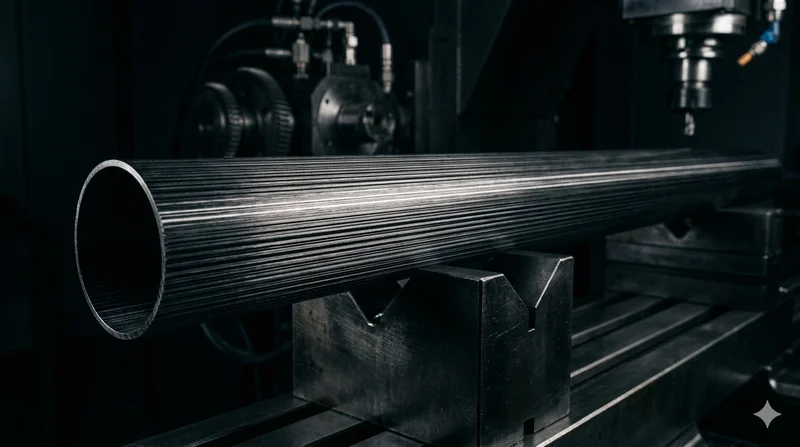
Round Carbon Fiber Tube — UD Unidirectional T700
Unidirectional (UD) round tube with all fibers aligned axially for maximum longitudinal stiffness. Ideal for applications requiring high bending rigidity with minimal weight, such as shafts, struts, and structural reinforcements.
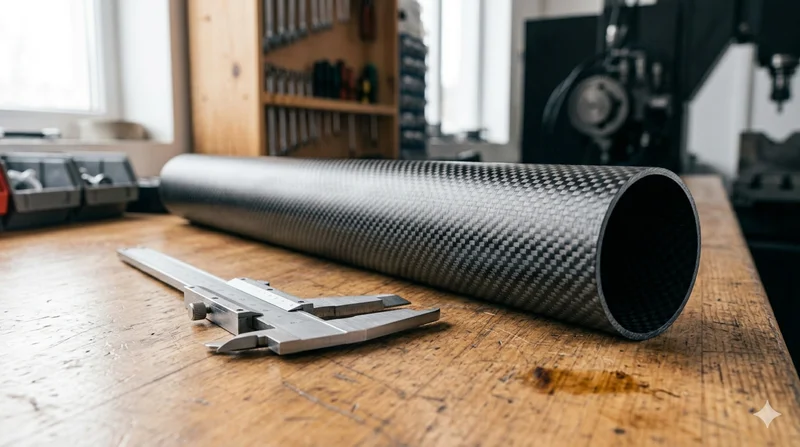
Round Carbon Fiber Tube — 3K Plain Weave T700
Standard round carbon fiber tube manufactured from Toray T700 grade fiber with 3K plain weave. Offers balanced strength and stiffness for general industrial applications including robotics, automation, sports equipment, and aerospace structures.