
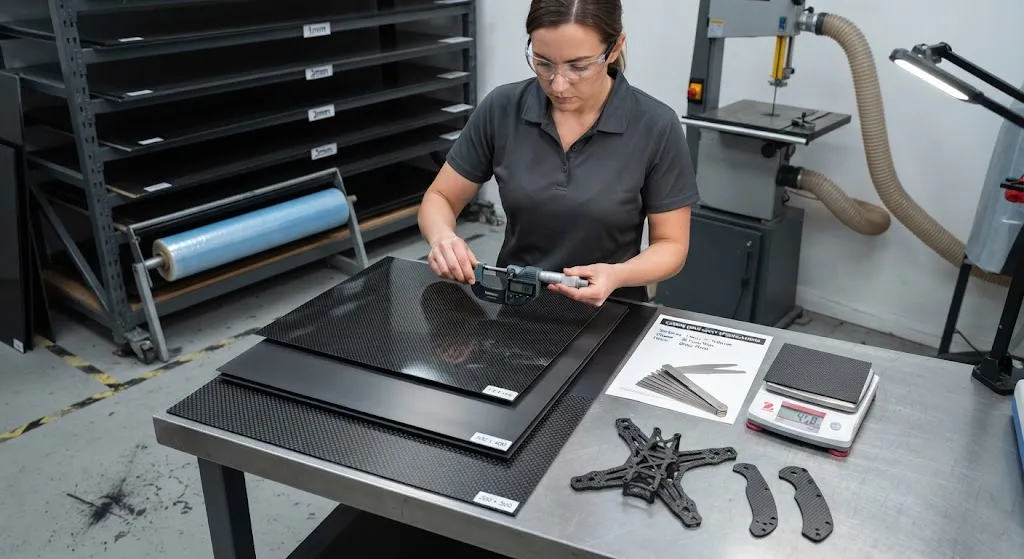
Carbon fiber sheets for sale 1mm thick sit in a sweet spot for buyers: thin enough to be light and easy to cut, strong enough for real parts. A 1 millimetre sheet is the grade most often ordered for drone frames, robot covers, cosmetic panels, knife scales and prototype brackets, and it is one of th
Introduction
Carbon fiber sheets for sale 1mm thick sit in a sweet spot for buyers: thin enough to be light and easy to cut, strong enough for real parts. A 1 millimetre sheet is the grade most often ordered for drone frames, robot covers, cosmetic panels, knife scales and prototype brackets, and it is one of the few carbon products where a buyer can compare offers almost entirely on specification. The challenge is that "1mm carbon fiber sheet" covers a wide spread of weave, finish, resin and tolerance, so two sheets at the same nominal thickness can differ sharply in price and in how they perform.
This guide is written for the buyer. It explains what the 1 millimetre grade contains, how weave and finish are graded, how thickness and tolerance should be read, where 1mm stock is used, and how to tell a fair price from an inflated one. Armed with these points, a buyer can compare carbon fiber sheets for sale without relying on the product name alone.
Carbon Fiber Sheets for Sale 1mm: What You Are Buying
A 1mm carbon fiber sheet is a cured laminate of carbon fiber and epoxy resin, typically 100 percent carbon with no glass layer, pressed to a nominal thickness of one millimetre. The two faces usually show a 3K woven fabric, either a twill weave with a diagonal pattern or a plain weave with a checkerboard pattern, and the sheet is supplied as a flat panel in standard sizes such as 200 by 250, 200 by 300, 300 by 400 or 400 by 500 millimetres.
What matters at the point of purchase is that the thickness is nominal. A sheet sold as 1 millimetre may measure anywhere from 0.8 to 1.2 millimetres depending on how tightly the tolerance is held, and that spread changes both weight and stiffness. A buyer who needs the sheet to drop into a slot, or to match a stack of parts, should ask for the tolerance rather than assume it.
Grades, Weave and Finish of a 1mm Sheet
Three visual and structural choices separate one 1mm sheet from another:
- Weave: 3K twill is the most common and shows a clean diagonal pattern; 3K plain gives a tighter checkerboard; forged carbon gives a marbled look; unidirectional sheet maximises stiffness in one direction but looks plain. For most buyers, twill and plain are the choices that matter.
- Finish: a glossy sheet has a clear-coat surface that shows the weave deeply, a matte sheet has a flatter, less reflective face, and some sheets are supplied with a peel-ply texture for bonding. The finish is cosmetic but also affects how easily the sheet can be bonded or painted.
- Resin and fiber content: aerospace-grade sheets use higher fiber volume fractions and give higher stiffness, while economy sheets trade some stiffness for a lower price. The fiber volume fraction is the single specification that best predicts performance.
Carbon Fiber Sheet Thickness and Tolerance
Thickness is where the 1mm grade rewards careful reading. The table below sets out how sheet thickness changes weight and bending stiffness, using a density of 1.55 grams per cubic centimetre and taking the 1 millimetre sheet as the reference for stiffness.
| Thickness (mm) | Areal weight (kg/m²) | Relative bending stiffness | Typical use |
|---|---|---|---|
| 0.5 | 0.78 | 0.13 | cosmetic skins, laptop covers |
| 1.0 | 1.55 | 1.00 | drone frames, panels, trays |
| 1.5 | 2.33 | 3.38 | RC chassis, brackets |
| 2.0 | 3.10 | 8.00 | structural plates, machined parts |
The table shows why thickness matters more than any other variable. Moving from 1 to 1.5 millimetres adds about half the weight again but more than triples the bending stiffness, and moving to 2 millimetres multiplies stiffness by eight. That is also why a tolerance of plus or minus 0.2 millimetres is significant at the 1 millimetre grade: it is a 20 percent thickness swing, and thickness enters stiffness roughly as its cube. Buyers who specify plus or minus 0.1 millimetres are paying for repeatability, and for parts that must fit a slot it is usually worth it.
Carbon Fiber Sheets for Sale: Where 1mm Stock Is Used
The 1 millimetre grade is used across a wide range of finished products:
- Drone and RC frames: arms, plates and battery trays where low weight and stiffness decide flight time.
- Robot and machine covers: lightweight protective panels that must stay flat and resist handling.
- Cosmetic trim: automotive interior panels, laptop skins and decorative fascias where the visible weave is the point.
- Knife scales and handles: thin, hard, dimensionally stable and pleasant to finish.
- Prototype brackets and gaskets: quick flat stock for drilling, cutting and testing before a moulded part is committed.
In most of these uses the buyer wants a flat, consistent sheet that cuts cleanly, which makes tolerance and flatness as important as the headline thickness.
How to Buy Carbon Fiber Sheet for Sale: A Checklist
Before ordering, confirm these points in writing:
- Fiber and weave: state 3K twill or plain, and whether a full-carbon (no glass) laminate is required.
- Thickness and tolerance: ask for the nominal thickness and the accepted range, not just "1mm".
- Sheet size and flatness: confirm the panel size and that it is supplied flat, with no bow or twist.
- Finish: choose gloss or matte, and whether a peel-ply surface is needed for bonding.
- Cutting: decide whether to buy a full panel or a CNC-cut shape, and whether cut edges are sealed.
- Consistency: ask whether the sheet is from a controlled batch, so a repeat order matches the first.
Price and Value for 1mm Carbon Fiber Sheets
Price for a 1mm sheet varies mostly with size, weave and tolerance. A 200 by 300 millimetre panel is the entry point for small jobs, while a 300 by 400 millimetre panel is the common choice for frames and covers; a CNC-cut shape carries a premium over the raw panel. A fair price reflects the fiber volume fraction, the thickness tolerance and the flatness, not the photograph of the weave. The most useful comparison is cost per part after cutting, not cost per panel, because a cheaper sheet with a loose tolerance can waste more material in rejected cuts than a tighter sheet costs up front.
Frequently Asked Questions
What is a 1mm carbon fiber sheet actually used for?
A 1 millimetre sheet is used for drone and RC frames, robot and machine covers, cosmetic trim and laptop skins, knife scales, and prototype brackets and gaskets. It is chosen where a part must be light, flat and easy to cut but does not need the stiffness of a 2 millimetre plate. It is the most popular thin carbon fiber panel for general fabrication.
How accurate is the thickness of a 1mm carbon fiber sheet?
It depends on the supplier. A good sheet holds plus or minus 0.1 millimetre, while an economy sheet may run plus or minus 0.2 millimetre, which is a 20 percent swing at the 1 millimetre grade. Because bending stiffness scales roughly with the cube of thickness, that swing matters. Always ask for the tolerance in writing if the sheet must fit a slot or a stack.
How much does a 1mm carbon fiber sheet weigh?
At a density of about 1.55 grams per cubic centimetre, a 1 millimetre sheet weighs about 1.55 kilograms per square metre. That is roughly 93 grams for a 200 by 300 millimetre panel and 186 grams for a 300 by 400 millimetre panel. The weight is proportional to area, so a larger sheet weighs more in direct proportion, while a thicker sheet at the same size weighs more in proportion to thickness.
Conclusion
Buying carbon fiber sheets for sale at 1mm is straightforward once the specification is pinned down. Confirm the weave and finish, ask for the thickness and its tolerance, check flatness and sheet size, and compare cost per part rather than cost per panel. The 1 millimetre grade is a genuine sweet spot for drone frames, covers, cosmetic trim and prototypes, but its performance depends on the fiber volume fraction and how tightly the thickness is held. A buyer who reads those three points can order carbon fiber sheet for sale with confidence and get a repeatable result.
If you are sourcing 1mm carbon fiber sheets with stated thickness tolerance, weave and finish, browse our carbon fiber sheet range, or contact our team for current sheet sizes, grades and bulk pricing.
Part of topic
Related Articles
- Carbon Fiber Tubes and Rods: Sizing and Selection for Projects
- Carbon Fiber Tube Chassis: Space Frames for Vehicles and Drones
- Carbon Fiber Tube Connect: Complete Assembly Guide
- Carbon Fiber Tube Connection: Sleeves, Inserts and Adhesive Joints
- Carbon Fiber Tube T-Joint: Bonding and Mechanical Assembly Options
- Carbon Fiber Tube Clamps: Joint Design and Hardware Selection
Interested in Our Products?
Contact our team for competitive pricing and technical specifications.
Get a QuoteRelated Products

Carbon Fiber Plate — 3K Twill T700 1.5mm
Thin 1.5mm carbon fiber plate with 3K twill weave surface. Lightweight and stiff, commonly used for covers, panels, drone bodies, and applications requiring a premium aesthetic appearance.

Carbon Fiber Plate — 3K Twill T700 3.0mm
Medium-thickness 3.0mm carbon fiber plate offering significantly higher load capacity while maintaining attractive 3K twill finish. Suitable for structural brackets, reinforcement plates, and load-bearing panels.

Square Carbon Fiber Tube — 3K Twill T700
Square cross-section carbon fiber tube manufactured with 3K twill weave for torsional strength. Preferred for structural frames, trusses, and support columns where rectangular geometry offers design flexibility.
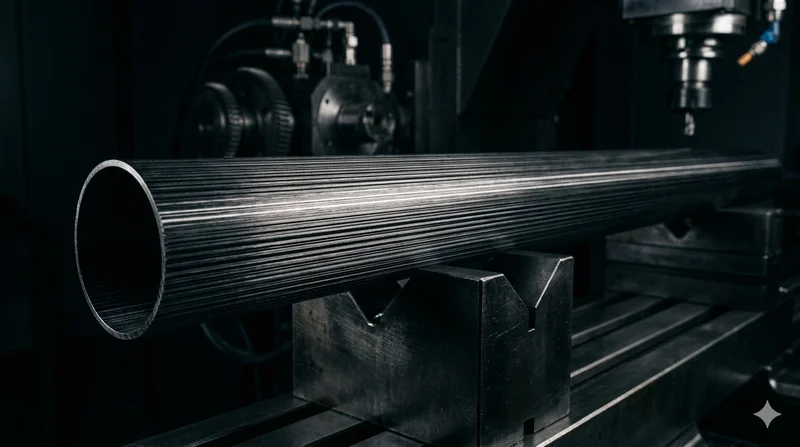
Round Carbon Fiber Tube — UD Unidirectional T700
Unidirectional (UD) round tube with all fibers aligned axially for maximum longitudinal stiffness. Ideal for applications requiring high bending rigidity with minimal weight, such as shafts, struts, and structural reinforcements.
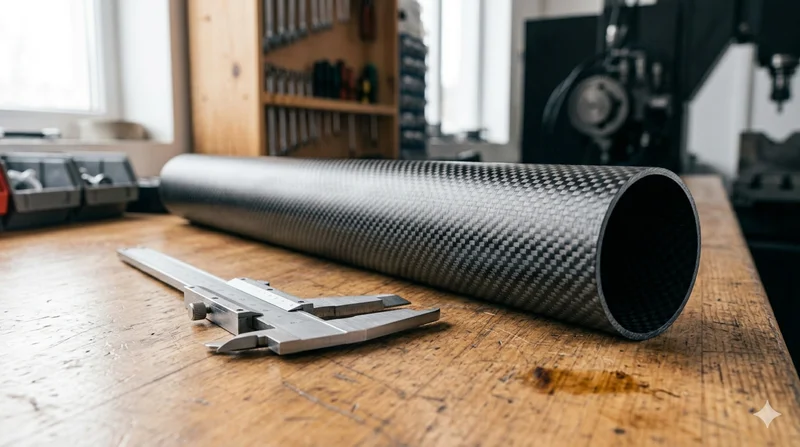
Round Carbon Fiber Tube — 3K Plain Weave T700
Standard round carbon fiber tube manufactured from Toray T700 grade fiber with 3K plain weave. Offers balanced strength and stiffness for general industrial applications including robotics, automation, sports equipment, and aerospace structures.