Using a carbon fiber rod for construction reinforcement is no longer limited to experimental projects. Engineers now specify carbon fiber reinforced polymer (CFRP) rods in bridges, marine structures, concrete repair, masonry strengthening, and environments where steel corrosion creates long-term cos
Introduction
Using a carbon fiber rod for construction reinforcement is no longer limited to experimental projects. Engineers now specify carbon fiber reinforced polymer (CFRP) rods in bridges, marine structures, concrete repair, masonry strengthening, and environments where steel corrosion creates long-term cost and safety risks. CFRP rods offer high tensile strength, low weight, and corrosion resistance, but they are not a drop-in replacement for steel in every detail. Their behavior in bending, anchorage, fire exposure, and field cutting requires deliberate design. This guide explains where carbon fiber rods fit in construction reinforcement, what specifications matter, how they compare with steel, and what buyers should verify before sourcing.
The best use cases are the ones where steel's weaknesses are expensive: chloride exposure, electromagnetic neutrality, lightweight handling, or long service life with minimal maintenance. When applied in the right context, carbon fiber reinforcement can reduce lifecycle cost even when initial material cost is higher.
Where Carbon Fiber Rods Fit in Construction
Carbon fiber rod for construction reinforcement is most valuable in conditions that punish steel or benefit from non-metallic properties.
| Application | Why CFRP Rod Works | Typical Rod Form | Design Note |
|---|---|---|---|
| Marine concrete structures | Corrosion resistance in chloride environments | Ribbed/sand-coated CFRP rod | Check bond development length |
| Bridge deck repair | High tensile strength, lightweight handling | Near-surface mounted (NSM) rod | Groove size and adhesive critical |
| MRI or sensitive facilities | Non-magnetic, non-conductive | Straight CFRP rod or bar | Confirm electromagnetic requirements |
| Masonry strengthening | Minimal added weight, easy insertion | Small-diameter CFRP rod | Use compatible grout/epoxy |
| Chemical plants/wastewater | Resists corrosive exposure | Ribbed or sand-coated rod | Verify resin chemical resistance |
CFRP rods are especially useful in near-surface mounted reinforcement, where grooves are cut into concrete and rods are bonded with structural epoxy or grout. They are also used as internal reinforcement in concrete members where corrosion protection is a primary design driver.
Carbon Fiber Rod vs Steel Rebar
Engineers often ask whether carbon fiber rod can replace steel rebar. The answer is "sometimes, with different design rules." The comparison below highlights the practical differences.
| Property | Carbon Fiber Rod (CFRP) | Steel Rebar | Practical Impact |
|---|---|---|---|
| Tensile strength | Very high (often 1500-2500 MPa) | Moderate (typically 400-600 MPa yield) | CFRP strong in tension, but linear elastic |
| Elastic modulus | Moderate to high (120-160 GPa) | ~200 GPa | Deflection/serviceability must be checked |
| Corrosion behavior | Excellent corrosion resistance | Prone to rust in chlorides | CFRP reduces long-term repair risk |
| Weight | About 1/4 of steel | Heavy | Easier handling and transport |
| Ductility | Linear elastic to failure | Ductile yielding | CFRP designs need different safety philosophy |
| Field bending | Cannot be field-bent like steel | Can be bent on site | CFRP bends must be factory-formed |
| Fire performance | Resin dependent, needs protection | Better known behavior, still degrades | Fire cover/detailing is critical |
The key takeaway: CFRP is not "better steel." It is a different material. It excels in tensile capacity and corrosion resistance, but it does not yield like steel, and it cannot be bent on site. Design must follow applicable CFRP reinforcement guides and project codes.
Key Specs and Design Considerations
When specifying a carbon fiber rod for construction reinforcement, the spec sheet should go beyond diameter and length.
- Rod diameter and tolerance: Common diameters range from 6 mm to 12 mm for strengthening applications, with larger bars for internal reinforcement. Confirm nominal diameter, actual diameter, and tolerance.
- Surface profile: Smooth rods rely mostly on adhesive bond. Sand-coated or ribbed rods improve mechanical interlock in concrete or grout.
- Tensile strength and modulus: Request tested values, not just typical marketing numbers. Design should use guaranteed properties as defined by relevant standards.
- Fiber volume and resin system: Fiber content affects strength and modulus. Resin system affects temperature resistance, chemical durability, and creep behavior.
- Anchorage and development length: Bond behavior is different from steel. Follow manufacturer data and design guides for embedment length, groove dimensions, and adhesive selection.
- Fire and temperature limits: CFRP performance depends on resin glass transition temperature and protective cover. Do not ignore fire detailing.
For near-surface mounted applications, groove width, groove depth, surface preparation, and adhesive curing conditions often control performance as much as the rod itself.
Installation and Sourcing Checklist
A good product can fail with poor installation. Buyers and contractors should align on handling and site procedures before delivery.
- Storage and handling: Keep rods clean, dry, and protected from UV if stored long-term. Avoid dragging rods across abrasive surfaces.
- Cutting: Use diamond or abrasive cutting tools with dust control. Do not shear CFRP rods like steel bars.
- Surface preparation: For NSM, cut grooves to specified dimensions, remove dust, and ensure the substrate is sound.
- Adhesive compatibility: Use the adhesive system tested with the rod surface. Sand-coated, ribbed, and smooth rods may require different bonding considerations.
- Quality documentation: Request batch test reports, material certificates, dimensions, and handling instructions.
- Supplier capability: Ask whether the supplier can provide cut lengths, factory bends, anchorage accessories, and technical support.
When sourcing, prioritize suppliers who understand construction reinforcement, not just carbon fiber products in general. The right partner can provide datasheets, bond data, and practical installation guidance.
Frequently Asked Questions
Can carbon fiber rod replace steel rebar in concrete?
In some cases, yes, but it requires CFRP-specific design. Carbon fiber rods have high tensile strength and corrosion resistance, but they behave linearly elastic and do not yield like steel. Engineers must check serviceability, bond, anchorage, shear, and fire requirements using applicable CFRP design standards and manufacturer data.
Is carbon fiber rod for construction reinforcement suitable for outdoor use?
Yes, especially in corrosive environments such as coastal structures, bridges exposed to deicing salts, and wastewater facilities. The rods themselves resist corrosion, but the resin system, UV exposure, and concrete cover or adhesive protection should be specified correctly for long-term durability.
Can CFRP rods be bent on site?
No. Unlike steel rebar, CFRP rods cannot be field-bent without damaging fibers and resin. Any bends, hooks, or special shapes must be manufactured during production. For projects needing custom shapes, confirm factory-formed options and lead times during the design stage.
Conclusion
A carbon fiber rod for construction reinforcement is a strong solution when corrosion, weight, or electromagnetic constraints make steel difficult to maintain. The key is to use it with the right design assumptions: check modulus and deflection, detail anchorage carefully, protect against fire, and never treat CFRP as bendable steel. With proper specification and installation, CFRP rods can extend service life and reduce maintenance in demanding structures. For custom diameters, cut lengths, and technical datasheets, explore our carbon fiber products or contact our team for sourcing support.
Part of topic
Related Articles
- Carbon Fiber Plate for 3D Printer: Design, Specs and Sourcing | YongXian
- Carbon Fiber Plate for Signage: Design, Specs and Sourcing | YongXian
- Carbon Fiber Sheet for Furniture: Design, Specs and Sourcing | YongXian
- Carbon Fiber Plate for Medical Device: Design, Specs and Sourcing | YongXian
- Carbon Fiber Sheet for Sporting Goods: Design, Specs and Sourcing | YongXian
- Carbon Fiber Sheet for Automotive Parts: Design, Specs and Sourcing | YongXian
Interested in Our Products?
Contact our team for competitive pricing and technical specifications.
Get a QuoteRelated Products
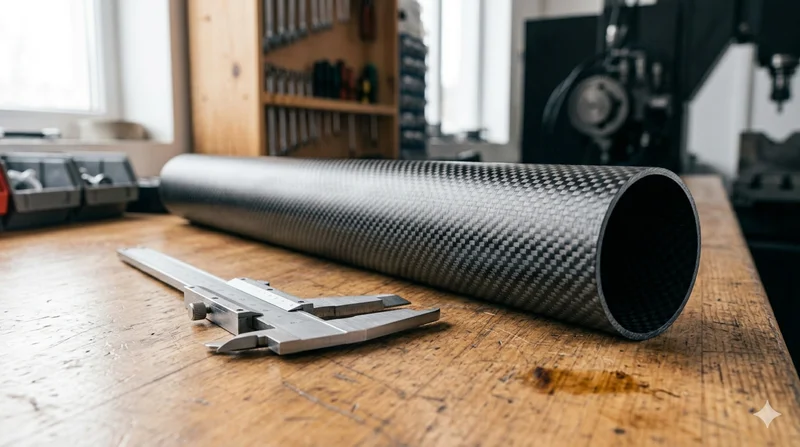
Round Carbon Fiber Tube — 3K Plain Weave T700
Standard round carbon fiber tube manufactured from Toray T700 grade fiber with 3K plain weave. Offers balanced strength and stiffness for general industrial applications including robotics, automation, sports equipment, and aerospace structures.
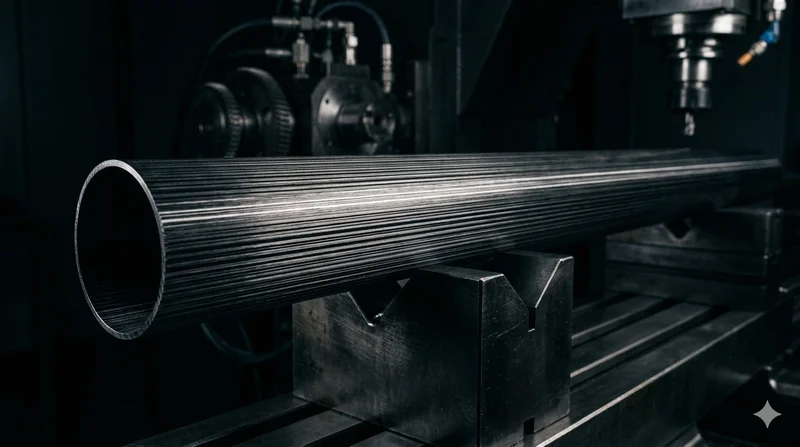
Round Carbon Fiber Tube — UD Unidirectional T700
Unidirectional (UD) round tube with all fibers aligned axially for maximum longitudinal stiffness. Ideal for applications requiring high bending rigidity with minimal weight, such as shafts, struts, and structural reinforcements.
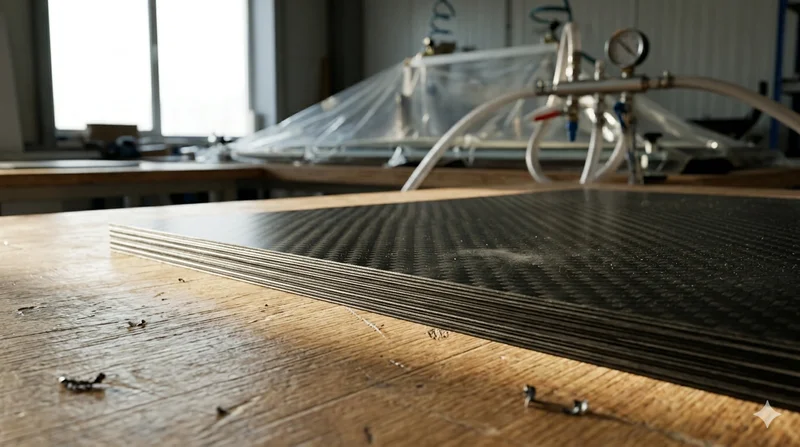
Carbon Fiber Plate — 3K Twill T700 3.0mm
Medium-thickness 3.0mm carbon fiber plate offering significantly higher load capacity while maintaining attractive 3K twill finish. Suitable for structural brackets, reinforcement plates, and load-bearing panels.
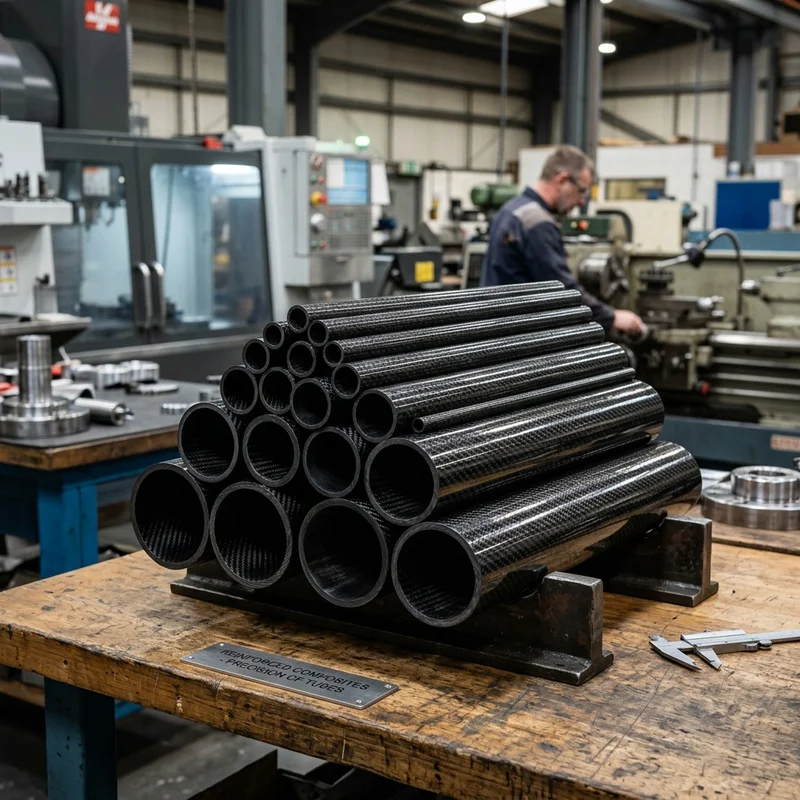
Round Carbon Fiber Tube — 3K Twill
Lightweight and ultra-stiff round tubes ideal for drone frames, robotics, and structural applications.
Carbon Fiber Plate — 3K Twill T700 1.5mm
Thin 1.5mm carbon fiber plate with 3K twill weave surface. Lightweight and stiff, commonly used for covers, panels, drone bodies, and applications requiring a premium aesthetic appearance.