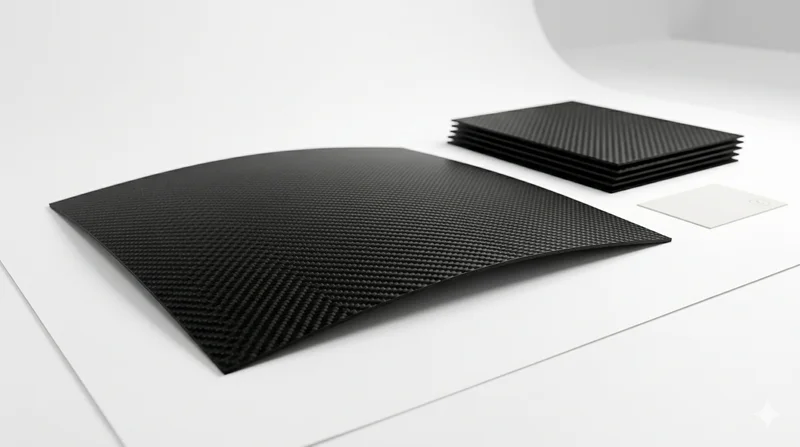
A carbon fiber plate for 3D printer builds is a popular upgrade for makers and machine builders who want a stiffer, lighter, and more dimensionally stable platform. From printer beds and gantry plates to structural brackets and enclosure panels, carbon fiber can improve performance when it is used i
Introduction
A carbon fiber plate for 3D printer builds is a popular upgrade for makers and machine builders who want a stiffer, lighter, and more dimensionally stable platform. From printer beds and gantry plates to structural brackets and enclosure panels, carbon fiber can improve performance when it is used in the right place. But it is not magic. A poorly chosen plate can warp the project budget, create fastening problems, or add unnecessary complexity. The real question is not "is carbon fiber good?" but "where does a carbon fiber plate add measurable value in a 3D printer?"
This guide covers the practical side: which printer parts benefit most, how to choose thickness and weave, how to handle drilling and mounting, and what to check when sourcing a plate. Whether you are upgrading a desktop machine or building a custom large-format printer, the right specification makes the difference between a clean upgrade and a frustrating retrofit.
Where Carbon Fiber Plate Helps in 3D Printers
Not every 3D printer part should be carbon fiber. The best candidates are parts where stiffness, low mass, or flatness matter more than low cost.
| Printer Part | Benefit of Carbon Fiber Plate | Typical Thickness | Caution |
|---|---|---|---|
| Gantry/cross member plate | High stiffness, low moving mass | 3-6 mm | Check vibration damping needs |
| Carriage mounting plate | Reduced inertia, stable mounting | 2-4 mm | Ensure accurate hole pattern |
| Printer base panel | Rigid foundation, corrosion resistant | 3-5 mm | Flatness and support spacing matter |
| Electronics/back panel | Lightweight, clean appearance | 1.5-3 mm | Not needed for low-cost builds |
| Build surface support plate | Flat and stiff support layer | 3-5 mm | Consider heat transfer and insulation |
A carbon fiber plate for 3D printer gantries can reduce moving mass, which may allow higher acceleration with less ringing. For static frames and panels, it offers stiffness and a clean look, but aluminum may still be the more economical choice.
Choosing Thickness, Weave and Finish
The specification should match the mechanical job, not just the appearance. A plate that looks great on a desk may still flex too much on a printer gantry.
- Thickness: For light panels, 1.5-2 mm can work. For carriage or gantry plates, 3-4 mm is common. For base plates or larger spans, 4-6 mm may be needed depending on support spacing.
- Weave: Twill weave is popular for visible parts. Plain weave can look cleaner in technical applications. For structural performance, layup quality and thickness matter more than weave pattern alone.
- Finish: Matte finishes hide fingerprints and reduce glare. Gloss looks premium but shows scratches. For machine parts, matte or satin is often more practical.
- Flatness: If the plate supports a build surface or linear rail mounts, flatness is critical. Ask for flatness tolerance and inspect on arrival.
- Hole machining: CNC-drilled holes save time and reduce delamination risk. Provide a DXF or drawing with tolerances.
- Material type: Full carbon fiber plate is stiff and light. Carbon fiber faced sandwich panels are lighter but not ideal for threaded holes or edge loads.
For most 3D printer upgrades, a solid carbon fiber plate in the 3-4 mm range is a sensible starting point. Thinner plates may flex; thicker plates add cost and weight without much gain.
Mounting, Drilling and Heat Considerations
Carbon fiber behaves differently from aluminum. Treating it like metal causes most DIY failures.
| Issue | Best Practice | Why It Matters |
|---|---|---|
| Drilling holes | Use sharp carbide or diamond tools, support backside | Reduces fraying and delamination |
| Fastening | Use washers, avoid over-torque | Prevents crushing and crack propagation |
| Tapping threads | Avoid direct tapping in thin plates | Use inserts, nuts, or backing plates |
| Heat near bed | Check resin temperature limits | Epoxy softens above its glass transition |
| Electrical isolation | Insulate electronics if needed | Carbon fiber can be electrically conductive |
If the plate is near a heated bed, confirm the continuous service temperature of the resin system. Standard epoxy plates may not be ideal directly under high-temperature build surfaces. In that case, use thermal insulation, an aluminum heat spreader, or a high-temperature resin system.
Also consider conductivity. Carbon fiber can conduct electricity through fibers and dust. Keep exposed wiring, PCB standoffs, and connectors properly isolated.
Sourcing Checklist for a Carbon Fiber Plate for 3D Printer
Small plates are easy to buy online, but quality varies widely. For a custom printer build or a product prototype, sourcing discipline saves time.
- Confirm flatness: Especially for bed supports and gantry mounts. A visually flat plate can still be unsuitable for precision mounting.
- Specify cut tolerance: Request CNC cut dimensions and hole position tolerance if holes are included.
- Ask about edge sealing: Sealed or chamfered edges reduce splinters and improve handling.
- Check surface grade: Cosmetic grade for visible panels, structural grade for hidden supports.
- Request material data: Thickness, layup, resin type, and temperature limit should be clear.
- Package properly: Plates should ship with protective film to avoid scratches during transit.
If you are building multiple machines, consistency matters more than a one-off bargain. A reliable supplier should be able to repeat the same thickness, finish, and cut quality across batches.
Frequently Asked Questions
Is a carbon fiber plate for 3D printer beds always better than aluminum?
No. Carbon fiber is stiff and lightweight, but aluminum often handles heat better and is easier to tap and machine. For a heated bed support, aluminum or a properly insulated stack may be more practical. Carbon fiber works best where low mass and stiffness are the main goals, such as gantry plates or structural panels.
Can I drill and cut a carbon fiber plate at home?
Yes, but use proper tools and safety precautions. Carbon fiber dust is irritating and should not be inhaled. Use sharp carbide tools, slow feed, masking tape, backside support, and dust extraction or a vacuum. Wear gloves, eye protection, and a respirator. For precise hole patterns, CNC machining is usually worth it.
What thickness carbon fiber plate should I use for a 3D printer gantry?
Many DIY gantry plates use 3-4 mm solid carbon fiber, but the right thickness depends on span, load, and mounting design. Short spans with good support may work with 3 mm, while wider unsupported spans may need 5 mm or a different structure. If possible, check deflection with a simple stiffness calculation before ordering.
Conclusion
A carbon fiber plate for 3D printer upgrades makes sense when it solves a real problem: reducing moving mass, increasing stiffness, or improving stability. Choose thickness based on span and load, plan mounting around carbon fiber's limits, and pay attention to heat and conductivity near electronics or heated beds. With the right spec, carbon fiber can make a printer feel tighter and more refined. For custom cut plates, thickness options, and material advice, visit our carbon fiber products or contact our team for a quote.
Part of topic
Related Articles
- Carbon Fiber Rod for Construction Reinforcement: Design, Specs and Sourcing | YongXian
- Carbon Fiber Plate for Signage: Design, Specs and Sourcing | YongXian
- Carbon Fiber Sheet for Furniture: Design, Specs and Sourcing | YongXian
- Carbon Fiber Plate for Medical Device: Design, Specs and Sourcing | YongXian
- Carbon Fiber Sheet for Sporting Goods: Design, Specs and Sourcing | YongXian
- Carbon Fiber Sheet for Automotive Parts: Design, Specs and Sourcing | YongXian
Interested in Our Products?
Contact our team for competitive pricing and technical specifications.
Get a QuoteRelated Products
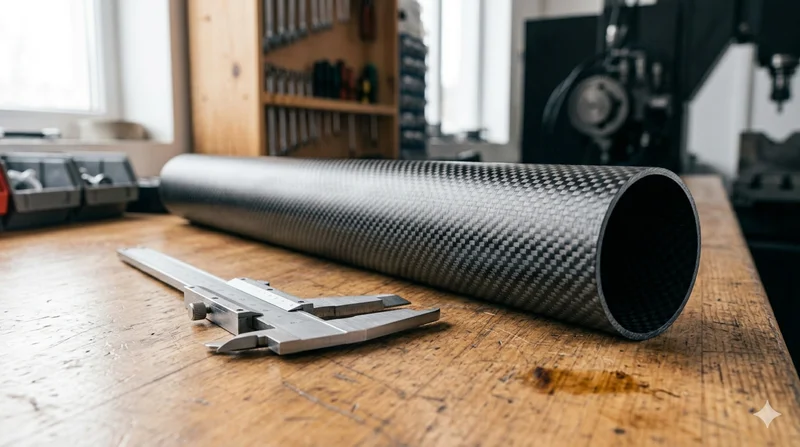
Round Carbon Fiber Tube — 3K Plain Weave T700
Standard round carbon fiber tube manufactured from Toray T700 grade fiber with 3K plain weave. Offers balanced strength and stiffness for general industrial applications including robotics, automation, sports equipment, and aerospace structures.
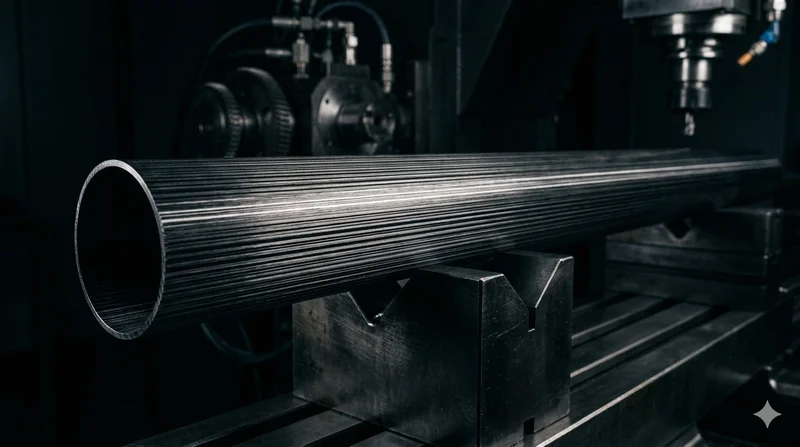
Round Carbon Fiber Tube — UD Unidirectional T700
Unidirectional (UD) round tube with all fibers aligned axially for maximum longitudinal stiffness. Ideal for applications requiring high bending rigidity with minimal weight, such as shafts, struts, and structural reinforcements.
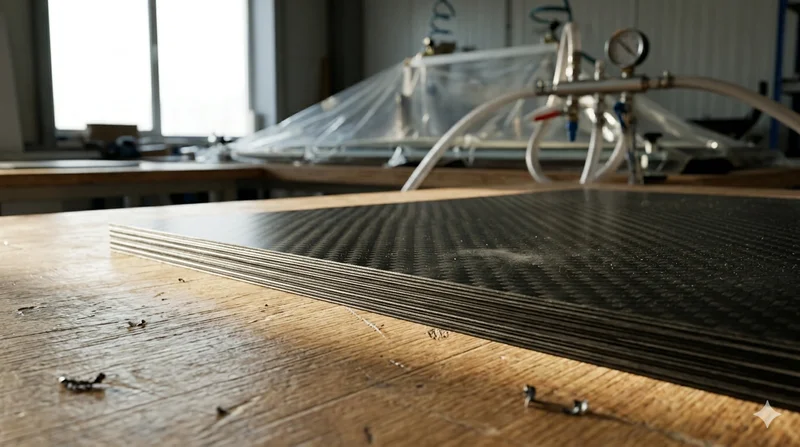
Carbon Fiber Plate — 3K Twill T700 3.0mm
Medium-thickness 3.0mm carbon fiber plate offering significantly higher load capacity while maintaining attractive 3K twill finish. Suitable for structural brackets, reinforcement plates, and load-bearing panels.
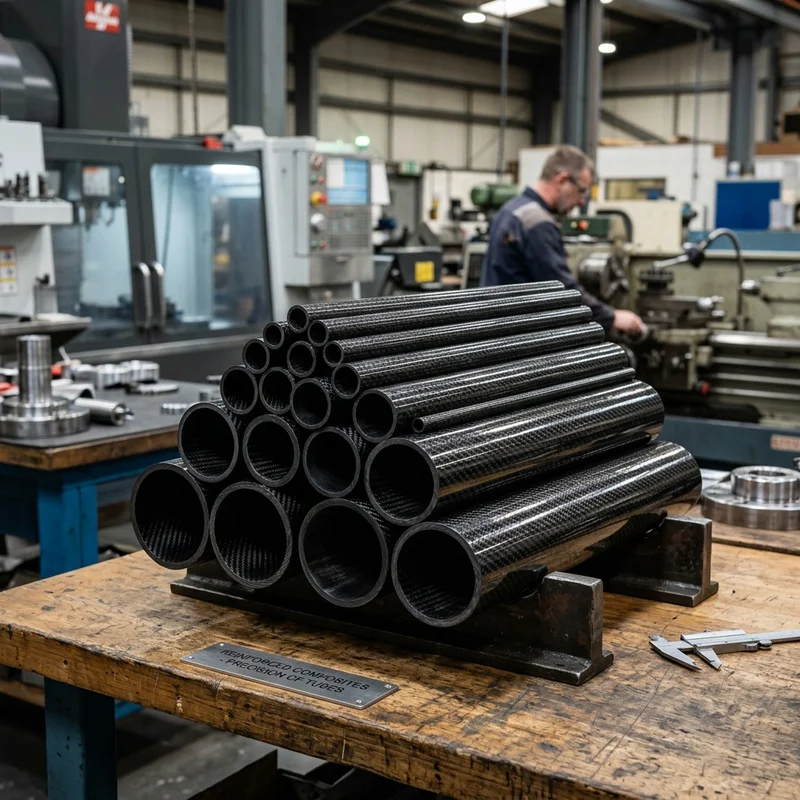
Round Carbon Fiber Tube — 3K Twill
Lightweight and ultra-stiff round tubes ideal for drone frames, robotics, and structural applications.
Carbon Fiber Plate — 3K Twill T700 1.5mm
Thin 1.5mm carbon fiber plate with 3K twill weave surface. Lightweight and stiff, commonly used for covers, panels, drone bodies, and applications requiring a premium aesthetic appearance.