A carbon fiber sheet for sporting goods is usually chosen when a product needs high stiffness, low weight and a premium surface without adding bulky metal structure. From paddle faces and bike accessories to archery components, hockey reinforcements and protective gear inserts, carbon fiber sheets c
Introduction
A carbon fiber sheet for sporting goods is usually chosen when a product needs high stiffness, low weight and a premium surface without adding bulky metal structure. From paddle faces and bike accessories to archery components, hockey reinforcements and protective gear inserts, carbon fiber sheets can deliver a crisp mechanical feel and consistent performance when the layup matches the load. This guide explains how to select the right carbon fiber sheet material, what specifications to put in a drawing, and how to source parts that perform the same from prototype to production.
The key is not just buying "carbon fiber." Sporting goods see repeated impact, sweat, UV exposure, abrasion and fast handling. A sheet that looks good on a sample table can fail after field use if the resin, fiber orientation, edge sealing or finish is wrong. Good sourcing starts with the use case, not the cosmetic weave.
Common carbon fiber sheet uses in sporting goods
Different sports load a sheet in different ways. A paddle needs stiffness and vibration control, while a protective insert may need impact resistance and controlled flex. The table below maps common carbon fiber sheet uses to practical design choices.
| Sporting application | Typical sheet range | Useful layup direction | What to prioritize |
|---|---|---|---|
| Paddle or racket face | 0.5-2.0 mm | 0/90 or twill with local reinforcement | Stiffness, feel, surface flatness |
| Bike accessory plate | 1.0-3.0 mm | Quasi-isotropic for multi-direction loads | Drilling quality, fatigue, weight |
| Archery or shooting accessory | 1.5-4.0 mm | 0/90 or UD hybrid | Dimensional stability, stiffness |
| Protective gear insert | 1.0-2.5 mm | Multi-axial layup | Impact response, edge safety |
| Fitness equipment panel | 2.0-5.0 mm | Quasi-isotropic | Rigidity, cosmetic finish, cost |
These ranges are starting points. The right carbon fiber sheet material depends on whether the part is mainly bent, twisted, hit, or used as a cosmetic structural cover. For visible parts, 3K twill is common because it balances appearance and handling. For pure stiffness, unidirectional layers can be efficient, but they need a balanced stack to avoid warping.
Design specs that matter before you order
A drawing for carbon fiber sheets should be more specific than thickness and length. The manufacturing process determines whether the sheet stays flat, drills cleanly and keeps its finish after machining.
- Thickness and tolerance: state nominal thickness and acceptable tolerance. Thin sporting goods panels may need tighter control for fit and feel.
- Layup schedule: specify 0/90, quasi-isotropic, UD hybrid, or a custom stack. Do not leave orientation to chance if performance matters.
- Resin system: epoxy is common for high-performance sheets. Ask about heat resistance, UV stability and surface hardness.
- Finish: gloss, matte, peel ply, or painted. Matte surfaces can hide wear, while gloss highlights weave but shows scratches.
- Machining allowance: if parts will be CNC cut, confirm edge sealing, hole quality and dust control requirements.
For equipment that touches skin or clothing, edge finishing is not a cosmetic detail. Carbon fiber edges can be sharp and may fray if cut poorly. Specify chamfers, rounded edges, or sealed edges where users handle the product.
Choosing the right carbon fiber sheet material
The best material is the one that fits the load, environment and budget. Full carbon fiber plate constructions give high stiffness and low weight, but they are not always necessary. Some sporting goods use a carbon skin over foam, wood or aluminum core to control cost and impact behavior.
| Option | Strengths | Limits | Best fit |
|---|---|---|---|
| Solid carbon fiber sheet | High stiffness, premium look, stable geometry | Higher cost, brittle edges if poorly finished | Rigid plates, mounts, covers |
| Carbon fiber sandwich panel | Very high stiffness-to-weight | More complex edge sealing and machining | Lightweight panels needing rigidity |
| Carbon over core | Cost control, impact tuning | More process steps, bond quality critical | Paddles, boards, protective structures |
| Aluminum or fiberglass alternative | Lower cost, tough impact behavior | Heavier or less stiff for same thickness | Price-sensitive or impact-heavy parts |
When comparing options, test the finished part, not only the flat coupon. A thin carbon fiber sheet for sporting goods may pass a bend test but fail at drilled holes or bonded inserts. Prototype with the actual hardware, fasteners and edge treatment you plan to use.
Sourcing and quality checks for production
Once the design is stable, sourcing becomes a process control problem. Ask suppliers how they control fiber orientation, cure cycle, thickness and surface quality. Consistency matters because sporting goods customers notice feel and appearance immediately.
- Request sample panels: check flatness, weave appearance, thickness and edge quality before placing a production order.
- Confirm machining capability: CNC cutting, countersinking and slotting should be tested on your actual pattern.
- Check packaging: sheets should be separated to avoid scratch damage during transport.
- Define acceptance criteria: include cosmetic zones, allowable pinholes, and edge defect limits in the purchase document.
- Plan batch traceability: keep lot records so field issues can be traced back to material and process.
If you are scaling from prototype to volume, ask for a first article inspection report. It should cover dimensions, thickness, hole positions and visual finish. That small step often prevents expensive rework after parts reach assembly.
Frequently Asked Questions
What thickness carbon fiber sheet is best for sporting goods?
There is no single best thickness. Thin sheets around 0.5 to 1.5 mm suit covers, faces and lightweight inserts, while 2.0 to 4.0 mm is common for rigid mounts and structural plates. The right choice depends on load direction, span, hole pattern and whether the sheet is supported by a core or frame.
Are carbon fiber sheets strong enough for impact sports?
They can be, but design matters. Carbon fiber is stiff and strong in tension, yet edges and localized impacts can cause cracking or delamination if the layup is too thin or poorly supported. For impact sports, use a suitable layup, protect edges, and test the complete part under realistic impact conditions.
Can carbon fiber sheets be cut and drilled for custom sporting goods parts?
Yes. Carbon fiber sheets are commonly CNC routed, drilled and milled. Use sharp abrasive or diamond tooling, proper dust extraction, and backing support to reduce fraying. For production parts, confirm hole tolerances, countersink angles and edge sealing so the finished component fits and lasts.
Conclusion
Choosing a carbon fiber sheet for sporting goods is a design decision as much as a purchasing decision. Start from the load case, select the right carbon fiber sheet material and layup, then lock down thickness, finish and machining details before ordering volume. If you need support selecting or customizing carbon fiber sheets for your next product, explore our carbon fiber products or contact YongXian to discuss specifications, samples and production supply.
Part of topic
Related Articles
- Carbon Fiber Sheet for Furniture: Design, Specs and Sourcing | YongXian
- Carbon Fiber Plate for Medical Device: Design, Specs and Sourcing | YongXian
- Carbon Fiber Sheet for Automotive Parts: Design, Specs and Sourcing | YongXian
- Carbon Fiber Rod for Fishing Rod Blank: Design, Specs and Sourcing | YongXian
- Carbon Fiber Plate for Robotics: Design, Specs and Sourcing | YongXian
- Carbon Fiber Tube for Bicycle Frame: Tube Sets, Joints and Sourcing | YongXian
Interested in Our Products?
Contact our team for competitive pricing and technical specifications.
Get a QuoteRelated Products

Round Carbon Fiber Tube — 3K Plain Weave T700
Standard round carbon fiber tube manufactured from Toray T700 grade fiber with 3K plain weave. Offers balanced strength and stiffness for general industrial applications including robotics, automation, sports equipment, and aerospace structures.
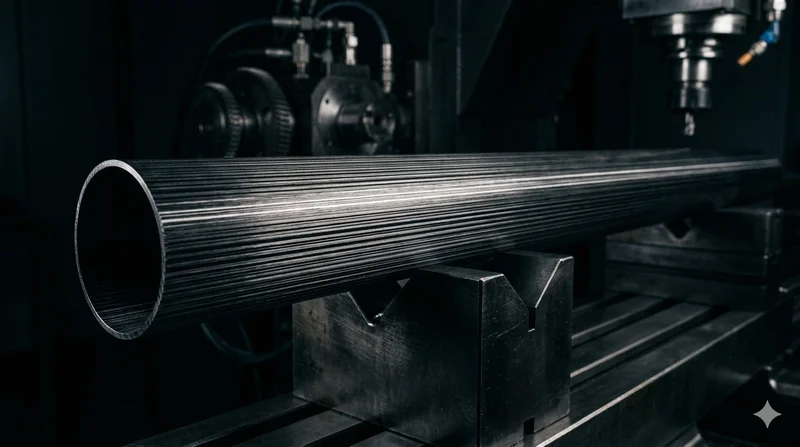
Round Carbon Fiber Tube — UD Unidirectional T700
Unidirectional (UD) round tube with all fibers aligned axially for maximum longitudinal stiffness. Ideal for applications requiring high bending rigidity with minimal weight, such as shafts, struts, and structural reinforcements.
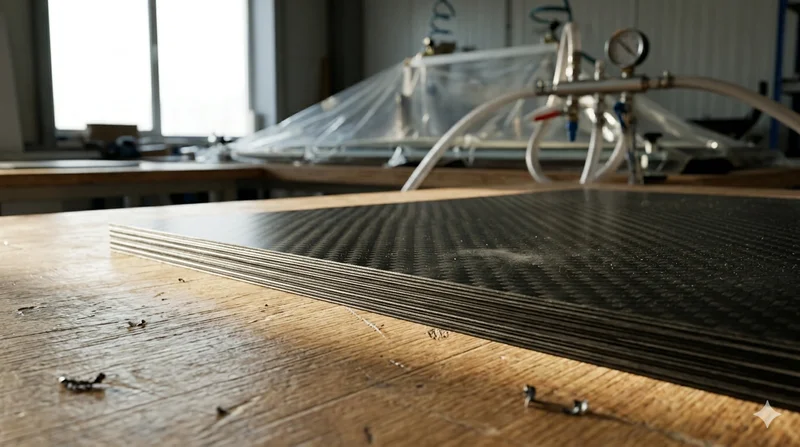
Carbon Fiber Plate — 3K Twill T700 3.0mm
Medium-thickness 3.0mm carbon fiber plate offering significantly higher load capacity while maintaining attractive 3K twill finish. Suitable for structural brackets, reinforcement plates, and load-bearing panels.

Round Carbon Fiber Tube — 3K Twill
Lightweight and ultra-stiff round tubes ideal for drone frames, robotics, and structural applications.
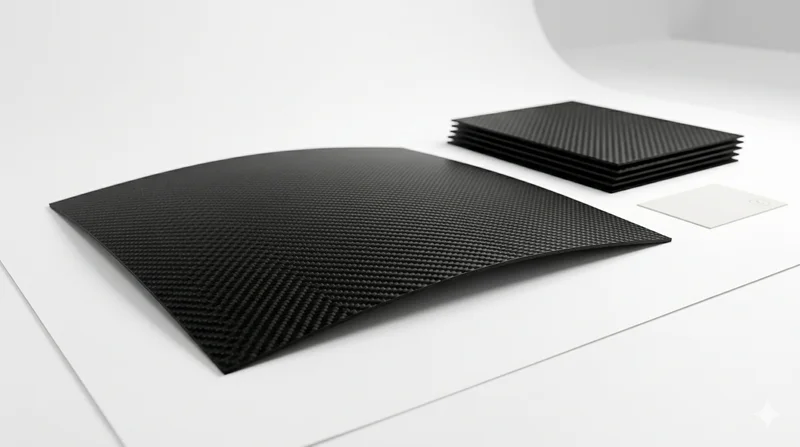
Carbon Fiber Plate — 3K Twill T700 1.5mm
Thin 1.5mm carbon fiber plate with 3K twill weave surface. Lightweight and stiff, commonly used for covers, panels, drone bodies, and applications requiring a premium aesthetic appearance.