
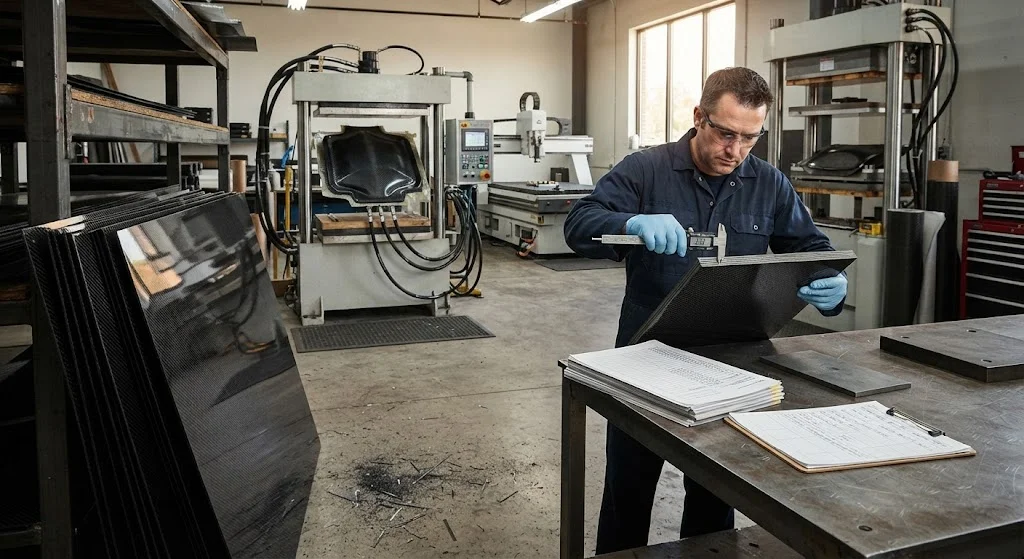
Finding dependable carbon fiber sheets suppliers is a recurring challenge for engineering teams that need flat composite panels in controlled thicknesses and consistent quality. A carbon fiber sheet is a rigid laminate produced by stacking woven fabric or unidirectional plies, impregnating them with
Introduction
Finding dependable carbon fiber sheets suppliers is a recurring challenge for engineering teams that need flat composite panels in controlled thicknesses and consistent quality. A carbon fiber sheet is a rigid laminate produced by stacking woven fabric or unidirectional plies, impregnating them with epoxy, and curing them under heat and pressure. Unlike fabric rolls, a sheet is a finished semi-finished product with defined thickness, flatness and surface finish, which makes it the preferred starting point for CNC machining, tooling surfaces, enclosures and structural stiffeners. The difficulty is that suppliers differ enormously in how they control fiber volume fraction, void content, thickness tolerance and surface quality, and those differences show up directly in machining behavior and long-term dimensional stability. This guide walks through the sheet types you will encounter, the specification parameters that matter, the quality evidence to request, and the procurement structure that produces comparable quotes from different carbon fiber sheets suppliers.
What Carbon Fiber Sheets Suppliers Produce
The first step in comparing carbon fiber sheets suppliers is understanding which product format fits your application. Most suppliers offer four formats, and each has a different cost and performance profile:
- Plain weave sheets: balanced 0/90 fabric construction with a tight checkerboard pattern, offering good stability for general machining and visible-surface parts. Available from 0.5 mm to 6 mm in finished thickness.
- Twill weave sheets: 2x2 twill fabric that drapes and machines cleanly, the standard choice for cosmetic automotive and consumer product panels because the diagonal pattern hides surface imperfections.
- Unidirectional sheets: all fibers aligned in one direction, delivering maximum stiffness along the fiber axis but requiring careful orientation planning in the part design.
- Sandwich panels: carbon fiber face skins bonded to a foam or honeycomb core, giving high bending stiffness at low weight for drone decks, machine guards and enclosures.
Beyond format, suppliers distinguish themselves by the fiber grade they stock. A supplier that carries both T300-grade sheets for cost-sensitive tooling and T700-grade sheets for structural parts can serve a wider range of projects than one locked into a single material.
Specification Parameters That Separate Carbon Fiber Sheets Suppliers
When you receive quotes from different carbon fiber sheets suppliers, the price difference is often explained by specification parameters that are easy to overlook. The table below shows the parameters that matter and typical values across quality tiers.
| Parameter | Standard grade | Engineering grade |
|---|---|---|
| Fiber grade | T300 (3K or 6K tow) | T700 (12K tow) |
| Fiber volume fraction | 55-60% | 58-65% |
| Thickness tolerance | ±0.2 mm | ±0.05-0.1 mm |
| Surface finish | Peel-ply or matte | High-gloss tooling finish |
| Void content | 1-3% | Below 1% |
| Typical tensile modulus | 70-100 GPa | 120-140 GPa |
Three parameters deserve special attention. Fiber volume fraction determines how much of the sheet is load-bearing fiber rather than resin; a sheet at 55 percent volume fraction is noticeably softer and heavier than one at 62 percent. Thickness tolerance matters because machined parts inherit the sheet's thickness variation. And void content, which is invisible until you cut the sheet, drives edge quality and the risk of delamination during machining. The resin system is the fourth parameter worth naming explicitly. Standard epoxy cures at room temperature and suits most machining and tooling work, while toughened systems improve impact resistance and flame-retardant variants meet enclosure and transport regulations. Suppliers that document the exact resin chemistry, rather than labeling it generically as "epoxy," make it possible to predict out-time, service temperature and chemical resistance before you commit to a purchase.
Quality Evidence to Request from a Carbon Fiber Sheet Supplier
Reputable carbon fiber sheets suppliers can document their process, and the depth of that documentation is a reliable signal of manufacturing discipline. This applies equally whether you are dealing with a CFRP sheet supplier that cuts stock to order, a carbon fiber plate dealer trading thick laminates, or a composite sheet manufacturer running continuous production — the paperwork is the proof. Before placing a production order, request the following evidence:
- Material certificate: fiber grade, lot number, resin system and cure cycle records for each production batch.
- Physical test data: density, fiber volume fraction, and tensile or flexural test results measured on the actual sheet grade you are buying.
- Thickness inspection records: measurement points across the sheet showing that the tolerance claim is backed by data, not just a datasheet.
- Process documentation: evidence of vacuum bagging or press consolidation parameters, which determine porosity and surface quality.
A practical qualification step is to order a sample sheet and machine a test coupon before committing to a production quantity. The way a sheet machines — edge chipping, dust behavior, and fiber breakout — tells you more about its quality than any brochure, and it costs a fraction of a bad production batch.
Procurement Structure: Getting Comparable Quotes
Comparing carbon fiber sheets suppliers fairly requires a written specification that removes ambiguity. A vague inquiry such as "carbon fiber plate, 3 mm thick" produces quotes for very different materials. A disciplined inquiry includes sheet dimensions and thickness tolerance, weave style and visible surface requirement, fiber grade, resin system (standard epoxy versus flame-retardant), edge finish, and the mechanical test data required. Ask each supplier to quote on the same format and to state their lead time for the actual sheet size, because stock sizes ship in days while custom dimensions may take weeks.
Volume pricing follows a predictable pattern across suppliers. Most carbon fiber sheets suppliers price in tiers, with discounts of 10-25 percent as quantity moves from a single sheet to a pallet or annual contract, because setup, material waste and quality inspection are amortized over more units. Shipping is a hidden cost that deserves scrutiny: sheets are rigid and bulky, so freight for large formats can approach the material cost on international orders. Factoring delivered cost rather than unit price is the difference between a good deal and an expensive one.
Frequently Asked Questions
What is the difference between carbon fiber sheet and carbon fiber plate?
The terms are used loosely, but in practice a sheet is a thin laminate up to about 3 mm, often sold in flexible or semi-rigid form, while a plate is thicker (3-25 mm) and fully rigid, built from more plies and cured to a thicker cross-section. Both are produced by the same consolidation process, but plate suppliers need higher press capacity and longer cure cycles, which is why thick plate costs more per kilogram than thin sheet. Specify the thickness you need and let the supplier confirm which format applies.
Can I machine carbon fiber sheets with standard CNC tools?
Yes, but the tooling matters. Solid carbide end mills with diamond coating are the standard choice, and climb milling with light radial engagement reduces edge fraying. The sheet should be supported on a vacuum table or sacrificial backing plate to prevent vibration, and dust extraction is mandatory because carbon dust is conductive and can damage electronics. Request machining guidance from your supplier, because sheets with high fiber volume fraction and low void content machine measurably better than cheaper grades.
How do I verify the fiber volume fraction claimed by a supplier?
Matrix burn-off is the standard method: a small coupon is weighed, the resin is burned away in a furnace, and the remaining fiber is weighed to calculate the fiber volume fraction. Acid digestion is an alternative for resins that do not burn cleanly. If a supplier will not provide test coupons or third-party test results for volume fraction, treat the datasheet value as a nominal figure. Consistent values across multiple lots indicate a stable process; scattered values suggest batch-to-batch variation that will complicate your own quality control.
Conclusion
Choosing between carbon fiber sheets suppliers comes down to specification discipline and evidence. The material grade, fiber volume fraction, thickness tolerance and void content determine whether your parts machine cleanly and hold their dimensions, and those parameters are only comparable when every supplier quotes against the same written specification. Order sample sheets, machine test coupons, and verify the quality documentation before scaling to production volume. The cost of qualification is small relative to the cost of a rejected batch.
Browse our carbon fiber sheets, fabrics and prepregs for your next project, or contact our engineering team to discuss specification support, sample qualification and volume supply for your application.
Part of topic
Related Articles
- Custom Carbon Fiber Assemblies: Multi-Component Integration and Quality Control
- Custom Carbon Fiber Fabrication: One-Stop Service from Design to Delivery
- Carbon Fiber Near Me Suppliers: Global Local Supplier Directory for Quick Procurement
- Custom Carbon Fiber Shop Services: From Prototype to Mass Production Workflow
- Carbon Fiber High-Speed Train Brake Discs: Thermal Stability and Wear Resistance
- Carbon Fiber Composite Rebar for Corrosive Environments: Marine and Chemical Plant Applications
Interested in Our Products?
Contact our team for competitive pricing and technical specifications.
Get a QuoteRelated Products
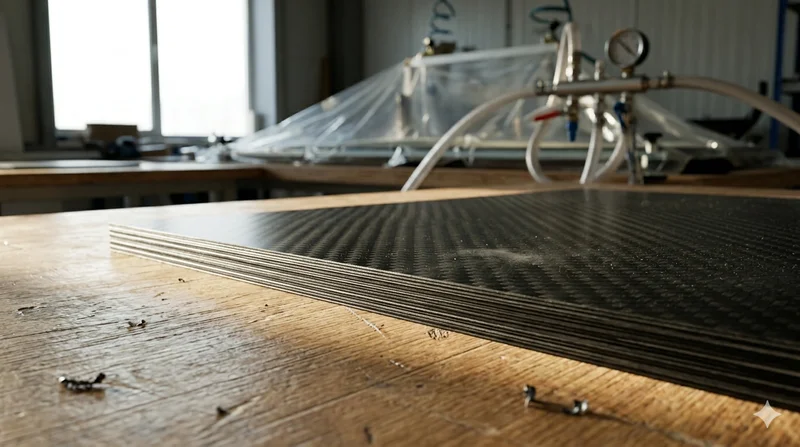
Carbon Fiber Plate — 3K Twill T700 3.0mm
Medium-thickness 3.0mm carbon fiber plate offering significantly higher load capacity while maintaining attractive 3K twill finish. Suitable for structural brackets, reinforcement plates, and load-bearing panels.
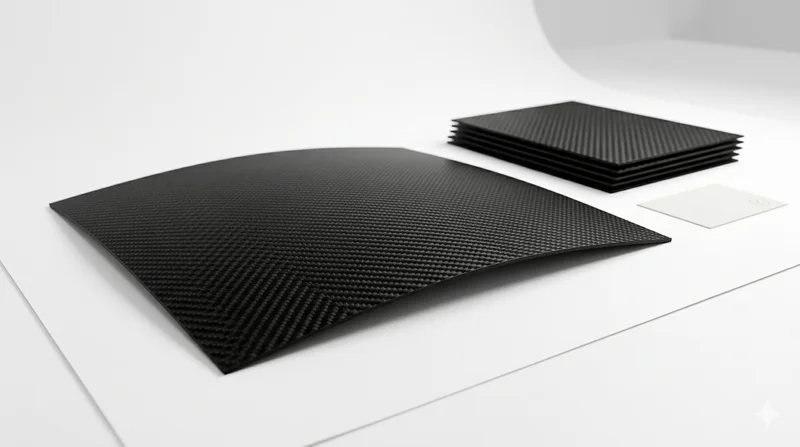
Carbon Fiber Plate — 3K Twill T700 1.5mm
Thin 1.5mm carbon fiber plate with 3K twill weave surface. Lightweight and stiff, commonly used for covers, panels, drone bodies, and applications requiring a premium aesthetic appearance.
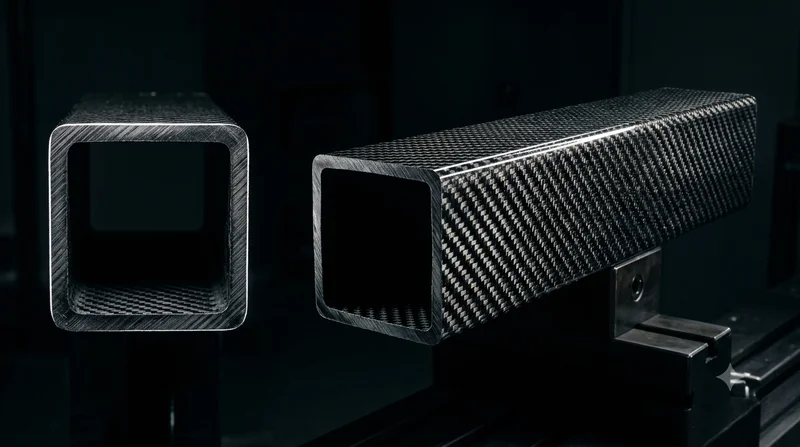
Square Carbon Fiber Tube — 3K Twill T700
Square cross-section carbon fiber tube manufactured with 3K twill weave for torsional strength. Preferred for structural frames, trusses, and support columns where rectangular geometry offers design flexibility.
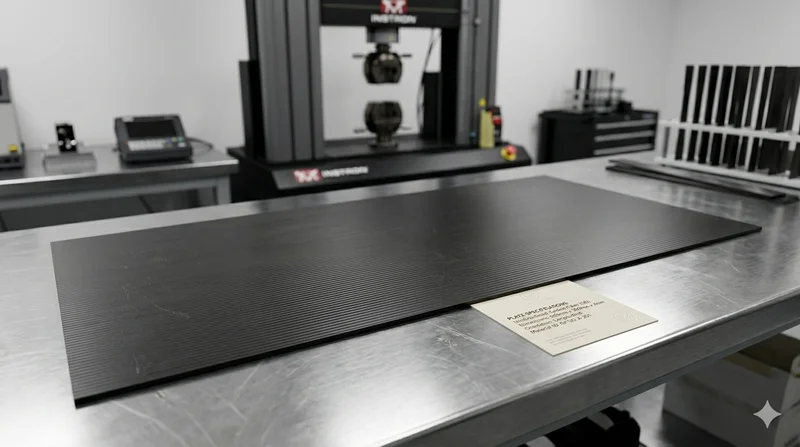
Carbon Fiber Plate — UD Unidirectional T700
Unidirectional carbon fiber plate with all fibers oriented in a single direction for maximum strength along the fiber axis. Essential for structural reinforcements, splints, and applications where load direction is predictable.
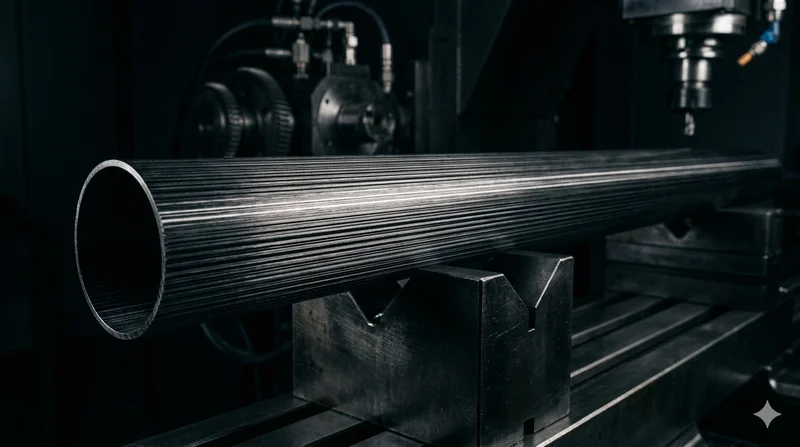
Round Carbon Fiber Tube — UD Unidirectional T700
Unidirectional (UD) round tube with all fibers aligned axially for maximum longitudinal stiffness. Ideal for applications requiring high bending rigidity with minimal weight, such as shafts, struts, and structural reinforcements.