
Carbon fiber sheets for cars sit at the practical end of composite engineering: flat laminated panels that a workshop can cut, bond and bolt into a vehicle without owning an autoclave the size of a garage. The same material family appears as dashboard trim in a sports car, as a roof skin on an elect
Introduction
Carbon fiber sheets for cars sit at the practical end of composite engineering: flat laminated panels that a workshop can cut, bond and bolt into a vehicle without owning an autoclave the size of a garage. The same material family appears as dashboard trim in a sports car, as a roof skin on an electric sedan and as a battery-tray floor that has to survive a crash pulse. Buyers specify sheets by thickness, weave, resin system and fiber volume fraction rather than by brand, because those four numbers decide whether a panel is cosmetic or load-bearing.
This guide separates the three automotive use cases — interior, exterior and structural — and shows where carbon fiber sheet molding compound wins on cost and where a prepreg laminate is still the only sensible answer.
What Carbon Fiber Sheets for Cars Are Made Of
Prepreg laminate sheet is woven or unidirectional carbon fiber pre-impregnated with epoxy and cured under pressure at roughly 120–130 °C. Fiber volume is typically 55–60 %, which gives the highest stiffness per kilogram and the cleanest twill appearance under clear coat, but the sheet arrives flat rather than near-net, so machining waste becomes a real cost line.
Sheet molding compound (SMC) is chopped carbon fiber, usually 12–25 mm long, dispersed in a vinyl ester or epoxy paste and compression molded at 3–10 MPa. Carbon fiber sheet molding compound is the volume automotive answer: 2–5 minute cycles, molded-in ribs and bosses, and class-A surfaces when the tool is right. Fiber volume is lower at 30–45 % and the property set is more isotropic than a laminate, which is often exactly what a bracket or a floor section needs.
Thermoplastic and sandwich blanks use polypropylene or PA6 matrices that press-form in under a minute and join by welding instead of adhesive. Sandwich sheets place a foam or balsa core between two thin carbon skins and are the cheapest route to bending stiffness whenever thickness is available.
| Sheet type | Fiber volume | Thickness | Cycle time | Typical automotive use | Indicative cost |
|---|---|---|---|---|---|
| Prepreg laminate, 3K twill | 55–60 % | 0.5–3 mm | 60–120 min cure | Interior trim, visible panels | USD 45–90 / m² |
| Carbon fiber SMC | 30–45 % | 1.5–5 mm | 2–5 min | Structural floors, brackets | USD 18–35 / kg |
| CFRTP flat blank | 40–50 % | 1–4 mm | 30–90 s | High-volume brackets, shields | USD 25–45 / kg |
| Carbon sandwich sheet | Skin dependent | 5–25 mm | Press or vacuum | Load floors, parcel shelves | USD 90–200 / m² |
Those figures are indicative material ranges at small to medium volume, not quotations; tooling, finishing and freight sit outside them.
Interior Uses of Carbon Fiber Sheets for Cars
Interior carbon is chosen for mass, touch and appearance. A 1 mm twill sheet bonded to an ABS carrier can replace a 2.5 mm painted plastic part at roughly 40 % of the mass, with a surface depth that printed film cannot imitate.
- Dashboard and console trim: 0.5–1.2 mm twill sheet bonded to a molded carrier and waterjet trimmed to a visible edge.
- Door cards and armrests: 1.0–1.5 mm sheet, often with foam backing for acoustic damping.
- Seat shells and backrests: 1.5–3.0 mm laminate or SMC, validated as a seat structure rather than as trim.
- Steering wheel and paddle bezels: small SMC parts where geometry matters more than panel size.
Two cabin-specific constraints decide the resin. The first is flame spread: interior materials face a horizontal burn requirement in most markets, for example FMVSS 302 in the United States, and an unmodified epoxy laminate does not pass on its own. Ask the converter for burn data on the exact resin system, never on the fiber alone. The second is thermal feel — carbon conducts heat, so a panel next to an air vent feels cold in winter and needs a radiused edge.
Exterior Uses of Carbon Fiber Sheets for Cars
Outside the cabin the priorities shift to UV stability, stone impact and paint compatibility. A 1.5–2.0 mm laminate roof skin or hood takes a 120 °C paint oven and a clear coat, while a 2–3 mm SMC panel tolerates low-speed impact better than a thin laminate because chopped fiber redistributes load around the strike point.
Typical parts are roof skins, hood and decklid outer panels, fender vents, mirror caps, splitters, diffusers and underbody flat panels. The rule that saves the most weight is to keep the carbon in tension or shear and put compression into a core: a 12 mm sandwich floor is often stiffer in bending than a 4 mm solid laminate at half the mass.
Structural Uses: Floors, Battery Trays and Crash Loads
Structural sheet parts are stiffness-driven, not strength-driven. Bending stiffness rises with the cube of thickness, so doubling a floor from 2 mm to 4 mm raises stiffness roughly eightfold for twice the material. That is why battery enclosure floors, parcel shelves and seat pans are usually sandwich constructions with thin carbon skins over a core, while brackets and suspension-adjacent plates stay solid.
- Load path: the sheet must bond or bolt into the body-in-white without creating a stress concentration at the joint.
- Failure mode: a laminate fails progressively in delamination and matrix cracking, while SMC releases energy abruptly and needs a larger safety factor in crash roles.
- Galvanic and thermal mismatch: carbon is cathodic to aluminium and steel, so metal fasteners need isolation and differential expansion must be absorbed across the panel length.
Carbon Fiber Sheet Cutting Methods
Secondary operations decide part cost as much as the sheet price does. Cutting is abrasive, dusty and unforgiving of poor support: unsupported edges delaminate, and dry dust conducts well enough to damage electronics elsewhere in the same building.
| Method | Tolerance | Feed rate, 2 mm CFRP | Edge quality | Practical note |
|---|---|---|---|---|
| Abrasive waterjet | ±0.1 mm | 300–800 mm/min | Good, slight taper | No heat affected zone; garnet sludge handling |
| CNC router, diamond tooling | ±0.15 mm | 1000–3000 mm/min | Good with backing board | Extraction mandatory; tool life in metres |
| Fiber or UV laser | ±0.05 mm | Fast below 1.5 mm | Charred matrix at kerf | Sanded kerf needed before bonding |
| Die cutting and blanking | ±0.3 mm | Seconds per part | Fair | Economic above roughly 5,000 parts per year |
Three rules keep quality predictable: clamp or vacuum the sheet on both sides of the cut line, always cut onto a sacrificial backing board, and clean the edge before bonding, because a contaminated edge is the most common cause of a joint that fails early.
Pricing follows the same logic. A 2 mm twill laminate sheet typically lands between USD 55 and 95 per square metre in small volume and between USD 35 and 55 per square metre at pallet quantity, with waterjet cutting adding a few dollars per part and hard tooling adding thousands. Treat every figure as an indicative range for planning, not as a quotation.
Frequently Asked Questions
Can carbon fiber sheets for cars carry structural loads?
Yes, when the laminate is thick enough or used as a sandwich skin. A 12 mm sandwich floor routinely outperforms a 4 mm solid panel at half the mass. Structural use still requires a defined load path into the body and isolation at every metal fastener.
Is carbon fiber sheet molding compound repairable?
SMC panels can be repaired by scarfing the damage and laminating a compatible patch, but the work needs a qualified procedure and the molded-in texture is hard to restore. Cosmetic exterior panels are often replaced rather than repaired because the finish is the function.
What thickness do I need for an interior panel?
Cosmetic trim is usually 0.5–1.2 mm bonded to a plastic carrier; door cards run 1.0–1.5 mm; seat shells and structural interior parts run 1.5–3.0 mm or use SMC. Thickness follows the stiffness target, not the appearance.
Does carbon fiber block GPS or phone signals?
A continuous carbon laminate is conductive and does attenuate radio signals, so antenna windows or non-conductive sections are designed into exterior panels where reception matters. Interior trim rarely causes a problem because it covers only part of a surface.
Conclusion
Carbon fiber sheets for cars cover a wider range than most buyers expect, from a 0.5 mm cosmetic trim sheet to a molded structural floor carrying crash load. Choosing well means matching the process to the volume, the resin to the environment and the thickness to the stiffness target, then controlling the cutting and bonding steps that decide whether the finished part lives up to the laminate data sheet.
YongXian supplies carbon fiber sheets, SMC-grade panels, tubes and machined parts for automotive programs. Review our carbon fiber sheet range or contact our team with your thickness, weave and volume requirements.
Part of topic
Related Articles
- Carbon Fiber Intake Tube: Engine Air Induction Systems
- Carbon Fiber Arrow Shafts: Spine Selection and Performance
- Car Carbon Fiber Gear Knob: Shift Knob Buying Guide
- Carbon Fiber Road Glide Fairing: Lightweight Upgrade Options
- Carbon Fiber Road Glide Fender: Aftermarket Options
- Carbon Fiber Bike Parts: Frame and Component Upgrade Guide
Interested in Our Products?
Contact our team for competitive pricing and technical specifications.
Get a QuoteRelated Products

Carbon Fiber Plate — 3K Twill T700 1.5mm
Thin 1.5mm carbon fiber plate with 3K twill weave surface. Lightweight and stiff, commonly used for covers, panels, drone bodies, and applications requiring a premium aesthetic appearance.

Carbon Fiber Plate — 3K Twill T700 3.0mm
Medium-thickness 3.0mm carbon fiber plate offering significantly higher load capacity while maintaining attractive 3K twill finish. Suitable for structural brackets, reinforcement plates, and load-bearing panels.

Square Carbon Fiber Tube — 3K Twill T700
Square cross-section carbon fiber tube manufactured with 3K twill weave for torsional strength. Preferred for structural frames, trusses, and support columns where rectangular geometry offers design flexibility.
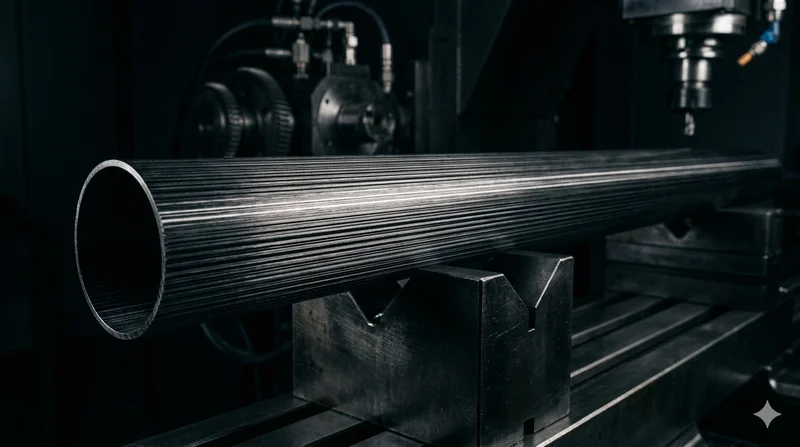
Round Carbon Fiber Tube — UD Unidirectional T700
Unidirectional (UD) round tube with all fibers aligned axially for maximum longitudinal stiffness. Ideal for applications requiring high bending rigidity with minimal weight, such as shafts, struts, and structural reinforcements.
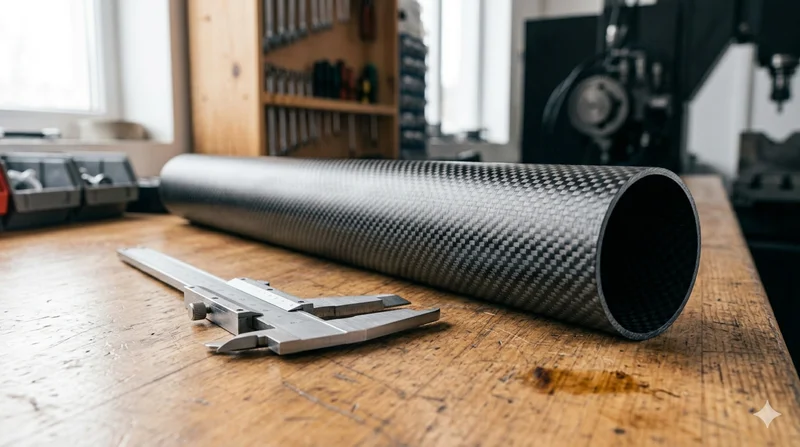
Round Carbon Fiber Tube — 3K Plain Weave T700
Standard round carbon fiber tube manufactured from Toray T700 grade fiber with 3K plain weave. Offers balanced strength and stiffness for general industrial applications including robotics, automation, sports equipment, and aerospace structures.