
A carbon fiber road glide fender removes mass from the unsprung front end of a Harley-Davidson touring frame without touching steering geometry, braking or luggage capacity. The stock front fender is a moulded ABS shell braced by a steel or aluminium bracket, weighing 1.1 to 1.6 kilograms depending
Introduction
A carbon fiber road glide fender removes mass from the unsprung front end of a Harley-Davidson touring frame without touching steering geometry, braking or luggage capacity. The stock front fender is a moulded ABS shell braced by a steel or aluminium bracket, weighing 1.1 to 1.6 kilograms depending on year. A cured carbon replacement of the same geometry lands between 0.40 and 0.70 kilograms, a 55 to 65 percent reduction. This guide covers construction routes, specifications, model-year fitment and delivery inspection. All prices are indicative aftermarket ranges.
Why a Carbon Fiber Road Glide Fender Changes the Ride
The front fender sits on the fork sliders, so it is unsprung mass. Weight removed there behaves like several times as much taken off the chassis, letting the fork follow road texture more accurately and lightening steering at low speed. Expect refinement, not reinvention: 0.7 kilograms on a 350-kilogram motorcycle is a small, honest gain. The case for a carbon fiber road glide fender rests on measurable unsprung-mass reduction, better corrosion behaviour than painted steel, and a cosmetic upgrade, in a part that takes an hour to fit.
Pre-Preg Versus Wet Layup: What You Are Buying
Pre-preg fabric arrives pre-impregnated with epoxy at 33 to 38 percent resin by weight. The laminate is laid into a machined mould, vacuum-bagged and cured at 120 to 130 degrees Celsius in an autoclave or heated press, giving a low-void laminate with a fibre volume fraction near 55 to 60 percent, weight at the low end of the range, and a weave that stays crisp across compound curves.
Wet layup means dry fabric is laid and resin applied by hand or roller. Resin content runs 45 to 55 percent, void content is higher, and the part is heavier for the same stiffness. A well-executed wet-lay fender with a gel coat and proper vacuum bagging is serviceable, but it costs less to produce and the price should reflect that. Resin transfer moulding sits between the two routes and suits volume production because it repeats resin content without autoclave cost.
Specifications Buyers Should Compare
A supplier should confirm these figures in writing. Treat them as typical aftermarket ranges, not guaranteed values for a specific product.
| Attribute | Pre-Preg Carbon | Wet Layup Carbon | Stock ABS Fender |
|---|---|---|---|
| Front fender weight | 0.40–0.60 kg | 0.55–0.75 kg | 1.10–1.60 kg |
| Rear fender weight | 1.30–1.90 kg | 1.80–2.50 kg | 3.20–4.20 kg |
| Resin content | 33–38% by weight | 45–55% by weight | Not applicable |
| Fibre volume fraction | 55–60% | 40–48% | Not applicable |
| Typical wall thickness | 1.5–2.5 mm | 2.0–3.5 mm | 2.5–3.5 mm |
| Density of cured laminate | 1.50–1.60 g/cm³ | 1.45–1.60 g/cm³ | 1.02–1.05 g/cm³ |
| Flexural modulus | 55–70 GPa | 35–50 GPa | 2.0–2.4 GPa |
| Indicative front fender price | USD 320–780 | USD 170–420 | USD 90–260 |
| Indicative rear fender price | USD 700–1,600 | USD 380–900 | USD 300–700 |
Two rows matter most. The flexural modulus gap is roughly twenty to one, which is why a thinner carbon wall matches a thicker plastic one and still saves weight. Density explains why light and stiff do not always arrive together: a low-fibre wet-lay part can be light and floppy. Read resin content, fibre volume fraction and wall thickness together, never weight alone.
Weave, Finish and UV Protection
Most Road Glide fenders use 3K twill weave, because the diagonal pattern reads cleanly on curves. Plain weave is stiffer and suits flat panels; 12K tow looks coarser and more directional. Forged carbon, moulded from chopped tow, gives a marbled surface with no weave direction and is often the cheaper route to a genuine carbon part. Clear coat decides ageing: two-component polyurethane with UV inhibitors at 60 to 120 micrometres holds gloss five years or more, while single-component aerosol lacquer common on budget parts can yellow within twelve to twenty-four months.
Fitment Across Road Glide Generations
Fitment causes most failed installations, because fender geometry changed with the model generations. Confirm the following before buying:
- Generation and year range: require an explicit year span rather than "fits Road Glide", and ask if the mould came from a factory part or a laser scan.
- Fork and wheel size: width and hole spacing follow the fork sliders and wheel diameter, so a fender for a 16-inch front wheel will not clear an 18 or 19-inch wheel and tyre.
- Mounting hole tolerance: quality suppliers hold hole positions within about plus or minus 1.5 millimetres of the OEM pattern. Request the hole drawing for production runs.
- Hardware inclusion: confirm whether the inner bracket, fasteners and rubber isolators ship with the shell, since reusing stock hardware is not always possible.
- Rear fender variants: rear fenders interact with saddlebag supports, lighting and plate brackets, so extended versions need fitted photos.
- Clearance check: on a lift, cycle the fork through its travel and verify fender-to-tyre and fender-to-guard clearance before final torque.
Rear fender variants deserve their own trial fit, because that is where returns cluster. Set the shell in place with the saddlebags mounted and measure clearance to the bag supports, the licence plate bracket and the lighting harness: allow at least 12 millimetres at the closest point and 20 millimetres around the plate bracket, since paint, heat and vibration all consume margin. Extended or stretched shells most often foul the bag support at the front lower corner, so check that gap first and re-check it with the rear suspension fully compressed.
Installation Notes That Prevent Damage
Carbon fiber is strong in tension but notch-sensitive. Never clamp a finished fender in a metal-jawed vice without soft pads, and never use it as a lever when lifting the front end. Torque fasteners with a calibrated wrench rather than by feel, because over-torquing crushes the laminate around a bolt hole permanently. Fit nylon or rubber washers where the schedule calls for them, and seal every cut edge with epoxy, because exposed fibre wicks moisture. On this model the fender is a non-structural cover, so composite replacements are accepted in most markets, though rear lighting and reflectors must still meet local rules.
How to Inspect a Carbon Fiber Road Glide Fender on Delivery
Inspect before installing, because a defect found after fitting is hard to argue. Check for pinholes and dry patches where the weave looks starved of resin, which indicate voids and a weak laminate. Run a fingernail along the edges for delamination, and flex the part gently: a healthy laminate answers stiff and ringing, a delaminated one sounds dull. Verify clear coat uniformity and hole positions with a caliper, then weigh the part — one 40 percent heavier than advertised is usually wet layup sold as pre-preg.
Frequently Asked Questions
Does a carbon fiber Road Glide fender fit all model years?
No. Geometry follows the fork sliders, wheel diameter and frame generation, so a part moulded for one year range will not fit another without modification. The vendor should quote an explicit year span and state whether the mould came from a factory part or a laser scan. Treat "fits Road Glide" alone as incomplete and request the mounting hole drawing before ordering.
Is a carbon fiber fender stronger than the plastic original?
It is far stiffer — roughly 55 to 70 GPa flexural modulus against 2.0 to 2.4 GPa for ABS — and much stronger in tension, but it is notch-sensitive. A sharp impact at a bolt hole or cut edge can start a crack that propagates. Correct torque, isolated fasteners and sealed cut edges are the three habits that prevent that failure mode.
What does a carbon fiber Road Glide fender cost?
Indicative aftermarket ranges are USD 170 to 420 for a wet-layup front fender and USD 320 to 780 for a pre-preg front fender with a UV-stable clear coat. Rear fenders run higher because they are larger: roughly USD 380 to 900 for wet layup and USD 700 to 1,600 for pre-preg. Figures move with weave, resin system, order volume and vendor location.
Conclusion
The aftermarket for a carbon fiber road glide fender rewards precision: state the model year range, ask for the construction route, request resin content and clear coat specification, and weigh the part on arrival. Pre-preg justifies its premium when weight and stiffness matter; a well-made wet-lay part is reasonable on a tighter budget. Fitment, not material, is where most projects fail, so it also pays to buy a carbon fiber road glide fender from a supplier who already runs the surrounding carbon fiber road glide parts — or a carbon fiber road glide fairing — to the same hole pattern. If you need a fender built to a specific hole pattern, thickness and clear coat, contact our team with your drawings and target volumes.
Related Articles
- Carbon Fiber Intake Tube: Engine Air Induction Systems
- Carbon Fiber Arrow Shafts: Spine Selection and Performance
- Car Carbon Fiber Gear Knob: Shift Knob Buying Guide
- Carbon Fiber Road Glide Fairing: Lightweight Upgrade Options
- Carbon Fiber Bike Parts: Frame and Component Upgrade Guide
- Carbon Fiber Sheets for Cars: Interior, Exterior and Structural Uses
Interested in Our Products?
Contact our team for competitive pricing and technical specifications.
Get a QuoteRelated Products

Carbon Fiber Plate — 3K Twill T700 1.5mm
Thin 1.5mm carbon fiber plate with 3K twill weave surface. Lightweight and stiff, commonly used for covers, panels, drone bodies, and applications requiring a premium aesthetic appearance.

Carbon Fiber Plate — 3K Twill T700 3.0mm
Medium-thickness 3.0mm carbon fiber plate offering significantly higher load capacity while maintaining attractive 3K twill finish. Suitable for structural brackets, reinforcement plates, and load-bearing panels.

Square Carbon Fiber Tube — 3K Twill T700
Square cross-section carbon fiber tube manufactured with 3K twill weave for torsional strength. Preferred for structural frames, trusses, and support columns where rectangular geometry offers design flexibility.
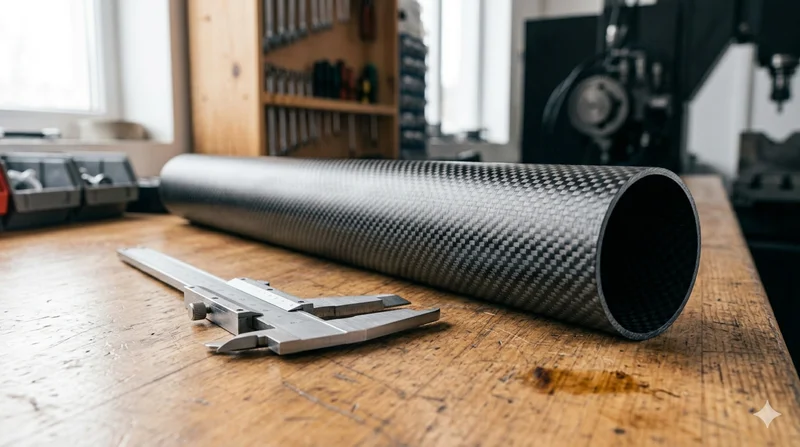
Round Carbon Fiber Tube — 3K Plain Weave T700
Standard round carbon fiber tube manufactured from Toray T700 grade fiber with 3K plain weave. Offers balanced strength and stiffness for general industrial applications including robotics, automation, sports equipment, and aerospace structures.
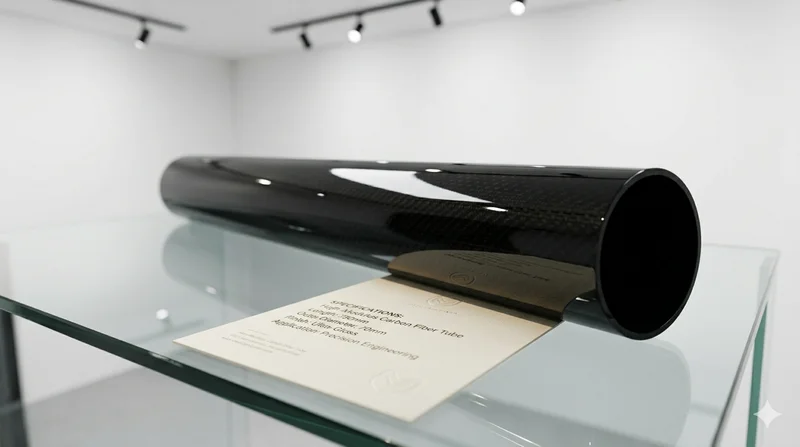
High Modulus Round Carbon Fiber Tube — M40
High modulus round tube manufactured with M40 grade fiber (tensile modulus 400 GPa). Designed for applications where maximum stiffness-to-weight ratio is critical, such as optical systems, precision machinery, and aerospace structures.