
Carbon fiber arrow shafts behave like a spring, not a stick, and that fact drives every specification an archer or an OEM buyer has to control. Whether the specification is spine, weight per inch or wall tolerance, carbon fiber arrow shafts only perform when the material and the geometry match the b
Introduction
Carbon fiber arrow shafts behave like a spring, not a stick, and that fact drives every specification an archer or an OEM buyer has to control. Whether the specification is spine, weight per inch or wall tolerance, carbon fiber arrow shafts only perform when the material and the geometry match the bow that launches them. A shaft that flexes too little groups away from point of aim; one that flexes too much bends around the riser and arrives with the tail low. Both failures look like form errors at the target, but they are decisions made long before the release. This guide covers spine selection, gpi weight, diameter classes, straightness and wall tolerance, and the manufacturing discipline that makes a batch repeat itself.
Production ranges seen across archery shaft lines, not lab-verified values for one SKU. Use them to bracket a specification, then confirm on your own bow.
What carbon fiber arrow shafts are and how they are built
A modern shaft is a thin-wall composite tube, usually 5 to 8 mm outer diameter, built from unidirectional carbon plies along the axis plus off-axis plies that control hoop stiffness. Wall thickness runs about 0.4 to 0.9 mm, and some hunting lines add a second inner tube for mass and impact resistance. Axis plies carry bending load and therefore set the spine; off-axis plies stop the tube ovalising when the nock is pressed in or the shaft takes a side hit.
- Resin: toughened epoxy, 100 to 130 °C cure for most target and field shafts.
- Construction: a thin carbon flag roll-wrapped on a mandrel, cured, then centreless ground.
- Straightness classes: 0.001 in, 0.003 in and 0.006 in total indicated runout.
- Weight tolerance: ±0.5 grain on premium lines, ±2 grains on economy lines.
- Finish: matte sanded, clear-coated, or printed with spine and batch code.
Because the mandrel sets the inside diameter and the grind sets the outside, a supplier controls diameter, wall concentricity and spine at once. Concentricity is the quiet one: a wall varying 0.05 mm around the circumference shifts the neutral axis and makes the shaft stiffer in one rotational position, which shows up as a flyer no tuning removes.
Spine selection for carbon fiber arrow shafts: matching the shaft to the bow
Spine is a stiffness rating written as static deflection in thousandths of an inch under a standard load. Lower numbers are stiffer: a 500 spine shaft deflects 0.500 in, a 700 spine shaft deflects 0.700 in and is more flexible. Questions about which carbon fiber arrow shafts suit a 45 lb compound or a 35 lb recurve always start with the static chart, then get corrected by arrow length, point weight, draw length and cam aggressiveness.
| Spine | Recurve draw weight | Compound draw weight | Common use |
|---|---|---|---|
| 500 | 40-50 lb | 45-55 lb | Heavier hunting setups, short draws |
| 600 | 28-40 lb | 35-45 lb | All-round field and 3D archery |
| 700 | 20-30 lb | 25-35 lb | Light target setups, youth and women's lines |
Two corrections matter more than the chart. Arrow length: cutting shorter makes a shaft stiffer, so 600 spine at 27 in is not 600 spine at 30 in. Point weight: adding 25 grains up front softens the dynamic reaction and usually calls for one step stiffer. Aggressive compound cams also load the shaft harder at the shot than the static number suggests, which is why many compound shooters run one step stiffer than the recurve column.
Static and dynamic spine are not the same number
Static spine is a bench measurement of material and geometry. Dynamic spine is what the shaft does in the 15 to 25 ms after release, bending around the riser, oscillating and settling. Two shafts with identical static spine can differ if their mass distribution differs, which is why a bare shaft test beats any chart. Paper tuning at 3 m and bare shaft grouping at 20 m show in twenty minutes whether the shaft is weak or stiff: on a right-handed bow, a nock tear left usually means weak and right means stiff. Change one variable per test — point weight, arrow length or spine — never two at once.
Weight, gpi and build consistency
Arrow weight is quoted as grains per inch. A light target shaft runs 5.0 to 6.5 gpi, an all-round field shaft 7.0 to 8.5 gpi, and a heavy hunting shaft 9.5 to 12.0 gpi. Total arrow mass is gpi multiplied by cut length, plus nock, insert, point and fletching. That total sets trajectory and margin for error: heavier arrows drop more but resist wind and carry momentum, lighter arrows fly flatter but drift and bleed energy faster.
| Specification | Light target | All-round field | Heavy hunting |
|---|---|---|---|
| Weight (gpi) | 5.0-6.5 | 7.0-8.5 | 9.5-12.0 |
| Outer diameter (mm) | 5.0-5.6 | 6.0-6.5 | 7.0-8.0 |
| Wall thickness (mm) | 0.40-0.50 | 0.55-0.70 | 0.75-0.90 |
| Straightness (in) | 0.001-0.003 | 0.001-0.003 | 0.003-0.006 |
| Weight tolerance (grain) | ±0.5 | ±1.0 | ±2.0 |
| Indicative price per shaft (USD) | 6-12 | 8-16 | 12-30 |
The pricing row is indicative only, and cost tracks straightness class, weight tolerance, finish and order volume far more than raw carbon content. Much of the gap between a 6 USD shaft and a 25 USD shaft is inspection time, not material.
Nocks, inserts and fletching prep
Insert fit is the first accuracy decision in assembly: it should need light hand pressure. An insert that drops in freely eventually pulls out with the point, while one that needs a hammer crushes the first ply.
- Cut with an abrasive wheel, then square the end on a facing tool.
- Clean the bore with isopropyl alcohol and let it flash off before bonding.
- Bond inserts and nocks with toughened two-part epoxy, 24 h at room temperature.
- Roll-test every arrow before fletching and reject visible wobble.
- Fletch at 1 to 2 degrees of offset for hunting vanes, 0 to 1 degree for target.
Where carbon fiber rod blanks and solid rod come in
Shaft makers buy two families of stock. Thin-wall tube stock becomes the arrow. Carbon fiber rod blanks — pultruded rods with defined straightness and diameter tolerance — are machined into internal footings, weight tubes, nock adapters and alignment pins, and they are the starting point for the fixtures an arrow builder uses during cutting and fletching. A carbon fiber solid rod is the same idea without the bore: heavier per unit length, so it suits balance weights and short structural inserts rather than anything that has to fly. When a supplier holds rod diameter to ±0.03 mm, the fittings that depend on it stop being a source of variation. Buyers sourcing an archery programme usually take the shaft, the matching rod stock and the tooling from one supplier so the fit between them is already proven.
Inspection and batch control
Carbon shafts fail by growing a localised crack or delamination under repeated bending until the wall splits, often with little visible warning on a matte finish. Deflection testing over a 200 mm span, a tap test at the nock end, and a micrometer check of outer diameter at three points catch most of it on incoming inspection. For a repeatable batch, fix the resin lot, mandrel, grind pass and cure cycle, then record spine and gpi on every run. Shaft-to-shaft variation inside a dozen arrows matters more to a competitive archer than the absolute spine number, because consistency is what holds a sight setting across a whole quiver.
Frequently Asked Questions
How do I choose between 500, 600 and 700 spine?
Start from draw weight and arrow length, move one step stiffer for a heavier point or an aggressive compound cam, and one step weaker for a longer arrow or lighter point. Verify with a bare shaft test rather than trusting the chart alone.
Does a stiffer carbon fiber arrow shaft always shoot more accurately?
No. Accuracy comes from matching the shaft to the bow so the arrow settles quickly. Too stiff and too weak both produce horizontal spread; the goal is the fastest-settling combination for a given setup, not the highest stiffness number.
What grain weight tolerance should I specify?
For target and field use, ±1.0 grain across a dozen arrows is practical, and premium lines hold ±0.5 grain. For close-range hunting shafts, ±2.0 grains is usually acceptable and keeps cost down.
Can I use the same shaft for a recurve and a compound?
Only if draw weights and arrow lengths are close. Compound cams load the shaft harder at the shot, so a shaft tuned on a recurve often reads weak on a compound of similar draw weight. Tune each bow separately.
Conclusion
Spine selection is a matching problem, not a quality ranking. Fix draw weight, arrow length and point weight first, pick the spine step from the chart, then verify by bare shaft testing and adjust one variable at a time. Around that decision, specify gpi, diameter class, straightness and weight tolerance tightly enough that a dozen arrows behave like one arrow. YongXian supplies carbon fiber arrow shafts, matching carbon fiber rod blanks and solid rod stock, and the tooling that goes with them, quoted against your drawings and tolerances. Send your spine, gpi and diameter targets through contact our team and we will reply with an indicative price and a sample plan.
Related Articles
- Carbon Fiber Intake Tube: Engine Air Induction Systems
- Car Carbon Fiber Gear Knob: Shift Knob Buying Guide
- Carbon Fiber Road Glide Fairing: Lightweight Upgrade Options
- Carbon Fiber Road Glide Fender: Aftermarket Options
- Carbon Fiber Bike Parts: Frame and Component Upgrade Guide
- Carbon Fiber Sheets for Cars: Interior, Exterior and Structural Uses
Interested in Our Products?
Contact our team for competitive pricing and technical specifications.
Get a QuoteRelated Products

Carbon Fiber Plate — 3K Twill T700 1.5mm
Thin 1.5mm carbon fiber plate with 3K twill weave surface. Lightweight and stiff, commonly used for covers, panels, drone bodies, and applications requiring a premium aesthetic appearance.

Carbon Fiber Plate — 3K Twill T700 3.0mm
Medium-thickness 3.0mm carbon fiber plate offering significantly higher load capacity while maintaining attractive 3K twill finish. Suitable for structural brackets, reinforcement plates, and load-bearing panels.

Square Carbon Fiber Tube — 3K Twill T700
Square cross-section carbon fiber tube manufactured with 3K twill weave for torsional strength. Preferred for structural frames, trusses, and support columns where rectangular geometry offers design flexibility.
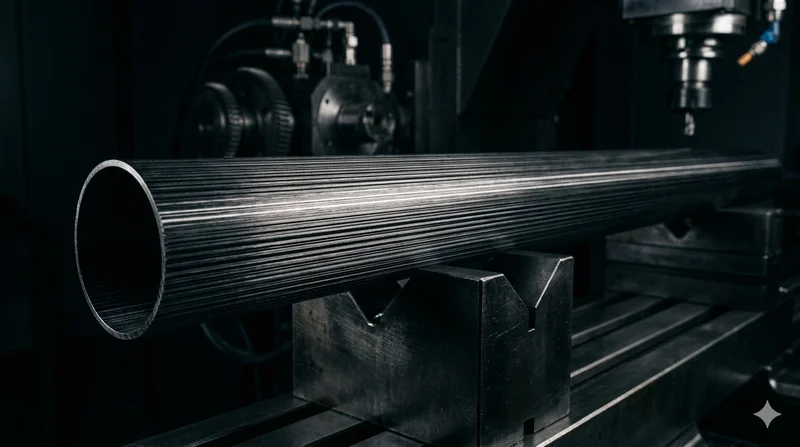
Round Carbon Fiber Tube — UD Unidirectional T700
Unidirectional (UD) round tube with all fibers aligned axially for maximum longitudinal stiffness. Ideal for applications requiring high bending rigidity with minimal weight, such as shafts, struts, and structural reinforcements.
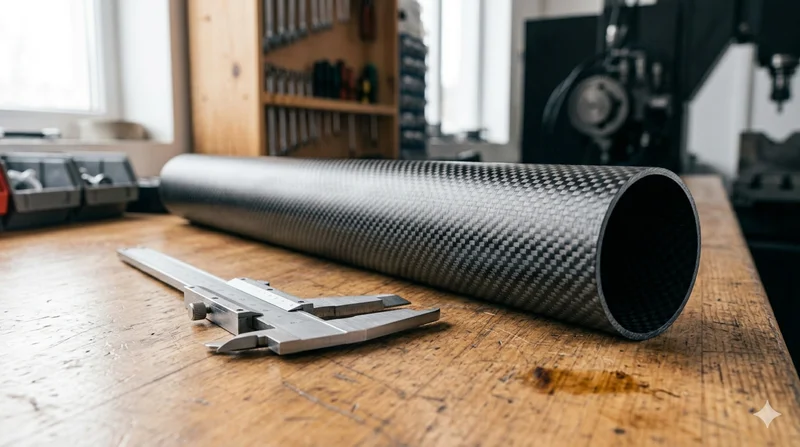
Round Carbon Fiber Tube — 3K Plain Weave T700
Standard round carbon fiber tube manufactured from Toray T700 grade fiber with 3K plain weave. Offers balanced strength and stiffness for general industrial applications including robotics, automation, sports equipment, and aerospace structures.