
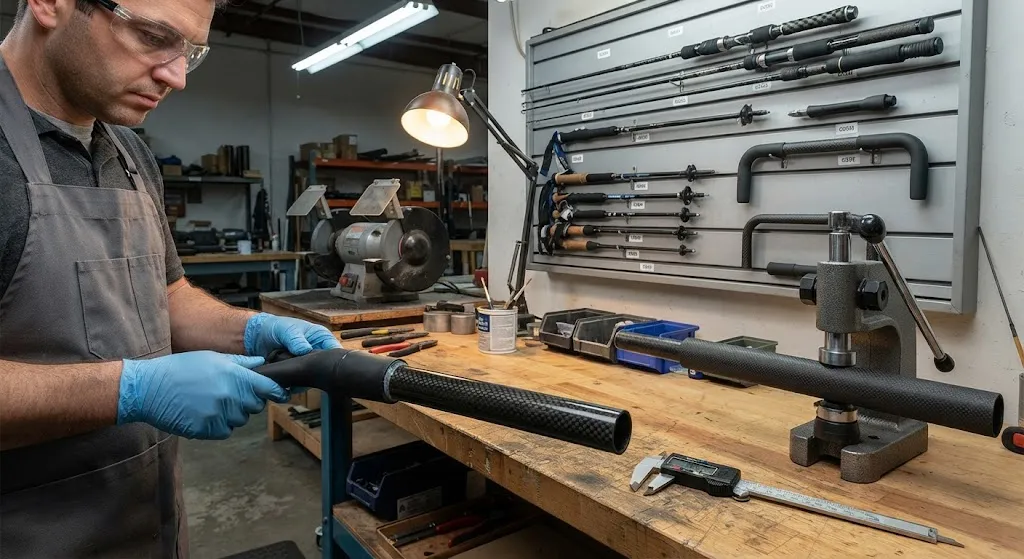
Carbon fiber rod grips have become the standard choice wherever a handle must combine light weight with a firm, vibration-resistant hold — from carbon fiber fishing rods and hiking poles to industrial push carts, control levers, and power tool handles. A carbon fiber rod grip typically starts with a
Introduction
Carbon fiber rod grips have become the standard choice wherever a handle must combine light weight with a firm, vibration-resistant hold — from carbon fiber fishing rods and hiking poles to industrial push carts, control levers, and power tool handles. A carbon fiber rod grip typically starts with a pultruded or roll-wrapped carbon fiber rod as the shaft, finished with a grip section that is either a textured carbon fiber tube, a wrapped CFRP layer, or a hybrid construction with a rubber or cork overlay. The carbon fiber rod grips market serves both sport and industrial buyers, because the same properties — low weight, high stiffness, temperature resistance, and durability — solve the same ergonomic problems in both worlds. This article explains the material options and ergonomic handle design principles behind carbon fiber rod grips, the main CFRP handle grip applications, and a practical method for choosing carbon fiber tool handles that reduce operator fatigue and last for years.
Carbon Fiber Rod Grips: Material Options and Ergonomic Handle Design
The grip is where the human hand meets the machine, so its design balances three things: friction to prevent slipping, damping to isolate vibration, and diameter to fit the hand comfortably. A carbon fiber rod grip can be made entirely of a composite tube — usually 20-40 mm in diameter with a textured or knurled surface — or as a hybrid where a rubber, EVA, or cork overlay is bonded over the carbon shaft. The table below compares the grip materials most often combined with carbon fiber rods:
| Grip Material | Friction | Vibration Damping | Temperature Range (°C) | Weight per 100 mm (g) | Typical Cost |
|---|---|---|---|---|---|
| Rubber sleeve | High | High | -40 to +100 | 25-40 | Low |
| EVA foam | Medium | Medium | -20 to +60 | 15-25 | Low |
| Cork | Medium | Medium | -20 to +60 | 10-18 | Low |
| Textured carbon fiber tube | Medium-high | Low-medium | -50 to +120 | 20-35 | Medium |
| Hybrid CFRP with rubber overlay | High | High | -40 to +100 | 30-45 | Medium-high |
Two design rules follow from the data. First, diameter controls comfort more than material: a 20-25 mm grip suits precision handling, while 28-40 mm supports the power grip used in pushing, pulling, and swinging tools. Second, damping comes from the overlay, not the carbon tube — so for vibration-heavy applications such as lawn equipment or pneumatic tooling, the hybrid carbon fiber rod grip with a rubber overlay is the reliable choice, while a bare textured tube suits fishing and sporting goods where sensitivity matters more than damping.
The grip must also stay attached to the shaft for the life of the product, and attachment methods follow the same hierarchy. Adhesive bonding with a two-part structural epoxy is the standard for carbon fiber rod grips because the bond line distributes load evenly and adds no weight; mechanical methods — a set screw, a taper lock, or a keyed end cap — are used where the grip must be removable or where the application sees hard impacts; and overmolding with rubber or thermoplastic directly onto the shaft gives the most durable chemical bond but requires a mold and higher minimum quantities. For a carbon fiber tool handle that sees daily industrial use, bonded grips with a mechanical backup at the end cap are the most common and most reliable choice.
CFRP Handle Grip Applications: Tools and Sporting Goods
The same carbon fiber rod grip geometry serves a surprisingly wide range of products, and the value proposition shifts slightly by sector. In sporting goods the weight saving improves balance and reduces fatigue over a full day of use; in industrial tooling the stiffness and weather resistance reduce downtime. The main CFRP handle grip applications are listed below:
- Fishing rods: A carbon fiber rod grip keeps the blank light near the reel seat, and the stiff handle transfers bites cleanly to the angler's hand.
- Hiking and trekking poles: Textured carbon grips stay comfortable in rain and cold, where foam grips become slippery and heavy.
- Industrial push carts and trolleys: Carbon fiber tool handles cut cart weight by 15-25 percent and eliminate the rust and splintering of wood or steel handles in wash-down environments.
- Control levers and machine handles: A rigid CFRP grip keeps lever travel precise and stays cool or warm to the touch in extreme factory temperatures.
- Hand tools: Screwdrivers, wrenches, and scrapers with carbon fiber handles resist oils and solvents better than painted metal or plastic.
- Rackets, paddles, and golf shafts: A composite rod grip with tuned stiffness improves feel and reduces the shock transmitted to the wrist.
Across all of these applications, the composite rod grip earns its place through the same four properties: light weight, high stiffness, corrosion resistance, and a long fatigue life measured in years rather than months.
Choosing Carbon Fiber Tool Handles for Industrial Use
Selecting a carbon fiber tool handle for industrial use is a small engineering exercise. Define the load case first — push, pull, twist, or impact — because it decides the required wall thickness and whether the handle needs a metal insert at the mounting end. Then match the grip diameter to the operator's hand and the gloved working conditions. The table below gives starting points:
| Handle Diameter | Typical Applications | Grip Style |
|---|---|---|
| 20-25 mm | Precision tools, probes, small levers | Precision grip |
| 28-32 mm | General hand tools, cart handles | Power grip |
| 32-40 mm | Heavy push-pull, trolleys, rackets | Power grip with gloves |
Finally, verify the surface finish: a clear-coated carbon fiber tool handle is the standard for indoor use, while a matte textured finish with a rubber overlay is preferred for wet, oily, or outdoor environments. Request a sample handle, test it on the actual machine for one shift, and confirm the mounting interface matches your existing fittings — a well-chosen carbon fiber rod grip then delivers years of service with no corrosion, no splintering, and no grip replacement.
Frequently Asked Questions
Are carbon fiber rod grips comfortable to hold?
Yes, when sized correctly. A bare carbon fiber tube offers a firm, smooth grip that is comfortable for precision work, and it can be textured or wrapped for additional grip. For heavy or vibration-heavy use, the hybrid carbon fiber rod grip with a rubber or foam overlay provides the highest comfort. The critical factor is diameter: choosing 20-25 mm for precision tasks and 28-40 mm for power gripping makes most handles comfortable for a full work shift.
Do carbon fiber handles break easily?
No. A properly designed carbon fiber rod grip is very strong in the direction of use — pultruded carbon fiber rods have tensile strengths above 2000 MPa and handles are engineered for the specific push, pull, or twist loads they will see. What carbon fiber does not like is sharp local impacts and over-tightened clamping, which can crush the tube wall. Design the mounting end with a metal insert or reinforced boss, and the handle will outlast most metal or wooden alternatives.
How do I choose the right carbon fiber rod grip for my product?
Start with the load case and grip diameter, then choose the surface treatment. For fishing and sporting goods, a textured carbon tube from 20-32 mm gives the best sensitivity and light weight. For industrial tool handles, add a rubber overlay for damping and select a 28-40 mm diameter for power gripping. Confirm the mounting interface, order a sample, and test it in the real working environment before committing to production quantities.
Conclusion
Carbon fiber rod grips solve the same ergonomic equation across sport and industry: a light, stiff, weatherproof handle that reduces operator fatigue and lasts for years. Whether the product is a fishing rod, a hiking pole, an industrial cart, or a control lever, the design process is the same — define the load, choose the diameter for the grip style, add damping where vibration is high, and verify the mounting interface. The result is a CFRP handle grip that performs measurably better than wood, steel, or plastic in the applications that matter.
When you need carbon fiber rod grips, CFRP handle grips, or custom carbon fiber tool handles for your product, review our carbon fiber rod and tube range or contact our engineering team with your load case, grip diameter, and mounting requirements, and we will help you specify the right composite rod grip configuration.
Part of topic
Related Articles
- Carbon Fiber Propellers for Drones: Efficiency, Durability and Performance Optimization
- Carbon Fiber Tube for Sale: Comparing Listings and Avoiding Bad Specs
- Carbon Fiber Engine Parts: High-Temperature Performance for Racing and Performance Vehicles
- Carbon Fiber Body Parts: Automotive Exterior Panels and Structural Components
- Carbon Fiber Drone Body Manufacturing: Monocoque Design and Production Methods
- Carbon Fiber Drone Parts Supplier: FPV Frames, Arms and Structural Components
Interested in Our Products?
Contact our team for competitive pricing and technical specifications.
Get a QuoteRelated Products

Carbon Fiber Plate — 3K Twill T700 3.0mm
Medium-thickness 3.0mm carbon fiber plate offering significantly higher load capacity while maintaining attractive 3K twill finish. Suitable for structural brackets, reinforcement plates, and load-bearing panels.

Carbon Fiber Plate — 3K Twill T700 1.5mm
Thin 1.5mm carbon fiber plate with 3K twill weave surface. Lightweight and stiff, commonly used for covers, panels, drone bodies, and applications requiring a premium aesthetic appearance.

Square Carbon Fiber Tube — 3K Twill T700
Square cross-section carbon fiber tube manufactured with 3K twill weave for torsional strength. Preferred for structural frames, trusses, and support columns where rectangular geometry offers design flexibility.
Carbon Fiber Plate — UD Unidirectional T700
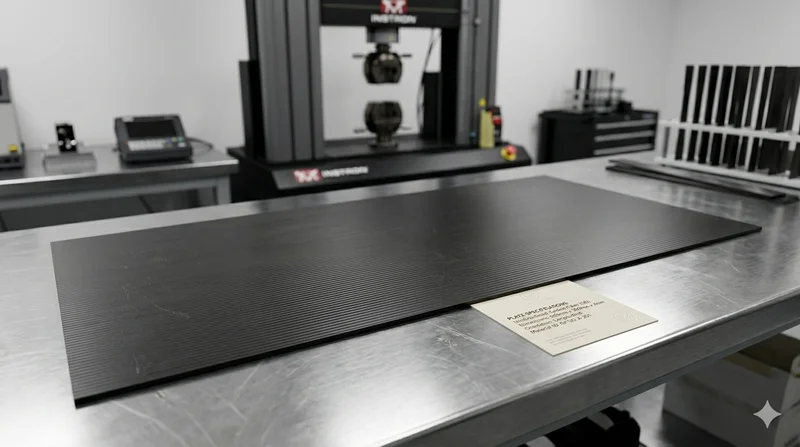
Unidirectional carbon fiber plate with all fibers oriented in a single direction for maximum strength along the fiber axis. Essential for structural reinforcements, splints, and applications where load direction is predictable.
Round Carbon Fiber Tube — UD Unidirectional T700
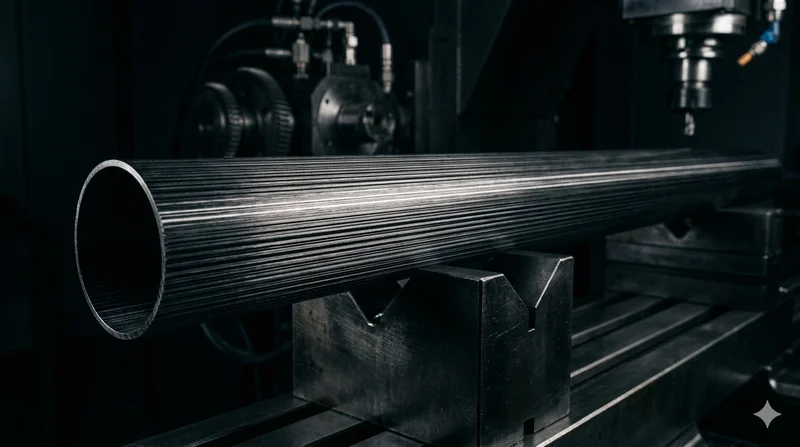
Unidirectional (UD) round tube with all fibers aligned axially for maximum longitudinal stiffness. Ideal for applications requiring high bending rigidity with minimal weight, such as shafts, struts, and structural reinforcements.