
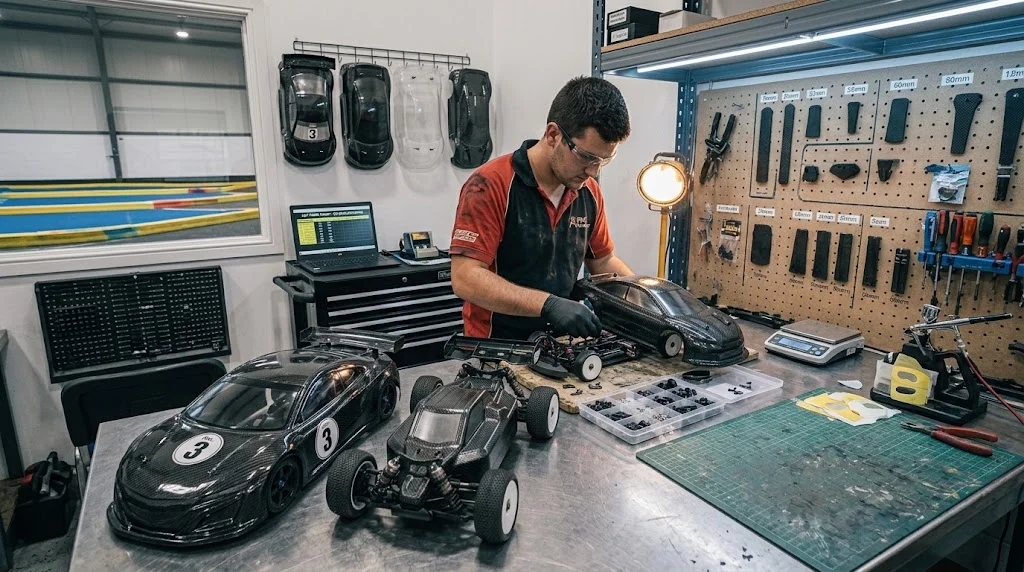
A carbon fiber rc body replaces the vacuum-formed ABS or polycarbonate shell that ships with most radio-controlled cars. The swap is not cosmetic: the shell is a meaningful share of total vehicle weight and sits high above the roll center, so removing 80-200 g from the roofline changes cornering res
Introduction
A carbon fiber rc body replaces the vacuum-formed ABS or polycarbonate shell that ships with most radio-controlled cars. The swap is not cosmetic: the shell is a meaningful share of total vehicle weight and sits high above the roll center, so removing 80-200 g from the roofline changes cornering response, traction on low-grip surfaces, and how the car settles after a jump. This guide explains what changes when you move to a CFRP shell, how on-road and off-road designs differ, what the layup and wall thickness numbers actually mean, and what the upgrade costs per class.
The same material logic that makes carbon fiber auto parts worth specifying on full-size vehicles applies at 1/10 scale, and the shell sits inside the wider catalog of carbon fiber car parts that hobbyists and small builders source for both models and machines.
What a Carbon Fiber RC Body Changes on the Track
The effects are predictable once you separate the four things a shell does:
- Weight and center of gravity: A stock 1/10 on-road shell in 0.8-1.0 mm polycarbonate weighs 170-240 g. A comparable carbon shell lands at 90-140 g. Because the saving is entirely above the axles, the roll moment drops with it — typically 3-6% less body roll in cornering before any spring change.
- Panel stiffness: Thin thermoplastic shells flex and pump air in and out of the wheel wells at speed, which makes the car nervous on long straights. CFRP is roughly 20-40x stiffer in-plane at the same thickness, so the panel stops acting like a spring and starts acting like an aero surface.
- Impact behavior: This is the honest trade-off. Polycarbonate yields and rebounds; carbon fiber laminate cracks and delaminates. A carbon shell survives clean aerodynamic loads superbly and survives curb strikes and rollovers badly.
- Signal and heat routing: Carbon fabric is electrically conductive, so antenna and receiver placement needs non-conductive windows or external mounts — a detail first-time converters routinely miss.
Choosing a Carbon Fiber RC Body for On-Road and Off-Road Cars
The two disciplines pull the design in opposite directions: on-road shells are large, smooth and aero-sensitive; off-road shells are small, deeply dished and impact-exposed. The table below gives indicative specifications by class.
| Class | Typical shell weight (carbon vs stock) | Wall thickness | Layup priority | Indicative price (USD) |
|---|---|---|---|---|
| 1/12 pan car | 75-100 g vs 150-190 g | 0.5-0.7 mm | Ultra-light, minimum resin | $95-150 |
| 1/10 on-road touring | 95-140 g vs 170-240 g | 0.6-0.8 mm | Flat deck stiffness, smooth surface | $120-190 |
| 1/10 drift | 110-150 g vs 190-260 g | 0.7-0.9 mm | Side-bite stiffness, style detail | $140-220 |
| 1/10 off-road buggy/truggy | 120-170 g vs 210-300 g | 0.8-1.2 mm | Impact tolerance, reinforced nose | $150-240 |
| 1/8 monster truck | 170-240 g vs 300-420 g | 1.0-1.5 mm | Damage tolerance over lightness | $200-320 |
Notice that the percentage saving is largest on small light cars (45-50%) and smallest on big bashers (40-43%), because the thick reinforced layups needed for impact eat into the advantage. If your platform spends its life in the air over dirt, a lighter shell is not automatically the faster shell.
Fiber Orientation, Weave and Wall Thickness
Three layup decisions drive how a shell behaves far more than the brand on the box:
- Weave: 2x2 twill drapes over compound curves without wrinkles and is the default for shaped bodies; plain weave is flatter and stiffer but bridges into corners on deep-dish off-road molds. 3K tow (roughly 3,000 filaments per strand) is the standard for model-scale panels; 12K appears on cheaper shells where the coarser weave shows clearly under clear coat.
- Orientation: Most shells are quasi-isotropic in the panel — 0/90 plus +/-45 plies — because loads arrive from several directions during a rollover. Intentional bias, such as extra +/-45 plies on the sides, stiffens the door area against side impact but adds 10-15 g.
- Resin and cure: Epoxy with a glass transition above 60 C is the floor for outdoor summer use; bargain shells cured with low-Tg resin go soft parked on a hot pit board. Vacuum-infused panels run 15-25% lighter than hand-laid ones at the same thickness because fiber volume fraction rises from about 45% to 55-60%.
Wall thickness should be matched to load path, not to feel: nose and rocker areas take the hits, roof and deck carry aero. Local reinforcement patches on the nose and around body-post holes add 15-30 g and roughly double the life of an off-road shell.
Fit, Mounting and Body-Post Rules
A carbon shell is rigid, so fit issues that a flexible Lexan sheet hides become permanent. Before ordering:
- Post pattern: Carbon fiber body parts cannot be re-formed with a heat gun. Confirm the post spacing against your chassis drawing; drill with a stepped reamer, never a twist bit, and seal the hole edge with thin cyanoacrylate to prevent fiber breakout.
- Tire clearance: Rigid shells do not flex when the suspension compresses. Check full droop and full compression, front and rear, with your actual tire compound mounted.
- Edge sealing: Every cut edge should be sealed. Unsealed laminate wicks moisture into the outer plies and shows white fuzz along the sills within a season.
- Retention: Use body-post washers or o-rings. A rigid panel transmits clip shock directly to the post hole instead of spreading it through flex.
Cost and When the Upgrade Pays Back
At $120-320 depending on class, a carbon shell is three to eight times the price of a painted Lexan body. It pays back where the car is competitive on lap time and where the shell is reused: indoor carpet touring, 1/12 pan racing, and any class with a weight limit. It does not pay back for bashing, where the purchase is effectively a consumable. A practical middle path is a carbon shell for competition and a stock polycarbonate shell for practice and crash days — most racers run exactly this split.
Whichever route you take, weigh the shell on a scale before you mount it: two shells in the same class from different manufacturers routinely differ by 30-50 g, and that difference is often the entire performance gap the upgrade was meant to buy.
Frequently Asked Questions
How much weight does a carbon fiber rc body save over stock?
Expect 70-130 g on 1/10 and 1/12 cars, which is roughly 40-50% of shell mass, and 100-180 g on 1/8 platforms, closer to 40%. Because the saving sits above the roll center, the felt effect is larger than the number: most drivers report crisper turn-in and less mid-corner body roll before touching the springs.
Is a carbon fiber shell allowed in sanctioned racing?
In most on-road and 1/12 classes, yes — shells are generally not restricted as long as overall vehicle weight stays above the class minimum. Some stock or spec classes do mandate the kit body. Check your series rulebook on body transparency and painted-film rules, since clear carbon panels read differently under scrutiny.
Can a cracked carbon fiber rc body be repaired?
Small cracks and edge chips can be repaired from the back side with carbon patch cloth and epoxy, then sanded flush — the repair holds aero loads well but shows through a light paint scheme. Cracks that cross a body-post hole or run a full panel length are structural and should retire the shell, because a repair there concentrates stiffness at the exact point the next rollover loads.
Conclusion
A carbon fiber rc body earns its place where weight sits high, panels must stay flat, and the shell is reused race after race. It is the wrong purchase where shells are consumed by impact. Match weave and wall thickness to your discipline, confirm post pattern and tire clearance before ordering, and seal every cut edge — then let the mass you removed from the roofline do its work.
We manufacture and supply CFRP shells and panels alongside our wider range: browse our carbon fiber products for tubes, plates and custom-cut components, or contact our engineering team with your drawing, thickness and annual volume for a quotation on custom carbon fiber body parts and profiles.
Related Articles
- Carbon Fiber Tube Protector: Edge Guards and Damage Prevention
- Carbon Fiber FPV Drone Frame: Geometry, Materials and DIY Builds
- Pultruded Carbon-Fiber Leaf Springs: Composite Suspension for Commercial Vehicles
- Carbon Fibre Drone Frame: UK Buying Guide
- Filament Wound Pressure Vessel: Design, Standards and Manufacturing
- Carbon Fiber Car Parts: Structural vs Cosmetic Components Explained
Interested in Our Products?
Contact our team for competitive pricing and technical specifications.
Get a QuoteRelated Products

Round Carbon Fiber Tube — 3K Plain Weave T700
Standard round carbon fiber tube manufactured from Toray T700 grade fiber with 3K plain weave. Offers balanced strength and stiffness for general industrial applications including robotics, automation, sports equipment, and aerospace structures.
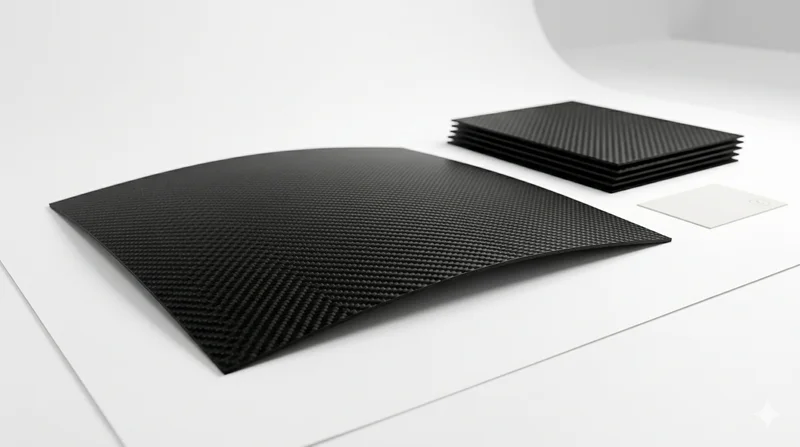
Carbon Fiber Plate — 3K Twill T700 1.5mm
Thin 1.5mm carbon fiber plate with 3K twill weave surface. Lightweight and stiff, commonly used for covers, panels, drone bodies, and applications requiring a premium aesthetic appearance.

Square Carbon Fiber Tube — 3K Twill T700
Square cross-section carbon fiber tube manufactured with 3K twill weave for torsional strength. Preferred for structural frames, trusses, and support columns where rectangular geometry offers design flexibility.

Round Carbon Fiber Tube — 3K Twill
Lightweight and ultra-stiff round tubes ideal for drone frames, robotics, and structural applications.
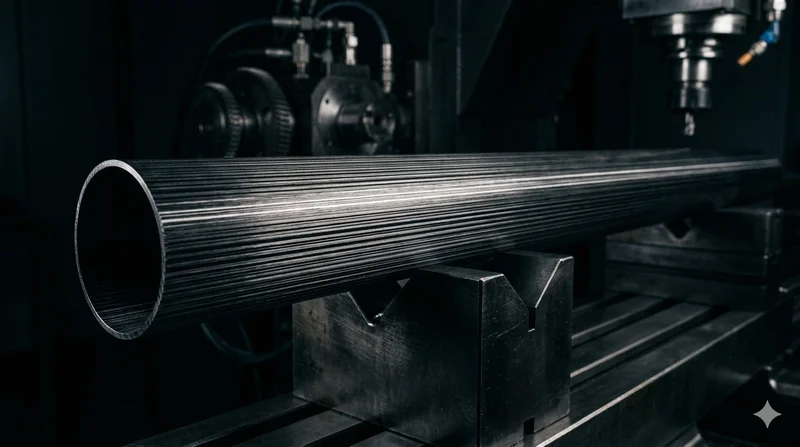
Round Carbon Fiber Tube — UD Unidirectional T700
Unidirectional (UD) round tube with all fibers aligned axially for maximum longitudinal stiffness. Ideal for applications requiring high bending rigidity with minimal weight, such as shafts, struts, and structural reinforcements.