
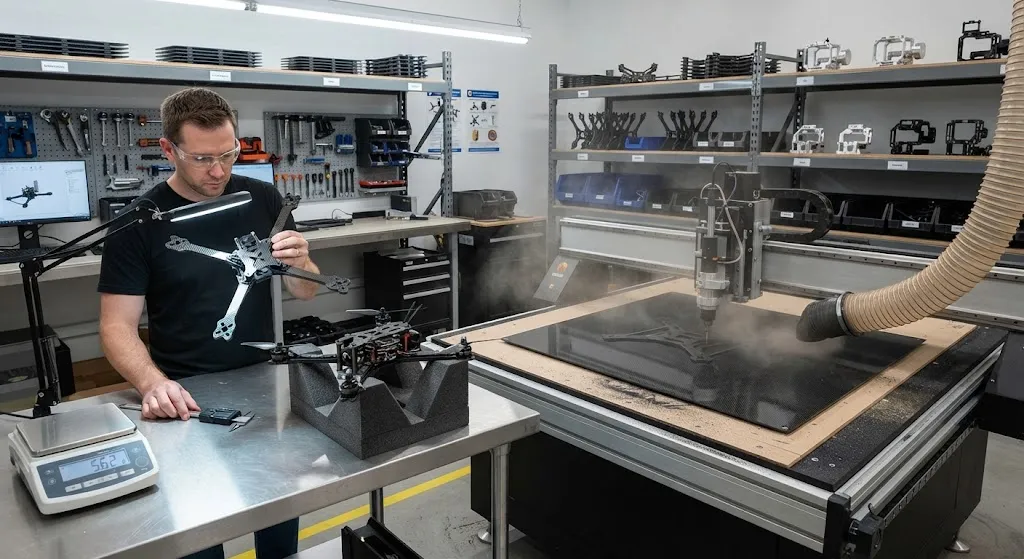
Carbon fiber drone parts are now the default choice for FPV frames, arms, and structural components in professional and racing drones, and the quality of those parts depends entirely on the supplier. Carbon fiber drone parts from a good supplier are lighter and stiffer than aluminum equivalents, but
Introduction
Carbon fiber drone parts are now the default choice for FPV frames, arms, and structural components in professional and racing drones, and the quality of those parts depends entirely on the supplier. Carbon fiber drone parts from a good supplier are lighter and stiffer than aluminum equivalents, but the same geometry can be produced with very different strength depending on the fiber grade, the resin system, the layup sequence, and how carefully the molding process is controlled. A frame that is 20 grams lighter on paper can be significantly weaker in practice if the fabric is wrinkled, the resin is under-cured, or the fiber volume fraction is too low.
This article explains what to look for when evaluating a carbon fiber drone parts supplier: the material grades and weave types used, the manufacturing processes that define quality, the specific carbon fiber UAV parts that matter most for FPV and industrial builds, and the practical qualification steps a buyer can take without a laboratory.
What a Carbon Fiber Drone Parts Supplier Should Offer
A serious carbon fiber drone parts supplier is more than a distributor of molded plates. The best suppliers control the entire chain from raw carbon fiber and prepreg to molding, machining, and testing, and they can document the material and process choices behind every part. Key capabilities to look for include:
- Material selection: Access to standard-modulus T300/T700 class fibers for frames and arms, with intermediate-modulus options for stiffness-critical components. Ask which fiber grade and areal weight are used for each part.
- Prepreg or wet layup: Prepreg-based molding with autoclave or matched-die consolidation gives consistent fiber volume fraction and mechanical properties; wet layup is cheaper but more variable. Know which process your parts use.
- CNC finishing: FPV frames and arms need precise hole patterns, standoff positions, and edge finish, so in-house CNC machining and drilling with proper edge sealing is essential.
- Batch consistency: A supplier should track material lot numbers and molding batches so that replacement parts match the originals in stiffness and weight.
Documentation matters as much as equipment. A supplier that can provide a data sheet with fiber grade, resin type, curing temperature, fiber volume fraction, and the test method used to verify strength is a supplier that understands how its parts perform — and that is the supplier worth building a product around.
Carbon Fiber Drone Parts for FPV Frames and Arms
The two parts that dominate FPV drone performance are the frame plates and the arms. FPV frames are typically cut from flat 3K twill or plain-weave carbon fiber plate, 2-6 mm thick, with the weave orientation arranged so that the high-strength fiber directions align with the load paths between motor mounts and the center stack. Arms are the highest-stress structural components: they transmit thrust from the motor to the frame while absorbing impact energy in a crash, so they are often made from unidirectional carbon fiber or a hybrid of unidirectional and woven layers for the right balance of stiffness and toughness.
| Part | Typical Material | Thickness | Critical Property |
|---|---|---|---|
| FPV frame plate | 3K twill weave, 2-4 mm | 2-4 mm | Flatness, hole accuracy, stiffness |
| Arm (racing) | Unidirectional + twill hybrid | 4-6 mm | Bending stiffness, impact toughness |
| Arm (industrial) | T700 unidirectional | 4-8 mm | Fatigue life, payload capacity |
| Center stack / gimbal mount | 3K twill or plain weave | 2-3 mm | Dimensional precision, thread inserts |
For racing drones, weight is the dominant driver, and suppliers compete on the lightest frame that survives the forces of high-G maneuvers. For industrial and commercial drones, the priority shifts to fatigue life and consistent payload capability: a delivery or inspection drone flies for thousands of hours, so the arms must carry repeated loads without accumulating damage.
CFRP Drone Components: Material Grades and Their Trade-offs
Understanding the material grades behind carbon fiber drone parts helps a buyer judge whether a quoted price is reasonable or suspiciously low. The fiber grade determines the ceiling of strength and stiffness, while the resin system determines how that strength survives heat, moisture, and impact.
- T300 class (standard modulus): The workhorse for drone frames and arms. Tensile strength around 3,500 MPa and modulus 230 GPa, well matched to the loads and stiffness needs of most UAV structures, at the lowest cost.
- T700 class (intermediate tensile): Higher tensile strength around 4,900 MPa with the same modulus. Common in high-performance arms where impact resistance and strength margins matter.
- High-modulus (M-series): Modulus above 290 GPa but lower strain to failure, used only in stiffness-critical, low-strain parts such as propeller shafts or camera gimbals where strength is not the limiting factor.
The weave type is the second variable. Twill weave (2x2) is the standard for drone plates because it drapes flat, holds its shape during cutting, and looks consistent. Plain weave is tighter and more stable for thin parts. Unidirectional carbon fiber delivers maximum stiffness in one direction and is used in arms and booms where the load path is known.
Drone Frame Carbon Fiber: How to Qualify a Supplier
Buyers do not need a full laboratory to separate a good carbon fiber drone parts supplier from a poor one. A practical qualification program covers four checks that can be done with simple tools:
- Weigh and measure: Check the actual weight of plates and arms against the specification. A 4 mm plate that weighs less than expected may have low fiber content, which means lower strength and stiffness.
- Inspect the edges: Look at cut edges and drilled holes. Delamination, fuzz, or frayed fibers at the edge indicate poor machining and shorten the part's fatigue life.
- Tap test: A sharp, ringing sound from a molded arm indicates good consolidation; a dull, hollow sound can indicate voids or delamination inside the laminate.
- Bend a sample: Bend a sacrificial sample or the molded-in test coupon. It should deflect significantly before a clean, splinter-free break, with no sudden delamination crack.
Ask the supplier for a test report on the specific part you are buying, not a generic material data sheet. The most useful report includes the fiber volume fraction, the test method (such as ASTM D3039 for tensile and ASTM D790 for flexural properties), and the measured values for the actual production part.
Frequently Asked Questions
What is the difference between a carbon fiber drone parts supplier and a CNC shop that cuts carbon plates?
A CNC shop can cut a plate to shape, but it does not control the material quality, the layup, or the molding process that determine how the part performs. A carbon fiber drone parts supplier is responsible for the material selection, the laminate design, the consolidation process, and the testing behind each part — then machines it to final dimensions. For FPV frames and arms, where a few grams and a few percent of stiffness decide performance, the process behind the part matters more than the cutting. Look for a supplier that can document the full manufacturing chain, not just deliver a machined shape.
How much lighter are carbon fiber drone arms than aluminum arms?
For an equivalent stiffness, carbon fiber arms are typically 40-50% lighter than aluminum arms. A carbon fiber arm with the same bending stiffness as an aluminum arm weighs roughly half as much because the density of carbon composite (around 1.6 g/cm³) is less than half that of aluminum (2.7 g/cm³), while the specific stiffness is higher. On a racing drone, the savings across four arms plus the frame can reduce total airframe weight by 20-40 grams, which directly improves flight time and maneuverability. The trade-off is cost: carbon fiber arms cost more than aluminum arms, and the impact behavior is different — carbon is stiffer but fractures more abruptly under severe impact.
Can a supplier make custom carbon fiber drone parts for a prototype drone?
Yes, and this is one of the main reasons to work with a supplier that controls the molding process rather than a distributor. Custom parts start with the design: the supplier reviews the load paths, selects the fiber grade and layup, and can recommend a weave pattern and thickness for each part. Small production runs use matched-die compression molding or autoclave-cured prepreg with CNC-machined molds, which keeps tooling cost manageable for prototype and low-volume work. When ordering custom parts, provide the part geometry, the loads it must carry, the weight target, and the mounting interface dimensions — the supplier uses these to design the laminate, not just cut the shape.
Conclusion
A carbon fiber drone parts supplier determines whether your drone is light and stiff or weak and heavy, and the difference is visible in the material grades, the layup design, the molding process, and the documentation behind each part. FPV frames, arms, and structural components deserve the same attention to material selection and quality control that any safety-critical composite part receives. Weight, edge quality, consolidation, and test data separate a competent supplier from a trader.
When qualifying a supplier, ask for part-specific test reports, inspect the machining quality, and verify the fiber grade and process behind every quote. Explore our carbon fiber drone parts and structural components including FPV frames, arms, and custom-molded parts, or contact our engineering team to discuss your UAV build and qualification requirements.
Part of topic
Related Articles
- Carbon Fiber Tube for Sale: Comparing Listings and Avoiding Bad Specs
- Carbon Fiber Engine Parts: High-Temperature Performance for Racing and Performance Vehicles
- Carbon Fiber Body Parts: Automotive Exterior Panels and Structural Components
- Carbon Fiber Drone Body Manufacturing: Monocoque Design and Production Methods
- Filament Wound Epoxy Tubes: Industrial Applications from Oil and Gas to Aerospace
- Carbon Fiber Rod Near Me: Stock Sizes, Tolerances and Local Availability
Interested in Our Products?
Contact our team for competitive pricing and technical specifications.
Get a QuoteRelated Products
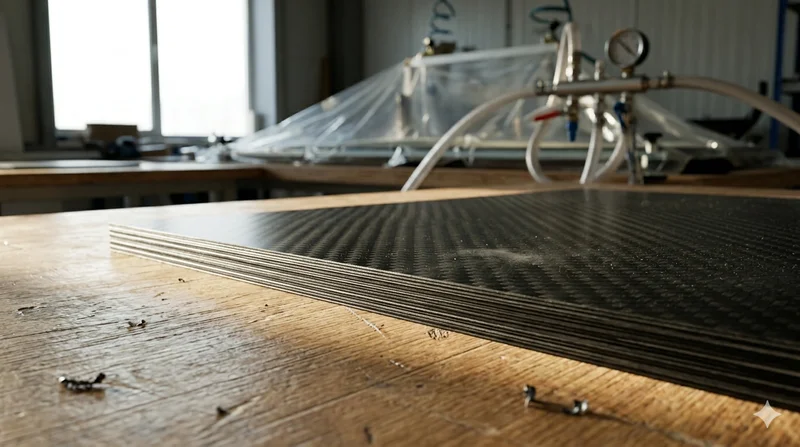
Carbon Fiber Plate — 3K Twill T700 3.0mm
Medium-thickness 3.0mm carbon fiber plate offering significantly higher load capacity while maintaining attractive 3K twill finish. Suitable for structural brackets, reinforcement plates, and load-bearing panels.

Carbon Fiber Plate — 3K Twill T700 1.5mm
Thin 1.5mm carbon fiber plate with 3K twill weave surface. Lightweight and stiff, commonly used for covers, panels, drone bodies, and applications requiring a premium aesthetic appearance.
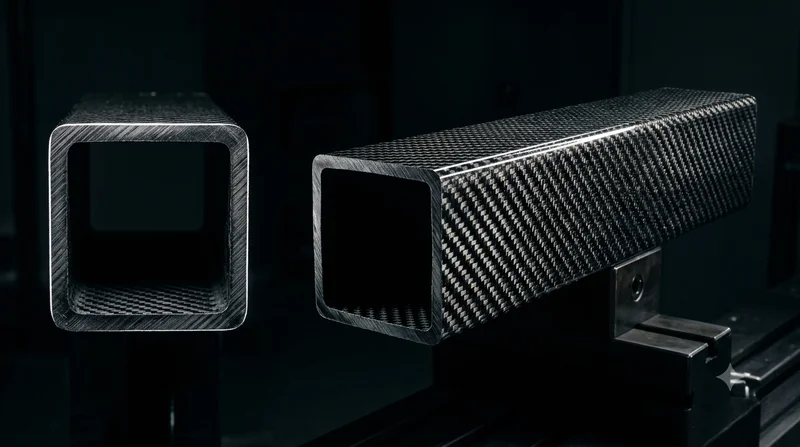
Square Carbon Fiber Tube — 3K Twill T700
Square cross-section carbon fiber tube manufactured with 3K twill weave for torsional strength. Preferred for structural frames, trusses, and support columns where rectangular geometry offers design flexibility.
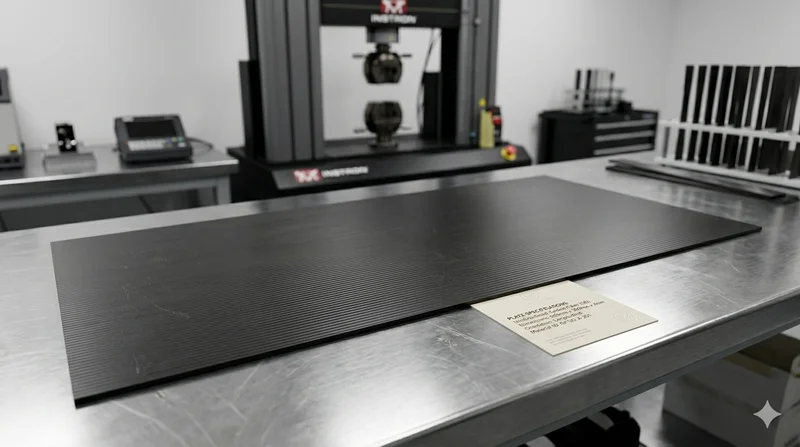
Carbon Fiber Plate — UD Unidirectional T700
Unidirectional carbon fiber plate with all fibers oriented in a single direction for maximum strength along the fiber axis. Essential for structural reinforcements, splints, and applications where load direction is predictable.
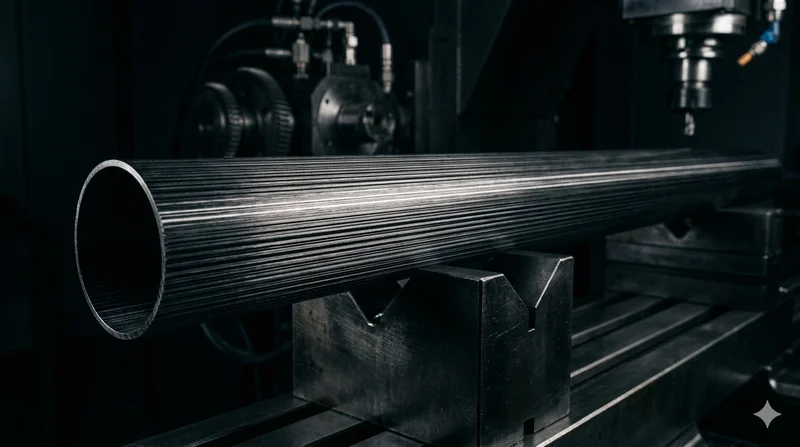
Round Carbon Fiber Tube — UD Unidirectional T700
Unidirectional (UD) round tube with all fibers aligned axially for maximum longitudinal stiffness. Ideal for applications requiring high bending rigidity with minimal weight, such as shafts, struts, and structural reinforcements.