
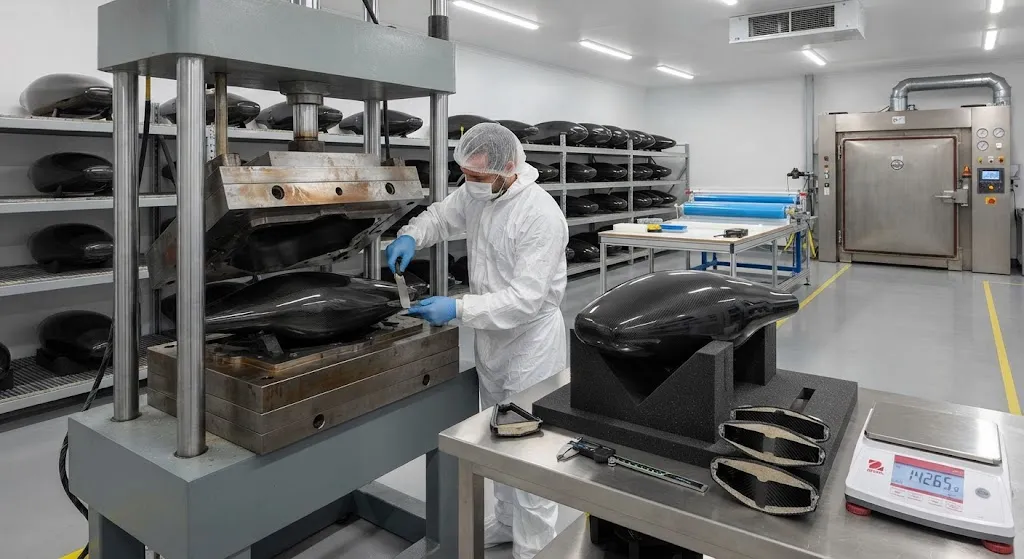
Carbon fiber drone body manufacturing has become the defining capability of modern UAV design because the drone body carries the aircraft, protects the payload, and absorbs landing and crash loads — all at a weight that determines flight endurance. A carbon fiber drone body achieves this through mon
Introduction
Carbon fiber drone body manufacturing has become the defining capability of modern UAV design because the drone body carries the aircraft, protects the payload, and absorbs landing and crash loads — all at a weight that determines flight endurance. A carbon fiber drone body achieves this through monocoque design: instead of a separate frame with panels bolted on, the shell itself is the structure, and the fibers are oriented along the load paths so that every gram of material works. The result is a fuselage that is typically 30-50% lighter than a bolted aluminum-frame design while offering equal or higher stiffness.
This article explains how carbon fiber drone body manufacturing actually works. We cover the monocoque design logic that makes a one-piece shell practical, the production methods used to mold drone bodies — compression molding, bladder molding, and autoclave-cured prepreg — and the quality controls that ensure every body leaving the mold is strong, light, and repeatable.
Carbon Fiber Drone Body Manufacturing: Monocoque Design Principles
Monocoque design is the reason a carbon fiber drone body can be both light and stiff. In a monocoque shell, the skin carries bending, torsion, and compressive loads directly, so there is no need for a heavy internal frame. Three design principles govern the laminate:
- Load-path orientation: Fibers are aligned with the principal load directions. Unidirectional plies run along the fuselage axis to carry bending, while ±45-degree plies handle torsion and crosswind loads.
- Sandwich construction: Thin carbon skins bonded to a lightweight core — foam or honeycomb — multiply bending stiffness dramatically. A sandwich panel is roughly 10-20 times stiffer per unit weight than a solid laminate of the same mass.
- Continuous load transfer: Loads flow around the shell without joints, so stress concentrations from bolted connections are eliminated. Where inserts are needed, they are molded in or bonded with large-area adhesive bonds.
The practical outcome is a drone body with a high stiffness-to-weight ratio and a clean external surface that simplifies aerodynamics. The same shell can integrate motor mounts, camera openings, and battery bays as molded features rather than add-on brackets.
Composite Drone Shell Production Methods: Compression Molding
Compression molding is the highest-volume method for carbon fiber drone body manufacturing. Precut sheets of prepreg — carbon fiber fabric pre-impregnated with epoxy resin — are stacked in a heated steel mold, and a hydraulic press closes the mold under pressure and temperature. The resin flows, consolidates the layers, and cures, typically at 140-180°C for 20-60 minutes. The finished shell demolds with both surfaces controlled by the mold.
| Method | Cycle Time | Tooling Cost | Best Fit |
|---|---|---|---|
| Compression molding | 20-60 min | High (steel molds) | Series production, tight tolerances |
| Bladder molding | 2-4 hours | Low-moderate | Closed-shell bodies, low-medium volume |
| Autoclave prepreg | 4-8 hours | High (molds + autoclave) | High-performance, aerospace-grade bodies |
Compression molding excels at speed and consistency: once the mold is qualified, every part is dimensionally identical, and the cycle time suits production runs of hundreds or thousands of shells. The limitation is geometry — a two-part mold needs draft angles, and complex internal features are difficult to form.
Carbon Fiber UAV Body Molding: Bladder and Autoclave Methods
For closed-shell drone bodies with no parting line, bladder molding is the standard approach. Dry or prepreg carbon fiber is laid into a rigid outer mold, and an inflatable bladder inside the shell expands under pressure, pressing the laminate against the mold surface during cure. This produces a seamless, single-piece body with smooth internal surfaces — ideal for fuselages where aerodynamic cleanliness and a watertight or EMI-shielded interior matter.
Autoclave curing adds pressure and vacuum on top of the temperature cycle: the shell is vacuum-bagged, then cured inside a pressurized autoclave at up to 6-10 bar. The combination of vacuum and pressure removes voids and maximizes fiber volume fraction, which is why autoclave-cured bodies reach the highest strength and stiffness for a given weight. The cost is cycle time and capital — autoclaves are expensive to buy and operate — so the method is reserved for high-performance or qualification-critical bodies.
Regardless of method, the mold design determines the achievable quality. Machined aluminum molds give precise geometry and fine surface finish, while composite molds are lighter and cheaper for short runs but transfer less detail. A good mold for a drone body also includes provision for locating molded-in inserts, alignment features for the two halves, and a release system that does not damage the cured shell.
CFRP Drone Fuselage: Material Selection and Layup
The layup of a carbon fiber drone body is engineered, not guessed, and the material choices follow from the load case and the production method:
- 3K twill fabric: The standard for body skins. It drapes over compound curves without wrinkles, gives a consistent appearance, and has balanced properties in both fabric directions.
- Unidirectional plies: Added along the fuselage axis where bending stiffness is needed, increasing stiffness without adding the weight of extra fabric plies.
- Core materials: PMI or PVC foam and Nomex honeycomb form the sandwich core in flat and lightly curved panels, multiplying stiffness with minimal weight.
- Resin systems: Epoxy prepregs with a glass transition temperature above 120°C suit most drone environments; toughened systems improve impact resistance for landing and handling damage.
Fiber volume fraction is the single most informative quality number: well-consolidated aerospace-grade laminates reach 55-65%, while poorly processed parts fall below 45% and lose strength proportionally. When evaluating a drone body supplier, the fiber volume fraction, the void content, and the cure cycle are the data points that reveal process quality.
Quality Control in Carbon Fiber UAV Body Production
Quality control in carbon fiber drone body manufacturing starts before molding and continues after the part leaves the mold. The checks that matter most:
- Incoming material control: Prepreg is stored frozen and logged by lot; expired or thawed material is rejected because moisture and aging degrade cured properties.
- Process monitoring: Mold temperature, pressure, and cure time are recorded for every cycle, so each shell has a complete process record.
- Dimensional inspection: The cured body is checked against the mold datum — critical mounting points, motor positions, and payload interfaces are measured to spec.
- Non-destructive testing: Ultrasonic or tap testing verifies that skins and cores are bonded without voids or delamination in high-stress regions.
- Destructive sampling: Test coupons molded with each batch are tested for tensile and flexural properties, correlating the batch's actual strength to the design values.
These controls are what separate a drone body that performs identically across a fleet from one that varies. A supplier that can produce batch records, test data, and dimensional reports for every shell has the infrastructure for serious production — and that is the infrastructure your aircraft deserves.
Frequently Asked Questions
Why is a monocoque carbon fiber drone body better than a frame with panels?
A monocoque body integrates the structure into the shell, so every fiber carries load and there are no heavy joints between separate parts. Compared with a bolted aluminum frame and plastic panels, a monocoque carbon body is typically 30-50% lighter with equal or higher stiffness, and it has a cleaner external surface that reduces drag. The trade-offs are higher tooling cost, more complex repair, and the need for careful design of the laminate around openings. For payload-carrying aircraft where endurance matters, the weight saving directly translates into longer flight time.
Which production method should a drone manufacturer choose for a new body?
The choice depends on volume, geometry, and performance targets. For series production of several hundred or more bodies with a geometry that suits a two-part mold, compression molding offers the fastest cycle time and best per-part cost. For a seamless closed-shell design at low-to-medium volume, bladder molding is the practical option. For the highest strength-to-weight ratio or aerospace-grade quality, autoclave-cured prepreg is the method — at the cost of longer cycles and higher capital. Start from the target volume and performance, and the correct method follows.
How are payload and equipment attached to a carbon fiber drone body?
Attachments are designed into the body rather than bolted through the skin. Molded-in threaded inserts are placed at the load points during lamination, bonded in place with structural adhesive, and captured by the core or a local reinforcement. Larger equipment bays use bonded baseplates that spread the load over a wide area of the shell. The rule is to avoid concentrating loads on the thin skin: every point load is either backed by a local laminate buildup, a core block, or a molded insert. This is why a drone body designed as a monocoque from the start is much easier to fit out than a shell that was designed as a cosmetic cover.
Conclusion
Carbon fiber drone body manufacturing has matured into a precise, well-understood discipline. Monocoque design lets a one-piece shell carry the aircraft and its payload at minimum weight, and the production method — compression molding, bladder molding, or autoclave-cured prepreg — determines the balance of cost, cycle time, and performance. Material selection, fiber volume fraction, and quality control separate a reliable fleet-ready body from an inconsistent shell.
When developing a new drone, start with the load case and the volume target, then choose the molding method and laminate that match. Explore our carbon fiber drone bodies and composite structures for standard designs, or contact our engineering team to discuss custom monocoque bodies, tooling, and qualification for your UAV program.
Part of topic
Related Articles
- Carbon Fiber Tube for Sale: Comparing Listings and Avoiding Bad Specs
- Carbon Fiber Engine Parts: High-Temperature Performance for Racing and Performance Vehicles
- Carbon Fiber Body Parts: Automotive Exterior Panels and Structural Components
- Carbon Fiber Drone Parts Supplier: FPV Frames, Arms and Structural Components
- Filament Wound Epoxy Tubes: Industrial Applications from Oil and Gas to Aerospace
- Carbon Fiber Rod Near Me: Stock Sizes, Tolerances and Local Availability
Interested in Our Products?
Contact our team for competitive pricing and technical specifications.
Get a QuoteRelated Products

Carbon Fiber Plate — 3K Twill T700 3.0mm
Medium-thickness 3.0mm carbon fiber plate offering significantly higher load capacity while maintaining attractive 3K twill finish. Suitable for structural brackets, reinforcement plates, and load-bearing panels.

Carbon Fiber Plate — 3K Twill T700 1.5mm
Thin 1.5mm carbon fiber plate with 3K twill weave surface. Lightweight and stiff, commonly used for covers, panels, drone bodies, and applications requiring a premium aesthetic appearance.

Square Carbon Fiber Tube — 3K Twill T700
Square cross-section carbon fiber tube manufactured with 3K twill weave for torsional strength. Preferred for structural frames, trusses, and support columns where rectangular geometry offers design flexibility.
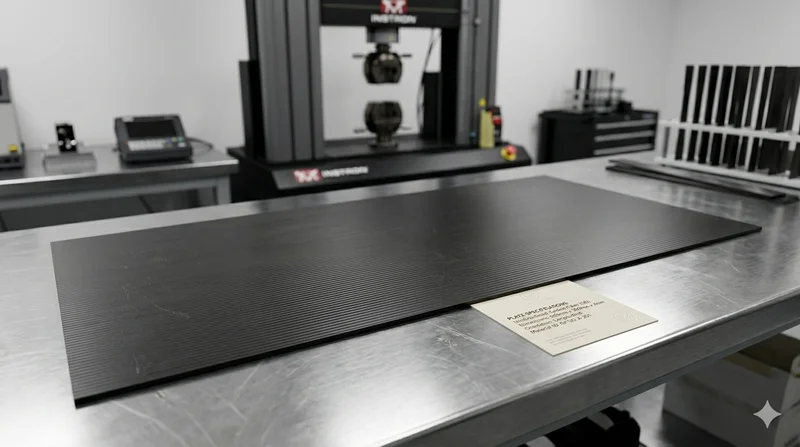
Carbon Fiber Plate — UD Unidirectional T700
Unidirectional carbon fiber plate with all fibers oriented in a single direction for maximum strength along the fiber axis. Essential for structural reinforcements, splints, and applications where load direction is predictable.
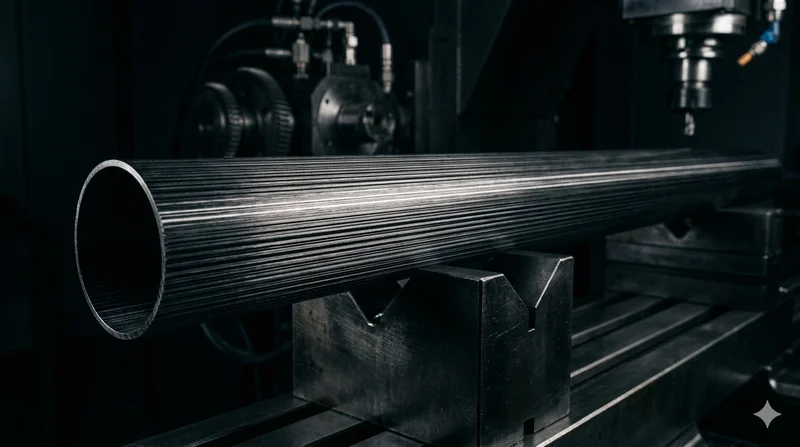
Round Carbon Fiber Tube — UD Unidirectional T700
Unidirectional (UD) round tube with all fibers aligned axially for maximum longitudinal stiffness. Ideal for applications requiring high bending rigidity with minimal weight, such as shafts, struts, and structural reinforcements.