
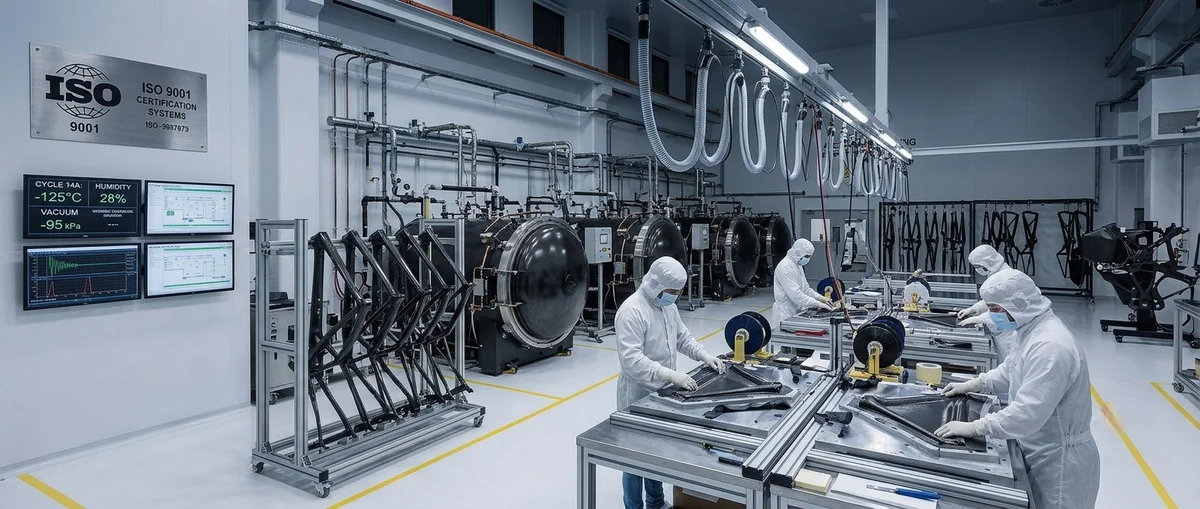
Modern carbon fiber bicycle frame manufacturing involves 14–18 distinct process steps from prepreg cutting to final paint. This article provides a data-driven walkthrough of the complete production workflow, with cycle times, tolerances, and quality-control checkpoints at every stage.
Carbon Fiber Bike Frame Manufacturing: A Precision Engineering Workflow
The global carbon fiber bicycle frame market was valued at approximately $4.2 billion in 2025, with an estimated 8.7 million frames produced worldwide. Unlike steel or aluminum frames that rely on welding and hydroforming, carbon frames are built layer by layer — each frame a bespoke laminate stack engineered for specific stiffness, compliance, and impact-resistance targets.
This article breaks down the complete manufacturing sequence, from raw prepreg materials arriving at the factory to the finished frame leaving the paint booth. Every step includes measurable process parameters that B2B buyers should understand when evaluating supplier capability.
Step 1: Prepreg Receiving and Storage
Carbon fiber prepreg (pre-impregnated sheets of carbon fiber fabric in an epoxy resin matrix) arrives from suppliers such as Toray, Mitsubishi, Hexcel, or domestic Chinese producers. The material must be stored at −18°C (−0.4°F) or lower. Typical out-life at room temperature (21°C) is 21–30 days for standard-modulus prepreg and 14–21 days for intermediate- and high-modulus grades.
Step 2: Pattern Nesting and Cutting
Each frame model has 60–120 individual prepreg ply patterns, each optimized for specific load paths. These are nested on 1.5 m × 100 m prepreg rolls. Modern CNC ultrasonic cutting machines achieve ±0.1 mm cut accuracy and 85–92% material utilization with optimized nesting algorithms (compared to 65–75% with manual cutting).
| Process Parameter | Standard Value | Premium Value |
|---|---|---|
| Number of plies per frame | 60–80 | 100–120 |
| Prepreg areal weight | 200–300 g/m² | 150–200 g/m² |
| Material utilization rate | 75–82% | 85–92% |
| Cut tolerance | ±0.3 mm | ±0.1 mm |
| Laser projection alignment | Optional | Standard |
Step 3: Ply Layup — The Core of Frame Performance
Cut prepreg plies are hand-laid or robotically placed into steel or aluminum molds. Layup time for a single frame is 45–90 minutes for an experienced technician. Robotic automated fiber placement (AFP) systems reduce this to 15–25 minutes with ±0.05 mm placement accuracy.
Step 4: Vacuum Bagging and Curing
Autoclave curing: 120–160°C at 4–7 bar pressure, 90–120 min cycle. Produces <1% void content. Out-of-autoclave (OOA) curing: 120–130°C in a convection oven, vacuum only. 60–90 min cycle. Void content 1–3%.
Step 5: Demolding and Post-Cure
After cooling to ≤40°C, the frame is demolded. A post-cure cycle (130–150°C for 60–120 min) ensures full glass transition temperature (Tg ≥ 120°C) and dimensional stability.
Step 6: Trimming, Bonding, and Surface Preparation
| Quality Checkpoint | Method | Acceptance Criteria |
|---|---|---|
| Void content | Micrographic cross-section | <1% (premium), <3% (standard) |
| Fiber alignment | Ultrasonic C-scan | ±2° of design orientation |
| Bond joint strength | Pull-test sample coupons | ≥25 MPa lap shear |
| Frame weight | Calibrated scale | ±3% of target weight |
| Dimensional accuracy | CMM / fixture gauge | ±0.5 mm at all interfaces |
Step 7: Painting and Final Assembly
Frames receive a two-part polyurethane primer (30–50 μm), base coat (20–40 μm), clear coat (40–60 μm), and optional decals. Total paint weight: 80–150 g. Final QC: ±1° head-tube alignment check and ±0.5 mm rear-droplet spacing measurement.
Manufacturing Cost Breakdown by Frame Tier
| Cost Category | Entry-Level | Mid-Range | Premium |
|---|---|---|---|
| Prepreg materials | $18–25 | $35–50 | $80–140 |
| Labor (layup + finishing) | $25–35 | $45–65 | $80–120 |
| Curing (autoclave energy) | $8–12 | $12–18 | $18–30 |
| Metal inserts and bonding | $5–8 | $8–12 | $15–25 |
| Paint and finishing | $10–15 | $15–25 | $30–50 |
| QC and testing | $3–5 | $8–12 | $15–25 |
| Total manufacturing cost | $69–100 | $123–182 | $238–390 |
FAQ
Q: What is the minimum order quantity for OEM carbon bicycle frame production?
A: Most Chinese OEM factories require MOQs of 200–500 units per model for standard frame geometries. Custom-geometry MOQs are typically 50–100 units. Mold tooling costs ($8,000–$25,000 per size) are amortized across the first order.
Q: How does autoclave curing differ from OOA curing in bicycle frames?
A: Autoclave curing applies 4–7 bar external pressure, resulting in <1% void content and higher fiber volume fraction (63–67% vs 55–60%). OOA relies on vacuum-only pressure (≤1 bar) and is suitable for mid-range frames. Autoclave adds $8–15 in energy cost per frame but is required for frames targeting ≤950 g weight.
Q: What are the key quality indicators to audit when sourcing carbon bike frames?
A: B2B buyers should audit five areas: (1) prepreg storage logs (verify ≤−18°C continuous cold chain); (2) layup room environmental control (21±2°C, ≤50% RH); (3) autoclave cure cycles with data-logger verification; (4) ultrasonic C-scan or tap-test records for every frame; and (5) fatigue test results per ISO 4210 (>100,000 cycles at ±2.5 kN).
Part of topic
Related Articles
- Carbon Fiber Mooring for Floating Offshore Wind: Fatigue and Corrosion in Deep Water
- Carbon Fiber Bicycle Frame Optimization: Layup Design and Manufacturing for Competitive Racing
- Carbon Fiber CFRP Retrofit for Infrastructure: Bridge and Building Seismic Strengthening
- Carbon Fiber Medical Imaging Equipment: Lightweight Gantry and Couch Structures for MRI/CT
- Carbon Fiber EV Battery Enclosures: Crash Safety and Electromagnetic Shielding Design
- Carbon Fiber Structures for Low-Altitude Economy: UAV Airframes and eVTOL Components
Interested in Our Products?
Contact our team for competitive pricing and technical specifications.
Get a QuoteRelated Products

Carbon Fiber Plate — 3K Twill T700 1.5mm
Thin 1.5mm carbon fiber plate with 3K twill weave surface. Lightweight and stiff, commonly used for covers, panels, drone bodies, and applications requiring a premium aesthetic appearance.

Square Carbon Fiber Tube — 3K Twill T700
Square cross-section carbon fiber tube manufactured with 3K twill weave for torsional strength. Preferred for structural frames, trusses, and support columns where rectangular geometry offers design flexibility.

Carbon Fiber Plate — 3K Twill T700 3.0mm
Medium-thickness 3.0mm carbon fiber plate offering significantly higher load capacity while maintaining attractive 3K twill finish. Suitable for structural brackets, reinforcement plates, and load-bearing panels.
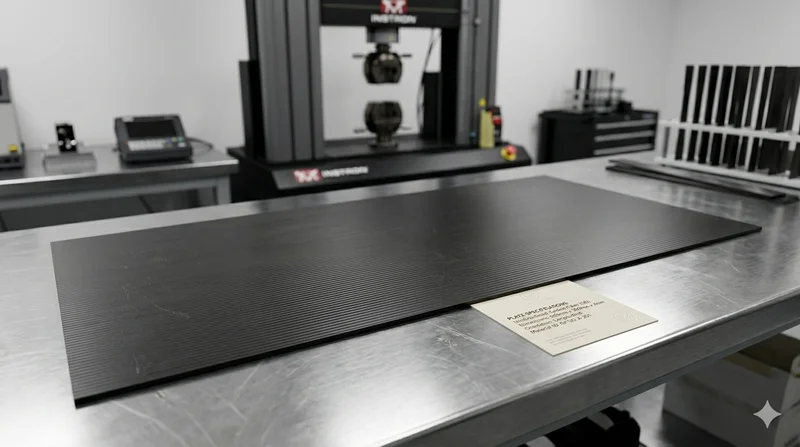
Carbon Fiber Plate — UD Unidirectional T700
Unidirectional carbon fiber plate with all fibers oriented in a single direction for maximum strength along the fiber axis. Essential for structural reinforcements, splints, and applications where load direction is predictable.
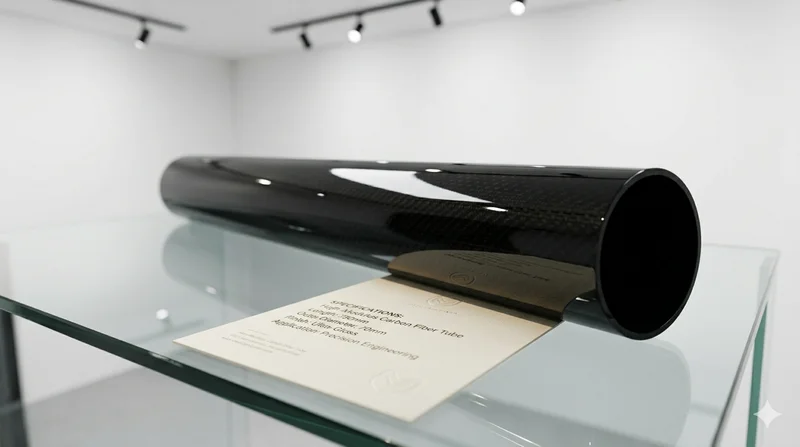
High Modulus Round Carbon Fiber Tube — M40
High modulus round tube manufactured with M40 grade fiber (tensile modulus 400 GPa). Designed for applications where maximum stiffness-to-weight ratio is critical, such as optical systems, precision machinery, and aerospace structures.