

Carbon fiber auto parts are the most effective way vehicle manufacturers can remove weight from a platform, and in the electric vehicle era that weight saving has a direct, measurable financial value. Every kilogram removed from an EV body improves range, reduces battery cost, sharpens acceleration
Introduction
Carbon fiber auto parts are the most effective way vehicle manufacturers can remove weight from a platform, and in the electric vehicle era that weight saving has a direct, measurable financial value. Every kilogram removed from an EV body improves range, reduces battery cost, sharpens acceleration and increases payload capacity. A mid-size electric sedan carries roughly 400-500 kg of battery; reducing vehicle weight by 10 percent can cut battery size by 5-8 percent for the same range, which at current pack prices of USD 100-130 per kWh is a saving of several hundred dollars per vehicle. This article explains how carbon fiber auto parts are manufactured, which CFRP automotive parts deliver the strongest return, and how to evaluate the cost-per-kilogram-saved trade-off when deciding where composite lightweighting pays.
Why Lightweighting Drives EV Range and Performance
The relationship between mass and range is linear for rolling resistance and proportional to the square of speed for aerodynamic drag, but the practical effect is well established: a 100 kg reduction in a typical EV adds roughly 3-6 km of range at highway speed, depending on the platform. Weight also compounds through the vehicle system. A lighter body allows smaller brakes, a smaller suspension and a lighter battery structure, creating a cascade of secondary savings that engineers call the mass decompounding effect.
| Material | Density (g/cm³) | Tensile strength (MPa) | Specific strength (MPa per g/cm³) | Weight for equal stiffness part |
|---|---|---|---|---|
| Mild steel | 7.85 | 400-550 | 50-70 | 1.00x baseline |
| Aluminum 6061 | 2.70 | 240-310 | 90-115 | 0.65x |
| GFRP (E-glass) | 1.9-2.0 | 400-700 | 200-360 | 0.55-0.60x |
| CFRP (T700, 60% fiber) | 1.55-1.60 | 1,200-1,800 | 750-1,150 | 0.30-0.35x |
The specific strength column is the key metric for lightweight auto parts: carbon fiber is roughly 10-20 times stronger per unit weight than steel, which is why CFRP automotive parts can use dramatically less material while meeting the same structural requirements. For stiffness-driven components such as body panels and chassis elements, the modulus-to-density ratio matters more, and carbon fiber retains a 2-4x advantage over steel there as well.
Which CFRP Automotive Parts Deliver the Strongest Return
Not every component in a vehicle benefits equally from carbon fiber. The parts that deliver the strongest return share three characteristics: they are far from the center of gravity, they are unsprung mass, or they are rotating mass. The further a component sits from the vehicle centerline, the greater its effect on handling and the larger the payload or range benefit when it is lightened.
- Wheels: The strongest single investment. A carbon fiber wheel is typically 35-45 percent lighter than an equivalent aluminum wheel, and because wheels are both unsprung and rotating mass, the effective benefit is 2-3x the static weight saving. Some OEM wheels save 3-4 kg per corner.
- Hood and body panels: A carbon fiber hood saves 40-60 percent of the weight of a steel panel while providing a visible premium. Structural panels such as door inners can use carbon fiber to consolidate multiple stampings into one molded part.
- Battery enclosure components: Composite covers and crash structures around the battery pack protect the pack while saving 30-50 percent versus steel, directly extending range by reducing the mass the pack must move.
- Driveshaft and propshaft: A carbon fiber driveshaft weighs roughly half of a steel unit, reducing rotating inertia and driveline losses.
- Seat structures: Composite seat frames save 8-12 kg per seat pair and lower the center of gravity.
- Chassis and suspension arms: CFRP control arms and subframe elements reduce unsprung mass, improving ride quality and tire contact.
For commercial and fleet operators, the same principle applies to payload: a carbon fiber body on a delivery van or truck recovers the weight for cargo, and over a 10-year service life that recovered payload is revenue. This payload argument, rather than performance marketing, is what has driven carbon fiber auto parts into commercial vehicles and bus structures.
Manufacturing Routes for Automotive Carbon Fiber
Automotive production economics are different from aerospace. Aerospace accepts long cycle times and high labor content because the parts are complex and low-volume; automotive demands cycle times measured in minutes and repeatable quality at thousands of parts per year. Three routes dominate:
| Process | Cycle time | Fiber content | Typical parts | Annual volume sweet spot |
|---|---|---|---|---|
| Compression molding (prepreg or sheet molding compound) | 5-20 minutes | 40-60% | Hoods, roof panels, seat structures | 10k-100k parts |
| High-pressure resin transfer molding (HP-RTM) | 3-10 minutes | 45-60% | Structural panels, crash structures | 20k-200k parts |
| Thermoplastic stamping (CFRTP) | 1-3 minutes | 40-55% | Floor pans, brackets, underbody shields | 100k-1M parts |
Thermoplastic systems are increasingly attractive because they offer weldable, reformable parts with cycle times close to metal stamping, and they eliminate the cold-chain storage that thermoset prepreg requires. For the highest volumes, hybrid concepts combine a steel or aluminum structure with carbon fiber reinforcement only where the stiffness or weight payoff is largest, which reduces cost while capturing most of the benefit.
The Cost-Per-Kilogram-Saved Decision
The honest way to evaluate carbon fiber auto parts is cost per kilogram saved, not material price. A carbon fiber hood may cost USD 400-800 versus USD 100-150 for steel, but it saves 8-12 kg, giving a cost of roughly USD 40-70 per kilogram saved. Compare that with the value of the saving in an EV: at 500 km range and battery costs around USD 120 per kWh, the battery-side value of removing one kilogram is approximately USD 15-30 depending on pack efficiency, and the range and performance benefits add value on top. For premium vehicles, the marketing and brand value of visible carbon fiber is a further factor that changes the arithmetic entirely.
The decision framework used by OEMs and Tier 1 suppliers is straightforward: list candidate components, calculate the achievable weight saving, divide the incremental cost by the saving, and rank the results. Components below USD 50 per kilogram saved with a battery value above USD 20 per kilogram often justify adoption at scale, while components above USD 100 per kilogram saved are typically limited to premium or motorsport programs. As carbon fiber prices fall and high-volume manufacturing routes mature, the crossover point moves steadily toward mainstream production.
Frequently Asked Questions
How much weight does a carbon fiber auto part save compared with steel or aluminum?
For a stiffness-equivalent part, carbon fiber typically saves 60-70 percent of the weight of a steel component and 30-50 percent of the weight of an aluminum component, depending on the loading case and fiber orientation. In practice, hood panels save 40-60 percent, wheels 35-45 percent, and driveshafts around 50 percent versus steel. The exact figure depends on whether the part is strength- or stiffness-driven, because carbon fiber's advantage over steel is larger on strength per unit weight than on raw stiffness.
Are carbon fiber auto parts strong enough for structural applications?
Yes. CFRP automotive parts used in crash structures are designed to absorb energy through progressive crushing, and carbon fiber composites demonstrate specific energy absorption two to three times higher than steel in many impact configurations. Structural parts are validated through the same crash and fatigue test regimes as metal parts, including ECE and FMVSS requirements. The design rules differ from steel because composite failure is brittle rather than ductile, so engineers design crush zones and joints specifically for composite behavior rather than assuming metal-like deformation.
Why is carbon fiber not used on every car if it saves so much weight?
The barrier is cost and production rate. Carbon fiber auto parts are more expensive per part than steel or aluminum equivalents, and high-volume processes that would make them affordable at 200,000 vehicles per year are still maturing. The economics also depend on the value of weight saving, which is highest for EVs with large batteries and premium vehicles. For mass-market vehicles, hybrid designs that use carbon fiber only in the highest-value locations, combined with aluminum for the rest, deliver most of the benefit at a fraction of the cost.
Conclusion
Carbon fiber auto parts convert weight reduction directly into EV range, performance and payload, and the mass decompounding effect multiplies the benefit across the whole vehicle. The strongest investments are wheels, body panels, battery enclosure structures and rotating driveline components, while the decision framework that governs adoption is cost per kilogram saved against the battery and performance value of that saving. As thermoplastic processing and high-volume resin transfer molding mature, CFRP automotive parts are moving from premium and motorsport into mainstream production.
Explore our carbon fiber sheets, rods and profiles for automotive and EV component development, or contact our technical team to discuss material selection and prototyping for your lightweight auto parts program.
Part of topic
Related Articles
- Carbon Fiber Rod Near Me: Stock Sizes, Tolerances and Local Availability
- Carbon Fiber Small Parts: Precision Manufacturing for Electronics and Medical Devices
- Carbon Fiber Sheets Suppliers: Specification Comparison and Procurement Guide
- Custom Carbon Fiber Assemblies: Multi-Component Integration and Quality Control
- Custom Carbon Fiber Fabrication: One-Stop Service from Design to Delivery
- Carbon Fiber Near Me Suppliers: Global Local Supplier Directory for Quick Procurement
Interested in Our Products?
Contact our team for competitive pricing and technical specifications.
Get a QuoteRelated Products

Carbon Fiber Plate — 3K Twill T700 3.0mm
Medium-thickness 3.0mm carbon fiber plate offering significantly higher load capacity while maintaining attractive 3K twill finish. Suitable for structural brackets, reinforcement plates, and load-bearing panels.

Carbon Fiber Plate — 3K Twill T700 1.5mm
Thin 1.5mm carbon fiber plate with 3K twill weave surface. Lightweight and stiff, commonly used for covers, panels, drone bodies, and applications requiring a premium aesthetic appearance.

Square Carbon Fiber Tube — 3K Twill T700
Square cross-section carbon fiber tube manufactured with 3K twill weave for torsional strength. Preferred for structural frames, trusses, and support columns where rectangular geometry offers design flexibility.
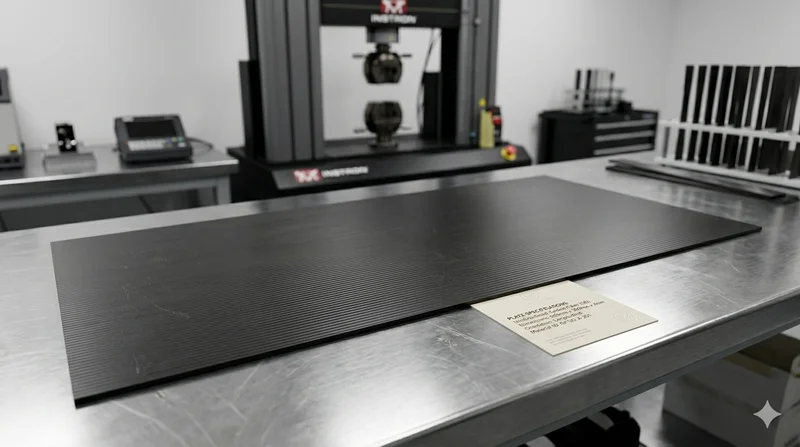
Carbon Fiber Plate — UD Unidirectional T700
Unidirectional carbon fiber plate with all fibers oriented in a single direction for maximum strength along the fiber axis. Essential for structural reinforcements, splints, and applications where load direction is predictable.
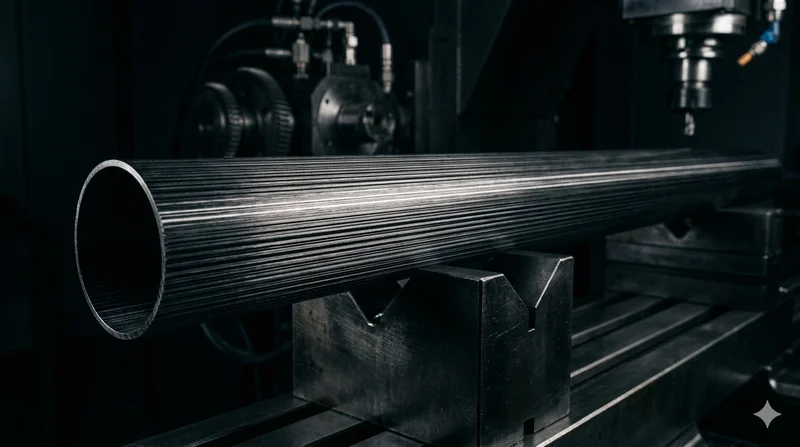
Round Carbon Fiber Tube — UD Unidirectional T700
Unidirectional (UD) round tube with all fibers aligned axially for maximum longitudinal stiffness. Ideal for applications requiring high bending rigidity with minimal weight, such as shafts, struts, and structural reinforcements.