
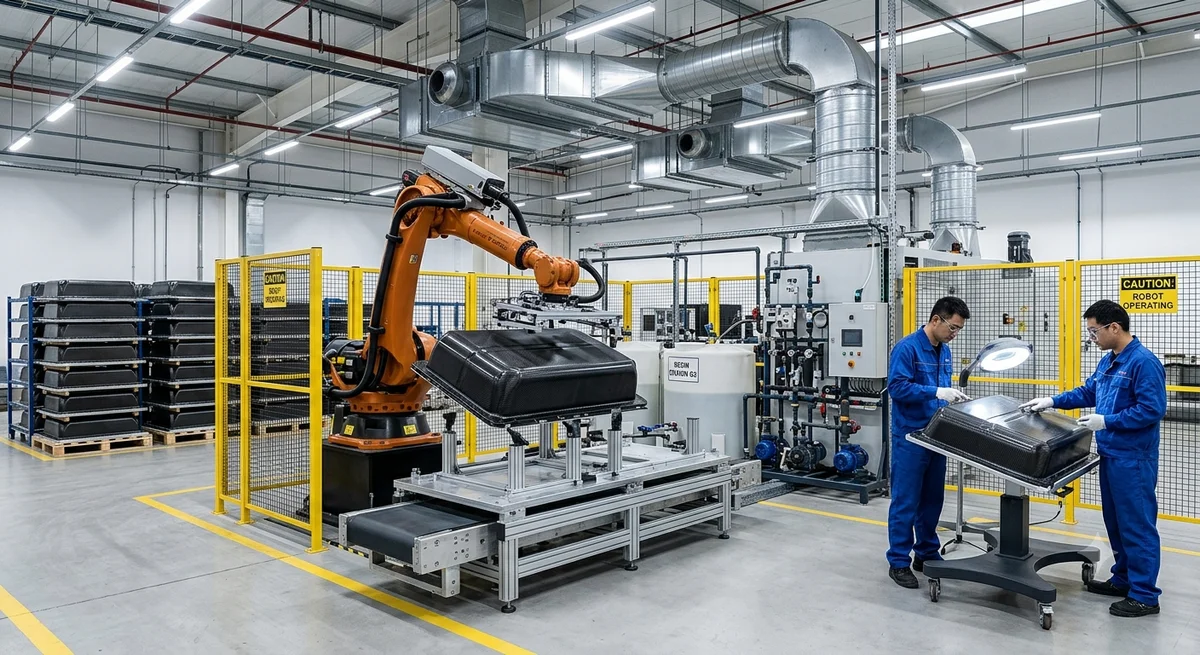
Explore how automotive OEMs are adopting carbon fiber composites for structural lightweighting in 2026, from mass-production chassis components to luxury vehicle body panels.
Introduction
Automotive lightweighting remains one of the strongest growth drivers for the carbon fiber composites industry. In 2026, global automotive carbon fiber consumption is projected to exceed 45,000 metric tons, driven by stringent CO₂ emission regulations in the EU (95 g/km target tightening to 80 g/km by 2028) and the rapid expansion of battery electric vehicle platforms. Unlike the aerospace sector, which prioritizes performance over cost, the automotive industry demands high-volume, cost-effective carbon fiber solutions. This article examines the key adoption trends across vehicle segments, the material technologies enabling mass-market penetration, and what B2B suppliers need to know to serve this growing market.
Carbon Fiber Adoption by Vehicle Segment
| Vehicle Segment | 2026 Carbon Fiber per Vehicle | Primary Applications | Growth vs 2024 |
|---|---|---|---|
| Electric hypercars | 80–150 kg | Monocoque, body panels, suspension arms | +15% |
| Luxury ICE sedans | 20–50 kg | Roof panels, driveshafts, brake rotors | +8% |
| Mainstream BEV crossovers | 15–35 kg | Battery enclosures, floor pans, bumper beams | +40% |
| High-performance SUVs | 40–70 kg | Frame rails, crossmembers, liftgate inners | +22% |
| Light commercial vehicles | 8–20 kg | Leaf springs, cargo floor panels, roof reinforcements | +12% |
Mass-Production Enablers: Fast-Curing Resins and Automated Processes
The biggest barrier to widespread automotive carbon fiber adoption has historically been cycle time. Aerospace-grade prepreg requires 60–120 minutes of autoclave curing — unacceptable for a vehicle production line running 60-second cycle times. In 2026, three technology breakthroughs are bridging that gap:
- Fast-curing epoxy resins — New formulations cure in 3–8 minutes at 150°C, compatible with existing compression molding infrastructure. Suppliers like Hexion and Huntsman now offer automotive-tailored prepreg systems with 5-minute cure windows.
- High-rate automated fiber placement (AFP) — Next-generation AFP heads achieve deposition rates of 100 kg/hour, making structural parts economically viable at volumes of 50,000+ units per year.
- Direct long-fiber thermoplastic molding — Carbon fiber-reinforced polypropylene and polyamide (PA6, PA66) compounds can be injection molded in sub-90-second cycles, opening up non-structural and semi-structural applications such as front-end modules, seatbacks, and pedal boxes.
For B2B buyers evaluating carbon fiber for automotive programs, the key question is no longer "Can carbon fiber reduce weight?" but rather "Which carbon fiber form and process delivers the lowest cost-per-kilogram-saved?"
Battery Enclosures: The Emerging Killer Application
Battery electric vehicle battery enclosures represent the fastest-growing carbon fiber application in the automotive sector. CFRP enclosures weigh 40–60% less than equivalent steel enclosures and offer superior thermal management and crash protection. In 2026, over 15 production EV models globally feature carbon fiber composite battery enclosures, up from just 3 in 2024. Suppliers that can deliver Class A surface finish, integrated fire protection, and leak-proof sealing at sub-$50/kg part cost are well-positioned for long-term supply agreements with OEMs.
Frequently Asked Questions
What is the cost target for automotive carbon fiber in 2026?
For mass-production structural parts, Tier 1 suppliers target $15–25/kg for carbon fiber material (fiber + preforming + resin), with finished part cost at $35–60/kg. For battery enclosures, the target finished part cost is $40–55/kg. These targets are within reach using fast-cure epoxy systems, automated layup, and high-volume compression molding.
How does carbon fiber compare to high-strength steel or aluminum in automotive lightweighting?
Carbon fiber offers 40–60% weight reduction over steel and 20–35% over aluminum, but at 3–5x the material cost. The economic crossover point depends on the value of weight saved. In BEVs, every kilogram saved extends range by approximately 0.4–0.6 km, making carbon fiber more economically justifiable than in ICE vehicles.
What testing standards are required for automotive carbon fiber components?
Automotive carbon fiber structural parts typically require FMVSS 301 (fuel system integrity), ECE R100 (battery safety), ISO 6603 (puncture impact), and ASTM D7136 (drop-weight impact) compliance. OEMs also require thermal cycling (−40°C to +80°C) and humidity aging validation per their internal standards.
Conclusion
Automotive carbon fiber adoption reached an inflection point in 2025–2026, with battery enclosures and high-rate manufacturing processes driving volume growth. B2B buyers should evaluate suppliers based on total cost per kilogram saved, not raw material price alone. YongXian CarbonFiber supplies automotive-grade carbon fiber tubes, plates, and custom-molded components with full OEM testing documentation. Visit www.yongxian.co to discuss your lightweighting program requirements.
Part of topic
Related Articles
- Carbon Fiber Mooring for Floating Offshore Wind: Fatigue and Corrosion in Deep Water
- Carbon Fiber Bicycle Frame Optimization: Layup Design and Manufacturing for Competitive Racing
- Carbon Fiber CFRP Retrofit for Infrastructure: Bridge and Building Seismic Strengthening
- Carbon Fiber Medical Imaging Equipment: Lightweight Gantry and Couch Structures for MRI/CT
- Carbon Fiber EV Battery Enclosures: Crash Safety and Electromagnetic Shielding Design
- Carbon Fiber Structures for Low-Altitude Economy: UAV Airframes and eVTOL Components
Interested in Our Products?
Contact our team for competitive pricing and technical specifications.
Get a QuoteRelated Products
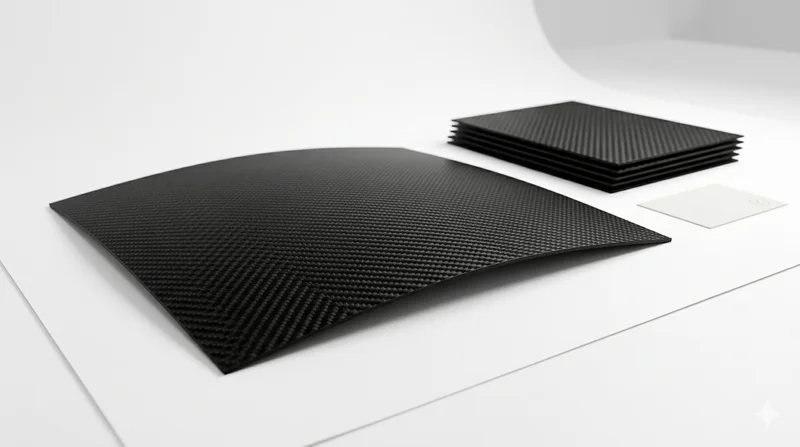
Carbon Fiber Plate — 3K Twill T700 1.5mm
Thin 1.5mm carbon fiber plate with 3K twill weave surface. Lightweight and stiff, commonly used for covers, panels, drone bodies, and applications requiring a premium aesthetic appearance.
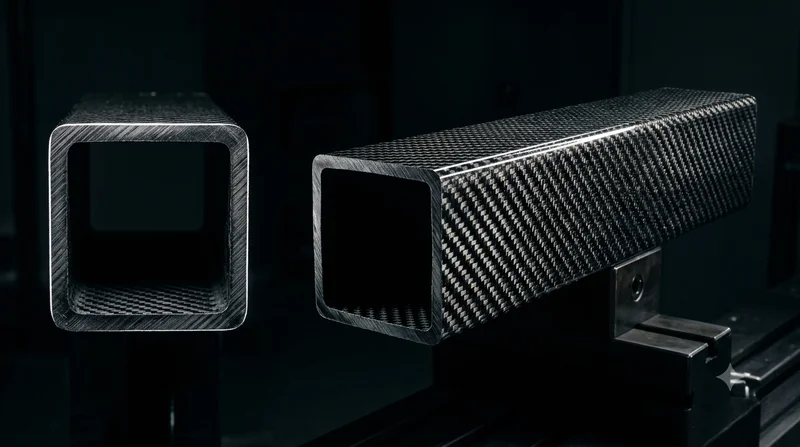
Square Carbon Fiber Tube — 3K Twill T700
Square cross-section carbon fiber tube manufactured with 3K twill weave for torsional strength. Preferred for structural frames, trusses, and support columns where rectangular geometry offers design flexibility.
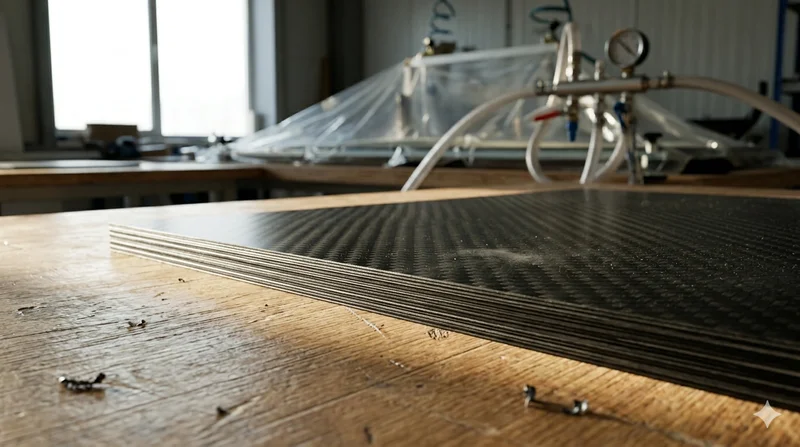
Carbon Fiber Plate — 3K Twill T700 3.0mm
Medium-thickness 3.0mm carbon fiber plate offering significantly higher load capacity while maintaining attractive 3K twill finish. Suitable for structural brackets, reinforcement plates, and load-bearing panels.
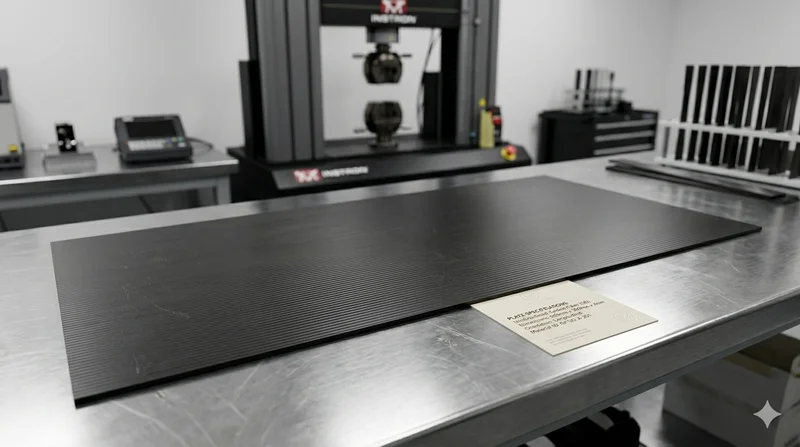
Carbon Fiber Plate — UD Unidirectional T700
Unidirectional carbon fiber plate with all fibers oriented in a single direction for maximum strength along the fiber axis. Essential for structural reinforcements, splints, and applications where load direction is predictable.
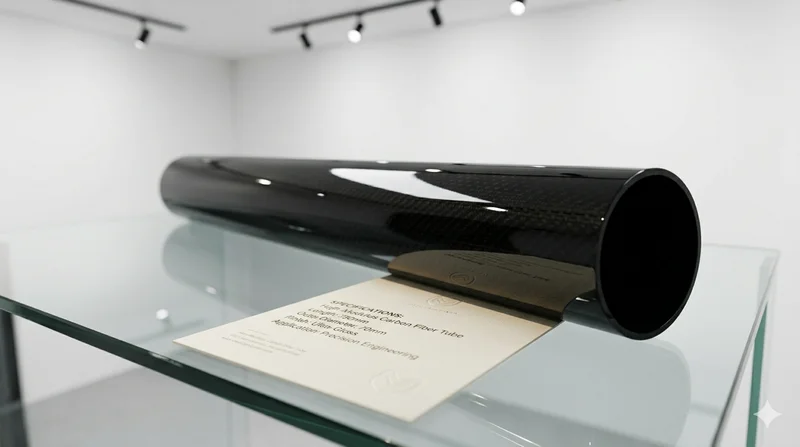
High Modulus Round Carbon Fiber Tube — M40
High modulus round tube manufactured with M40 grade fiber (tensile modulus 400 GPa). Designed for applications where maximum stiffness-to-weight ratio is critical, such as optical systems, precision machinery, and aerospace structures.